Road Salt and Your Car: How to Rust-Proof Before Winter
Every winter, Irish councils spread thousands of tonnes of salt on the roads. It keeps us moving on icy mornings, but it’s the single biggest cause of rust on Irish cars. Salt water gets thrown into every seam, sill and subframe, and it sits there for months doing damage you can’t see until a panel bubbles or the car fails its NCT.
The good news: a couple of hours before the gritters come out makes a huge difference. This is the pre-winter routine we recommend for everyday cars, vans and classics alike. If you’re planning a full strip-and-rustproof restoration instead, see our 10-step complete rust protection guide.
Why road salt is so hard on your car
Rust needs three things: bare steel, oxygen and water. Salt doesn’t cause rust on its own, but dissolved in water it makes an electrolyte, a liquid that carries electrical current far better than plain water. That speeds up the electrochemical reaction that turns steel into iron oxide many times over. (We explain the science in Understanding Rust.)
Worse, salt is hygroscopic: it pulls moisture out of the air. A seam packed with dried salt never really dries out, even in a garage. A heated garage can actually make things worse, because warmth speeds the reaction up. That’s why the damage keeps going long after the roads are dry, and why getting salt off the car matters as much as keeping it out.
Where salt does the most damage
How to rust-proof your car before winter: 6 steps
Wash the underside properly
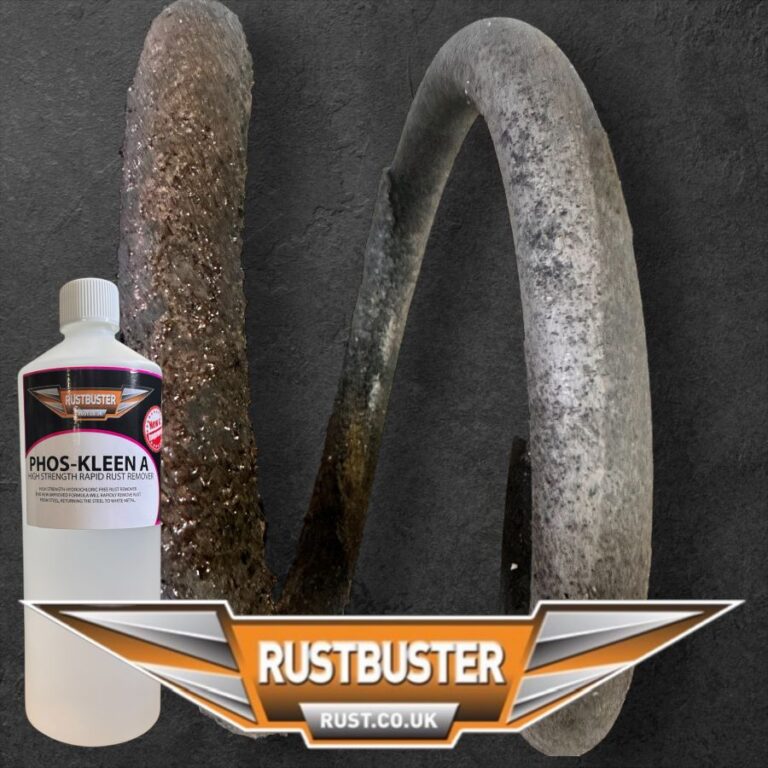
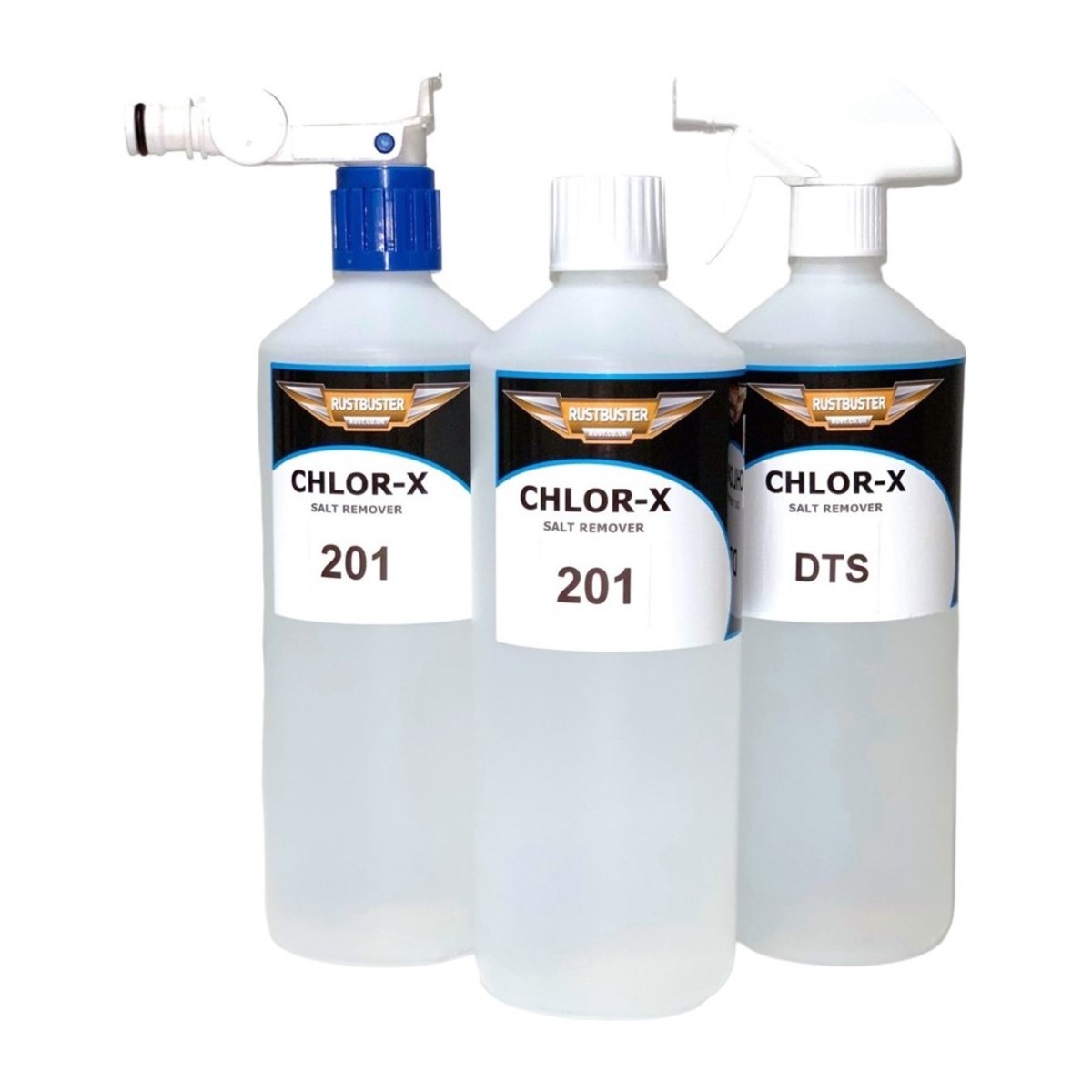
You can’t protect metal that’s covered in mud and last winter’s salt. Get the car up on ramps if you can, and pressure-wash the wheel arches, sills, subframes and every ledge that holds dirt. Heavy road grime and old oily deposits come off with Rustbuster Safer Degreaser. Then wash with Rustbuster Chlor-X to lift the soluble salts that plain water leaves behind in pits and seams (why that matters).
Let it dry completely, then inspect
Give it a full dry day, or a run on a dry road, before you coat anything, because wax sealed over wet metal traps the water in. Then take a torch underneath and look for bubbling or flaking underseal, orange surface rust on subframes and brackets, and crusty brake pipes. Check that the drain holes in the sills, doors and tailgate are clear. They need to stay open, so don’t wax them shut.
Treat any rust you find
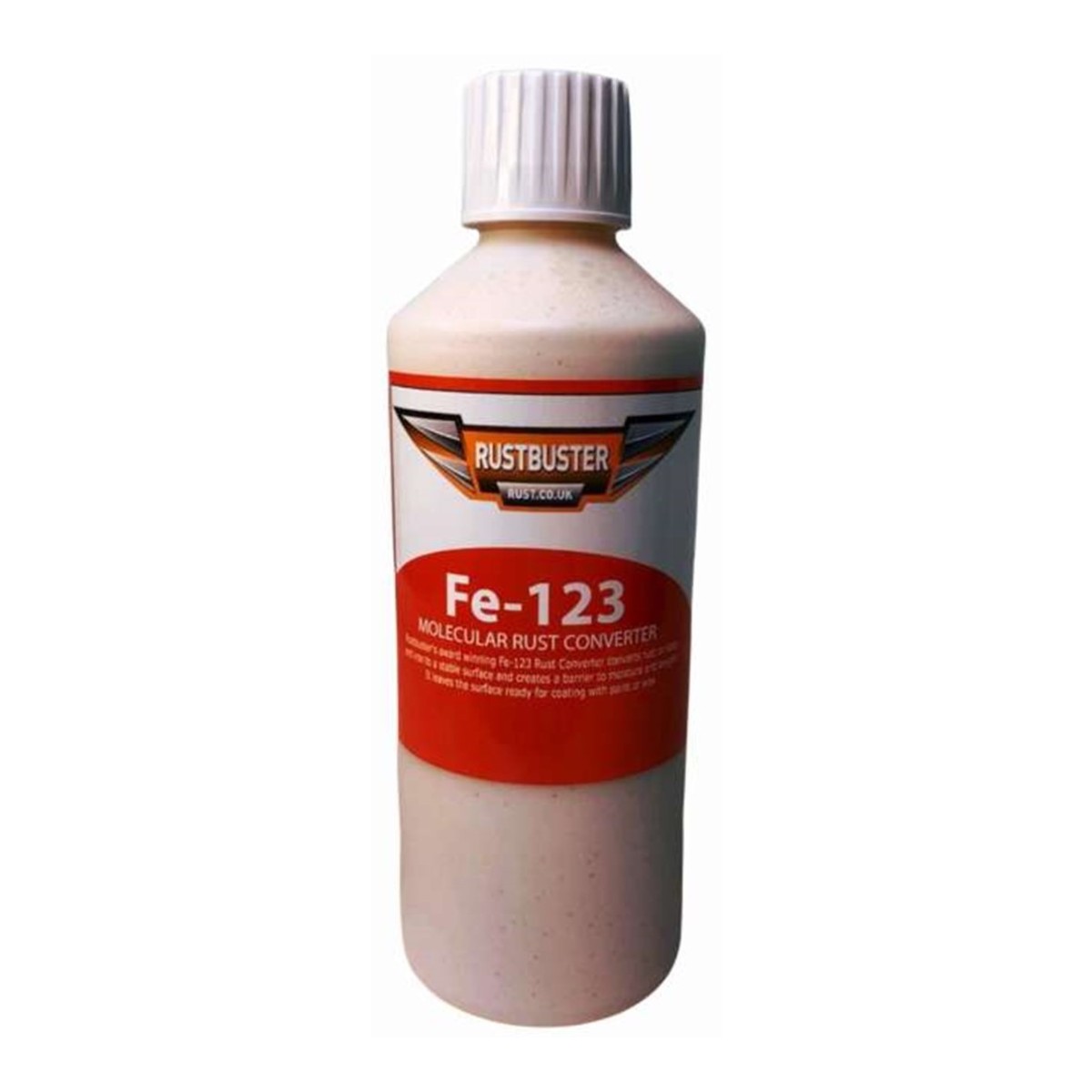
Don’t bury rust under wax. Wire-brush off anything loose and flaky, then treat the remaining surface rust with FE-123 Rust Converter, which reacts with the rust and turns it into a hard, stable black layer. Let it cure fully before moving on (how to use FE-123). If you find structural rot or badly corroded brake pipes, that’s a job for a garage before winter, not a coat of wax.
Wax the cavities
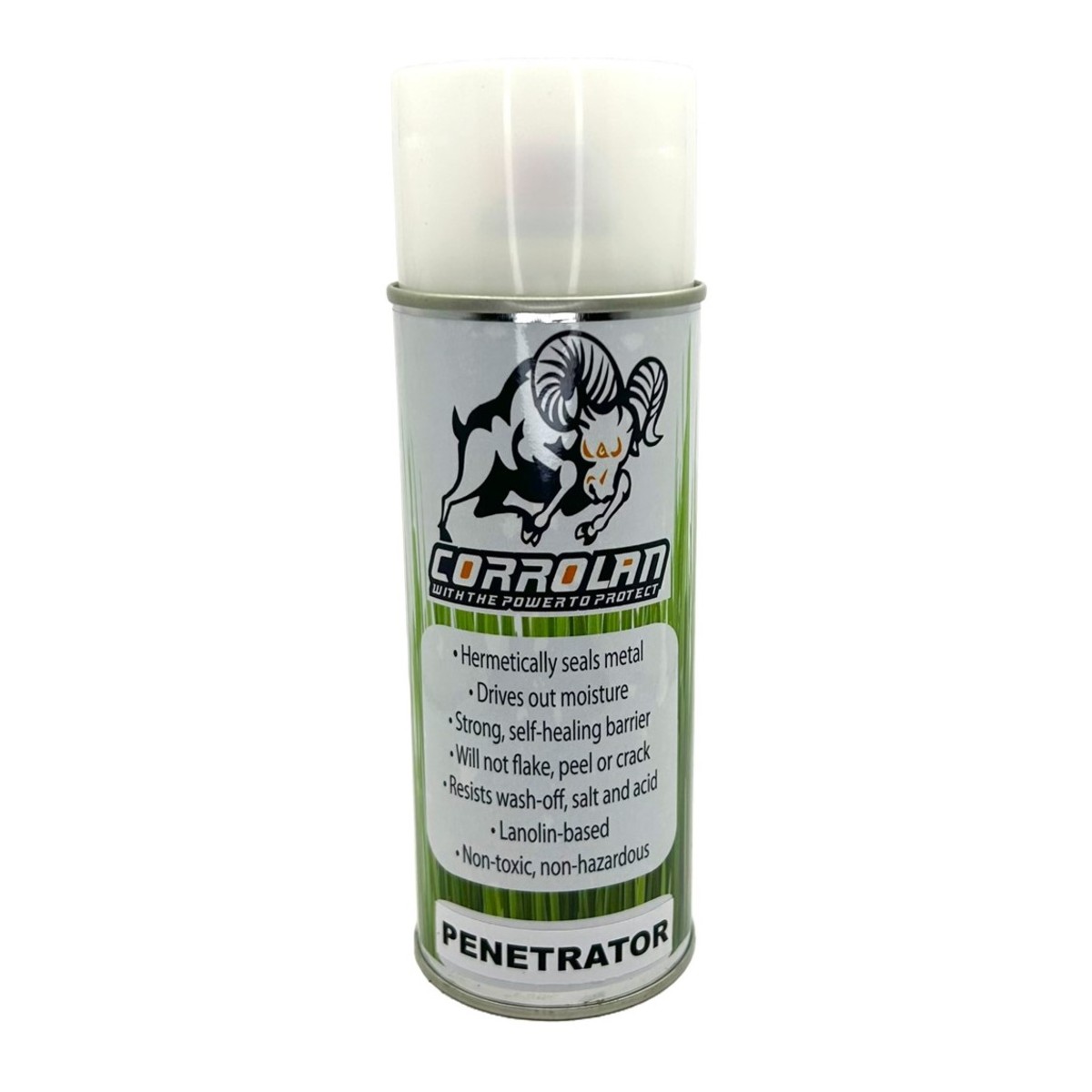
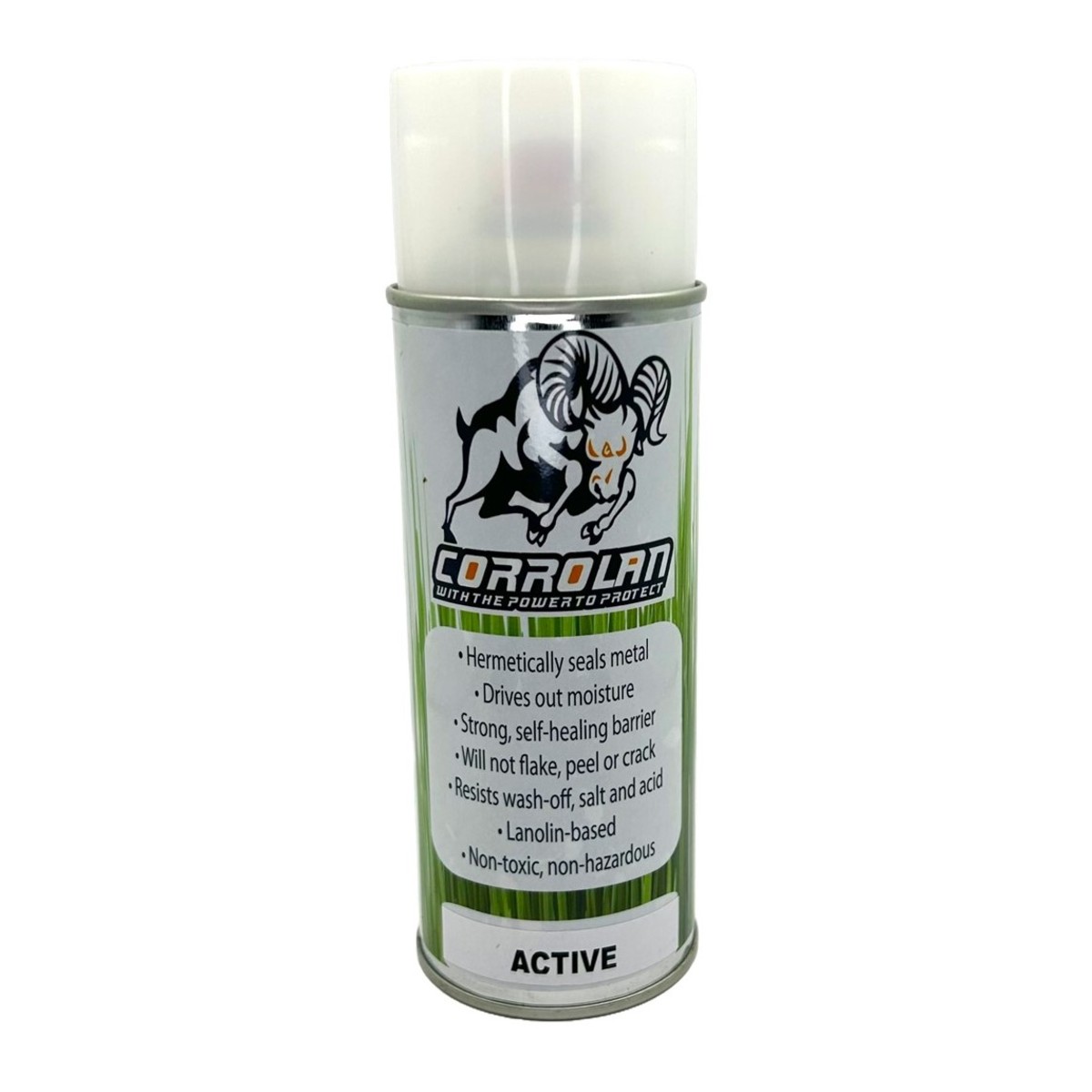
Sills, door bottoms, chassis rails and other box sections rust from the inside out, so they need a creeping cavity wax. Where there’s existing light rust or tight seams, start with Corrolan Penetrator, a thin lanolin wax that wicks deep into crevices. Follow with Corrolan Active, which stays flexible and self-heals if it’s disturbed. Use the aerosol’s extension tube through existing holes and grommets and work along the whole cavity. Techshield Cavity Wax is an alternative if you prefer a traditional wax. For a whole-car job with an injection gun, see our cavity wax injection guide.
Coat the underbody
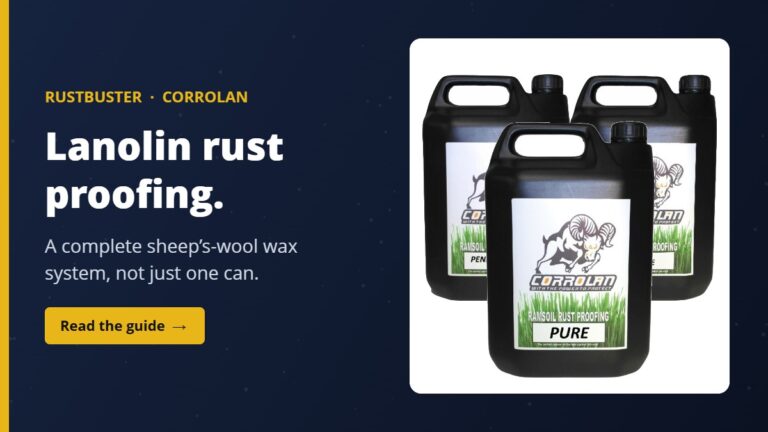
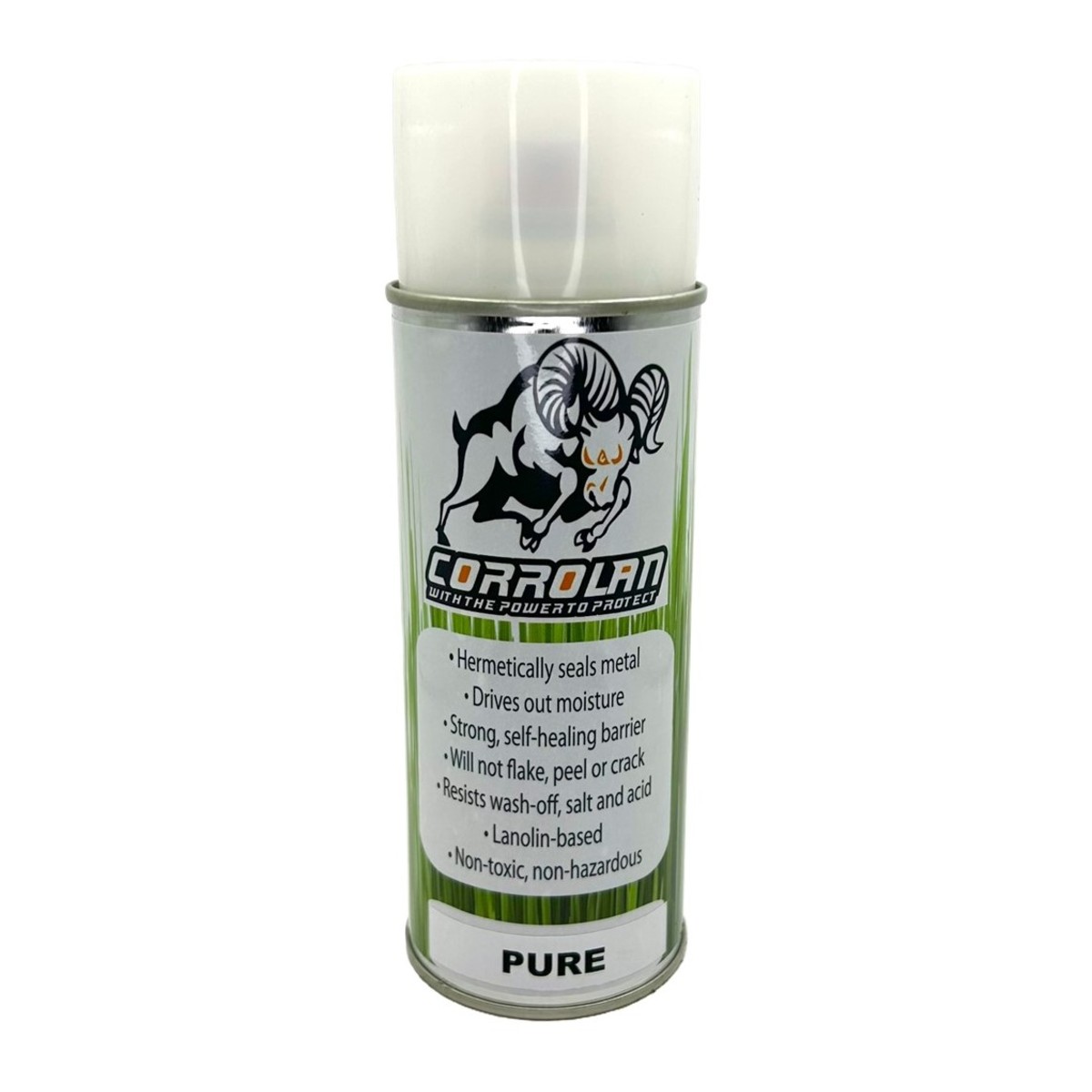
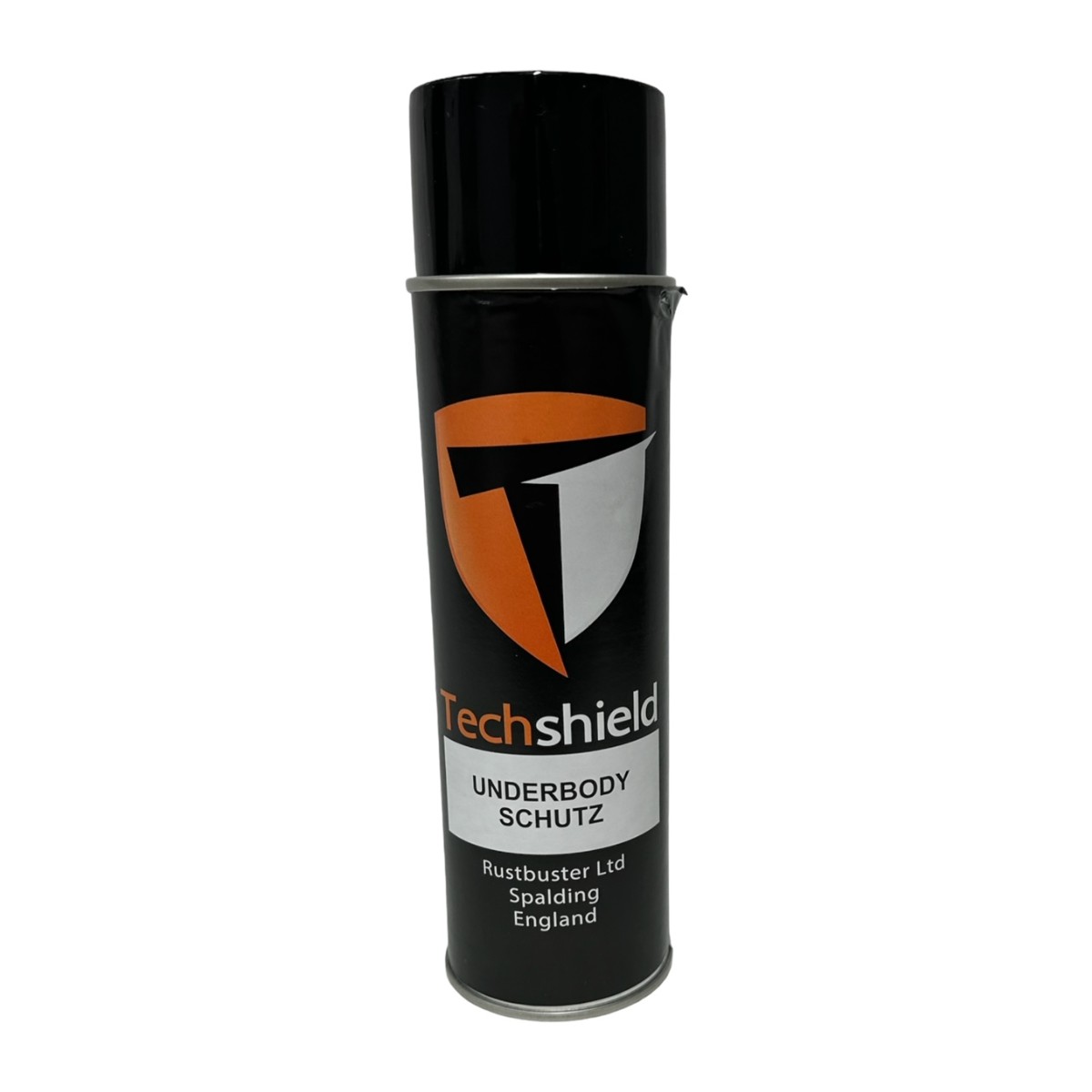
Now protect the exposed underside: floorpan, subframes, suspension arms, brake and fuel line clips, and inside the arches. Corrolan Pure is a lanolin underbody wax that stays soft and self-healing, and its honey colour means you can still see the metal to check it next year. If you prefer a traditional black finish, use Techshield Underbody Schutz, a tough black bitumen underseal that also gives stone-chip protection on arches and sills. It can’t be painted over, so on sills and valances you’ll paint, use Techshield Stonechip instead. Keep all coatings off brake discs and pads, exhaust pipes and drive belts.
Protect the engine bay and exposed metal
Salt spray gets into the engine bay too: brackets, bolt heads, battery trays and suspension turrets. Techshield Heat Resistant Clear leaves a dry, invisible film that handles engine heat and doesn’t attract dirt. It’s ideal where you don’t want a sticky wax (more on clear rust protection).
Which product goes where?
| Area | Product | Why |
|---|---|---|
| Salt removal before coating | Chlor-X | Removes soluble salts that water alone leaves in pits |
| Surface rust spots | FE-123 Rust Converter | Turns rust into a stable black layer you can coat over |
| Tight seams & rusty cavities | Corrolan Penetrator | Thin, deep-creeping lanolin primer coat |
| Sills, doors, box sections | Corrolan Active | Flexible, self-healing cavity wax |
| Floorpan & subframes (see-through) | Corrolan Pure | Soft lanolin wax, honey colour so you can inspect the metal |
| Floorpan, subframes & arches (black) | Techshield Underbody Schutz | Tough black bitumen underseal with gravel protection |
| Sills & valances you’ll paint | Techshield Stonechip | Tough textured stone-chip coating you can paint over |
| Engine bay & visible metal | Techshield Heat Resistant Clear | Dry, clear, heat-resistant film |
Through the winter: keep the salt off
Protection only buys you time if salt is allowed to sit on the car all season. Rustbuster’s advice is to wash the car every 10 to 14 days through winter, paying most attention to the underside, and to rinse sooner after a run on freshly gritted roads. A garden hose or pressure washer under the arches and sills is enough. Top up the wax on any areas that get scrubbed off, and plan to reapply underbody wax roughly every six months, before winter and again in spring.
Common mistakes to avoid
- Coating over dirt, salt or damp. Wax sprayed onto a dirty or wet underside seals the problem in. Wash, desalt and dry first.
- Waxing over flaking rust. Remove loose rust and convert what’s left with FE-123 before coating.
- Blocking drain holes. Cavities need to drain. Wax the inside of the cavity, but keep the drain holes open.
- Only washing the paintwork. The salt that does the damage is underneath. An automatic car wash without underbody jets misses most of it.
- Spraying brakes or exhausts. Mask or avoid brake discs, pads and exhaust pipes.
- Waiting for spring. Protection goes on before the salt, not after the damage is done.
Your pre-winter rust kit
Towing a trailer or horsebox this winter? See our guide to rustproofing trailers, horseboxes and farm machinery.
Road salt and rust-proofing FAQs
Does road salt really damage cars?
Yes. Salt dissolved in water forms an electrolyte that makes steel rust much faster than water alone, and salt holds moisture in seams and cavities long after the roads are dry. It’s the main cause of underbody corrosion on Irish and UK cars.
When should I rust-proof my car?
In October or early November, before the councils start gritting, on a dry day so the underside is fully dry. A spring top-up after the salt season keeps the protection going.
Is it worth rust-proofing a new car?
Yes. Factory protection is good but not complete, especially inside cavities and around subframes and seams. Adding cavity and underbody wax while the metal is still clean is the easiest time to do it, and it helps the car stay NCT-ready for longer.
How often should I wash my car in winter?
Every 10 to 14 days, with the focus on the underside, arches and sills, and sooner after driving on freshly gritted roads.
Can I put underbody wax over rust?
Not over loose, flaking rust. Wire-brush off anything loose, treat the remaining surface rust with a rust converter such as FE-123 and let it cure, then apply the wax. Light rust in tight seams can be treated with a penetrating lanolin wax like Corrolan Penetrator.
Lanolin wax or traditional wax: which is better?
Both protect well. Lanolin waxes like Corrolan stay soft, creep into seams and self-heal when scuffed, and the lighter colour lets you inspect the metal. Traditional black waxes give a classic underbody look. See our lanolin rust proofing guide and Waxoyl alternatives guide for a full comparison.
Laying a car up for the winter instead? Follow our winter lay-up checklist. Not sure what your car needs? Ask our team. We’re happy to help you pick the right products.