How to Paint Galvanised Steel: Using Rustbuster T-Wash
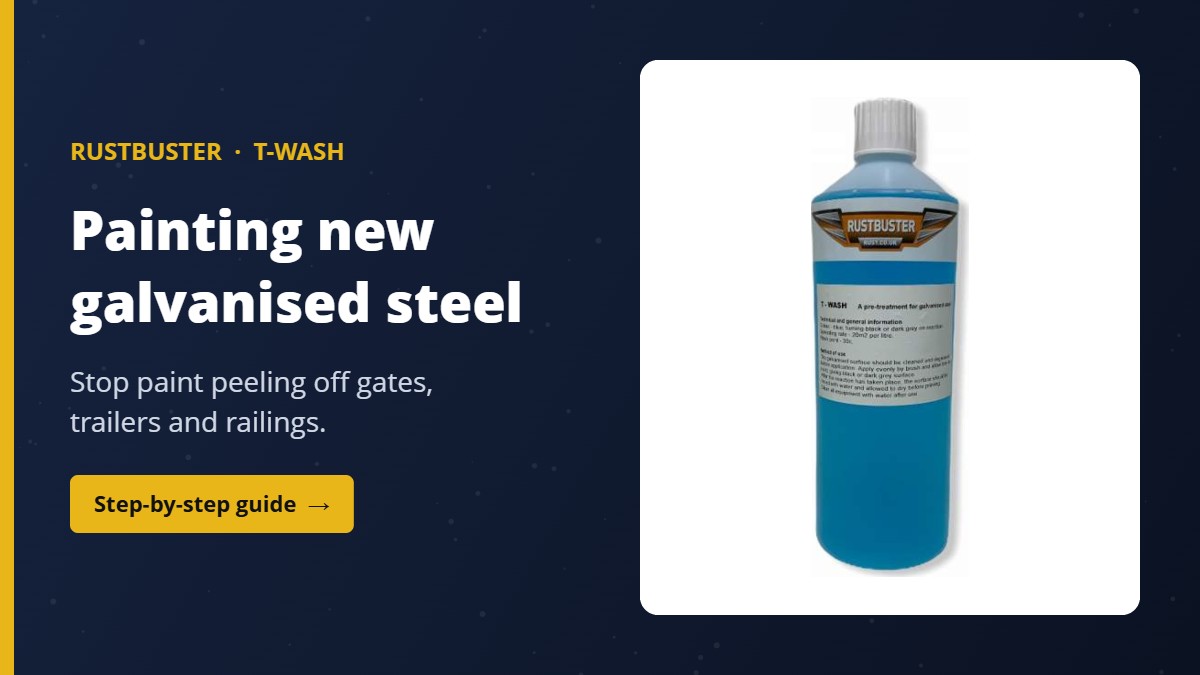
Anyone who has painted a new galvanised gate or trailer knows the story: it looks great for a few months, then the paint starts flaking off in sheets. It’s not bad paint. New galvanising simply isn’t ready to be painted until it’s been properly prepared. Rustbuster T-Wash is the traditional fix, and it’s simple to use. Here’s why paint fails on galvanised steel and exactly how to stop it.
Why paint peels off new galvanised steel
Two things on a fresh galvanised surface stop paint from gripping:
- A greasy film left over from the galvanising process.
- A passive layer of zinc hydroxides and carbonates that forms on the new zinc surface. It’s smooth and chemically resistant, which is great for protecting the steel but terrible for paint adhesion.
Galvanising that has weathered outdoors for around two years loses much of this naturally, which is why old galvanised steel is easier to paint. New galvanising needs help.
What T-Wash does
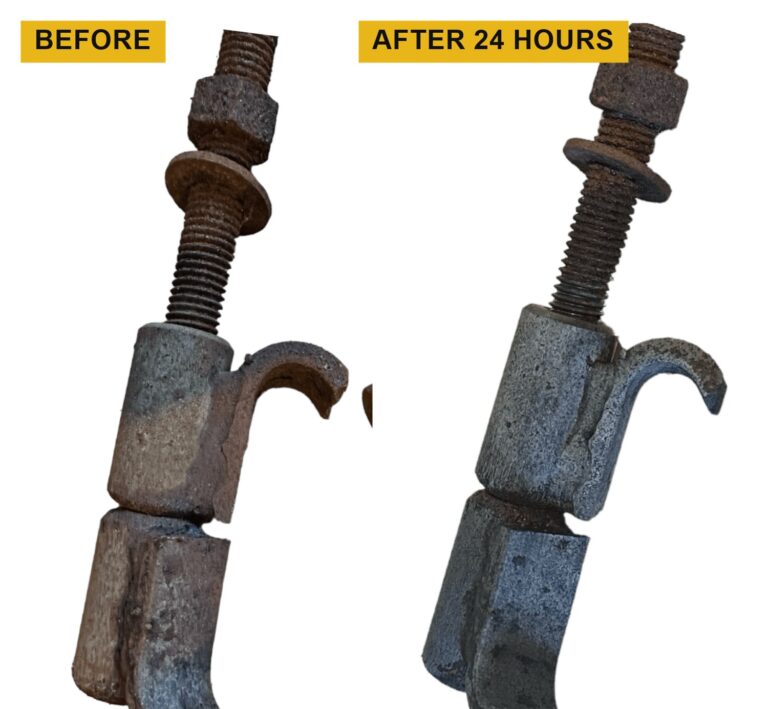
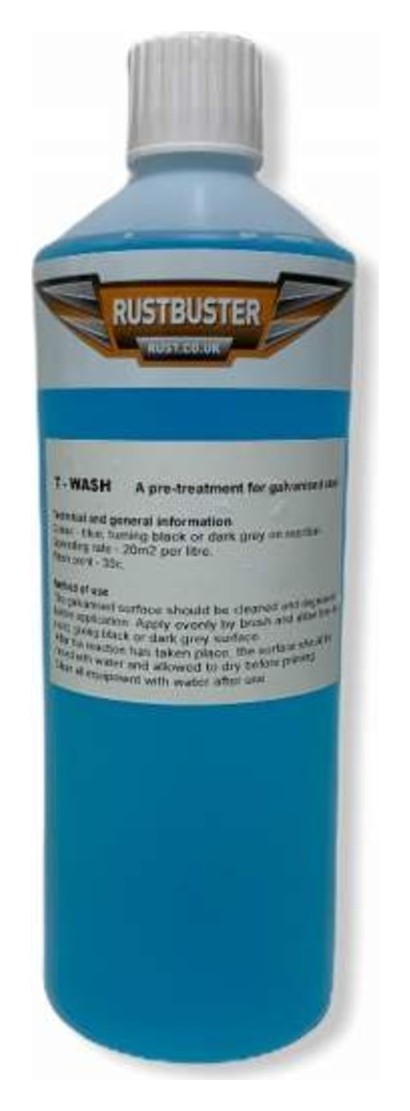
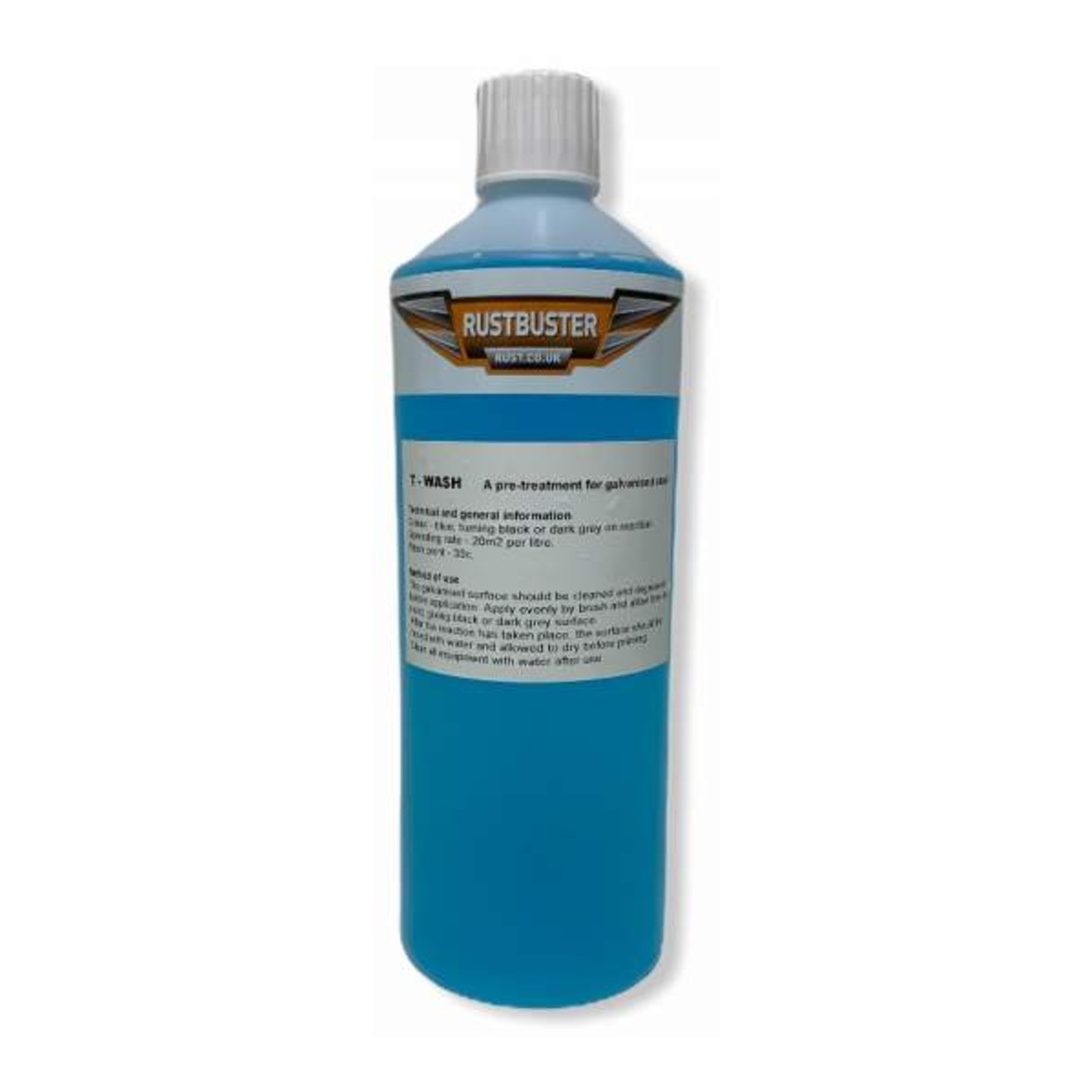
T-Wash is a mordant solution: it reacts with the surface of the zinc, neutralising the hydroxides and carbonates and leaving a surface that paint can properly key into. You can see it working: grease-free galvanised steel turns black or dark grey as T-Wash reacts. That colour change is your sign the surface is ready. Any patches that stay shiny tell you there’s still grease there.
✔ Ideal for
New galvanised gates, railings, trailers and horse boxes, farm machinery, sheds, corrugated roofing, balustrades and structural steel in construction, transport and agriculture.
ℹ Weathered galvanising
Older galvanised steel (around two years outdoors or more) has lost most of its greasy film naturally, but it still needs a thorough clean before painting.
How to paint galvanised steel with T-Wash
Degrease thoroughly
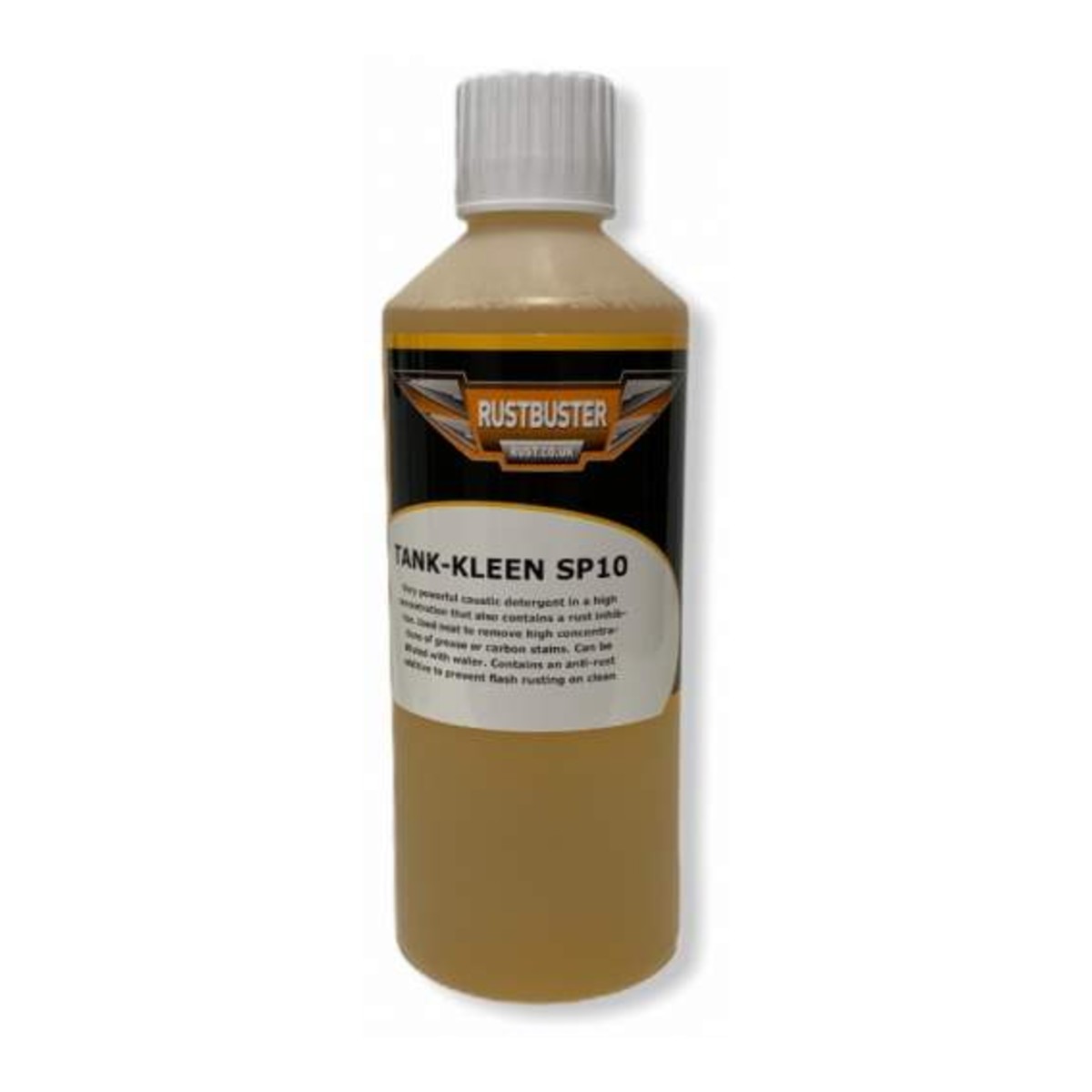
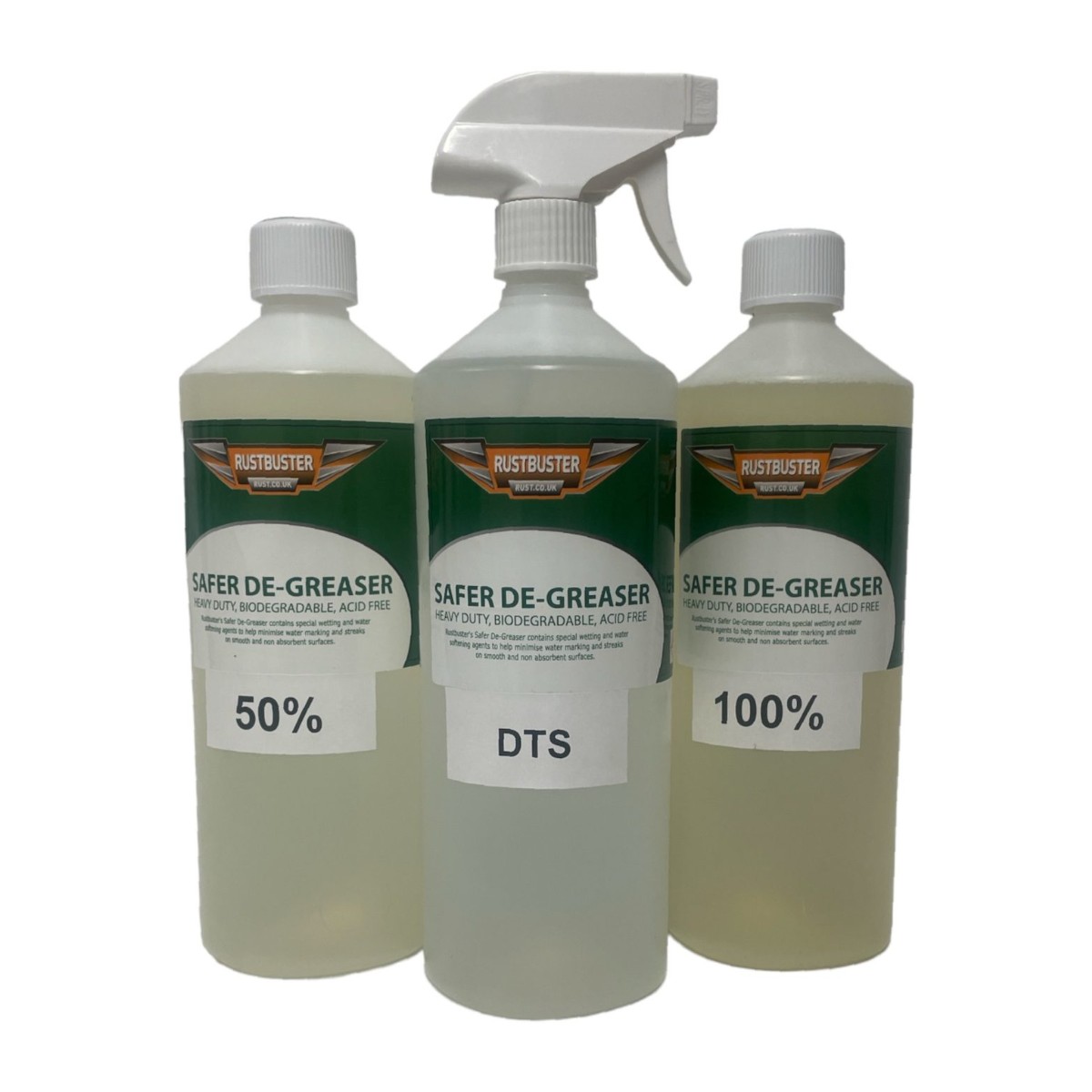
This is the step that makes or breaks the job. Apply Rustbuster SP10 Tank-Kleen (diluted 1:4) or Rustbuster Safer Degreaser and work it in with a brush until it foams. Leave it for 5 to 60 minutes depending on how dirty the steel is.
Rinse and dry
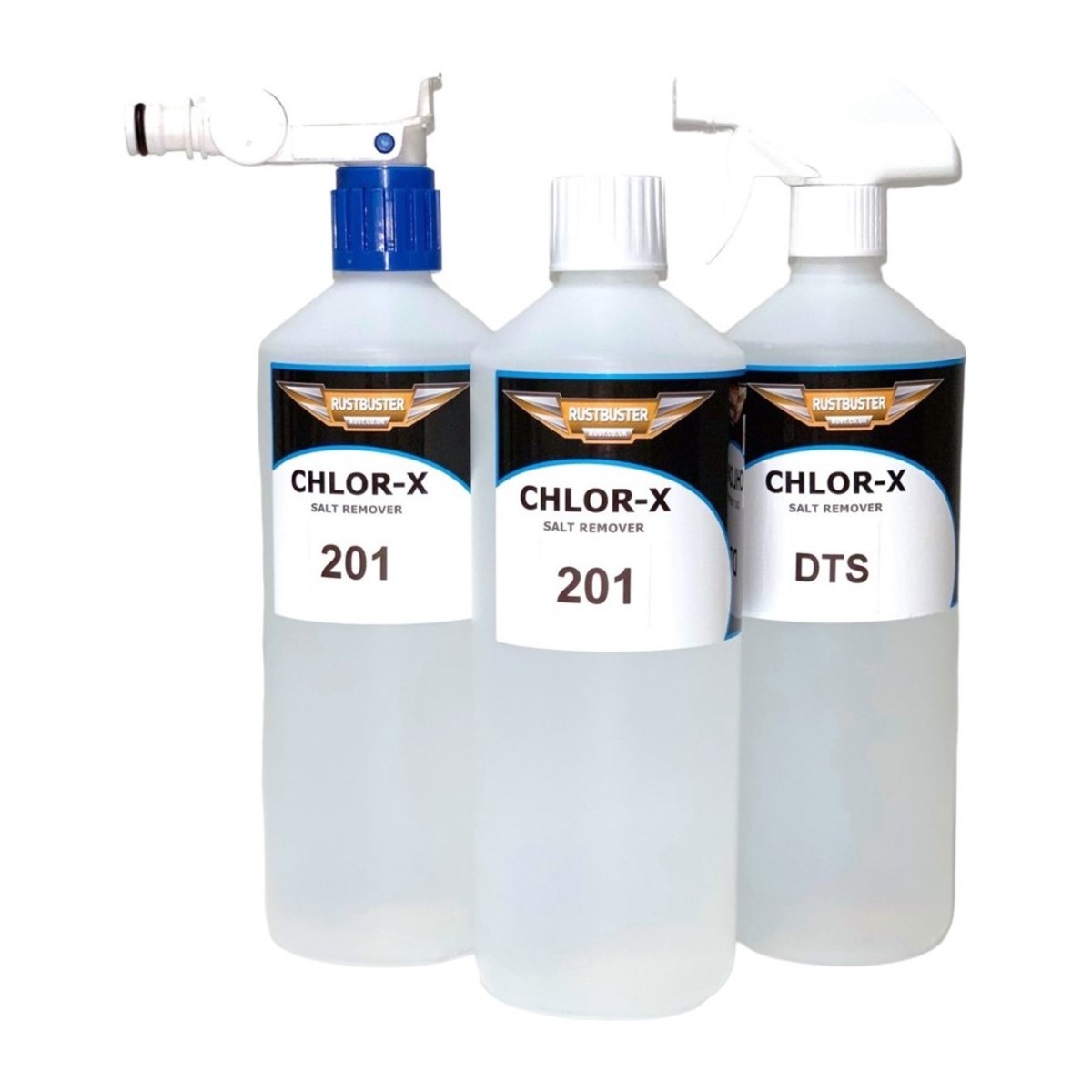
Rinse off with fresh water or Rustbuster Chlor-X, then let the surface dry completely.
Brush on T-Wash
Apply T-Wash evenly with a brush over the whole surface.
Watch for the colour change
After a short while the galvanising turns black or dark grey. That shows the reaction has worked. If any areas stay bright, they still have grease on them: clean those areas again with SP10 and re-treat with T-Wash.
Rinse again and let it dry
Wash the treated surface with fresh water or Chlor-X and allow it to dry fully before painting.
Prime and paint
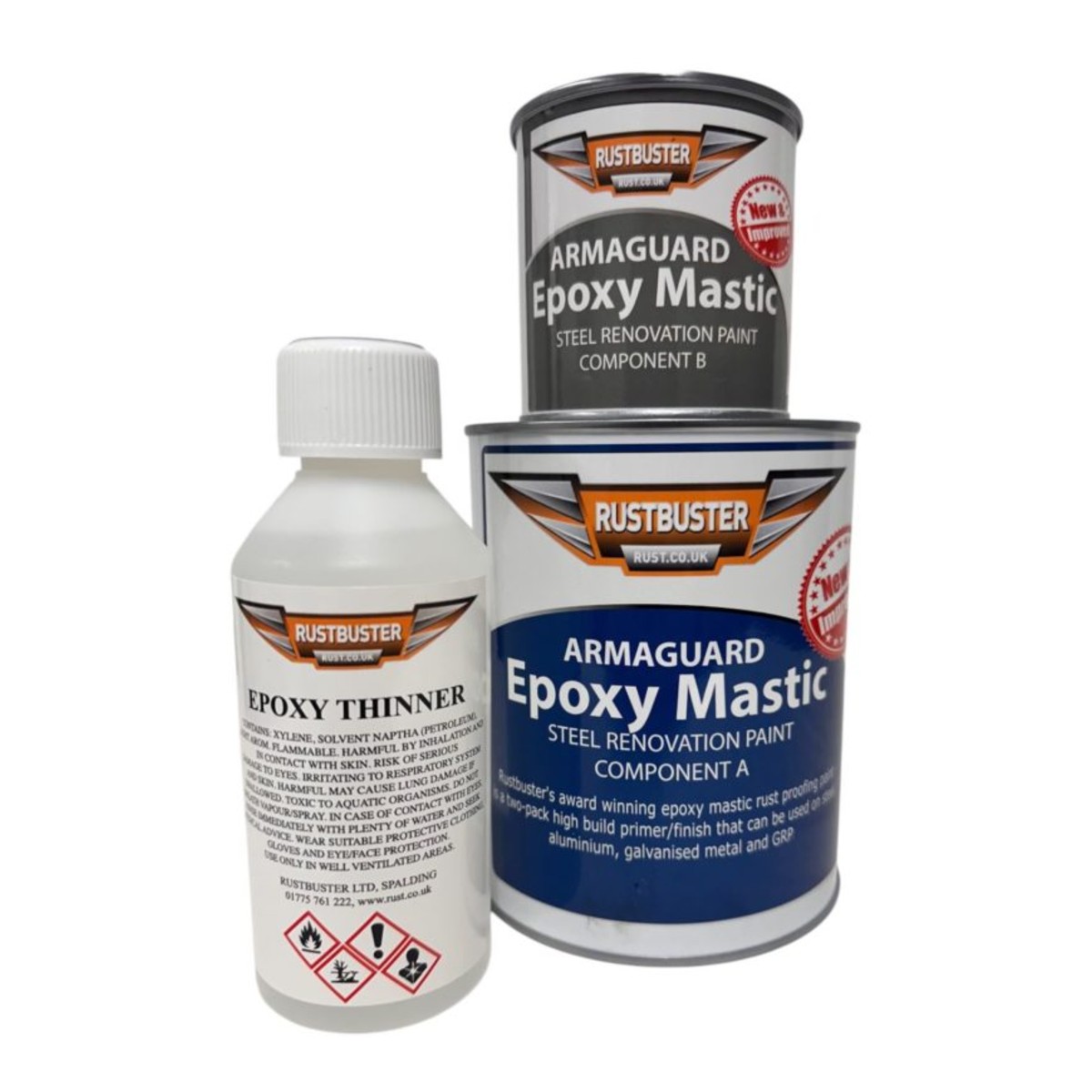
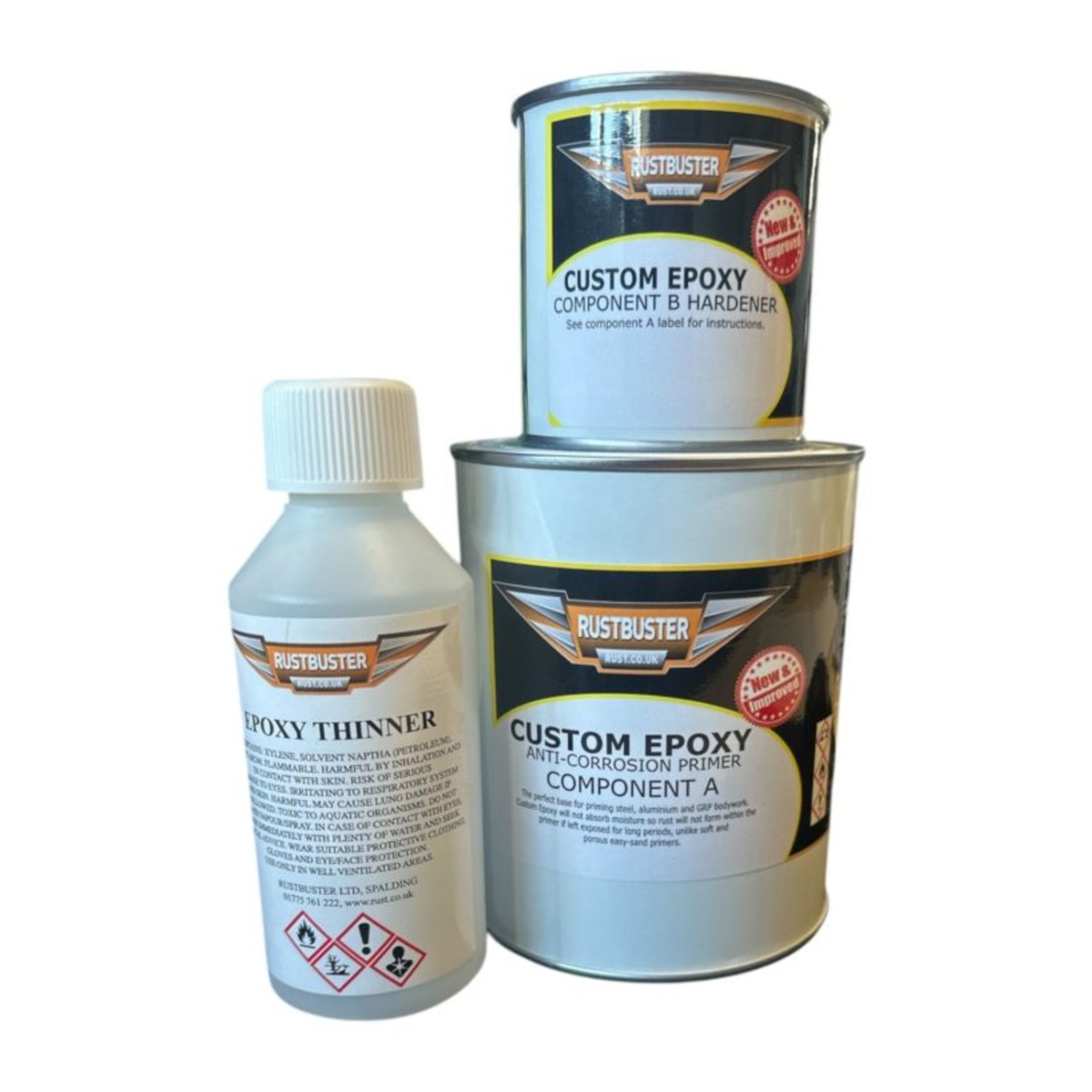
Now apply your paint system. Rustbuster Epoxy Mastic works as a primer and finish in one, or use Custom 421 Epoxy Primer under your chosen topcoat. Where the galvanising has been damaged, cut or welded, Zinc Rich Epoxy-Anode restores zinc protection to the bare steel (see our zinc rich primer guide).
Mistakes to avoid
- Painting straight onto new galvanising. It may look fine at first, but it will almost certainly flake.
- Skimping on degreasing. T-Wash can’t react through grease. If it doesn’t turn black, clean again.
- Skipping the rinse. Wash off the treatment and let the steel dry fully before painting.
- Sanding through the zinc. Don’t grind the galvanising off to get paint to stick; you’ll remove the protection you paid for.
Galvanised trailer? See our full guide to rustproofing trailers, horseboxes and farm machinery.
Gate already rusting, or covered in white powder? See our guide to fixing rust, white rust and peeling paint on galvanised gates and railings.
Painting galvanised steel FAQs
Why does paint peel off galvanised steel?
New galvanising carries a greasy film from the galvanising process and a passive layer of zinc hydroxides and carbonates. Both stop paint from gripping. Degreasing and treating with a mordant solution like T-Wash solves it.
What is a mordant solution?
A mordant solution such as Rustbuster T-Wash reacts with the surface of galvanised steel, neutralising the hydroxides and carbonates that stop paint sticking and leaving a surface that paint can key into.
What colour should T-Wash turn?
Black or dark grey. That shows the reaction has worked. Areas that stay bright still have grease on them: clean again with SP10 and re-apply T-Wash.
What paint should I use on galvanised steel?
After T-Wash, Rustbuster Epoxy Mastic works as a primer and finish in one, or use Custom 421 Epoxy Primer under your topcoat. For damaged or welded galvanising, Zinc Rich Epoxy-Anode restores zinc protection to the bare steel.
Do I need T-Wash on old galvanised steel?
Galvanising that has weathered for around two years or more has lost most of its greasy film naturally, so it’s easier to paint, but it still needs a thorough clean first. T-Wash is designed for new galvanised surfaces.
More rust guides: zinc rich epoxy primer, how to use Epoxy Mastic and surface preparation. Painting a trailer, gate or farm machinery and not sure what you need? Ask us.