Surface Preparation
Here’s the hard truth of any paint or rust-proofing job: around 99% of coating failures come down to poor surface preparation — not the coating itself. Get the prep right and almost anything will stick and last; get it wrong and the best paint in the world will blister and lift. This is how to prepare steel properly, in the right order, with the right products.
The four enemies of a lasting finish
Before any primer goes near the metal, all four of these have to be gone:
- Salt — the invisible contaminant that blisters paint from underneath.
- Grease and dirt — stops coatings keying to the metal.
- Loose, flaking paint — anything not firmly stuck will take your new coating with it.
- Loose surface rust — a coating is only as good as what it sits on.
Prepare in the right order
The sequence matters as much as the products — do it out of order and you can lock contamination into the steel.
Remove the salt — first, always
Salt has to come off before any blasting or mechanical cleaning — abrasives and wire brushes just drive salt crystals deeper into the steel. Wash it out with Chlor-X and SP10 pre-paint prep. See our guide to removing salts.
Degrease thoroughly
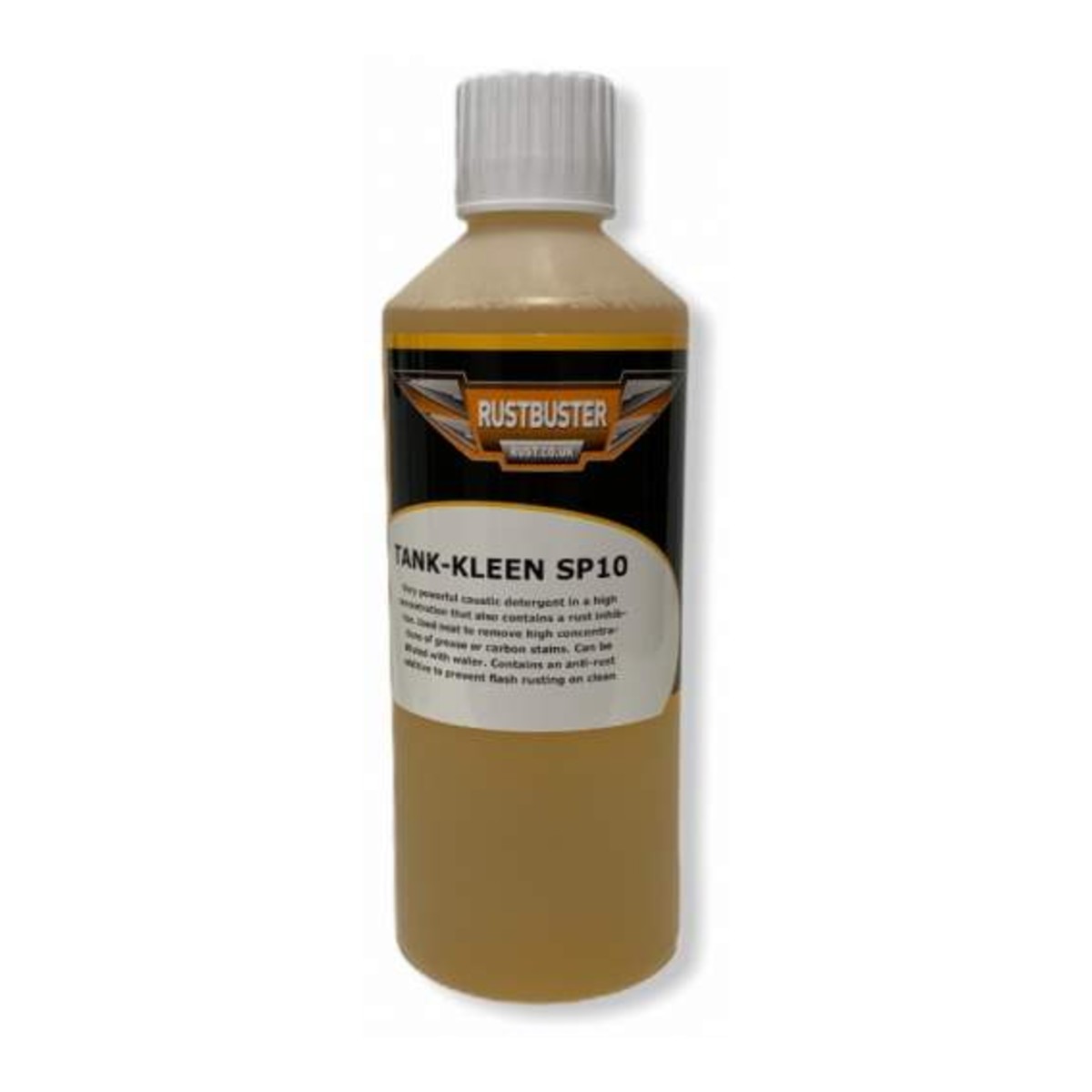
Next, degrease with a product that leaves no oily film behind — all Rustbuster degreasers are suitable, such as SP10 pre-paint prep or the green, caustic-free Safer Degreaser. Any grease left on the surface gets pushed deeper into the steel when you remove the rust.
Remove rust and old paint
Now tackle the rust and failed paint. Blast cleaning is the most effective, but it isn’t always practical in a restoration — access can be restricted and thin panels can distort. The alternatives are chemical (Safer Rust Remover, Phos-Kleen A, or convert what’s left with FE-123) or mechanical (wire brushing and bristle-blasting tools such as an MBX).
Reach the right standard, then prime
Get the surface to a recognised cleaning standard (see below), and don’t over-work it — over-brushing burnishes the steel and harms adhesion. Once it’s clean and dry, prime the same day so it can’t pick up fresh contamination.
The Rustbuster surface-prep toolkit
Everything you need to hit a proper long-life standard, from salt removal to phosphating:
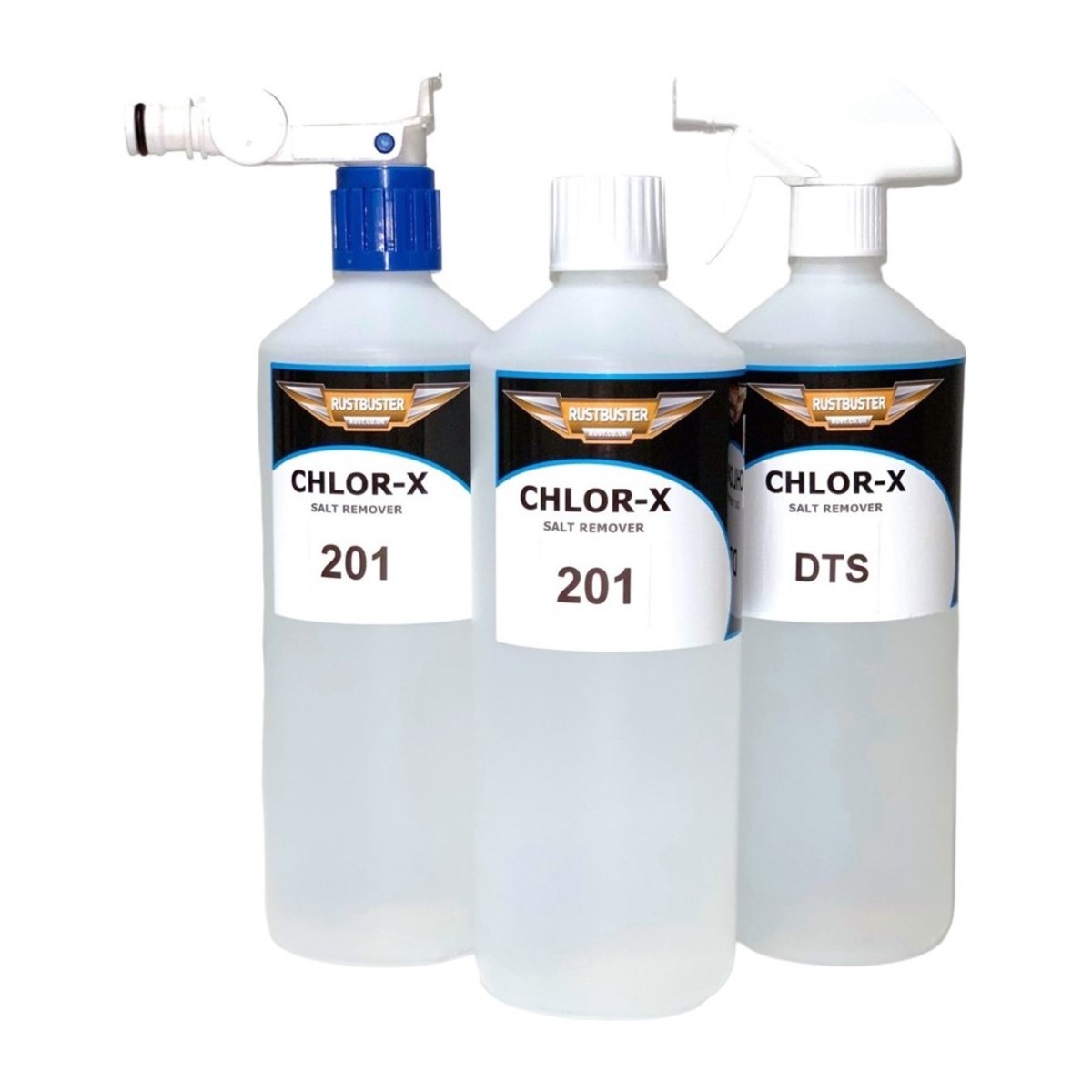
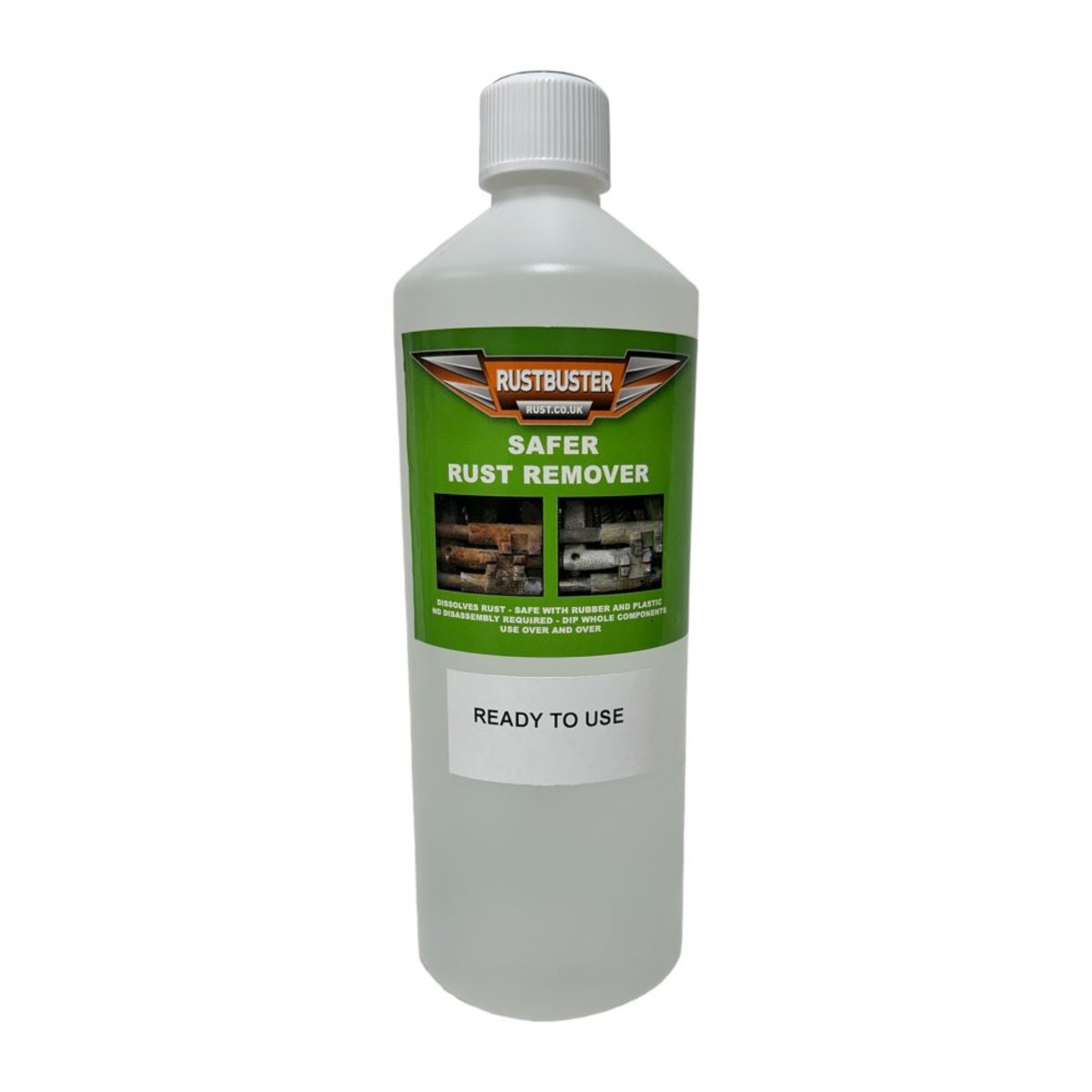
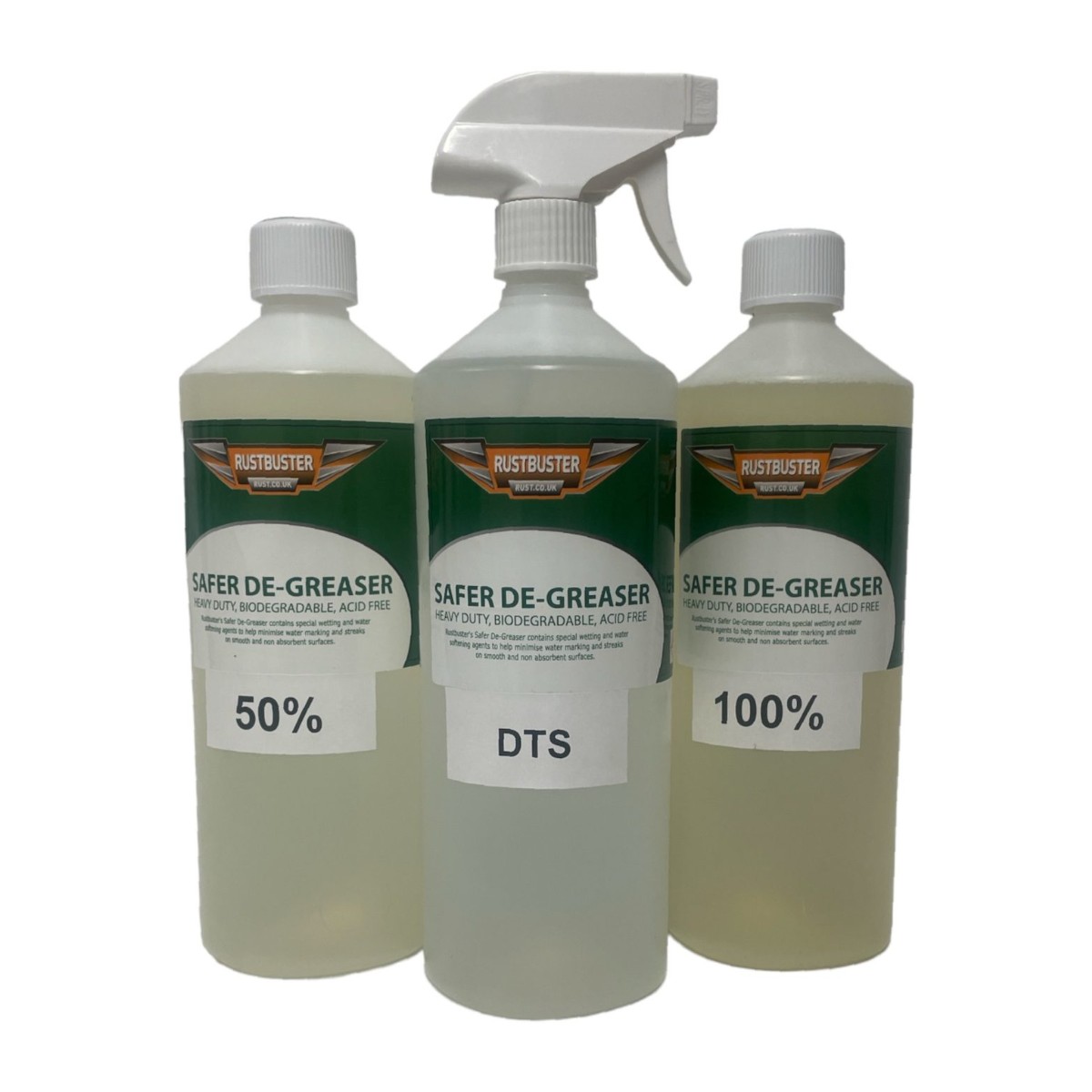
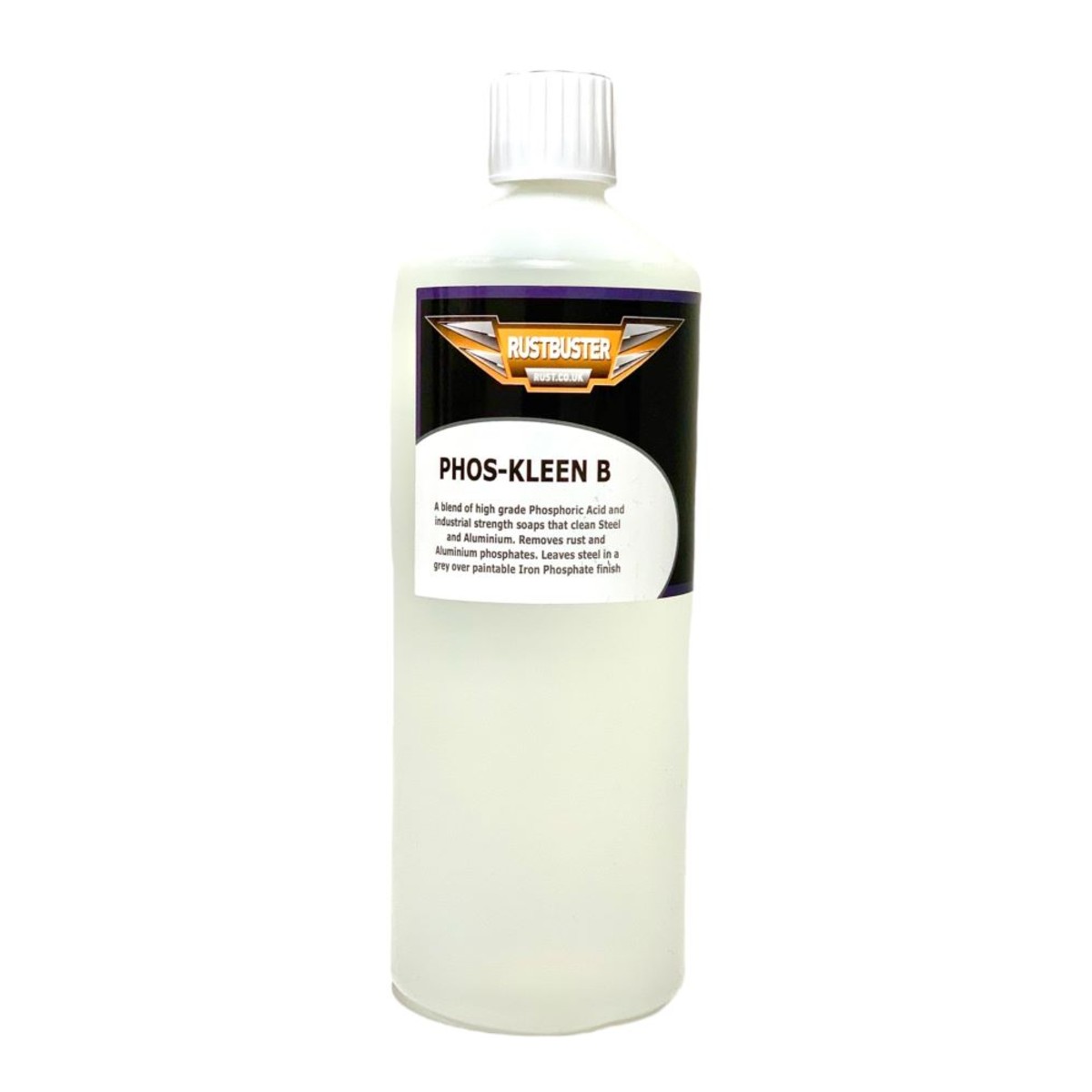
- Salt removers — Chlor-X
- Concentrated degreasers — SP10 pre-paint prep
- Green, acid-free rust remover — Safer Rust Remover
- Green, caustic-free degreaser — Safer Degreaser
- Chemical rust removal & phosphating — Phos-Kleen A and Phos-Kleen B
- Abrasives, tools & safety kit — see our surface preparation range
Cleaning standards explained (St2, St3 & SA 2.5)
Not sure how clean is clean enough? Wire brushing tidies an existing surface but doesn’t cut a fresh profile, so it’s worth knowing the recognised standards (BS 7079). First chip off any heavy rust and remove visible oil and grease, then work to one of these:
| Standard | Method | Result |
|---|---|---|
| St2 | Thorough hand & power tool cleaning (usually hand wire brushing) | Free of visible oil, grease, dirt, poorly-adhering scale, rust and old paint |
| St3 | Very thorough hand & power tool cleaning (usually mechanical wire brushing) | As St2, plus a bright metallic sheen |
| SA 2.5 | Blast cleaning — or an MBX bristle-blasting tool / die grinder | Near-white metal, no visible rust, with a key profile up to ~70µm |
Surface preparation FAQs
Why does surface preparation matter so much?
Because around 99% of coating failures trace back to poor preparation, not the paint itself. If salt, grease, loose paint or loose rust are left on the steel, the new coating simply won’t last — it will blister, peel or lift.
What order should I prepare a surface in?
Salt first (before any blasting or wire brushing, which drive it deeper), then degrease, then remove rust and old paint, then get to a recognised cleaning standard and prime the same day.
Do I have to blast-clean, or can I do it by hand?
You don’t have to blast. Blasting is very effective but often impractical on a car. Hand and power-tool cleaning to St2/St3, or an MBX bristle-blasting tool for a near-white SA 2.5 finish, both work well — just avoid over-brushing, which burnishes the metal.
What is burnishing and why is it bad?
Burnishing is over-brushing one area until it takes on a highly polished surface. That smooth, shiny finish gives the coating far less to grip, so it actually reduces adhesion — the opposite of what you want.
Prep is step one of the whole job. Next, see how to use FE-123 rust converter, use Phos-Kleen B, and our full 10 steps to complete rust protection.