How to Use FE-123 Rust Converter
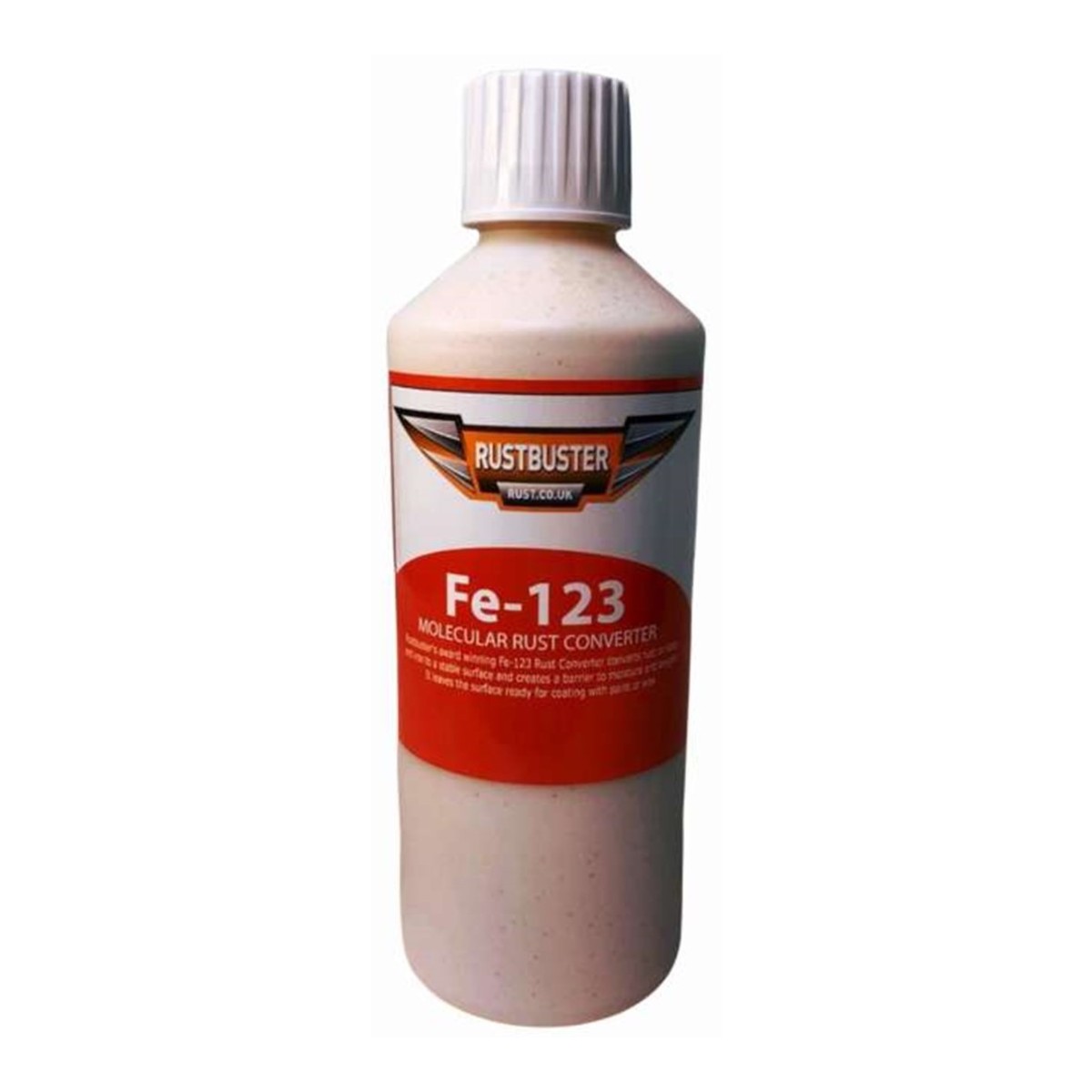
Rustbuster FE-123 Rust Converter is a water-based rust converter that turns active rust into a hard, stable, paintable black surface — no need to grind back to bright metal, and no neutralising afterwards. Used properly it’s one of the simplest ways to stop rust in its tracks. Here’s exactly how to get the best from it.
Still choosing a rust converter? See our best rust converter buyer’s guide: what to look for, test results and which size to buy.
How does FE-123 work?
FE-123 is brushed straight onto rusty steel — either ginger surface rust or pitted steel that’s been power-tool cleaned. On contact it reacts with the iron (Fe) in the surface, producing a hard black stabilised layer that’s ready to paint. Because it chemically converts the rust rather than sitting on top of it, there’s no need to neutralise or rinse it off. The key is a clean, grease-free surface and a light, single application.
How to apply FE-123, step by step
Shake it up
FE-123 settles in the bottle because of its zinc content, so give every bottle a good shake before use until it’s a smooth, creamy consistency. It’s water-based, so never let it freeze.
Prep the metal
Remove loose, flaking rust and power-tool-clean any pitted areas. Wash off all grease and dirt first — but not with white spirit, diesel or paraffin, as the oil in them stops the reaction. Never wire-brush a greasy surface either; it just drives grease into the rust.
Brush it on
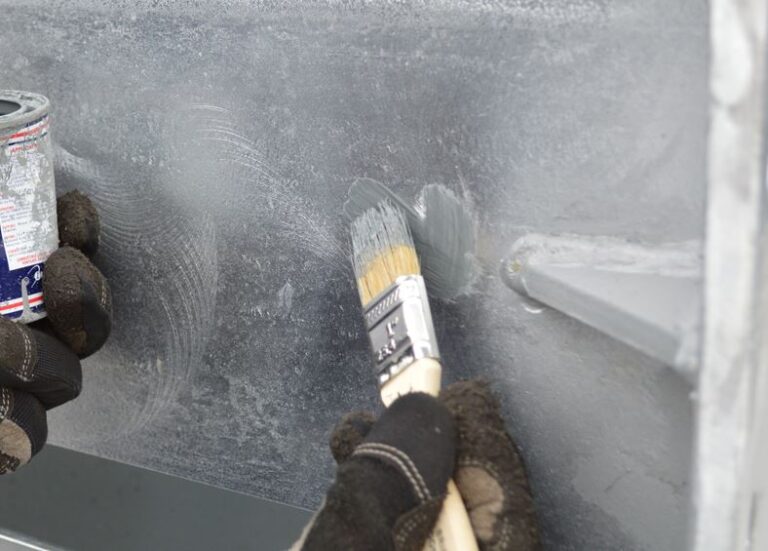
Brush FE-123 onto the bare, rusty steel — ginger surface rust or cleaned pitted steel. Use it sparingly: it’s a surface treatment, not a coating, so you only need enough to wet the rust.
Let it react
FE-123 reacts with the iron in the steel and cures to a hard, black, stabilised surface that’s ready to paint. It doesn’t need neutralising or rinsing. One coat is enough — only touch in a spot you’ve obviously missed.
Prime and paint
Once it’s dry, prime and paint over it with your chosen system — any Rustbuster primer works. Just not a zinc-rich coating (see below).
Common mistakes to avoid
- Don’t apply a second coat over an already-reacted area — with no fresh rust to react to, it just dries a toffee colour. The same happens over paint.
- Don’t apply it to painted surfaces — spot-prime small rust breaks by brush instead; there’s no need to convert sound paint.
- Don’t degrease with white spirit, diesel or paraffin — their oils stop FE-123 reacting.
- Don’t wire-brush a dirty, greasy surface — it pushes grease into the rust and blocks the reaction.
- Don’t lay it on thick — it’s a surface treatment, so use only enough to react with the steel.
- Don’t topcoat with a zinc-rich coating — the reaction and latex barrier cut the electrical contact the zinc particles need.
What to do after converting
FE-123 stabilises the rust, but it isn’t your final finish — always seal it. Prime and topcoat with your chosen paint system, and for underbody or cavity areas, protect everything with a wax. See our 10 steps to complete rust protection for the full process, and our lanolin rust-proofing guide for long-term underbody protection.
FE-123 rust converter FAQs
Do I need to neutralise FE-123 after applying it?
No. FE-123 reacts with the iron in the steel to form a stable black surface and doesn’t need neutralising or washing off. Once it has reacted and dried, you prime and paint straight over it.
Can I apply FE-123 over paint?
No — it needs bare, rusty steel to react with. On a painted panel, spot-prime any small rust breaks by brush instead. Applied over paint (or an already-reacted coat) it simply dries a toffee colour.
How many coats of FE-123 do I need?
One. A second coat over an already-reacted surface has nothing to react with, so use just enough to wet the rust and only touch in a spot you have obviously missed.
What can I paint over FE-123?
Any standard primer and paint system, including any Rustbuster primer. The one exception is zinc-rich coatings — don’t use them over FE-123, as the reaction breaks the electrical contact the zinc needs.
Ready to stop the rot? Grab your bottle of the rust converter trusted by restorers and bodyshops across Ireland.