How to Use Rustbuster Epoxy Mastic
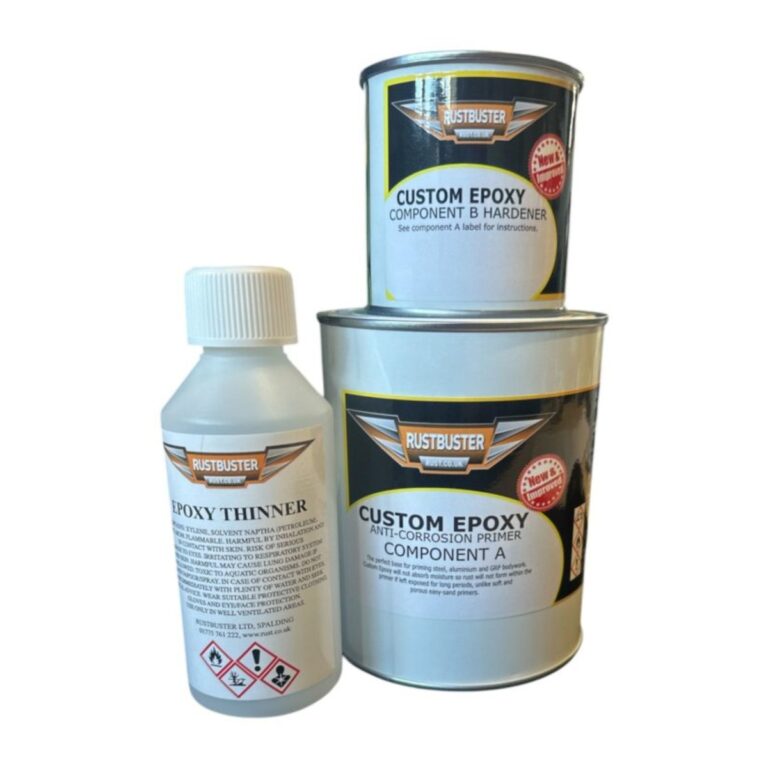
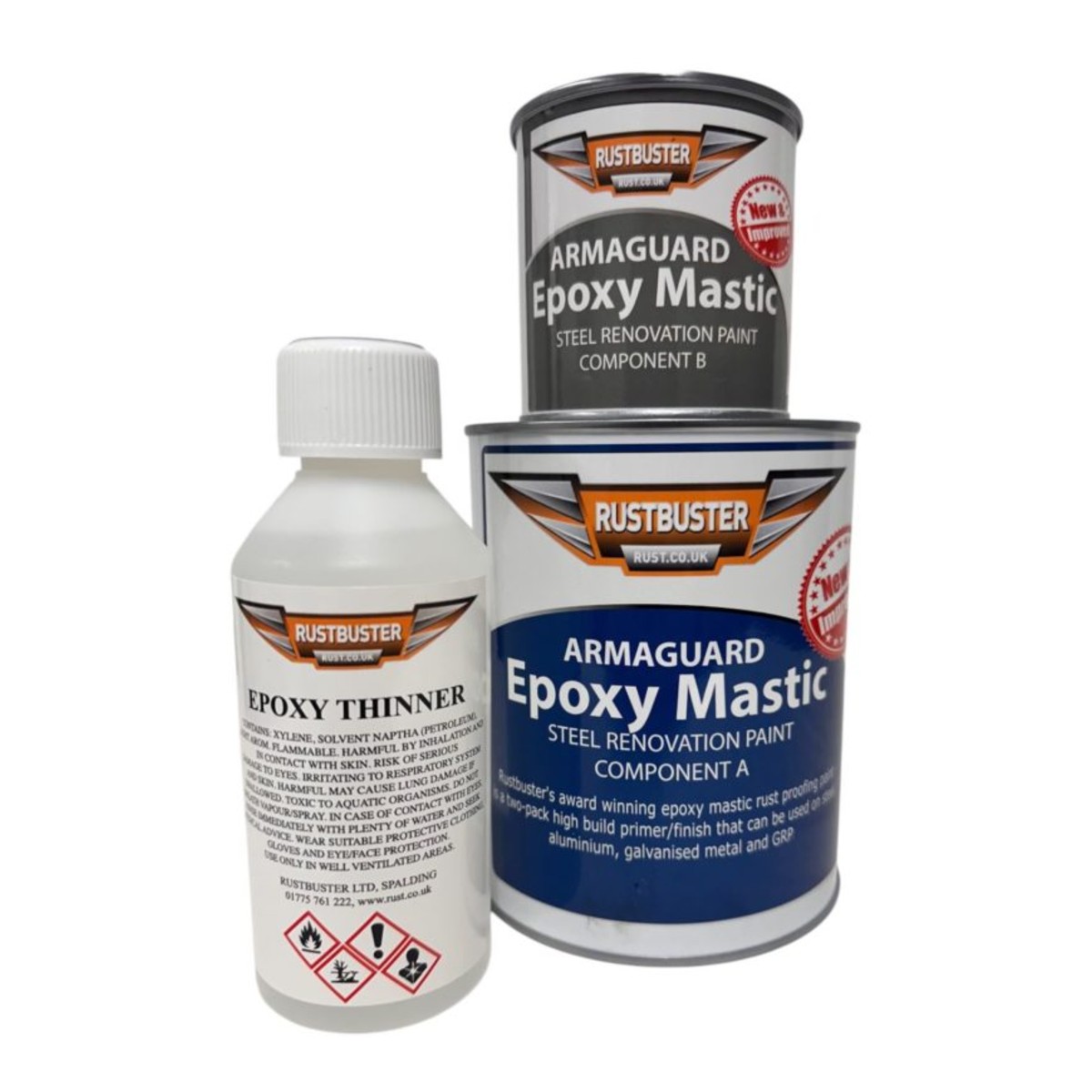
For years, EM121 was one of the most popular rust-proofing paints Rustbuster made — a firm favourite of restorers for turning rusty, pitted steel back into something tough and protected. Its replacement, Armaguard Epoxy Mastic, carries that reputation forward: the same iron-hard-yet-flexible protection, now improved and reformulated. Here’s what Epoxy Mastic is, why it replaced 121, and how to use it.
What is Epoxy Mastic?
Epoxy Mastic is a high-build, high-solids two-pack epoxy (a base and a hardener) for renovating and protecting rusting, pitted steel in severe environments. Its stand-out quality is adhesion: it grips wire-brush-cleaned steel and still delivers the same exceptional performance as coatings applied over blast-cleaned steel — so there’s no need for a blast cabinet. The finish is as hard as iron but flexes with the steel, so it won’t flake, peel or blister — even under water — and it resists oils, salt water and mechanical damage. It contains no harmful isocyanates, and shrugs off heat up to 200°C before discolouring and 350°C before blistering.
How does it work?
Epoxy Mastic is built from nanoscale corrosion-protective pigments carried in short-chain molecules with very low surface tension. That lets the paint flow right down into every pit and trough on the steel’s surface, forming a tough penetrating bond — the best kind of grip a coating can get. The high-build epoxy then sets a super-strong barrier over those pigments as they hug the metal, giving up to six times the penetration and adhesion of single-pack paints. Ordinary single-pack paints use larger pigments in long-chain molecules, so they tend to lie over the pits rather than sinking into them.
What’s new since EM121
When the cost of 121’s key ingredients climbed — some by as much as 200% — Rustbuster chose to re-engineer the paint rather than water it down. The result keeps 121’s legendary performance and adds some real practical wins:
| Spec | Epoxy Mastic |
|---|---|
| Type | High-build, high-solids two-pack epoxy (base + hardener) |
| Mix ratio | 3:1 (base to hardener) |
| Cures down to | −10°C |
| Surface prep | Wire-brushed steel gives blast-clean performance |
| Heat resistance | 200°C before discolouring, 350°C before blistering |
| Isocyanates | None |
How to use Epoxy Mastic
Prepare the steel
Remove salt, grease and loose rust first. The great news is you don’t have to blast — Epoxy Mastic grips wire-brush-cleaned steel and still performs like a coating over blast-cleaned metal. See our surface preparation and salt removal guides.
Mix it 3:1
Stir the base, then mix three parts base to one part hardener. Only mix what you can use while it’s workable, and stir thoroughly so it cures evenly.
Apply a high build
Brush, roller or spray on a good, high-build coat. The low-surface-tension formula flows down into every pit and trough, so work it into the surface rather than laying it on thin. Two coats give the best protection.
Overcoat and finish
Higher solids mean faster overcoating than the old formula — recoat within the window, and it even cures in the cold, down to −10°C. Leave it as your tough protective layer, or top-coat it; body filler can go over it too.
Sizes and colours
Epoxy Mastic comes in 1.25L and 2.25L tins plus 5L trade sizes, in black and a growing range of greys and colours. Browse the full Epoxy Mastic range to pick your size and shade.
Painting a trailer or farm machinery? See our step-by-step guide to rustproofing trailers, horseboxes and farm machinery with Epoxy Mastic.
Epoxy Mastic FAQs
What happened to Epoxy Mastic EM121?
EM121 was a firm favourite for years, but the cost of its key ingredients rose sharply — by as much as 200%. Rather than cut the quality, Rustbuster developed a new-generation Epoxy Mastic that matches and improves on it. After extensive testing it officially replaced EM121 in 2025.
How is the new Epoxy Mastic better than 121?
It keeps everything people loved about 121 — the iron-hard-yet-flexible finish, wire-brush adhesion and corrosion protection — and adds a simpler 3:1 mix, higher solids, faster overcoating, cold curing down to −10°C, and a growing choice of colours.
Do I have to blast-clean the steel first?
No. Epoxy Mastic is designed to grip wire-brush-cleaned steel and still perform like a coating applied over blast-cleaned metal, which makes it ideal for home and restoration use. Just get the surface clean, dry and free of salt and loose rust.
Is Epoxy Mastic safe to use?
It contains no harmful isocyanates, but it is still a two-pack epoxy — wear gloves and eye protection, and use a suitable respirator when spraying.
Epoxy Mastic is the barrier-coat stage of the job. For priming bodywork see our Custom 421 primer guide, and for the full process our 10 steps to complete rust protection.