How to Seal a Fuel Tank with Rustbuster Slosh
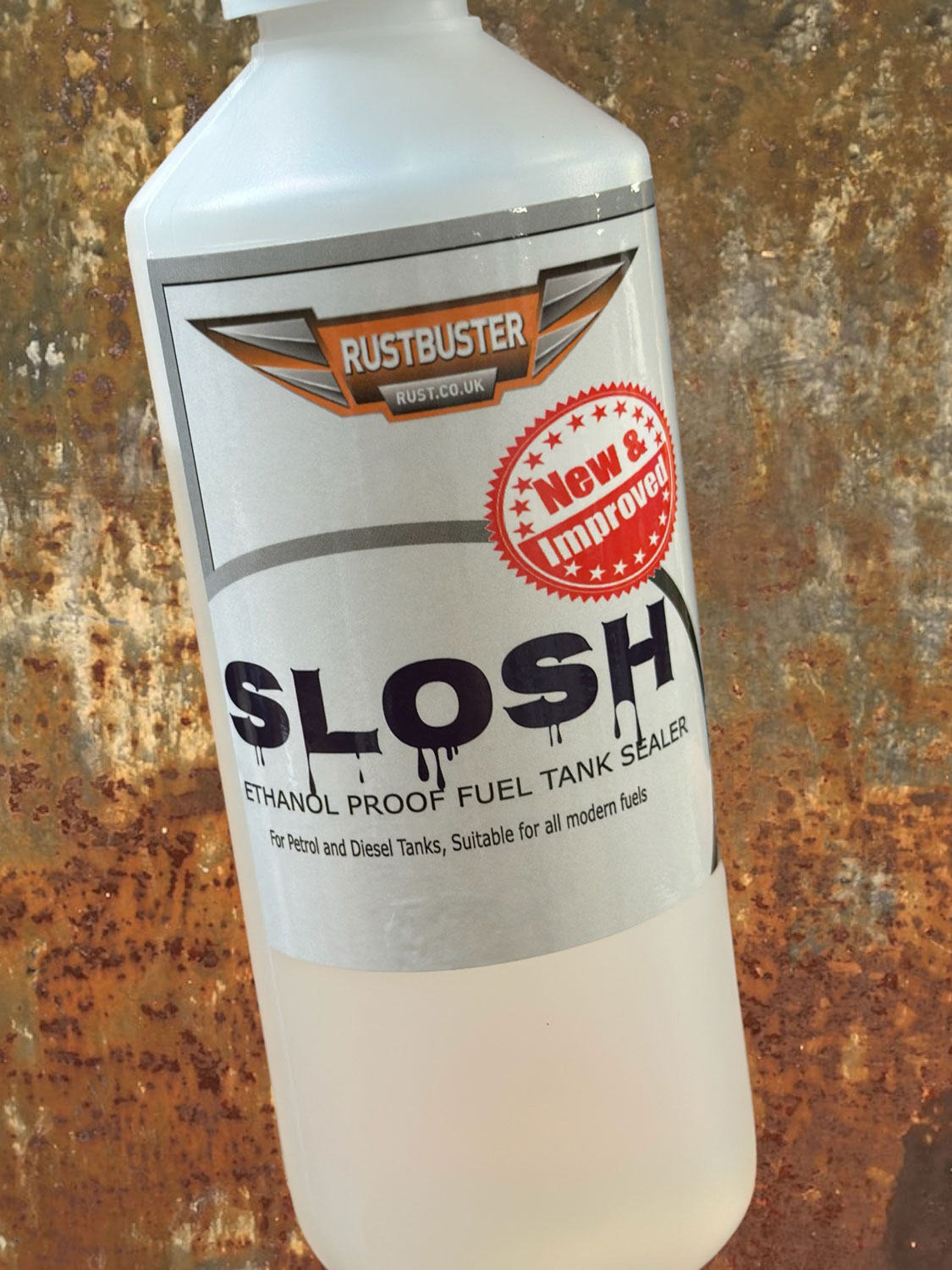
A rusty or ethanol-damaged fuel tank is one of the most common headaches on classic cars and motorcycles — pinholes and weeping seams that leak, and rust flakes that break loose and block the fuel tap or carburettor. Rustbuster Slosh fixes it from the inside out: clean the tank, seal it, and it’s protected against rust and modern ethanol fuels for good. Here’s the full process, start to finish.
Why seal a fuel tank?
Today’s ethanol-blended petrol (E5 and E10) is hard on older tank interiors, drawing in moisture and accelerating rust until you get pinholes, weeping seams and leaks — plus loose rust that clogs everything downstream. Slosh lines the inside of the tank with a tough, ethanol-proof coating that stops the rust and seals pinholes up to 500µm along with weeping seams. It works on steel, aluminium and glass-fibre (GRP) tanks, and it has been tested with bio-ethanol up to E85 without breaking down.
What you’ll need
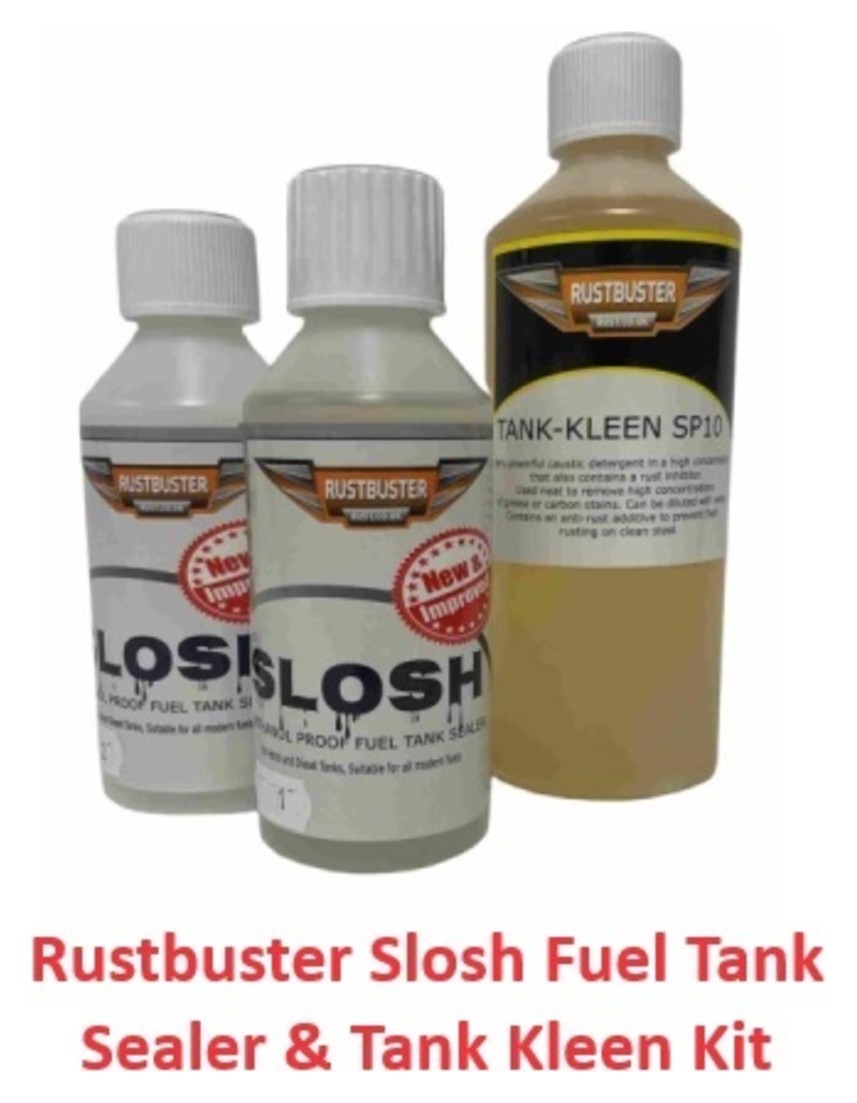
Everything to clean and seal a tank comes in the Slosh Fuel Tank Sealer & Tank-Kleen Kit: the Slosh sealer itself, plus Tank-Kleen caustic degreaser to strip out grease, tar and old fuel first. You’ll also want a handful of nuts, washers or clean sharp stones as an abrasive, some gloves, and — for any larger holes — a petrol-resistant epoxy repair paste such as PC-7.
How to seal a fuel tank, step by step
Strip the tank
Remove all plugs, fuel-gauge sender units and filters, and inspect the inside for loose rust and old fuel deposits. This matters: Slosh will seal filters and senders in place if you leave them in.
De-rust and clean with Tank-Kleen
Pour Tank-Kleen into the tank, drop in a handful of nuts, washers or clean sharp stones as an abrasive, and slosh it from side to side to scrub away rust and contamination. Repeat until it comes out clean, then power-wash the inside.
Dry it completely
Leave the tank to dry, or force-dry it by blowing air through. It must be bone dry before sealing — any moisture or solvent left inside sets off a foaming chemical reaction that wrecks the coating.
Fix any larger holes
Slosh seals pinholes up to 500µm and weeping seams, but anything bigger needs repairing first. Fill larger holes or welds from the outside of the tank with a petrol-resistant epoxy repair paste (such as PC-7) before you seal.
Coat the inside
Put on gloves and temporarily block off the drain or sender hole. Pour the Slosh sealer in and rotate the tank from side to side and upside down until every internal surface is coated.
Rest, then recoat
Let it tack off — around 20 minutes, but always follow the timing in your kit’s instructions — then repeat to build the coating up. (On motorcycle tanks, Rustbuster’s method is a second application around two hours later.)
Drain the excess
Remove the temporary bung and drain the leftover sealer back into the tin through the drain plug — never the filler neck, which causes pooling. Mind the overcoating window: once it has passed, the coating won’t take another coat.
Let it cure
The tank can be used after 24 hours, but a full 5-day cure is strongly recommended for the toughest, most fuel-resistant finish.
Refit everything
Once cured, refit the sender units, filters and plugs. Let any leftover sealer set solid in the tin, then dispose of it as dry waste.
Important warnings
- The tank must be bone dry — any moisture or solvent left inside triggers a foaming reaction that ruins the seal.
- Remove all filters and sender units first — Slosh will seal them permanently in place.
- Don’t let sealer block breather pipes.
- Drain excess sealer through the drain plug, never the filler neck.
- Not guaranteed on plastic tanks — Slosh is for steel, aluminium and GRP.
- Follow the instructions supplied with your kit to the letter — timings and quantities matter.
Resealing a tank that has been sealed before? The old, failing sealer has to come out first. See our guide to removing old tank sealer with R10/B1 resin remover.
Fuel tank sealing FAQs
Will Slosh cope with ethanol (E5/E10) fuel?
Yes. Slosh has been tested with bio-ethanol dilutions of up to 85% (E85) with no breakdown of the coating, so it easily handles today’s E5 and E10 pump fuels — a big reason classic owners seal their tanks.
What tanks can I use it on?
Steel, aluminium and glass-fibre (GRP) petrol and diesel tanks. Slosh cannot be guaranteed on plastic tanks.
How big a hole will Slosh seal?
Pinholes up to 500µm across, plus weeping seams. Larger holes should be repaired from the outside with a petrol-resistant epoxy paste (such as PC-7) before you seal the inside.
How long before I can use the tank?
You can refit and run the tank after 24 hours, but leaving it a full 5 days gives the toughest, most fuel-resistant finish.
Sealing the tank is the finishing touch on a fuel system you can trust. While you’re protecting a classic, it’s also worth reading our guide to lead replacement & E10 protection.