How to Use Rustbuster Custom 421 Epoxy Primer
Prime it once, prime it right. Rustbuster Custom 421 is a non-porous, pure epoxy body primer built for real-world restorations — the ones that don’t happen in a temperature-controlled bodyshop. It seals bare metal so well that you can leave it exposed for weeks without it soaking up moisture. Here’s why that matters, and how to use it.
Why an epoxy primer?
Professional body shops can prepare, prime and finish in a controlled environment. In a home garage or a long restoration, the weather — and your primer’s ability to cope with it — becomes critical. Ordinary easy-sand body-shop primers are porous: if they aren’t painted within a set time in controlled conditions, they absorb moisture, and that quietly leads to corrosion and micro-blisters under your paint.
Custom 421 solves that. It’s a non-porous, pure epoxy primer that can be left exposed during the restoration without absorbing moisture — greatly reducing the risk of micro-blisters and corrosion, and giving you the perfect base on steel, aluminium and GRP.
How to use Custom 421
Prep to bare, clean metal
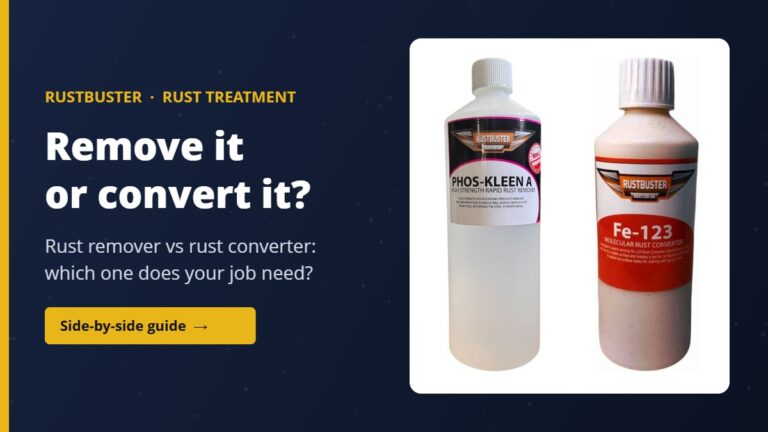
Custom 421 goes onto clean, dry, bare steel, aluminium or GRP. Get the surface right first — see our surface preparation guide and, where there’s rust, our FE-123 rust converter guide.
Mix the two packs
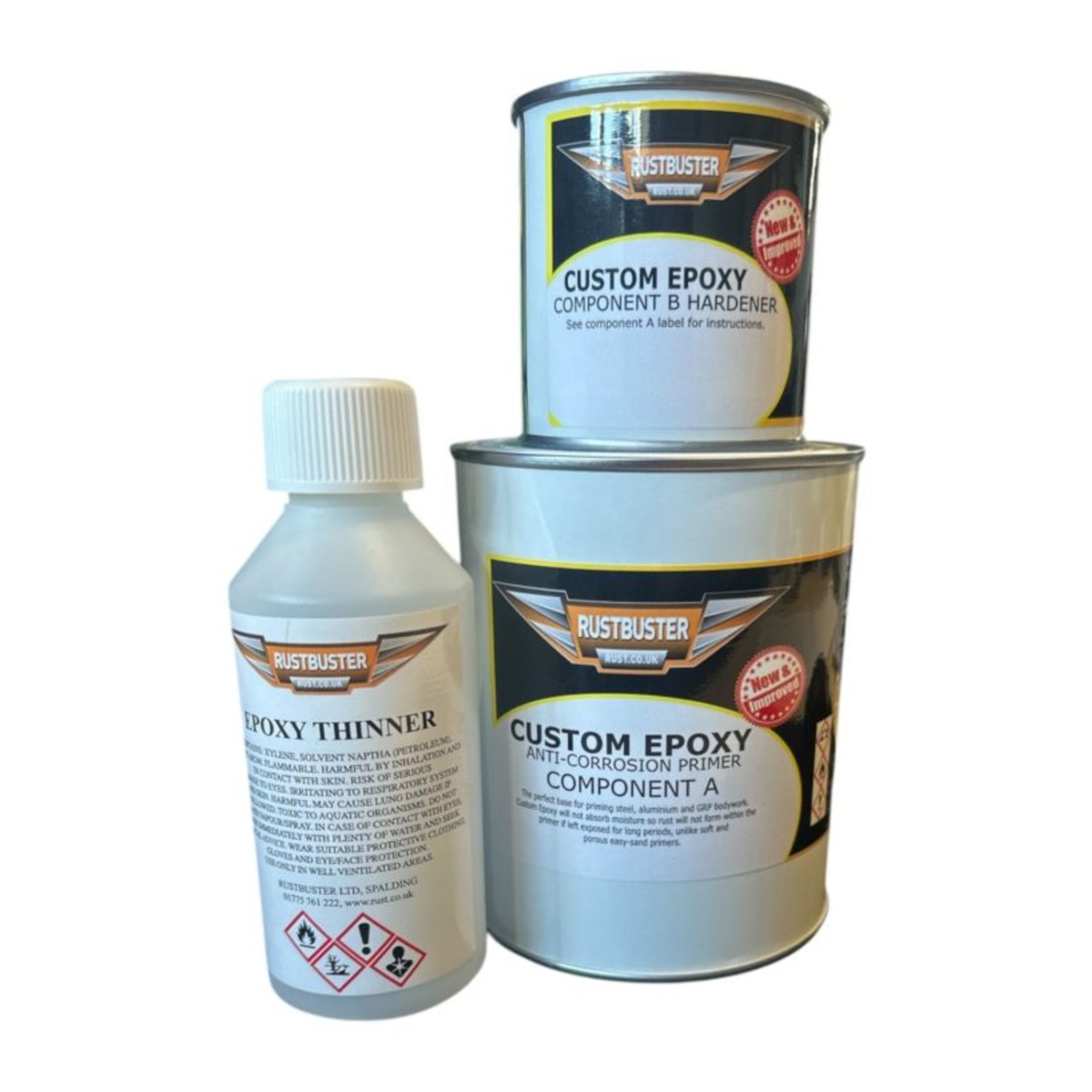
Combine the 800ml Part A with the 200ml Part B and thin with the supplied 250ml of epoxy thinner. One kit covers around 10 square metres.
Spray on your epoxy base
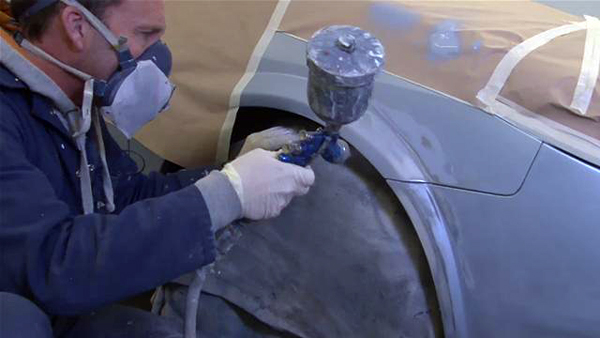
Apply an even base coat. Custom 421 contains no harmful isocyanates, but you must still wear an A2 – P2/3 respirator mask when spraying (see the safety note below).
Leave it exposed — that’s the point
Unlike porous easy-sand primers, Custom 421 won’t drink in moisture, so it can stay on the panel through the rest of your restoration without risking corrosion or micro-blisters. No rush to topcoat.
Filler, sand and topcoat
Body filler can go on before or after priming. When you’re ready to paint, key the surface with a light P320 sand and finish with single-pack cellulose or a two-pack topcoat.
Restoring a chassis? See our stage-by-stage chassis restoration guide.
Custom 421 FAQs
Why use an epoxy primer instead of a normal one?
Ordinary easy-sand body-shop primers are porous. If they aren’t topcoated quickly in controlled conditions, they absorb moisture, which leads to corrosion and micro-blisters. Custom 421 is a non-porous pure epoxy, so it seals the metal and can be left exposed.
Can I leave Custom 421 exposed during a long restoration?
Yes — that’s exactly what it’s designed for. Because it doesn’t absorb moisture, you can prime now and topcoat weeks or months later without the corrosion risk you’d get from a porous primer.
What can I prime with Custom 421, and what goes over it?
It primes steel, aluminium and GRP. Once lightly sanded with P320, you can overcoat it with single-pack cellulose or two-pack finishes, and body filler can be applied before or after priming.
Is Custom 421 safe to spray?
It contains no harmful isocyanates, but it is still a two-pack epoxy — you must wear an A2 – P2/3 respirator mask when spraying, along with the usual eye and skin protection.
Custom 421 is the primer stage of the job. For the full picture, see our surface preparation guide and 10 steps to complete rust protection.