
E10 Petrol Problems for Older Engines (and How to Protect Yours)
E10 petrol — standard unleaded containing up to 10% ethanol — is now the normal grade at pumps across Ireland. For most cars built in the last decade or so it’s no problem. But for older and classic engines, that extra ethanol can cause real, expensive damage. Here’s exactly what E10 does to an older engine, which vehicles are at risk, and how to protect yours.
What is E10 petrol?
Ireland moved from E5 (up to 5% ethanol) to E10 (up to 10%) as its standard petrol grade, as part of the Government’s climate action plan to cut transport emissions — the same move already made across the UK and more than fifteen other European countries, plus the US and Australia. It’s good news for the environment and fine for modern engines, which are built for it. The catch is everything built before those engines. The old E5 grade is still available as “super unleaded”, which older cars can use — though it still contains up to 5% ethanol.
Why is E10 a problem for older engines?
Ethanol is the issue, and the more of it there is, the worse it gets. Here’s what it does inside an engine and fuel system that wasn’t designed for it:
- It pulls in water. Ethanol is hygroscopic — it draws moisture out of the air, causing condensation in tanks, fuel lines and carburettor float bowls, swollen paper filters, and eventually phase separation, where the ethanol and water sink to the bottom of the tank. That separated fuel reaching the engine can do serious, sometimes irreparable damage.
- It corrodes metal. Ethanol promotes rust wherever air meets metal, attacking steel and alloy tanks, carburettors and fuel lines from the inside.
- It rots rubber and plastic. As a solvent, ethanol perishes rubber hoses, cork gaskets, plastic and fibreglass tank linings far faster than old E5 ever did.
- It saps power and economy. Ethanol carries about a third less energy than petrol, so it lowers both your octane rating and your mileage.
- It goes stale fast. Ethanol-blended petrol has a much shorter shelf life and degrades quickly — a real problem for classics that sit between drives.
- It can cause overheating. Modern fuel’s different volatility is behind the overheating-in-traffic and hot-restart problems many classic owners notice.
Is my vehicle at risk?
Around 95% of petrol cars on the road can run E10 — but that still leaves a lot that can’t, and Ireland is full of cherished classics. As a rough guide:
| Vehicle | E10 status |
|---|---|
| Built before 2002 | Not recommended — treat every tank, or run E5 super unleaded |
| 2002–2011 | Grey area — many aren’t warranted for E10; check, and treat to be safe |
| 2011 onwards | Almost all fully E10-compatible |
| Motorcycles pre-2011 | Often not compatible — many Honda, Yamaha and Suzuki models |
| Mowers, chainsaws, generators | Especially vulnerable — always treat the fuel |
It’s not just cars: ethanol also hits small 2-stroke and 4-stroke equipment hard — lawnmowers, chainsaws, strimmers and generators — and many motorcycles and scooters built before 2011. See our small engine and garden machinery guide.
How to protect your engine from E10
The good news: you don’t have to give up E10 or hunt down ethanol-free fuel. The answer is to treat every tankful with the right additive for your engine.
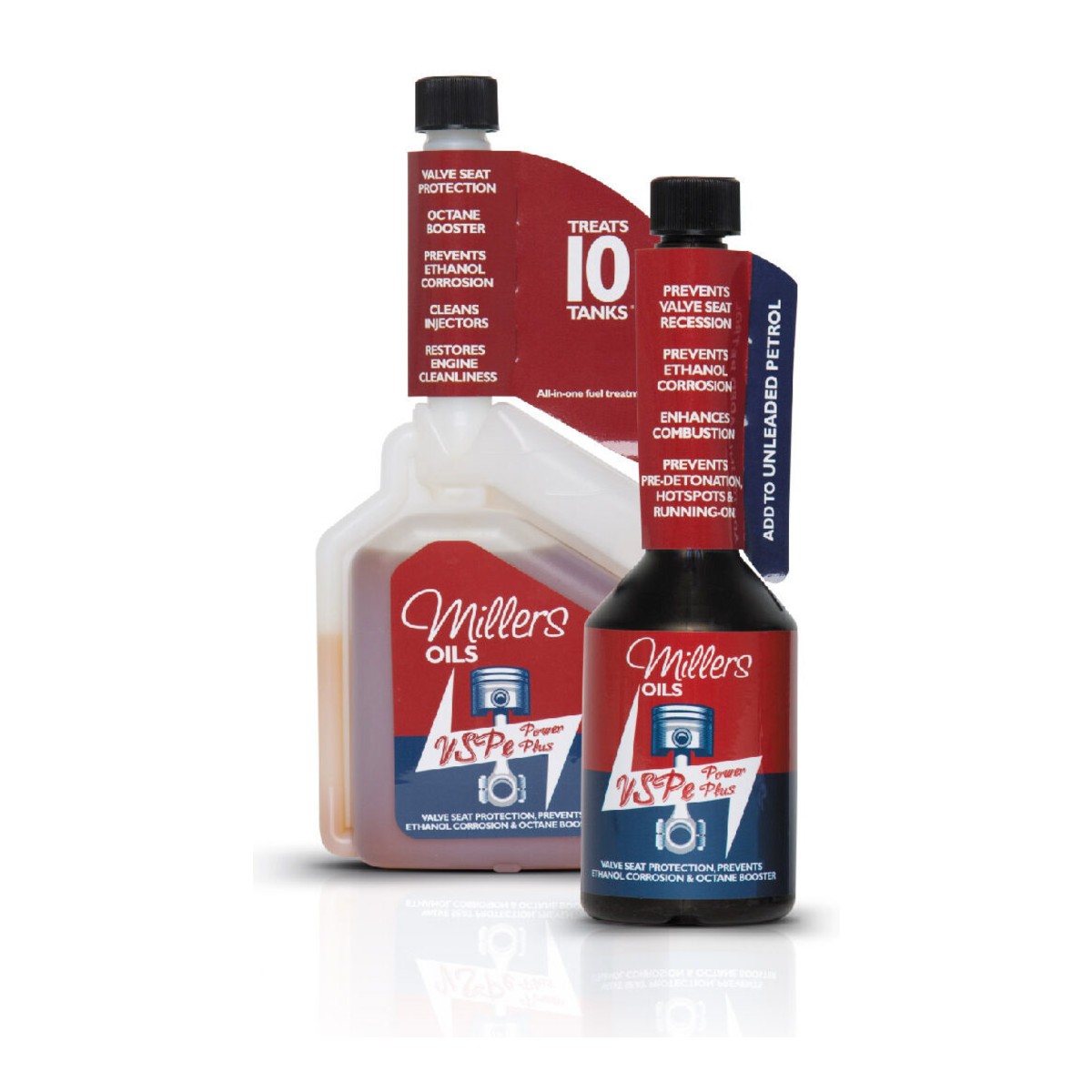
For classics & older engines: VSPe Power Plus
This is the one to reach for. VSPe Power Plus is a 3-in-1 treatment built for exactly this problem: it neutralises ethanol’s corrosive, water-attracting effects, adds the valve-seat (lead-replacement) protection older engines need, and restores the octane E10 takes away. One dose per tankful — the single best defence for any vintage or classic petrol engine.
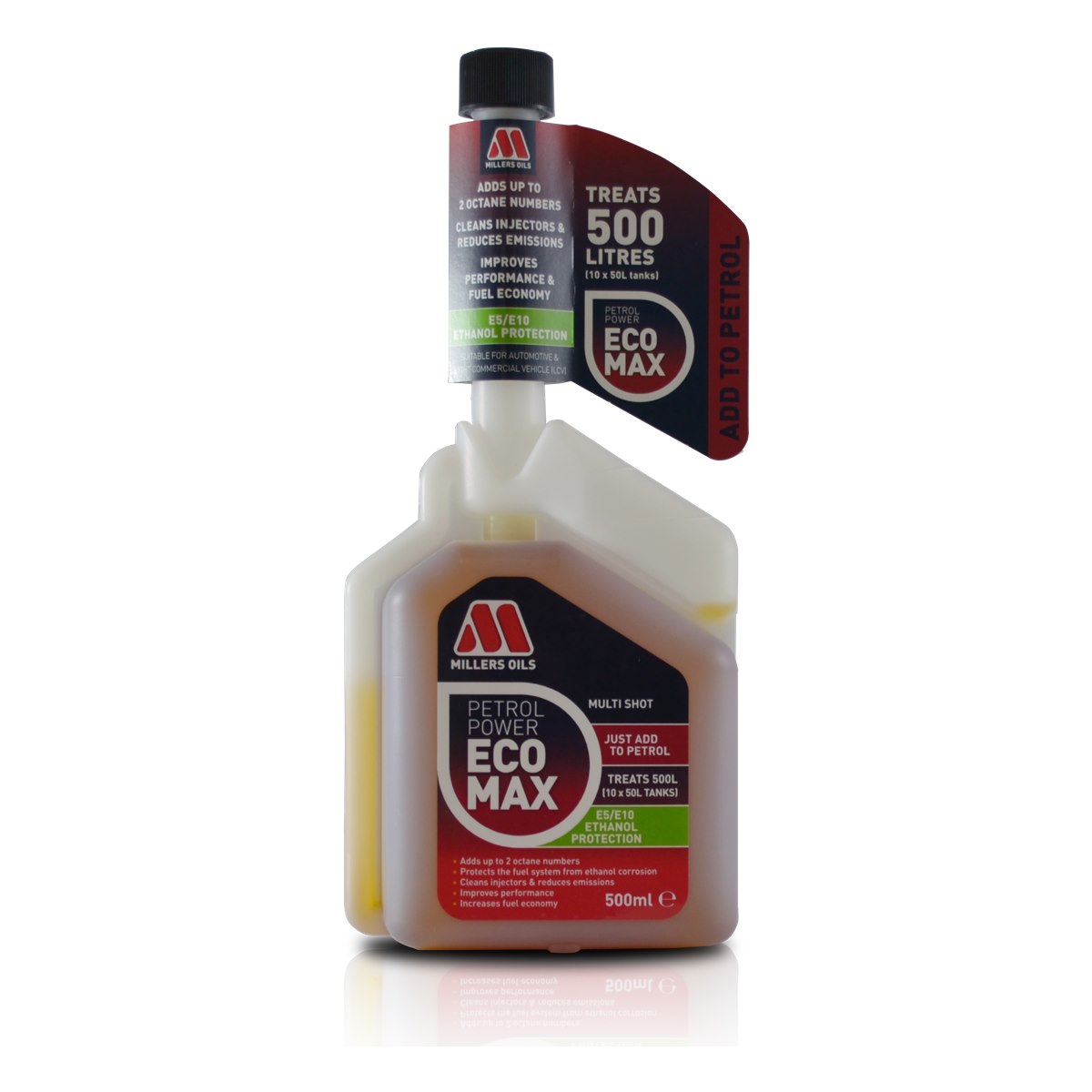
For modern petrol engines: Petrol Power EcoMax
Newer engines don’t need lead replacement, but they still benefit from ethanol protection and a clean fuel system. Petrol Power EcoMax guards against E10, cleans injectors and helps restore performance and economy — the everyday choice for post-2000 cars.
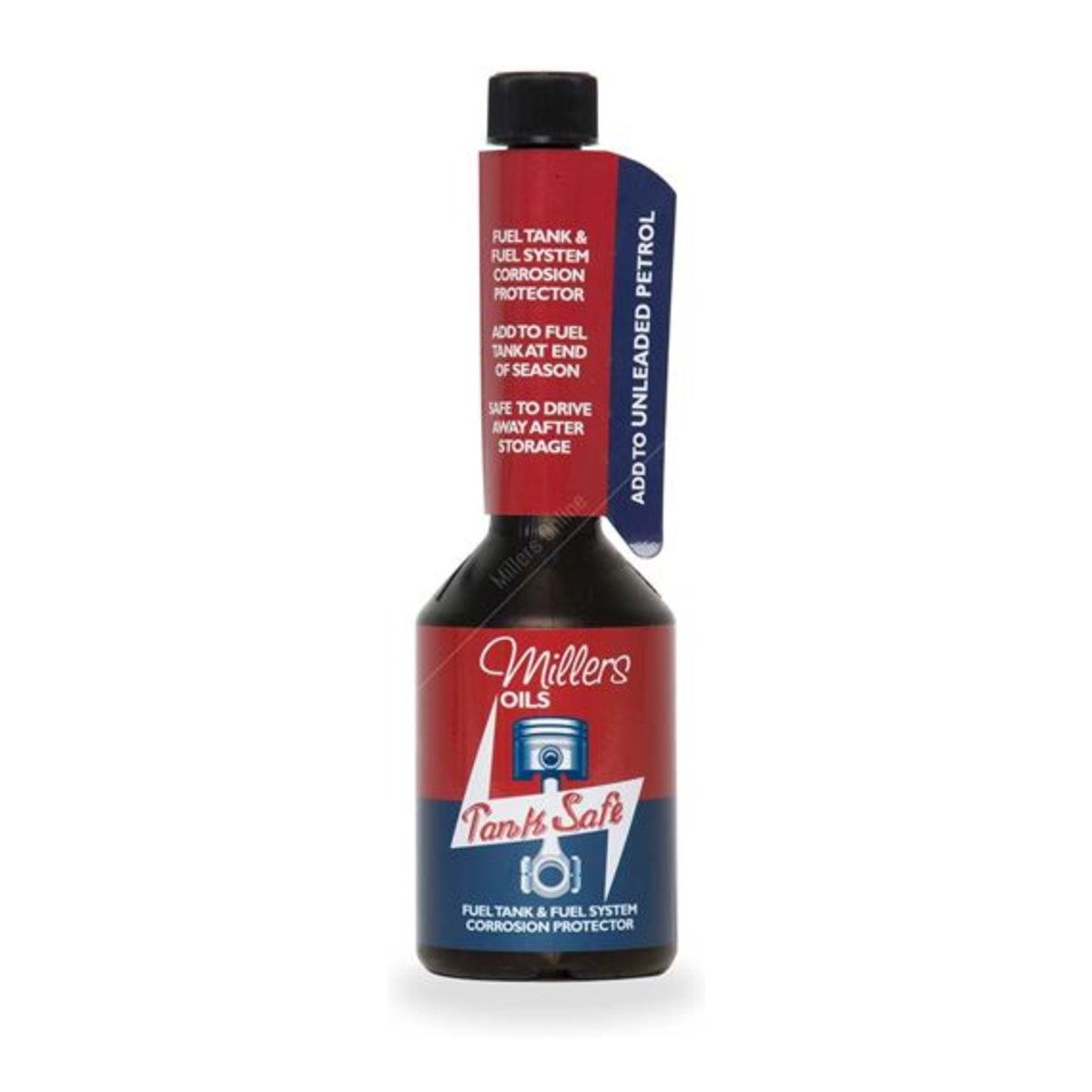
For stored or laid-up cars: Tank Safe
If your classic is only used occasionally or stored over winter, stale, phase-separated E10 is the big risk. Tank Safe stabilises the fuel and protects the tank and fuel system while the car sits, so it fires up cleanly in spring. (See our guide to laying up a classic for winter.)
Not sure which additive you need? Use our 30-second fuel additive picker for petrol, diesel and classic engines.
Does your classic also need lead? VSPe Power Plus combines lead replacement with E10 protection, or, for genuine leaded fuel, see TetraBOOST E-Guard 15.
E10 petrol FAQs
What is E10 petrol?
E10 is standard unleaded petrol containing up to 10% ethanol — double the 5% in the old E5 grade. Ireland has moved to E10 as its standard pump grade to help cut transport emissions, in line with the UK and much of Europe. E5 is still sold as “super unleaded” protection-grade fuel.
Can I use E10 in my classic car?
If it was built before 2002, it’s not recommended. Cars from 2002–2011 are a grey area — many aren’t warranted for E10, so check. From 2011 onward, almost all cars are compatible. If you’re unsure, use E5 super unleaded and treat every tank with a protective additive.
What damage does E10 do to older engines?
Ethanol draws in water (causing corrosion and phase separation), attacks rubber, cork, plastic and fibreglass in the fuel system, lowers octane and mileage, and goes stale quickly — leading to blocked filters, corroded carbs, perished seals and poor running.
How do I protect my engine from E10?
Treat every tankful. For classics, Millers VSPe Power Plus protects against ethanol, replaces lead and restores octane. For modern engines, Petrol Power EcoMax adds ethanol protection and a fuel-system clean. And for stored cars, Millers Tank Safe protects the fuel and tank during lay-up.
Does E10 go off if my car is stored?
Yes. Ethanol-blended petrol has a short shelf life and can phase-separate within weeks to months. If a car is laid up, treat the fuel with Tank Safe and ideally keep the tank full to reduce condensation.
Want the deeper dive? Read our guide to lead replacement & E10 protection for classic cars, and our take on octane boosters.