
Lawnmower, Strimmer and Chainsaw Oil and Fuel: A Small Engine Care Guide
Lawnmowers, strimmers, chainsaws, hedge trimmers, leaf blowers and generators all run on small petrol engines, and they all get the same treatment: worked hard for a season, then shoved in the shed for months. Most small-engine trouble comes down to two things, the wrong oil and old fuel. This guide explains which oil your machine needs, how to mix two-stroke fuel, why E10 petrol is hard on small engines, and how to store everything so it starts first pull in spring.
Two-stroke or four-stroke?
Before you buy oil, find out which type of engine you have. The two need completely different oils.
| Four-stroke | Two-stroke | |
|---|---|---|
| Typical machines | Lawnmowers, ride-on mowers, generators, pressure washers, rotavators | Strimmers, chainsaws, hedge trimmers, leaf blowers, some older mowers |
| Where the oil goes | In a sump, like a car engine, and changed regularly | Mixed into the petrol, and burned as the engine runs |
| How to tell | A separate oil filler cap, usually with a dipstick | One filler for fuel, often marked with a mix ratio such as 50:1 |
| Oil you need | Four-stroke engine oil in the grade your manual gives | Two-stroke oil, mixed with petrol at the ratio your manual gives |
Four-stroke oil: lawnmowers and ride-ons
Most small four-stroke engines are air-cooled and run hot, with a small sump holding well under a litre of oil. That little oil works hard, so the grade and the level both matter. Your manual will give the grade: most modern small engines call for SAE 30 or 10W-30, with an API service rating of SJ or later. A 10W-30 multigrade flows more easily on a cold start, which is why many makers list it for use across all seasons. For more on what the numbers mean, see oil viscosity grades explained.
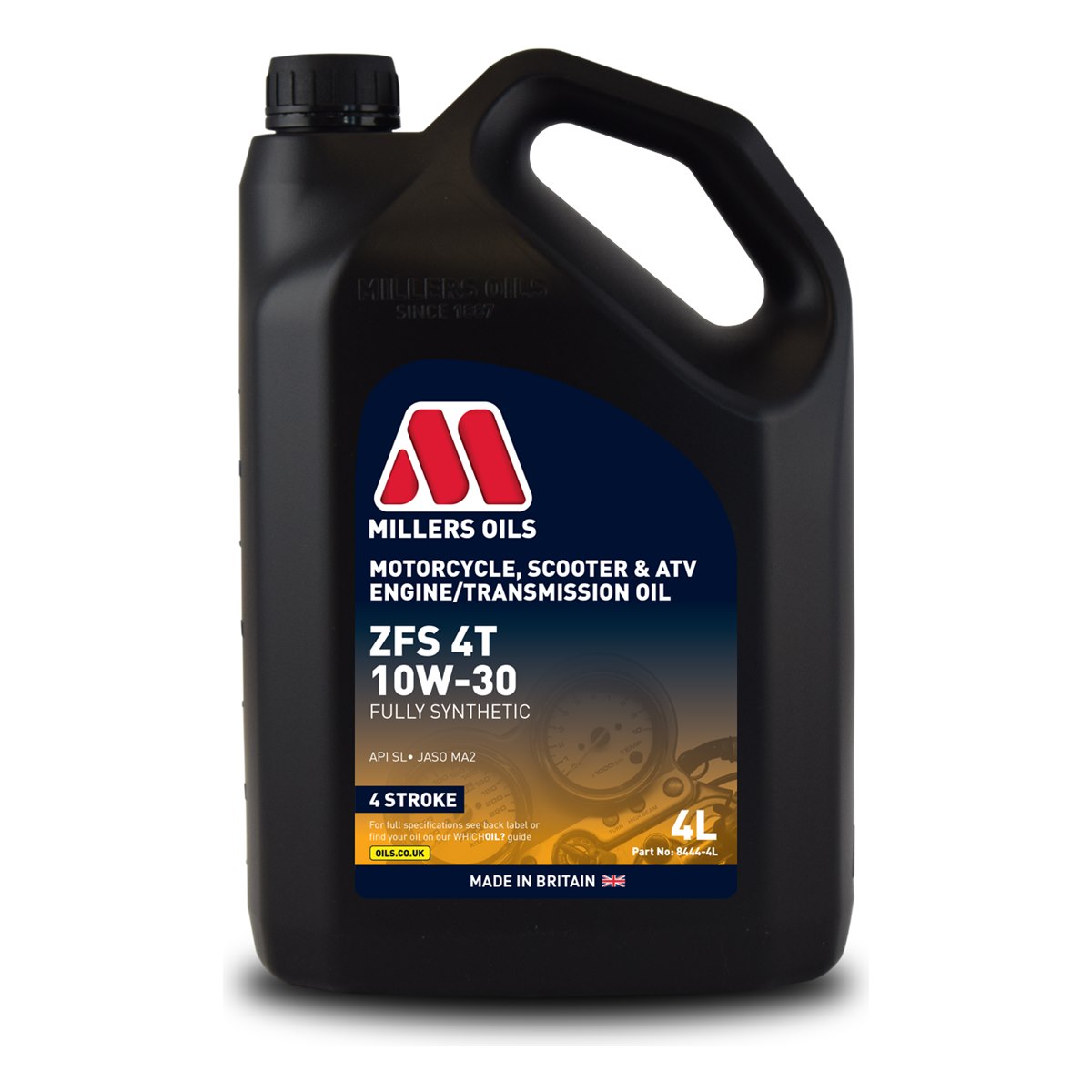
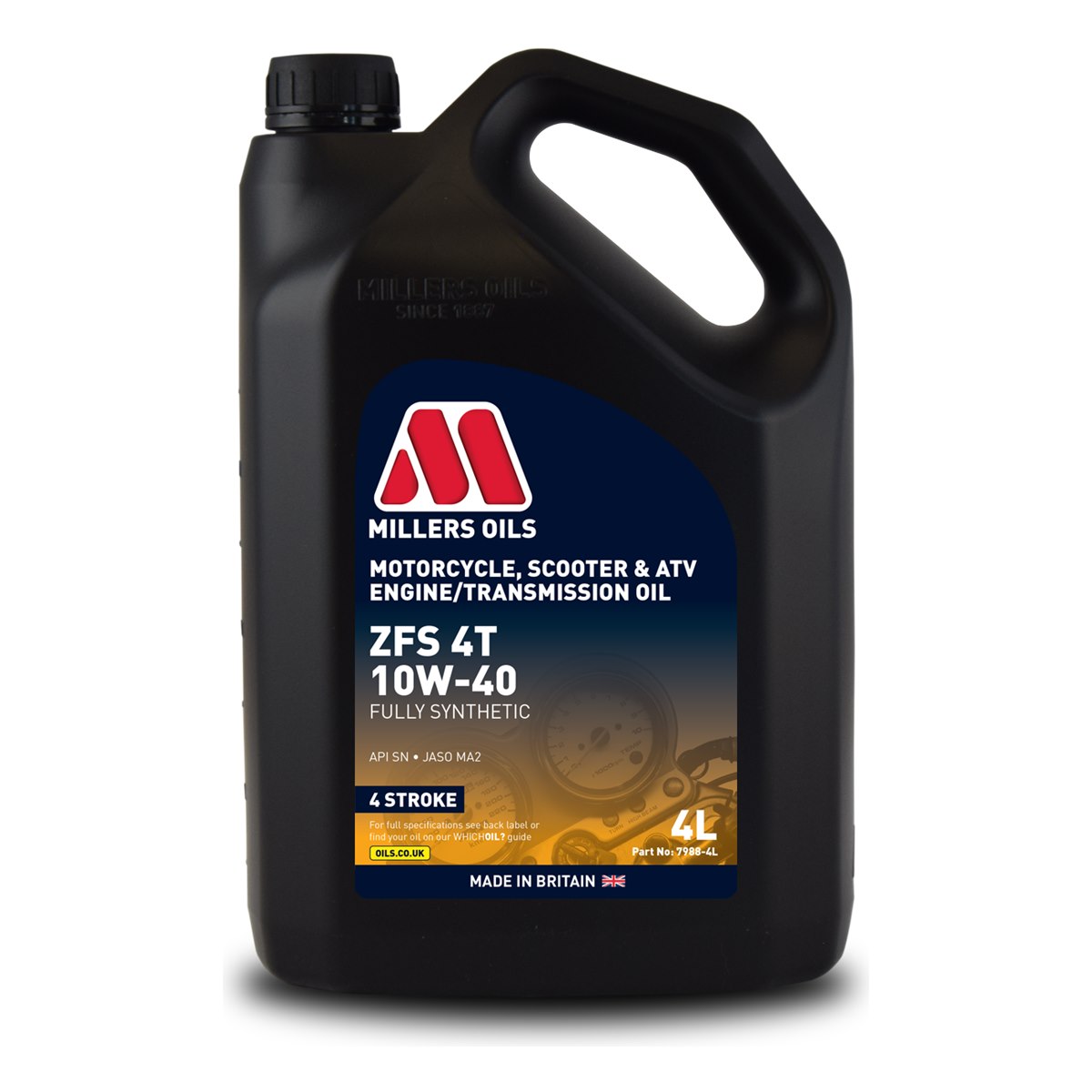
Our pick is Millers ZFS 4T 10W-30. It’s a fully synthetic four-stroke oil developed for air- and water-cooled motorcycle, scooter and ATV engines, and it meets API SL, SJ and SH, so it covers what most small-engine manuals ask for. Its fully synthetic base oil and additives give high-temperature endurance, excellent oxidation resistance and valve-train wear protection, and keep the engine clean. If your manual lists 10W-40, ZFS 4T 10W-40 meets API SN, SM, SL and SJ.
Changing lawnmower oil
Warm it up, then stop it
Run the engine for a few minutes so the oil thins and drains fully, then switch off and let it cool enough to handle safely. Disconnect the spark plug lead so it can’t start.
Drain the old oil
Use the drain plug if there is one. On most walk-behind mowers you tip the mower to drain the oil out of the filler. Check your manual for which way to tip it: on most, the air filter and carburettor side should face up, so oil and fuel don’t flood them.
Refill to the mark, and no higher
Stand the mower on level ground and add fresh oil a little at a time, checking the dipstick as you go. Small sumps are easy to overfill, and too much oil can cause smoke and oil leaks.
Dispose of the old oil properly
Take used oil to your local recycling centre or civic amenity site. Never pour it down a drain or onto the ground.
How often? Follow your manual. Many makers call for a first oil change after the first few hours on a new engine, then at least once a season. The easy habit: check the level before every use, and change the oil at the end of each season, so the engine doesn’t sit all winter in old, acidic oil.
Two-stroke oil: strimmers, chainsaws and hedge trimmers
A two-stroke engine has no sump. The oil travels in with the fuel, lubricates the piston, rings and bearings, and then burns, so poor oil shows up quickly as smoke, fouled plugs and carbon build-up. Hand-held garden tools rev hard and are air-cooled, so look for an oil rated JASO FD or ISO-L-EGD, the top grades for air-cooled two-strokes.
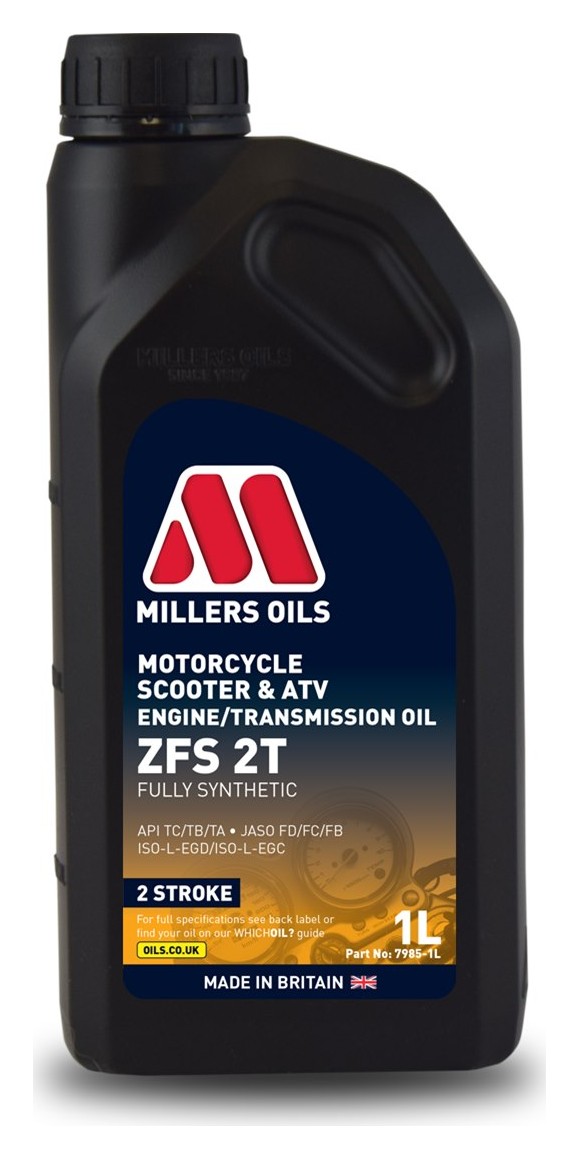
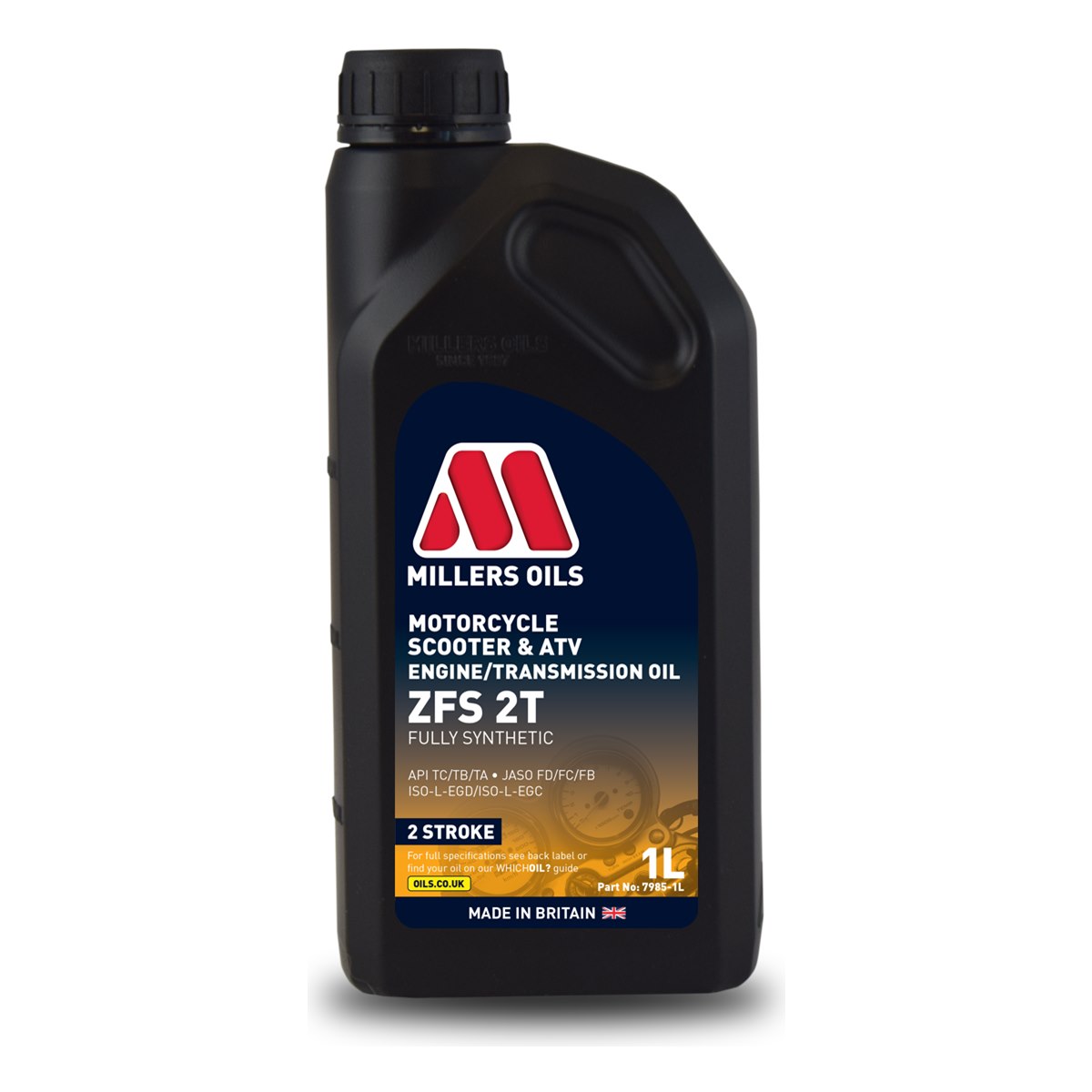
Millers ZFS 2T meets JASO FD, ISO-L-EGD and API TC. It’s a fully synthetic, ester-based, low-smoke oil whose ashless additives help prevent ring sticking, piston seizure and plug fouling. It’s dyed blue, so you can see at a glance that a can is mixed, and it works in premix and oil-injection systems alike. Mix it with petrol at the ratio your machine’s maker recommends.
Two-stroke mix ratios
| Ratio in your manual | Oil per 1 litre of petrol | Oil per 5 litre can |
|---|---|---|
| 50:1 | 20ml | 100ml |
| 40:1 | 25ml | 125ml |
| 32:1 | 31ml | 156ml |
| 25:1 | 40ml | 200ml |
Most modern strimmers and chainsaws run at 50:1, where a 1-litre bottle of ZFS 2T makes 50 litres of mix. Older machines often need more oil, so always check. For more detail, see our two-stroke oil guide.
- Measure, don’t guess. Too little oil risks a seizure; too much means smoke, carbon and fouled plugs. Use a measuring bottle or a marked mixing can.
- Put the oil in first. Add the oil to the can, then the petrol, then shake well. Shake again before each fill-up.
- Only mix what you’ll use soon. Mixed fuel goes stale, so mix enough for a few weeks, not the whole year.
- Don’t use outboard oil. TC-W3 oil is made for water-cooled outboard engines, not hot-running, air-cooled garden tools.
- Chainsaw bar oil is different. The bar and chain need a dedicated chain oil in their own reservoir. Never use two-stroke oil or old engine oil there.
Fuel: why E10 and old petrol stop small engines
Irish unleaded is now E10, containing up to 10% ethanol. Ethanol attracts moisture, and over months in a half-empty tank or fuel can it can separate out, leaving a layer of water and ethanol at the bottom. Stale petrol also turns to gum and varnish. A car’s fuel injectors can cope with a lot, but a small engine’s carburettor has tiny jets and passages that block easily, and its rubber fuel lines and diaphragms can suffer too. That’s why the most common reason a mower won’t start in spring is last year’s petrol. For the full story, see E10 petrol problems explained.
| When | Use this | How much |
|---|---|---|
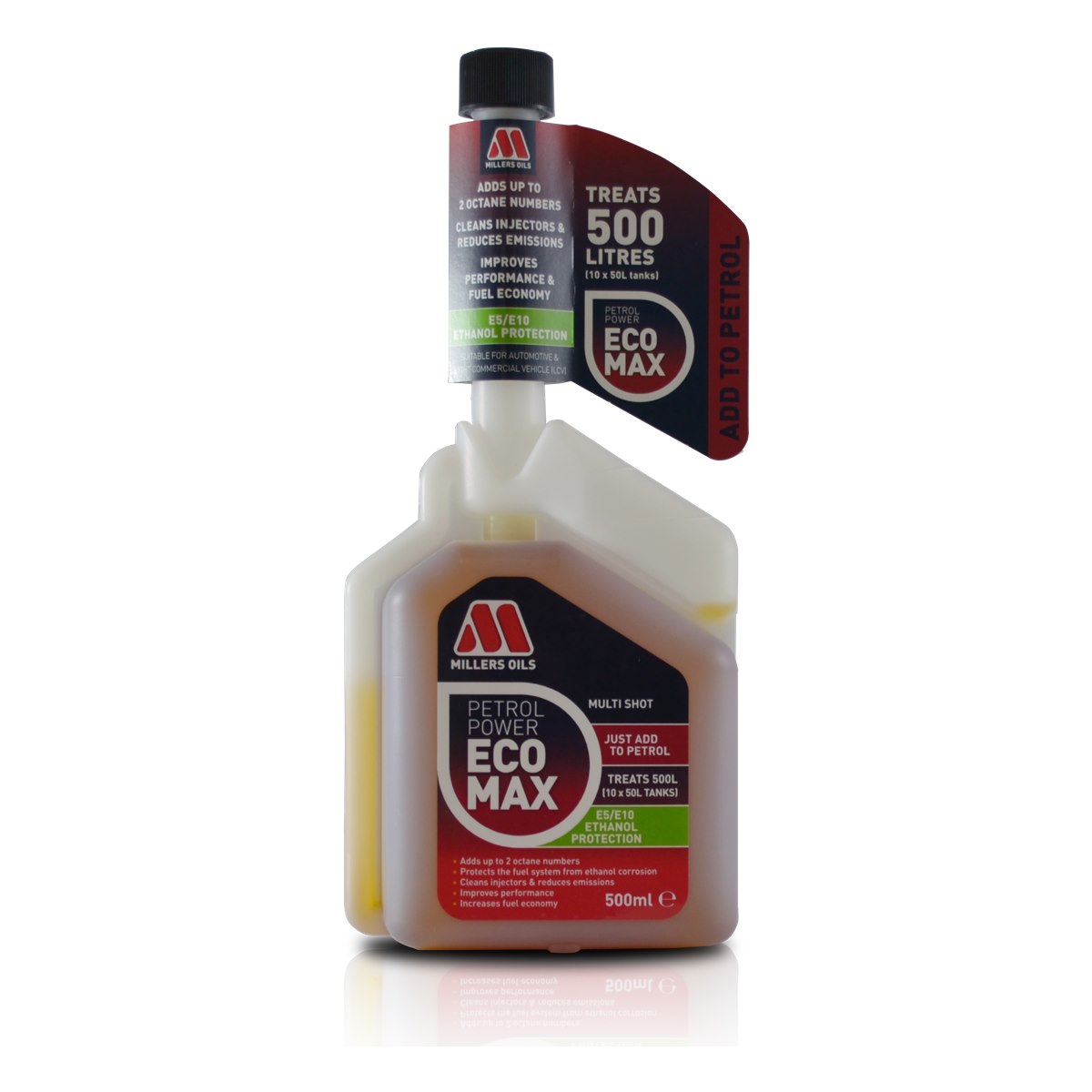
| All season, in the petrol can | Petrol Power EcoMax: protects against the corrosive effects of ethanol in E5 and E10, and keeps the fuel system clean | 1ml per litre, so 5ml per 5 litre can. One 500ml bottle treats up to 500 litres |
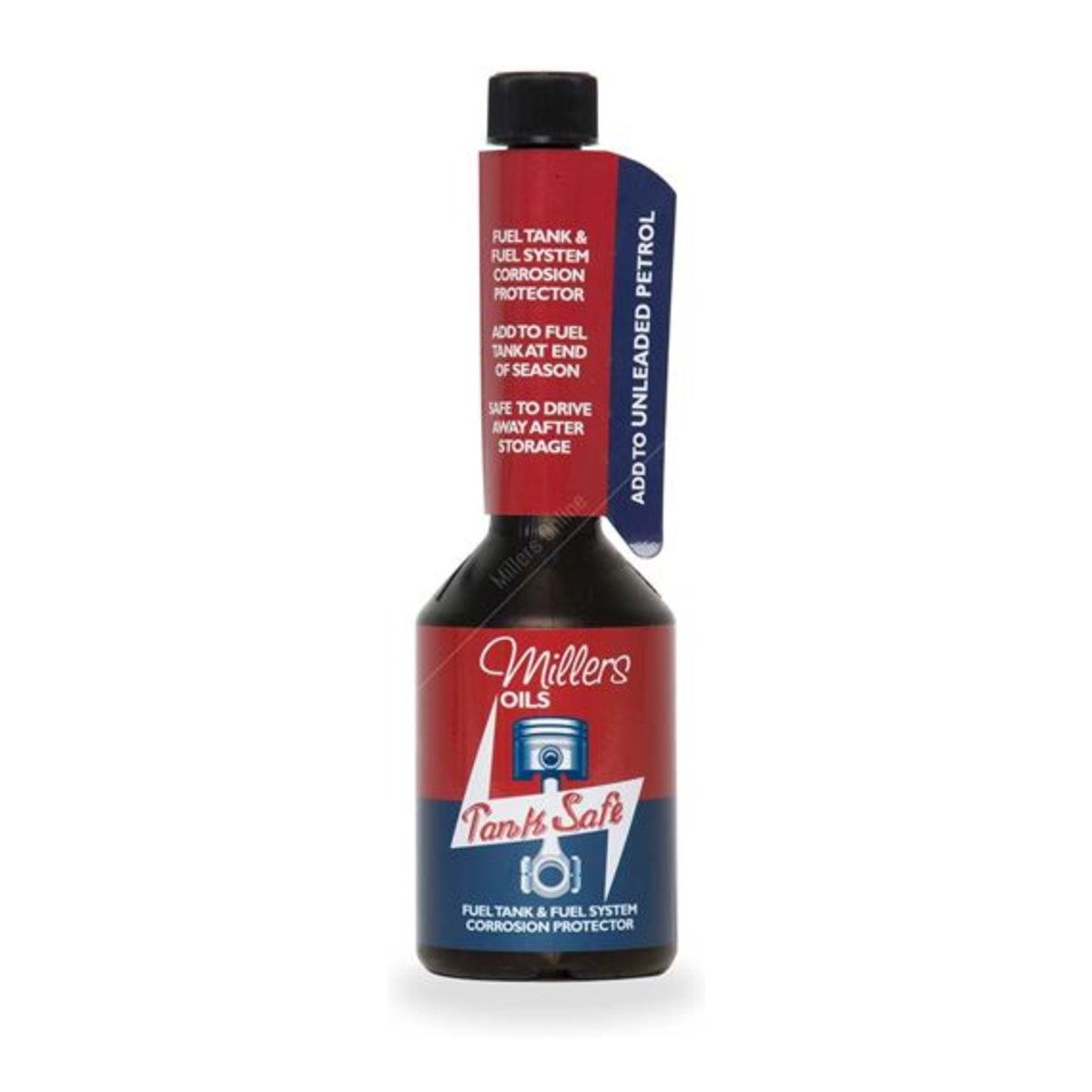
| End of season, before storage | Tank Safe: anti-corrosion and vapour-phase protection for the fuel tank and system, and keeps carburettors clean | One 250ml bottle treats about 50 litres, so about 5ml per litre, or 25ml per 5 litre can |
The simplest habit: treat the petrol can every time you fill it, and buy fuel in amounts you’ll use within a month or two. Not sure which additive you need? Try our fuel additive picker.
Winter storage checklist
Deal with the fuel
Either treat the fuel with Tank Safe and run the engine for a few minutes so treated fuel reaches the carburettor, or empty the tank and run the engine until it stops. Check your manual: some makers, particularly of hand-held two-stroke tools, prefer the tank emptied.
Change the oil on four-strokes
Used oil contains acids and combustion by-products. Changing it before storage means the engine sits in clean oil all winter.
Clean it thoroughly
Disconnect the plug lead, then scrape wet grass from under the mower deck and brush the cooling fins clear. Packed grass holds moisture against the steel all winter and rots the deck.
Protect bare metal
Touch in chipped paint on the deck, and wipe blades, chains and bare steel with a lanolin protector such as Corrolan to keep rust away.
Service the small things
Clean or replace the air filter, check the spark plug, and grease any grease points on ride-ons (see which grease do I need?). Take the battery off a ride-on and keep it charged over winter.
Store it dry
Keep machines in a dry shed or garage, covered but not wrapped airtight, and away from boilers or anything with a pilot light.
Spring start-up
- Check the oil level on four-strokes, and top up to the mark.
- Use fresh fuel. If last year’s petrol wasn’t treated, drain it and start again with fresh, treated fuel or freshly mixed two-stroke.
- Check the plug and air filter, and replace them if they’re dirty or worn.
- Sharpen or replace the blade. A sharp blade cuts cleanly and puts less load on the engine.
- Still won’t start? A carburettor gummed up by stale fuel usually needs cleaning. Treating fuel from now on stops it happening again.
Small engine FAQs
What oil does my lawnmower need?
Check the manual or engine label. Most modern four-stroke lawnmowers call for SAE 30 or 10W-30 with an API rating of SJ or later. Millers ZFS 4T 10W-30 is fully synthetic and meets API SL, SJ and SH.
Can I use car engine oil in my lawnmower?
Only if it matches the grade and API rating your manual asks for. Many modern car oils are thin, low-viscosity grades such as 0W-20 or 5W-30 designed for water-cooled car engines, which isn’t what most air-cooled mower engines are designed for.
What is the mix ratio for a strimmer or chainsaw?
Most modern strimmers and chainsaws use 50:1, which is 20ml of two-stroke oil per litre of petrol, or 100ml per 5 litre can. Older machines often need 25:1 to 40:1, so always check the manual or fuel cap.
Can I use E10 petrol in my lawnmower?
Most modern garden machinery runs on E10, but ethanol attracts moisture and E10 goes stale in storage, which can block small carburettors. Treat the fuel with an ethanol-protection additive such as Millers Petrol Power EcoMax, and don’t leave untreated fuel in the machine over winter.
Why won’t my mower start after winter?
The most common cause is stale fuel that has gummed up the carburettor. Drain the old fuel, refill with fresh petrol, and check the spark plug and air filter. If it still won’t start, the carburettor usually needs cleaning. Treating fuel with Millers Tank Safe before storage helps prevent it.
How often should I change lawnmower oil?
Follow the manual. Many makers call for a first change after the first few hours on a new engine, then at least once a season. Check the level before every use, and change the oil at the end of the season before storage.
More guides: two-stroke oil explained, which fuel additive?, E10 petrol problems and winter lay-up with Tank Safe.