Gearbox Oil Explained: Manual, Automatic, DSG & CVT Fluids
Gearbox oil is the fluid most drivers forget about, until the gear change goes notchy, the automatic starts slurring or the DSG begins to judder. Modern transmissions are precise, expensive pieces of engineering, and each type needs a very specific fluid. The right one keeps shifts smooth for hundreds of thousands of kilometres; the wrong one can cause damage surprisingly quickly. Here’s how to get it right.
Step one: what kind of gearbox do you have?
Everything starts here. Each type of transmission uses a completely different fluid, and they are not interchangeable.
| Gearbox type | How you’ll know | Fluid it needs | Millers option |
|---|---|---|---|
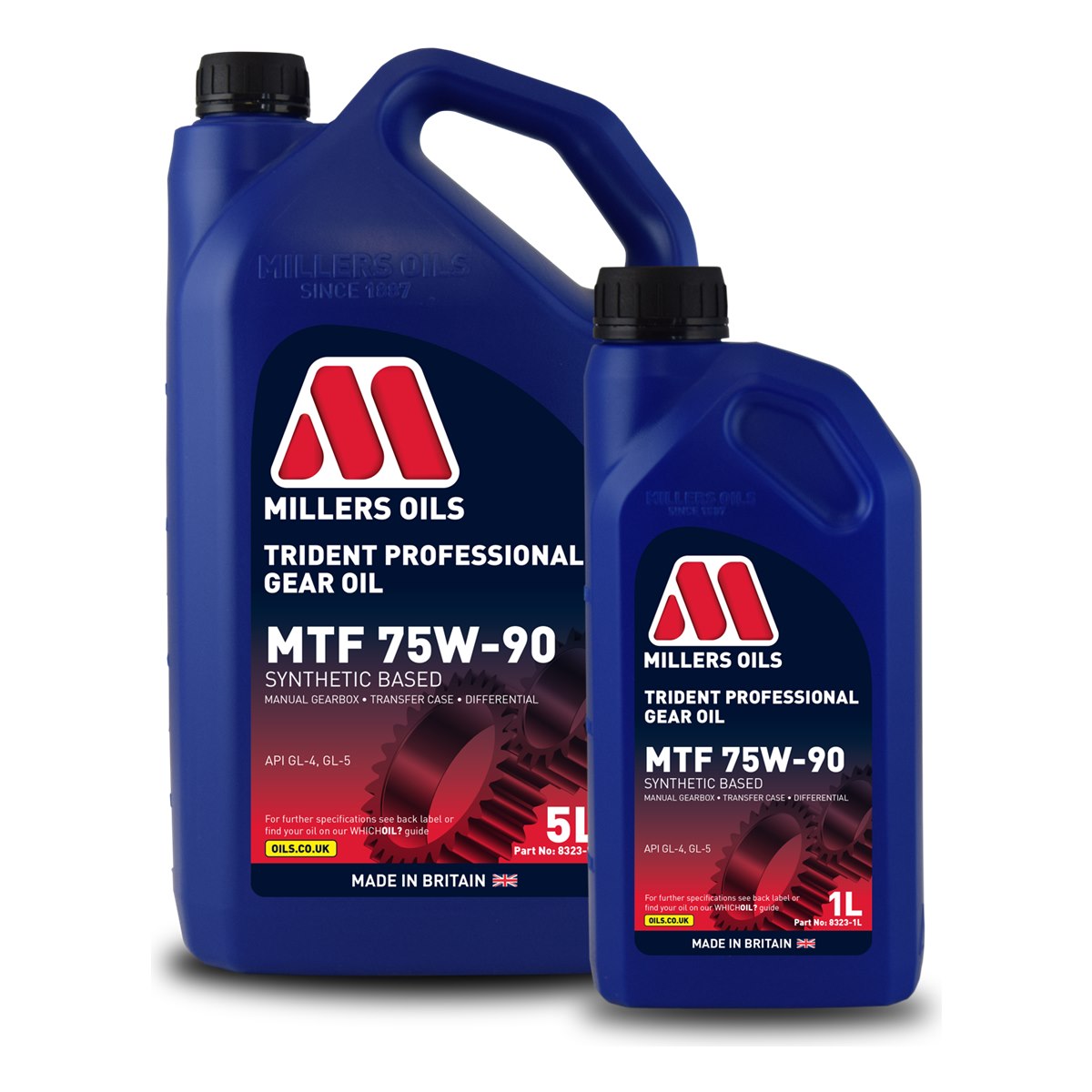
| Manual | Clutch pedal and gear stick | Manual transmission fluid (gear oil), usually 75W, 75W-80 or 75W-90 | XF Premium MTF or Trident MTF |
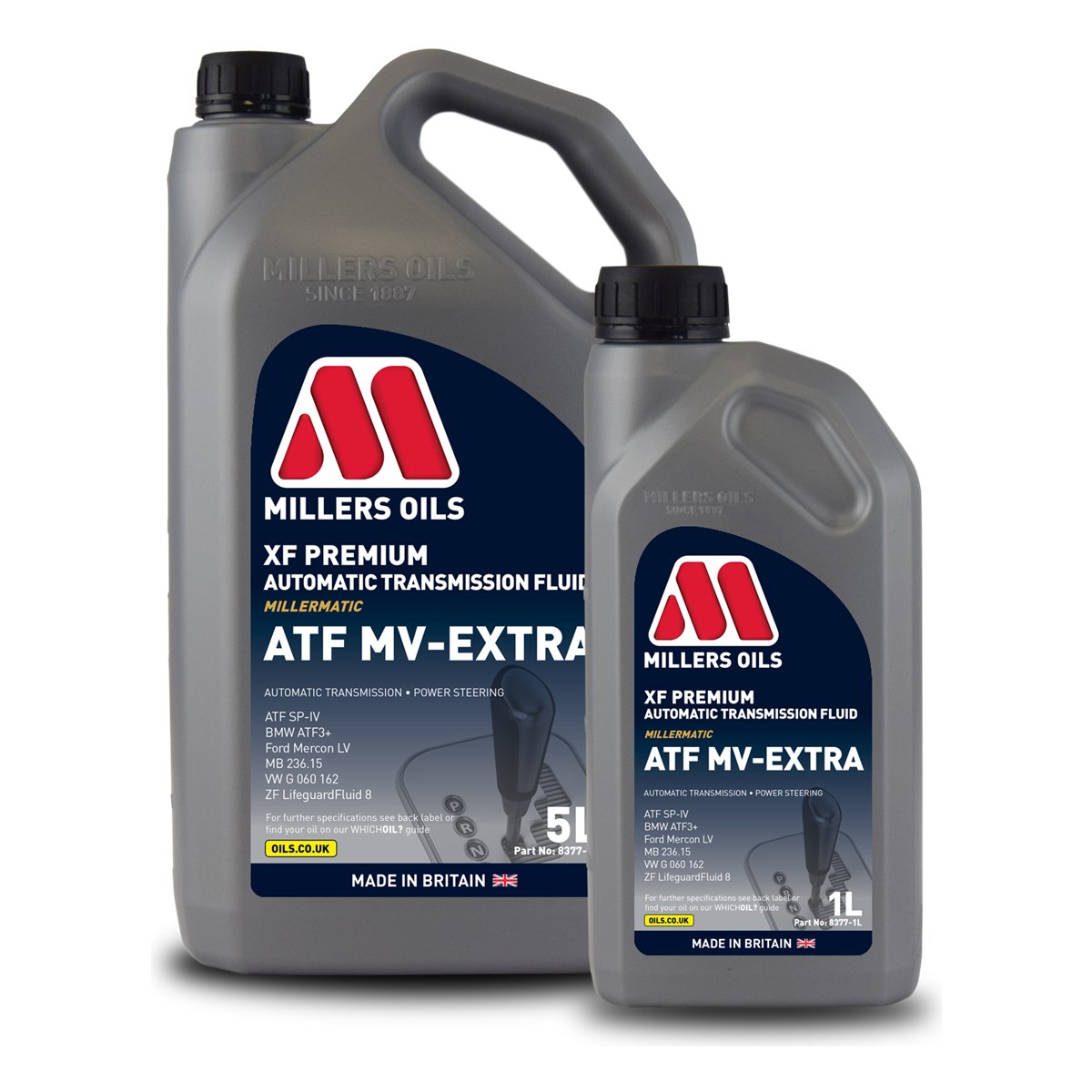
| Conventional automatic | No clutch pedal; smooth torque-converter automatic | ATF (automatic transmission fluid) to the right specification | XF Premium ATF MV-EXTRA |
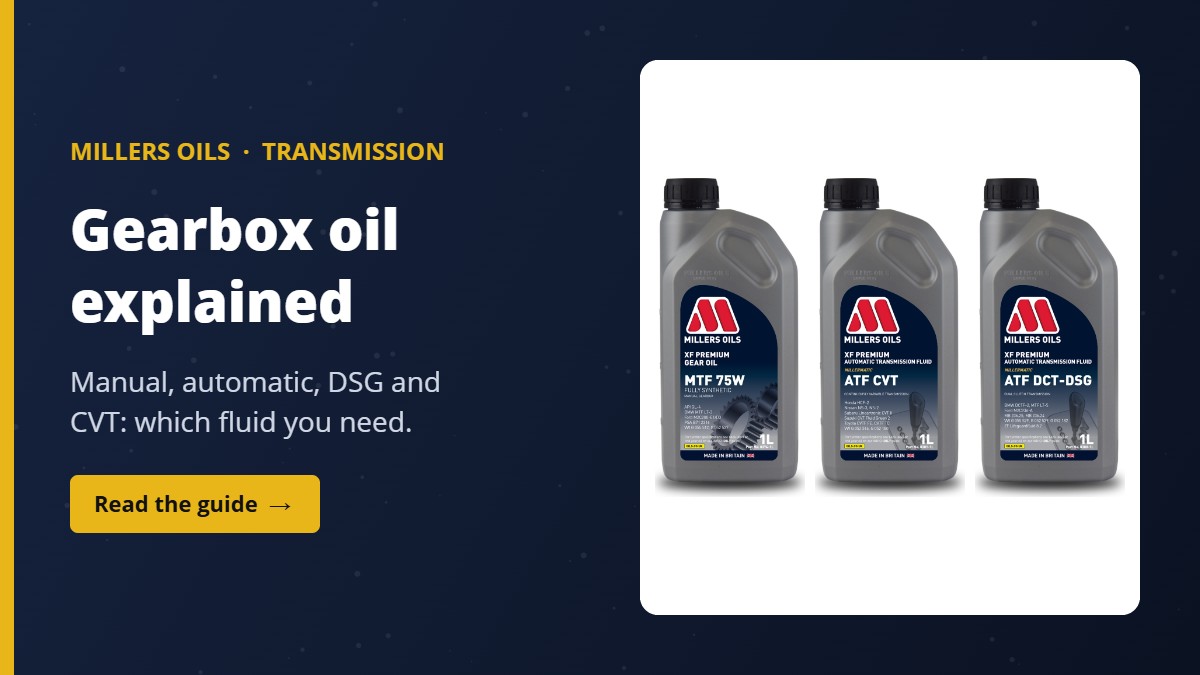
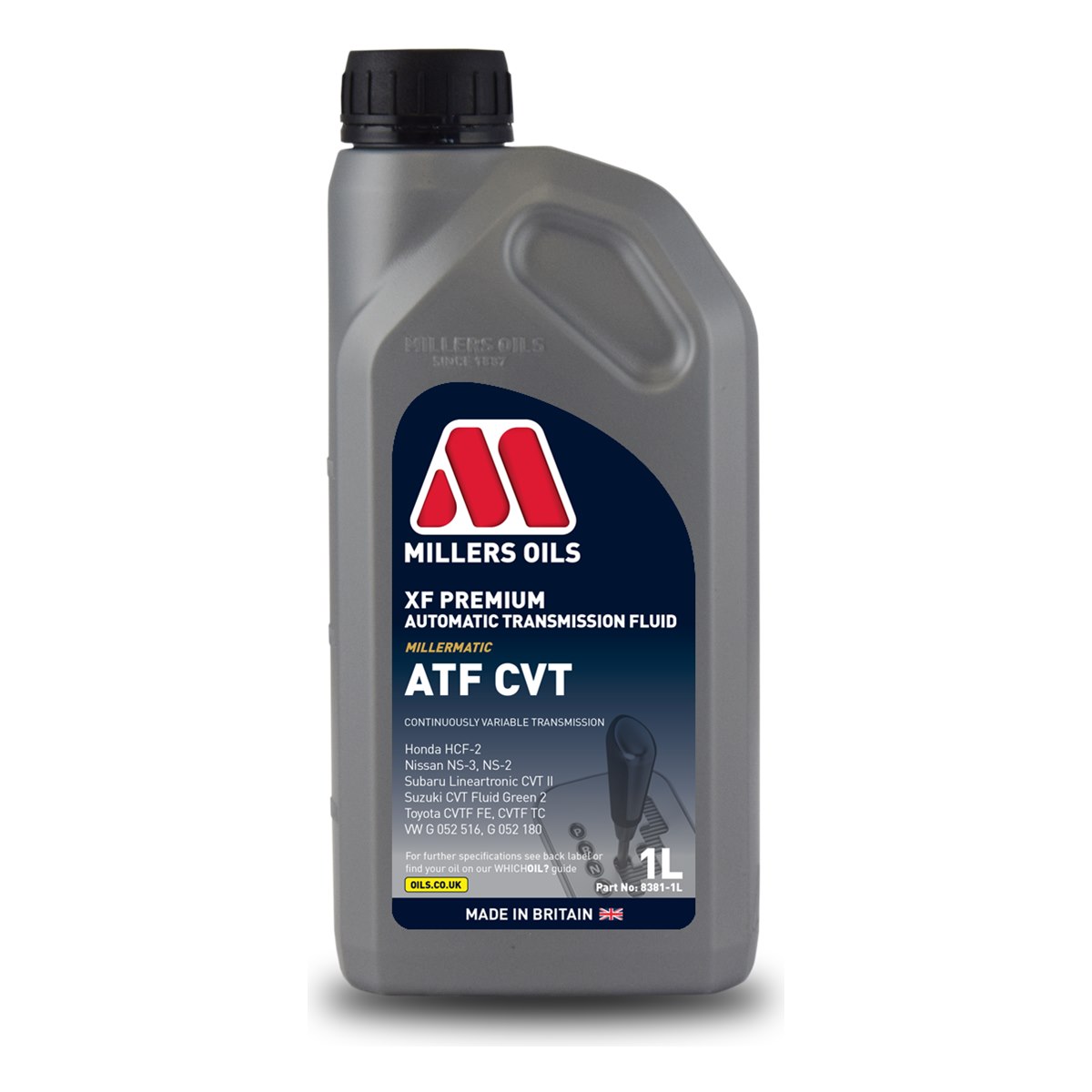
| CVT | No clutch pedal; no distinct gear changes, engine revs stay steady as you accelerate | Dedicated CVT fluid, never ordinary ATF | XF Premium ATF CVT |
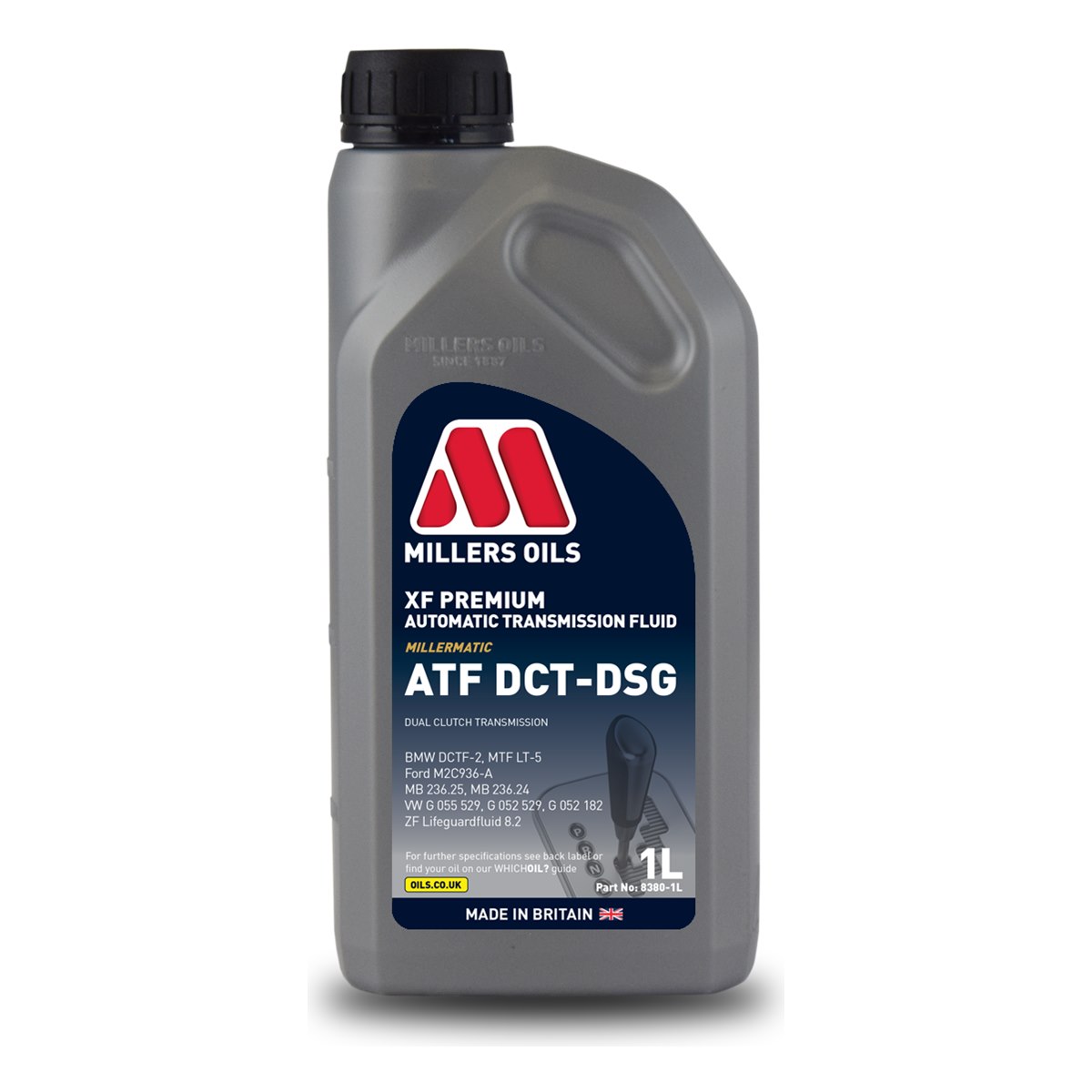
| Dual-clutch (DSG / DCT) | Automatic with very fast, crisp shifts; often badged DSG, S tronic, PDK, EDC or Powershift | Dedicated DCT fluid | XF Premium ATF DCT-DSG |
Differentials and axles have their own oil too. We cover those further down.
Manual gearbox oil
What 75W-90 means
Gear oil viscosity works like engine oil, but on its own scale. The number with the W (for Winter) is how easily it flows when cold: a 75W gets around a cold gearbox quickly for easier first shifts. The second number is its thickness at working temperature. A gear oil 90 is not thicker than an engine oil 40: the two scales simply measure differently. Always use the grade in your handbook, whether that’s 75W, 75W-80 or 75W-90.
GL-4 vs GL-5: the rating that really matters
The API “GL” rating tells you how much extreme-pressure (EP) protection the oil has. GL-4 is the traditional rating for manual gearboxes. GL-5 has more EP additive, designed for heavily loaded hypoid differentials. The catch is that in some gearboxes, especially older ones with brass or bronze synchro rings, the extra GL-5 additives can attack those “yellow metals” and ruin the synchros. So if your handbook says GL-4, stick to an oil that meets GL-4.
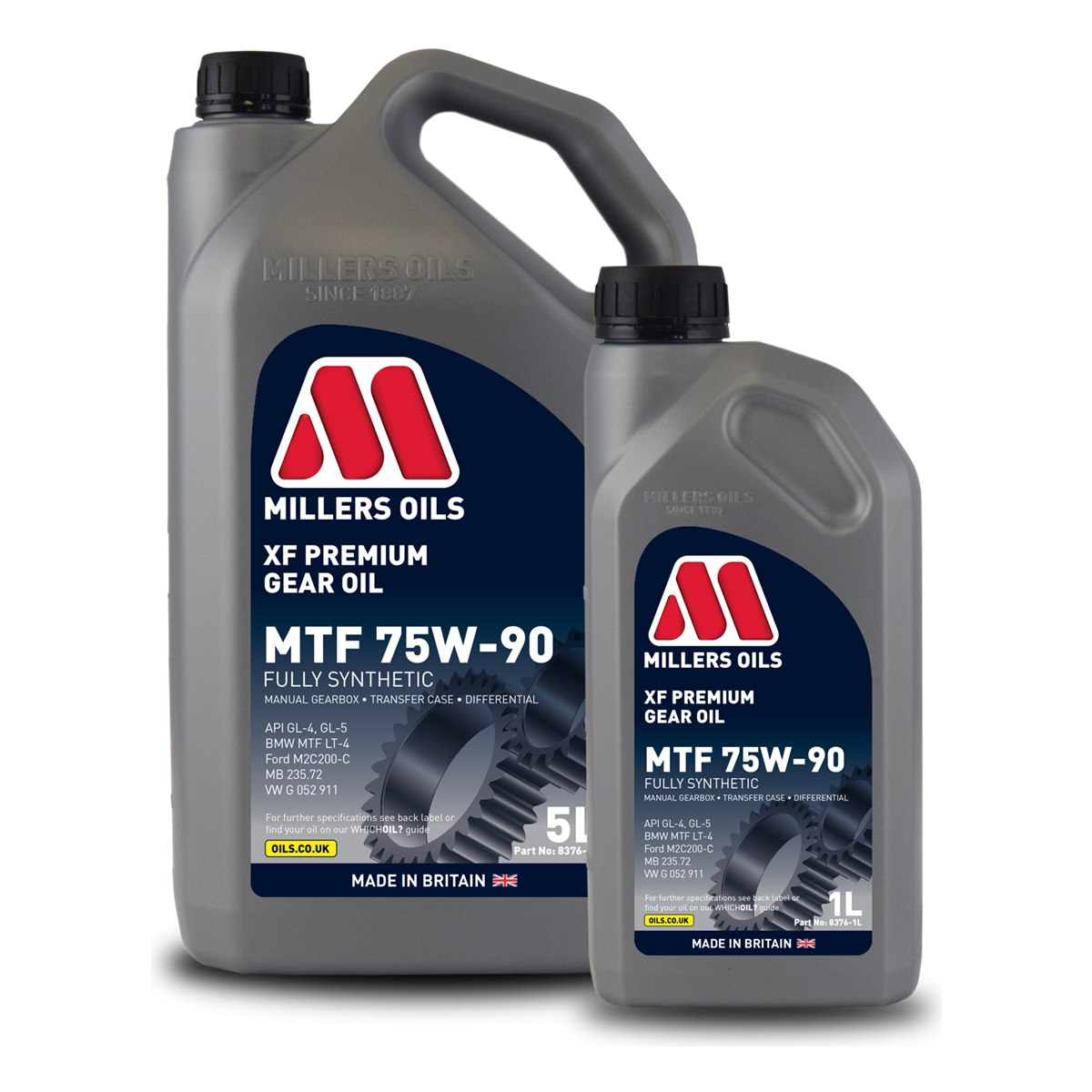
For modern cars, Millers XF Premium MTF 75W-90 and Trident Professional MTF 75W-90 meet both API GL-4 and GL-5. For gearboxes that call for other grades, there’s XF Premium MTF 75W (GL-4, with BMW/Mini, Ford, GM and VW Group approvals) and XF Premium MTF 75W-80. The XF range is fully synthetic, predominantly for European and Asian vehicles, and formulated for hybrids too. You can see every manual option on our manual gearbox oil page.
Automatic transmission fluid (ATF)
A conventional automatic uses ATF for everything: lubricating the gears, cooling, and transmitting power through the torque converter and clutch packs. Car makers each have their own ATF specifications, such as Dexron, Mercon, MB 236, ZF Lifeguard, Toyota WS or JWS 3309, so the key is matching the one in your handbook.
Millers XF Premium ATF MV-EXTRA is a multi-vehicle ATF with the widest specification coverage in the range, covering a very long list of manufacturer requirements from BMW, Mercedes-Benz, Ford, GM, Toyota, Honda, Hyundai, Kia, Volvo, VW Group and many more. XF Premium ATF MV (5L) is another premium multi-vehicle ATF built for very long service intervals, and Trident Professional ATF UN is a professional multi-vehicle ATF that also suits older automatic transmissions. Some ATFs are also approved for certain power steering systems: see our power steering fluid guide.
CVT fluid
A CVT (continuously variable transmission) uses a steel belt or chain running between variable pulleys instead of fixed gears. It relies on a very specific level of friction between belt and pulley, so it needs dedicated CVT fluid. Millers XF Premium ATF CVT covers CVTs from European, Asian and American makers, including Nissan NS-2 and NS-3, Honda HCF-2, Toyota TC and FE, Subaru, Mitsubishi, Ford, Mercedes-Benz MB 236.20 and VW Group TL 52 516.
DSG and dual-clutch (DCT) fluid
Dual-clutch gearboxes like VW Group’s DSG work like two manual gearboxes run by computer, with clutches that often run in oil (“wet” clutches). That fluid has to lubricate the gears and control clutch friction precisely, which is why DCTs need their own fluid and regular changes at the manufacturer’s interval. Millers XF Premium ATF DCT-DSG is made for wet dual-clutch gearboxes, including VW Group DSG (TL 52 529 and TL 52 182), BMW DCTF-1, Mercedes-Benz MB 236.21 and 236.24, Ford Getrag, Renault EDC and more.
For competition dual-clutch transmissions, Millers CRX DCT-DSG NT+ is a fully synthetic NANODRIVE ester fluid designed for the latest wet and dry dual-clutch gearboxes found in race cars.
Differentials, axles and limited-slip diffs
Rear-wheel and four-wheel-drive cars have a differential (or several) with its own oil. Most modern hypoid differentials need a GL-5 oil to cope with the sliding, heavily loaded gear teeth. If the diff has a plate-type limited-slip differential (LSD), the oil also needs friction modifiers, otherwise the plates can stick and slip, causing chatter and noise.
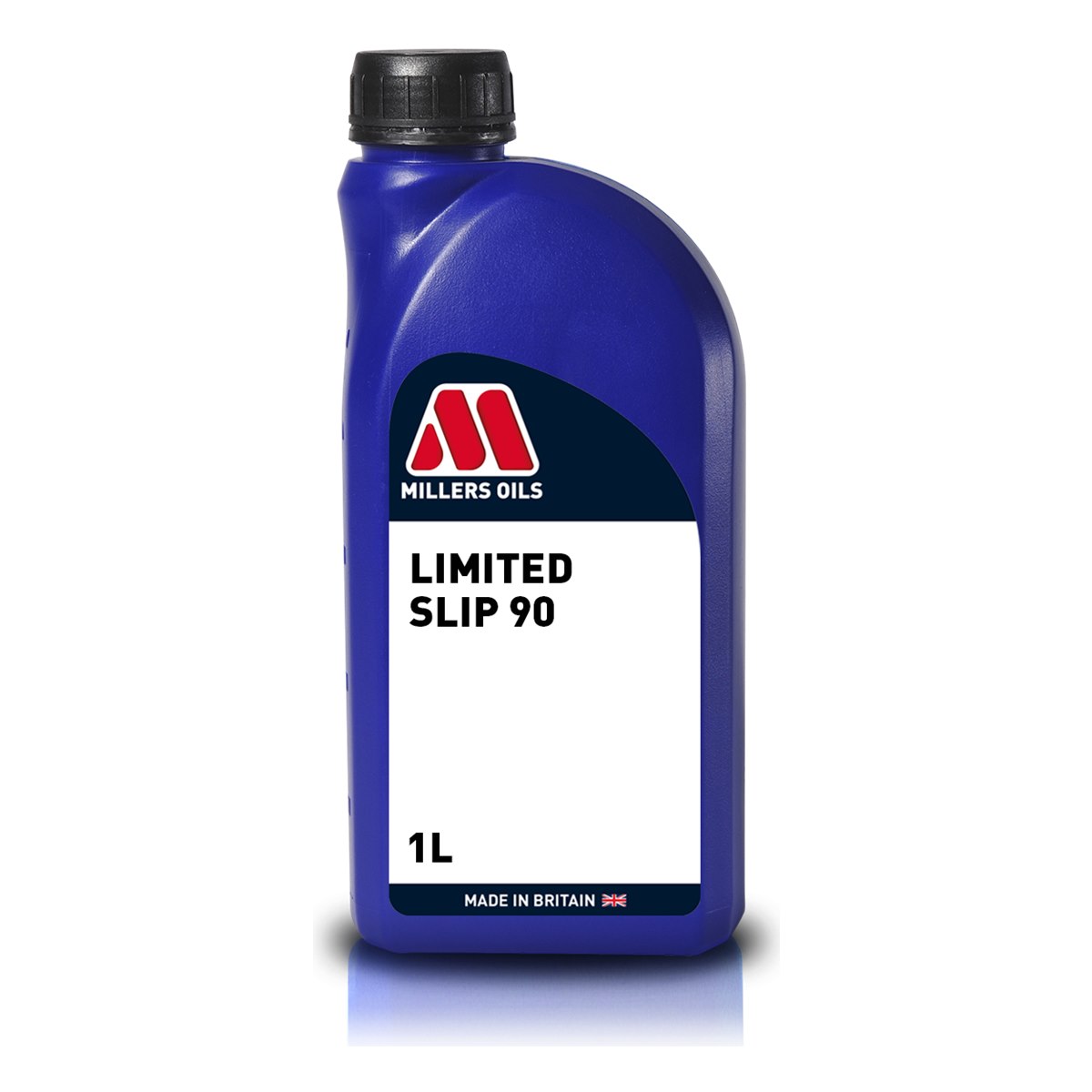
Millers Differential/Axle Oil Limited Slip 90 is a GL-5 gear oil with friction modifiers for limited-slip axles, and is also fine in normal axles. For performance and competition use, the CRX LS 75W-90 NT+ and CRX LS 75W-140 NT+ limited-slip oils can be used in both limited-slip and standard units.
Motorsport and track-day transmissions
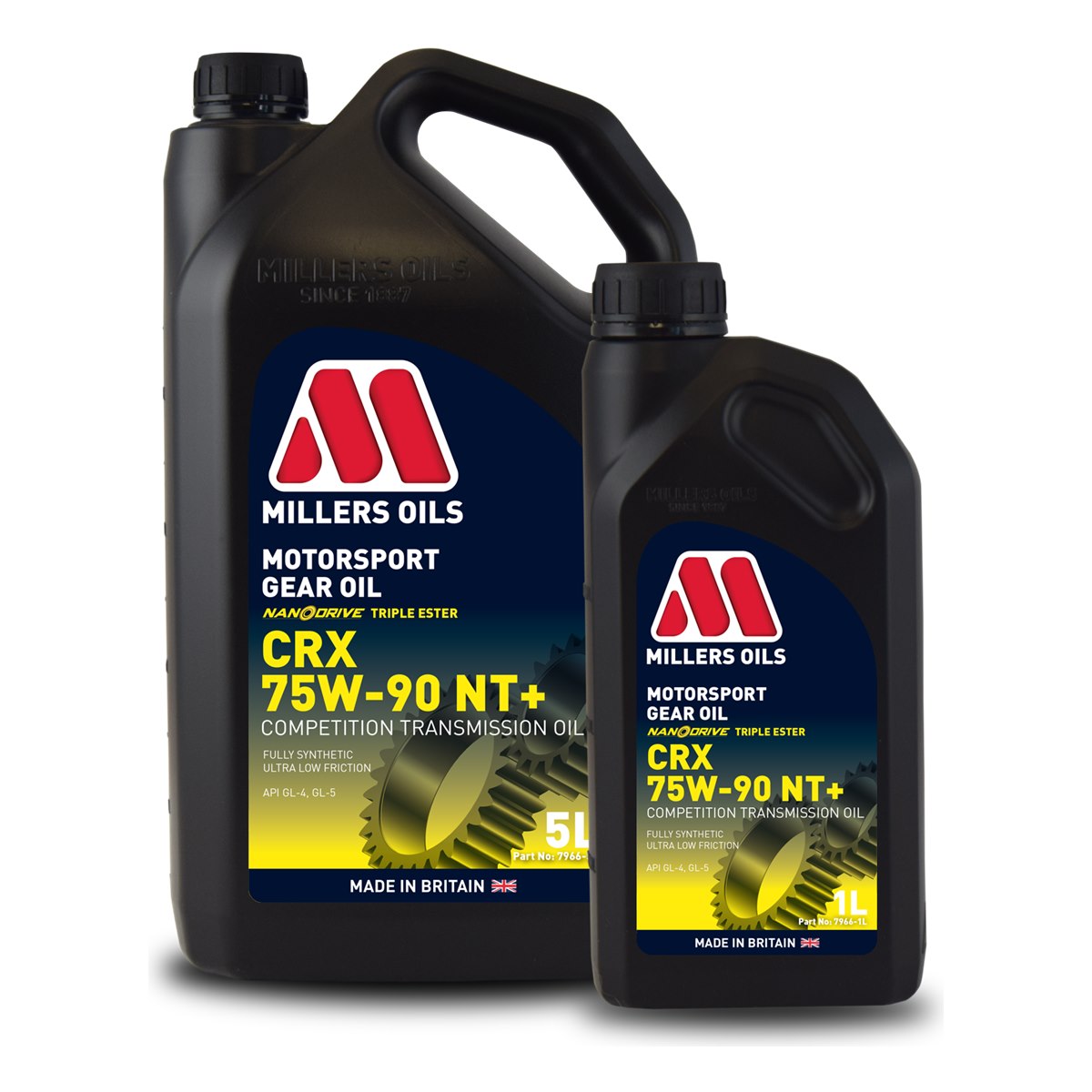
Sequential and dog-engagement gearboxes, and anything pushed hard on track, need a fully synthetic competition oil. The Millers CRX NT+ range uses NANODRIVE low-friction technology with a triple-ester formulation to cut friction and protect gears at race temperatures, and is recommended for Hewland, Xtrac, Glebe, ZF, Tran-X, Elite and Samsonas transmissions:
- CRX 75W-90 NT+ and CRX 75W-140 NT+: for gearboxes and diffs without a plate-type limited-slip diff.
- CRX LS 75W-90 NT+ and CRX LS 75W-140 NT+: with friction modifiers for limited-slip diffs.
- CRX 75W-110 NT+: heavy-duty, friction-modified oil for highly stressed final drives in long-distance racing and high-power rally cars.
Classic and vintage gearboxes
Older gearboxes were designed around the oils of their day, and many contain brass and bronze parts that modern high-EP oils can harm. Very early boxes that must not use EP oil take a non-EP GL-1 oil such as Millers Vintage Green Gear Oil 90 or 140. Classic gearboxes that call for an EP GL-4 oil can use Millers Classic Gear Oil EP 80W-90 or EP 140, both safe on brass and bronze. Classic hypoid differentials take Classic Differential Oil EP 90 or 85W-140 (GL-5). Browse the full Millers Classic & Vintage range, or use our Oil Finder. For GL-1, GL-4 and GL-5 explained in full, read our classic gear and differential oil guide.
“Sealed for life”? Changing your gearbox oil
Some manufacturers describe gearbox oil as “filled for life”, but that life is often the length of the warranty. Oil breaks down with heat and collects wear particles, and many specialists recommend changing it on higher-mileage cars, especially if shifts are getting notchy or an automatic is slow to engage. DSG and dual-clutch gearboxes have fixed service intervals that must be kept. Check your handbook, and follow the manufacturer’s procedure for filling and checking the level, particularly on automatics.
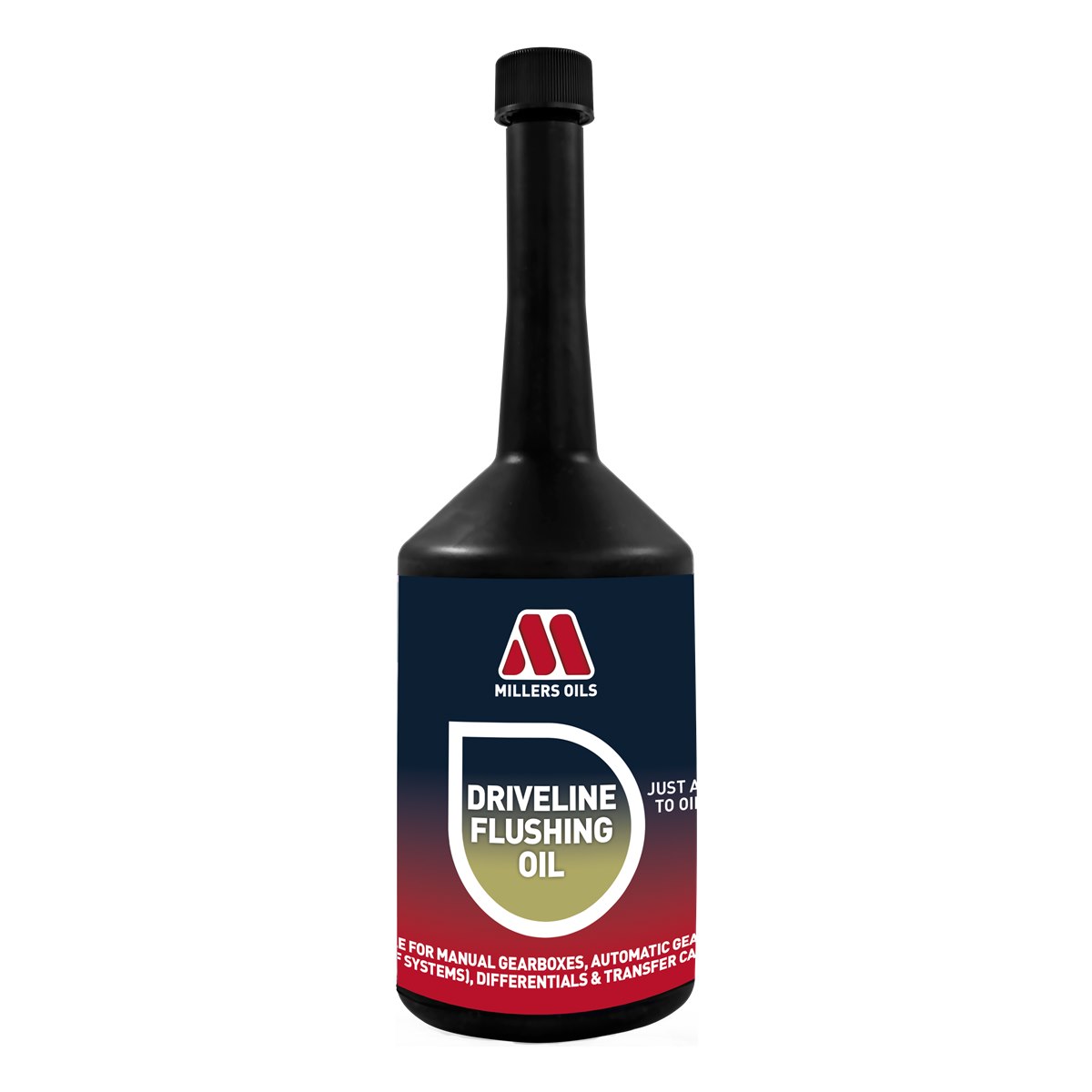
Before a drain and refill, Millers Driveline Flushing Oil lifts sludge and debris so the fresh oil starts clean. It’s oil-based and gentle on seals, and suits manual gearboxes, conventional automatics, differentials, transfer cases and power steering. It’s not suitable for dual-clutch (DSG/DCT) or CVT transmissions.
Common gearbox oil mistakes
- Putting ATF in a CVT or DSG. They each need their own dedicated fluid.
- Using GL-5 where GL-4 is specified. In gearboxes with brass or bronze synchros it can damage them.
- Using a non-LS oil in a plate-type limited-slip diff. Expect chatter, noise and wear.
- Going by viscosity alone. Two “75W-90” oils can carry very different approvals. Match the specification, not just the numbers.
- Believing “sealed for life” means never. Old, tired gearbox oil is a common cause of poor shifting.
Gearbox oil FAQs
What is the difference between GL-4 and GL-5 gear oil?
GL-5 contains more extreme-pressure additive than GL-4 and is designed for heavily loaded hypoid differentials. GL-4 is the traditional manual gearbox rating. In some gearboxes with brass or bronze synchros, GL-5 additives can cause damage, so always use the rating your handbook specifies. Some modern oils meet both.
Can I use ATF in a CVT gearbox?
No. A CVT needs a dedicated CVT fluid with the right friction characteristics for its belt or chain. Ordinary ATF can cause slipping, judder and wear.
What oil does a DSG gearbox take?
A wet DSG needs a dedicated dual-clutch transmission fluid meeting the VW specification, such as TL 52 529 or TL 52 182. Millers XF Premium ATF DCT-DSG covers these and many other dual-clutch specifications.
What does 75W-90 mean on gear oil?
The 75W is the cold rating (W for Winter): how easily the oil flows in a cold gearbox. The 90 is its thickness at working temperature. Gear oil uses a different scale from engine oil, so a 90 gear oil is not thicker than a 40 engine oil.
Is gearbox oil really sealed for life?
“Filled for life” often means for the life of the warranty. Gear oil breaks down with heat and collects wear particles, so changing it on higher-mileage cars can improve shifting and protect the gearbox. Dual-clutch gearboxes have set service intervals that must be followed.
Do I need a special oil for a limited-slip differential?
Yes, for plate-type limited-slip diffs. They need an oil with friction modifiers, such as Millers Limited Slip 90 or CRX LS NT+, to prevent chatter and noise. These LS oils can also be used in standard differentials.
Not sure what your gearbox takes? Send us your registration, or the make, model and year, and we’ll tell you. Call 089 448 6626. More guides: engine oil grades explained, power steering fluid, brake fluid explained and which grease do I need?
Changing gearbox or diff oil? Add Millers Driveline Flushing Oil to the old fluid first to lift out sludge and debris (not for DSG or CVT). See our oil system treatments guide.