Rust Remover vs Rust Converter: Which Do You Need?
The short answer: a rust remover chemically strips rust off, taking the metal back to clean bare steel — best for parts you can treat completely. A rust converter reacts with the rust that’s there, turning it into a stable black layer you can paint straight over — best for larger areas like chassis and underbodies where getting back to bright metal isn’t realistic. Many jobs use both.
Still choosing a rust converter? See our best rust converter buyer’s guide: what to look for, test results and which size to buy.
What a rust remover does
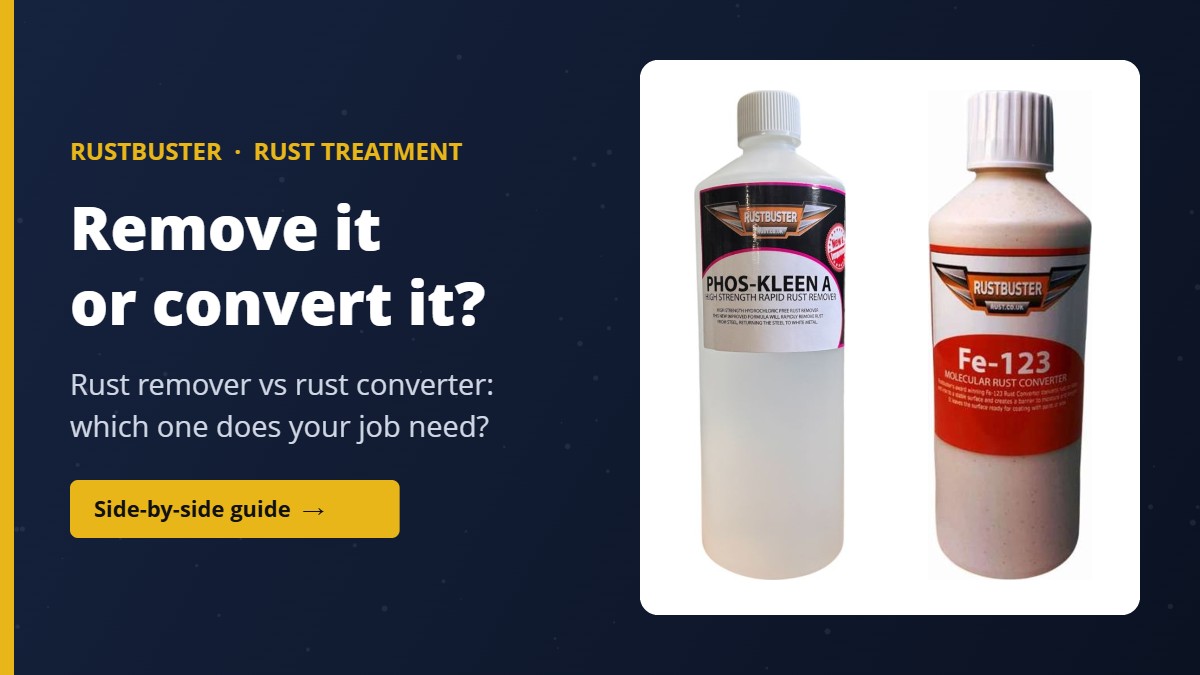
Rust removers dissolve iron oxide chemically. Traditional removers like our Phos-Kleen (A) and Phos-Kleen (B) are phosphoric acid based — fast and thorough on bolts, brackets, panels and tools. If you’d rather avoid acids, Safer Rust Remover uses gentler chelating chemistry that won’t attack paint, rubber or good metal, so parts can be left to soak. (Not sure which Phos-Kleen you need? A strips heavy rust to bare steel; B preps lightly rusted panels for paint. See the A vs B comparison.)
The result is clean bare steel — which is also the catch. Bare steel starts flash-rusting within hours in Irish humidity, so plan to prime the same day, or hold the surface with Bor-X anti-flash rust inhibitor until you can.
Choose a remover when: the part is small enough to treat fully (soak or wet-apply), you want bare metal for welding or a show-standard paint job, or you’re de-rusting tools and fixings.
What a rust converter does
A rust converter doesn’t remove anything. It reacts with the rust in place, converting it into a stable, inert compound — the surface turns black as it cures and becomes a sound base for paint. Our FE-123 Rust Converter is the best-selling product in our whole Rustbuster range for good reason: brush or spray it onto firm surface rust, let it cure, and you’ve killed the corrosion without days of stripping.
Converters aren’t magic, though. They need something to react with — on clean metal they do nothing — and they can’t reach rust buried under flaking scale. Wire-brush or scrape off anything loose first, and remember a converter stabilises the surface; it doesn’t restore strength to metal that’s rusted thin. Rot you can push a screwdriver through needs cutting out and welding, not chemistry.
Choose a converter when: you’re treating large areas (chassis rails, floors, sills, arches), the rust is surface-level on solid metal, or full removal just isn’t practical.
Side by side
| Rust remover | Rust converter | |
|---|---|---|
| What it does | Dissolves rust to bare steel | Turns rust into a stable, paintable layer |
| Best for | Small parts, fixings, pre-weld prep | Chassis, underbody, sills, large panels |
| Surface after | Bare metal (prime promptly) | Black cured layer, ready for paint |
| Heavy flaking rust | Yes, with soaking/repeat | Remove loose scale first |
| Our picks | Phos-Kleen, Safer Rust Remover | FE-123 |
The full job: a proven system
Whichever route you take, rust treatment only lasts if it’s sealed and protected — especially on Irish winter roads, where salt gets into every seam. The system we recommend (and use):
- Clean and degrease — Safer Degreaser, and Chlor-X to neutralise road salt.
- Remove loose rust — wire brush, scraper or abrasive disc.
- Treat — FE-123 converter for large areas, or Phos-Kleen to bare metal on parts.
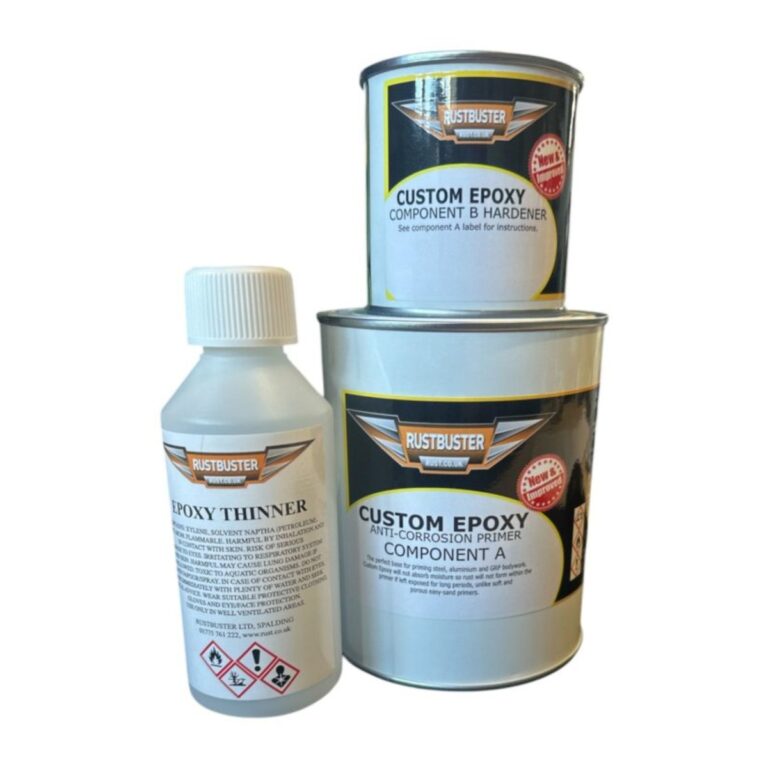
- Seal with epoxy — two coats of Epoxy Mastic rust proofing paint, a moisture-proof barrier tough enough for underbody use.
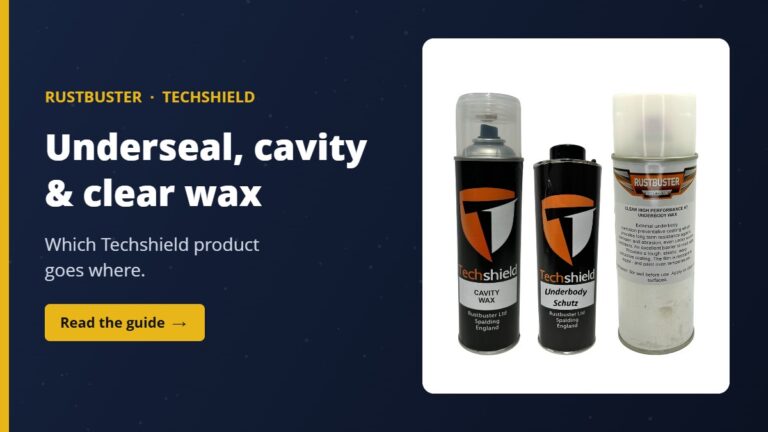
- Protect — Corrolan cavity wax inside box sections, underbody wax or stonechip outside.
Serious structural corrosion is an NCT failure point, so sills, chassis rails and suspension mounting points deserve attention before the rust gets established — prevention is a fraction of the cost of welding.
Common questions
Does rust converter really work?
Yes — on the right surface. Applied to firm surface rust, a quality converter like FE-123 stops the corrosion reaction and leaves a paintable finish. It won’t rescue metal that’s already rusted through.
Can you paint over rust converter?
Yes — that’s the point. Once FE-123 has fully cured, overcoat it with an epoxy primer or Epoxy Mastic for a long-lasting seal. Don’t leave converted rust bare long-term.
Is phosphoric acid a remover or a converter?
A bit of both — it dissolves rust and leaves a thin iron-phosphate coating. Used wet and rinsed, it behaves as a remover; that’s how our Phos-Kleen products are designed to work.
What about rust stains on paint, wheels or driveways?
That’s a different job — use Purple-X rust stain remover, which lifts rust staining without harming the surface underneath.
Still not sure which your job needs? Ask us — we use these products ourselves and are happy to talk it through. Browse the full Rustbuster range here. Everything is in Irish stock, with free delivery over €150.