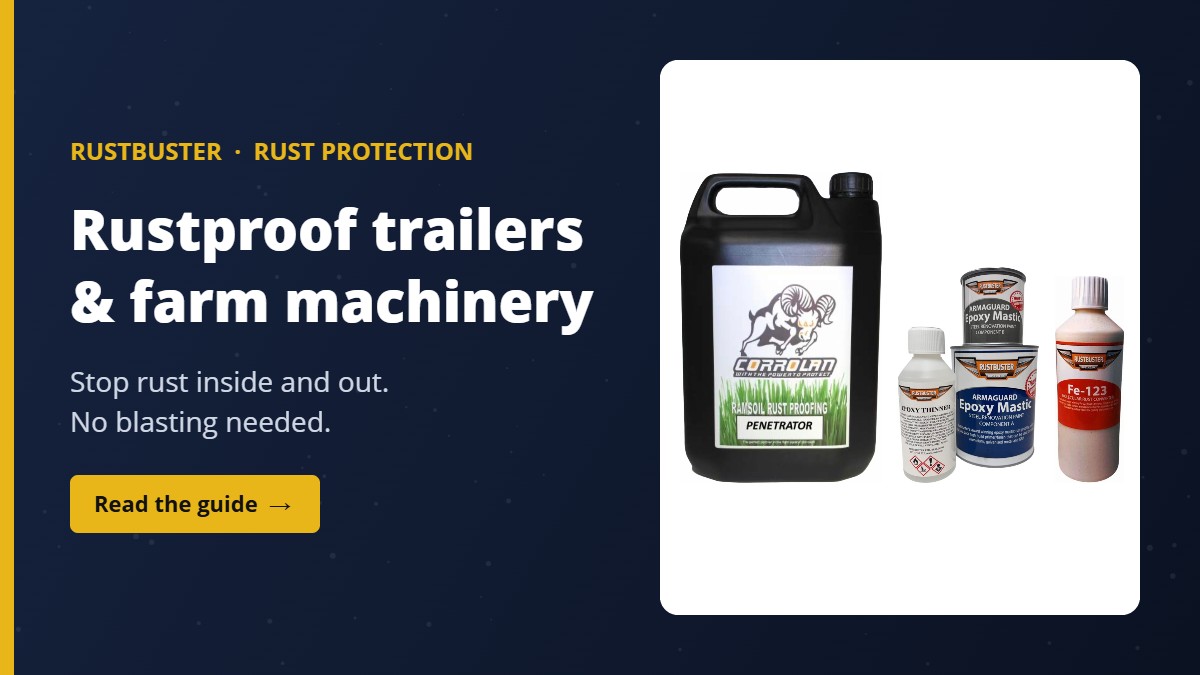
How to Rustproof a Trailer, Horsebox or Farm Machinery
Trailers, horseboxes and farm machinery have a hard life. They live outdoors all year, get towed along gritted roads in winter, and spend their working days loaded with wet muck, manure, fertiliser, silage or livestock. Then they’re parked up wet and rarely washed. It’s no surprise that steel rots from the inside out, starting where you can’t see it. The good news is you don’t need a blast cabinet or a spray booth to stop it. This guide covers where rust starts, a proven Rustbuster system you can apply with a brush and a wire wheel, and a simple yearly routine to keep it away.
Where trailers and machinery rust first
| Area | Why it rusts | What to use |
|---|---|---|
| Box-section chassis and drawbar | Water, mud and salt get inside and never dry out, so they rust from the inside | Corrolan Penetrator, then Corrolan Active cavity wax |
| Where the floor meets the frame | Muck and wet bedding sit in the joint, and timber floors hold moisture against the steel | Clean, treat rust, Epoxy Mastic, then wax the seams |
| Spring hangers, leaf springs, U-bolts and shackles | Layers of metal trap water, and road spray hits them first | Safer Rust Remover for small parts, then Corrolan Penetrator |
| Mudguards and wheel arches | Constant blasting by grit and road spray chips the paint | Epoxy Mastic, or Techshield Underbody Schutz |
| Hitch, jockey wheel clamp, ramp hinges and pins | Moving parts wear through paint, and pins trap water | Corrolan Penetrator, which also lubricates fine parts |
| Spreaders, hoppers and tipping bodies | Fertiliser and salts left in the corners attack the steel between jobs | Wash out, Chlor-X, then Epoxy Mastic and wax |
The Rustbuster system, step by step
Rust protection is only as good as the preparation underneath it. Work in this order, and pick a dry day: Rustbuster’s paints and waxes should go on steel that is at least 3°C above the dew point, so there’s no condensation on the surface.
Wash and degrease
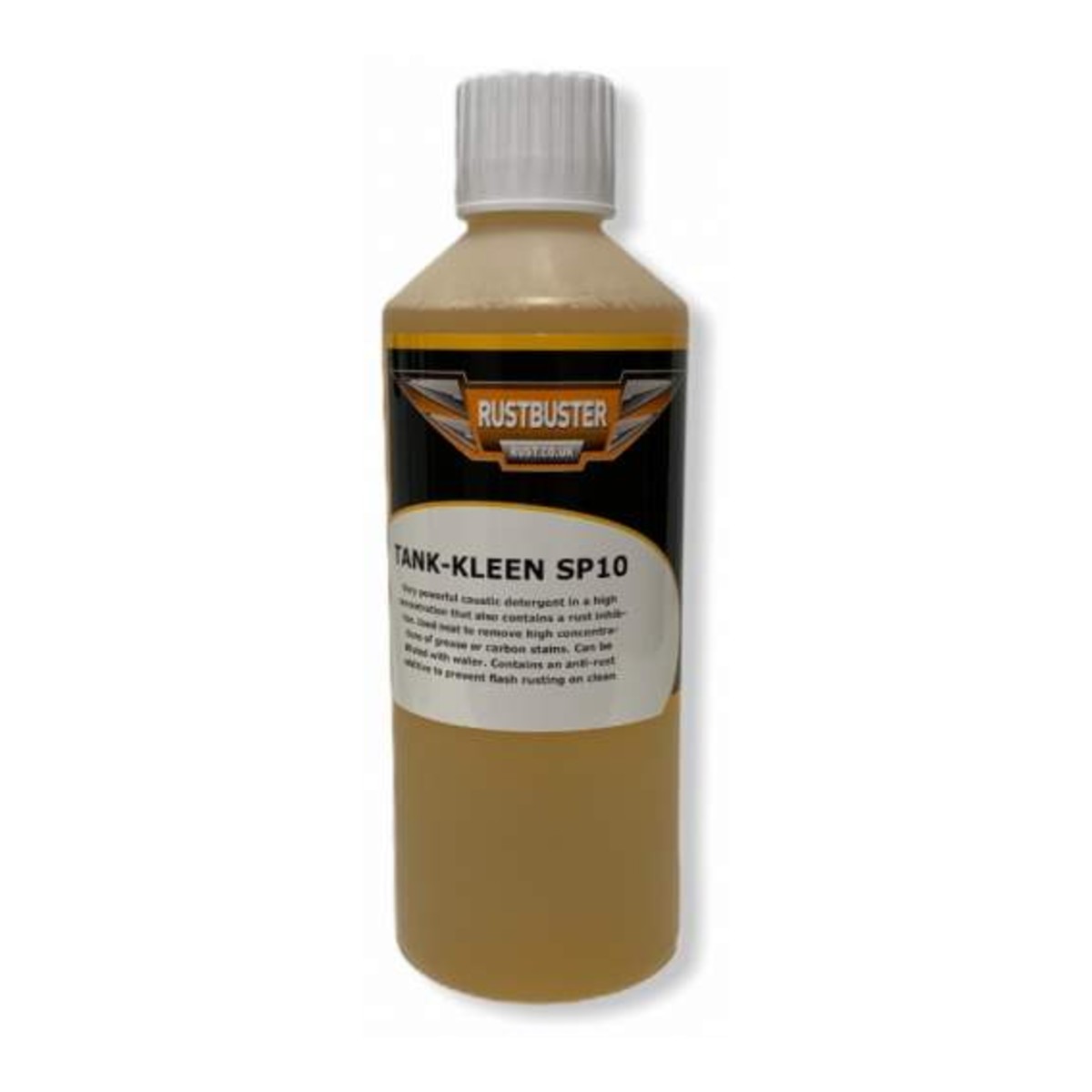
Farm and trailer grime is heavy going. Tank-Kleen SP10 is a caustic industrial degreaser suitable for steel, engines and farm equipment. Dilute it 1:4 with water and scrub it in, or run it through a power washer’s detergent tank at up to 1:100. Leave it 5–60 minutes, then rinse thoroughly. Keep it off paintwork, as it can stain. For lighter jobs, or around painted areas, use Safer Degreaser.
Get the salt off
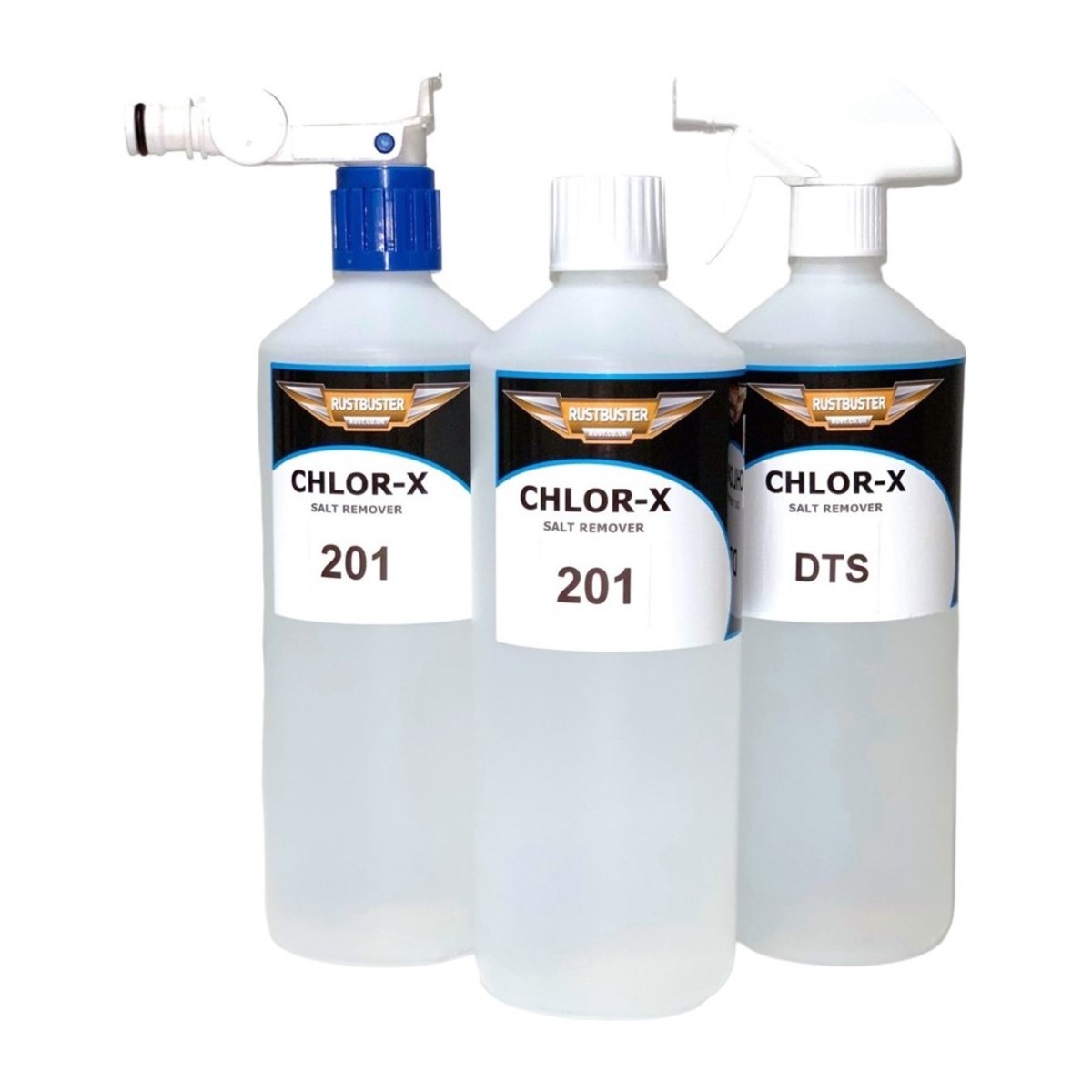
Salt crystals cling to steel, and power washing alone won’t shift them. Chlor-X Salt Remover gets behind the crystals and lifts them away. Run it through a power washer at 100:1, or spray on the ready-to-use formula, leave 10 minutes and hose off. Paint over salt and the rust will come straight back through. See how to remove salts.
Remove loose rust and flaking paint
Wire brush, flap disc or needle gun everything loose back to firm metal. Drop small parts such as U-bolts, shackles and pins into Safer Rust Remover, an acid-free dip that works on heavily pitted rust. For heavy rust and mill scale on steel, Phos-Kleen A works fast, but it’s a strong acid for industrial use: see our Phos-Kleen A guide first.
Convert the rust that’s left
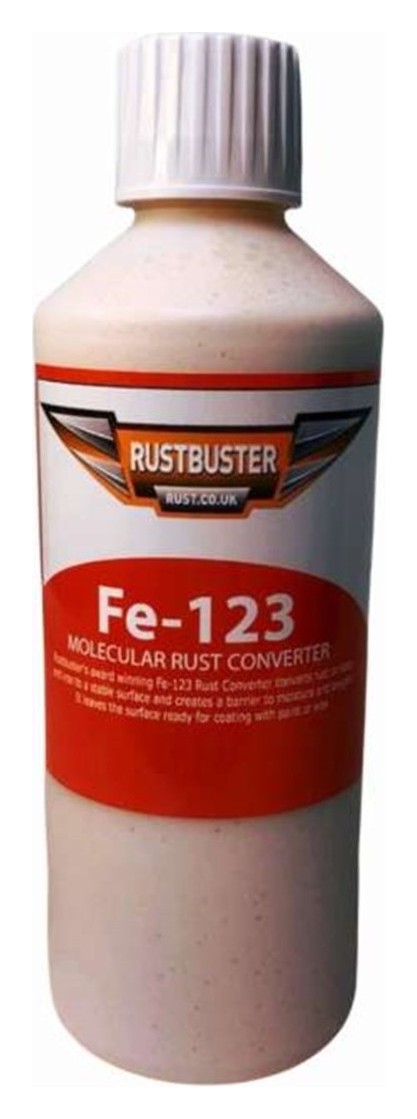
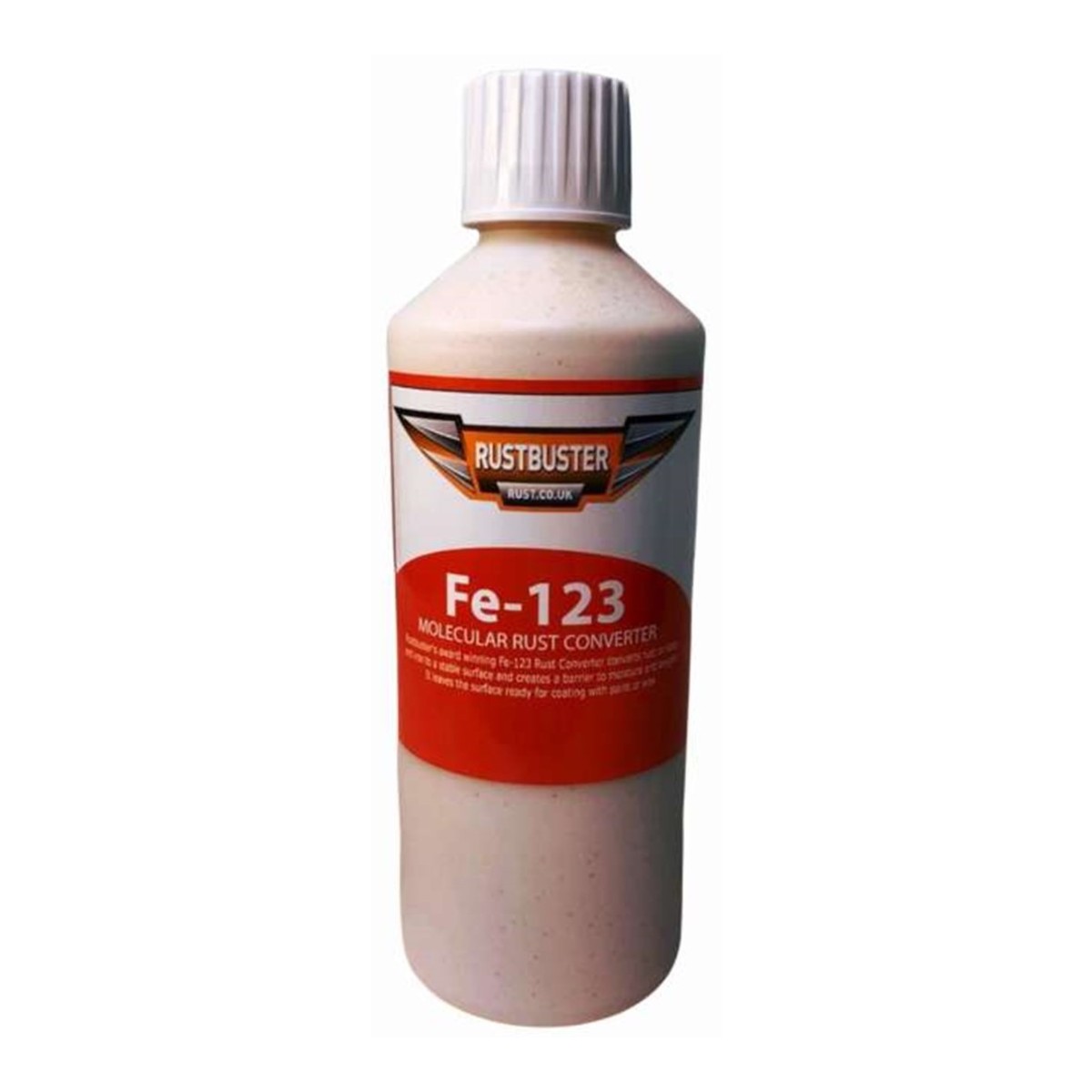
Rust in pits and seams that you can’t wire out gets FE-123 Rust Converter. Brush it on and leave it 15–60 minutes: it turns purple, then black as the tannic acid converts the rust into a stable, paintable surface. There’s no need to wash it off, and you can paint or wax straight over it. Coat it within a month. See how to use FE-123.
Paint with Epoxy Mastic
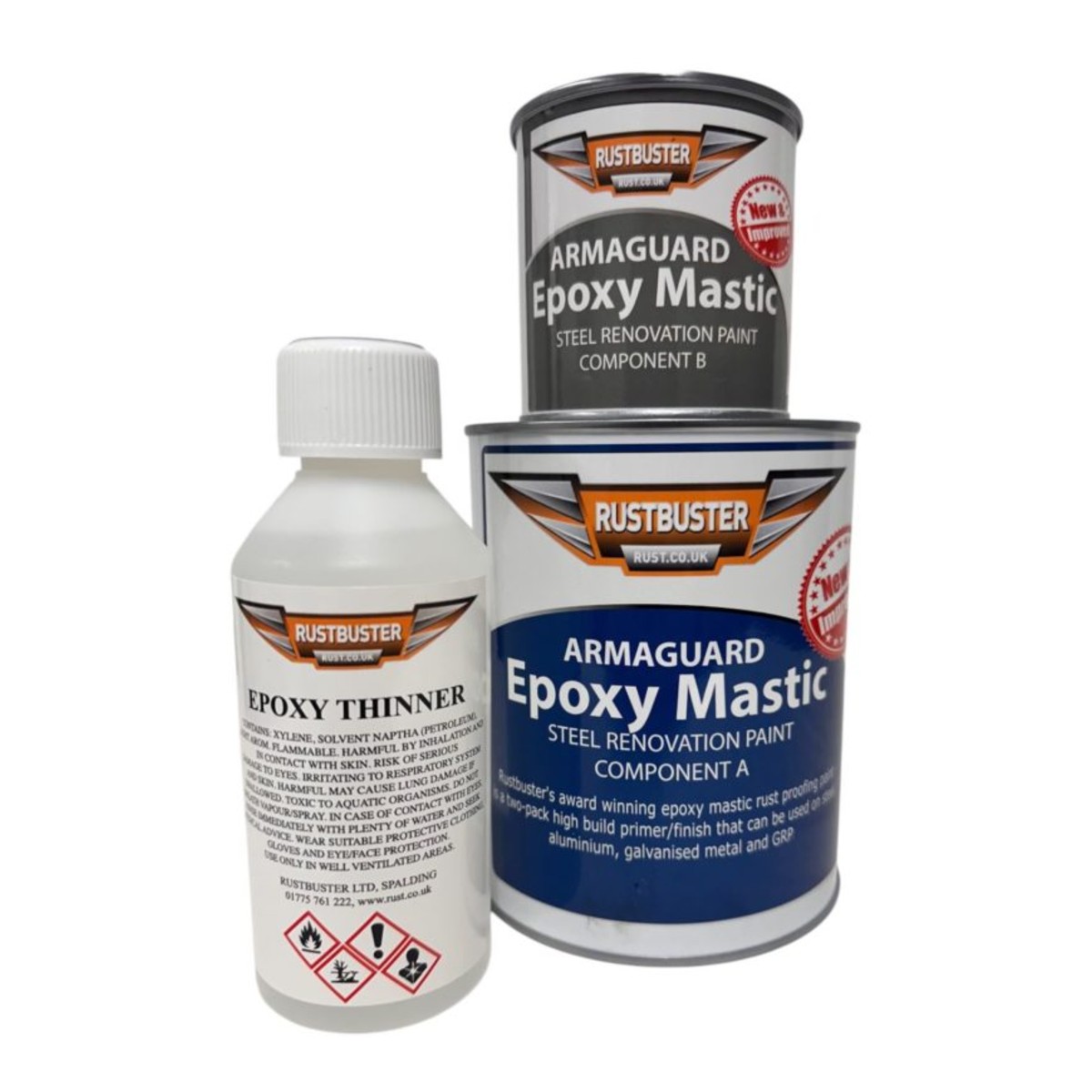
Armaguard Epoxy Mastic is Rustbuster’s award-winning two-pack rustproofing paint, and it’s made for exactly this job. It grips wire-brushed steel with the performance of a coating over blast-cleaned metal, sets hard yet flexes with the steel, and won’t let moisture through. Mix 3:1, brush or spray a high-build coat, and apply a second coat any time after about 5 hours at 20°C. It works as a primer and finish in one, at about 6.4m² per litre. See how to use Epoxy Mastic.
Wax the hidden places
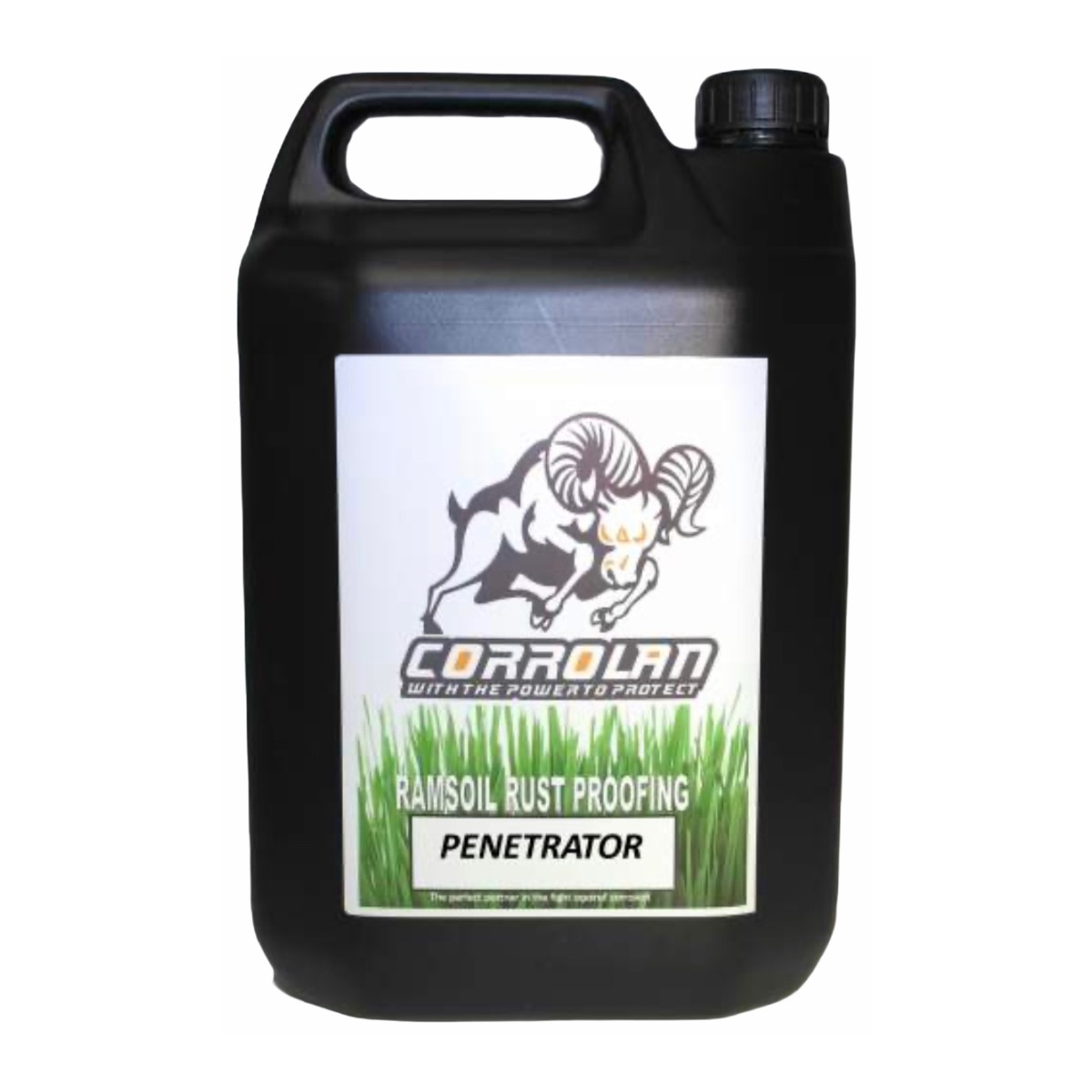
Paint can’t reach inside box sections, or into seams and spring packs. Spray Corrolan Penetrator in first: it’s thin enough to creep into seams, threads and fine crevices and drive out trapped moisture. Follow with Corrolan Active inside chassis rails and box sections, and Corrolan Pure on the underside. These lanolin waxes stay soft and self-healing rather than cracking, and can be applied to steel as cold as −5°C.
- Stop flash rust when you wash. Freshly cleaned bare steel can go orange within minutes. Adding Bor-X to your rinse water at 0.25–2% keeps it clean until it’s dry and ready to paint. See our Bor-X guide.
- Don’t put zinc primer over FE-123. The converter’s barrier stops zinc making electrical contact with the steel. Use one or the other on a given area.
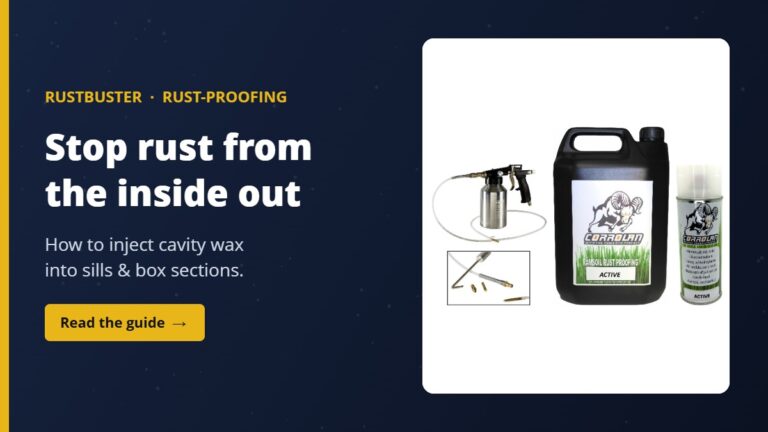
- Get into the box sections. Drill small access holes where needed, and use a wax injection gun with a long probe. See our cavity wax injection guide.
- Keep drain holes clear. Wax should coat the inside of a chassis rail, not block the holes that let water out.
Galvanised trailers
Many modern trailers are hot-dip galvanised, which protects well until the zinc is scratched or worn through. Paint doesn’t stick well to new galvanising, so it needs the right prep.
| Condition | What to do |
|---|---|
| Sound galvanising | Leave it alone and wash it regularly, especially after salted roads |
| New galvanising you want to paint | Degrease with SP10, rinse, then T-Wash. It turns the surface black or dark grey to show it has worked. Rinse, dry and paint with Epoxy Mastic. See how to paint galvanised steel. |
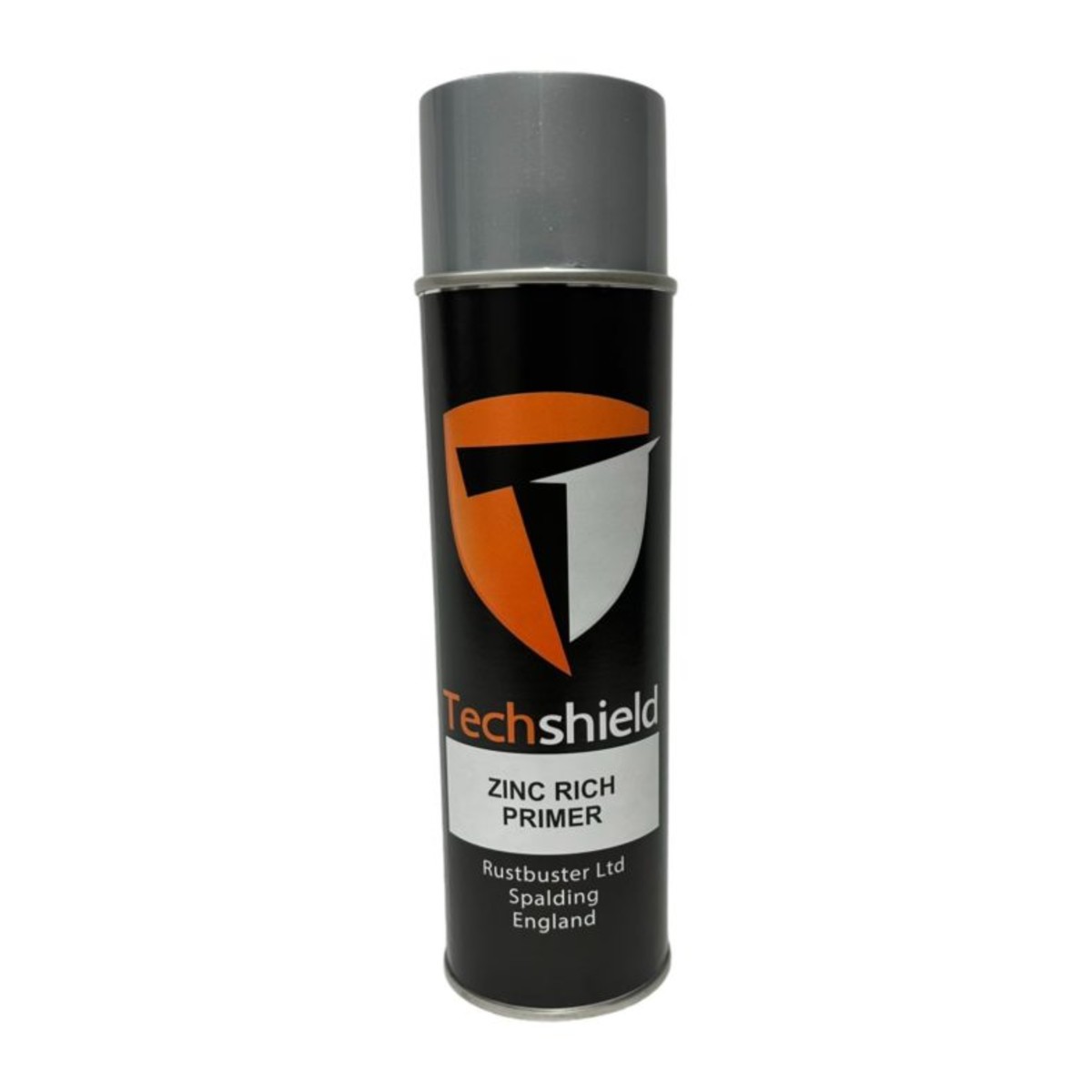
| Scratches, welds and worn spots | Techshield Zinc Rich Weldable Primer gives cathodic protection with 90% zinc in the dry film, and matches old galvanising. For larger areas, brush Zinc Rich Epoxy-Anode. See our zinc-rich primer guide. |
Horseboxes and livestock trailers
Urine and wet bedding are hard on steel, and they soak through timber floors and mats to the cross-members underneath, which are the parts you rarely see. At least once a year, lift the mats, check the floor, and inspect the cross-members, ramp hinges and ramp springs from underneath. Treat any rust with FE-123, paint with Epoxy Mastic, then wax the underside of the floor and the cross-members with Corrolan Penetrator and Corrolan Pure. Corrolan is natural, non-toxic and made from the lanolin in sheep’s wool.
Farm machinery
Fertiliser spreaders, sprayers, tipping trailers, toppers and loader buckets all suffer from the same things: salts and residues left sitting in corners between jobs, and long spells parked outside. Rustbuster’s Corrolan range is used to protect agricultural and construction machinery as well as vehicles.
- Wash out after every job, especially after spreading fertiliser. Don’t park machines up with residue in them.
- Use Chlor-X at the end of the season to lift salts that water alone leaves behind.
- Touch in chips before they spread. A small tin of Epoxy Mastic, or Techshield aerosols, fixes damage while it’s small.
- Wax before winter lay-up. Corrolan Pure forms a translucent amber film, so you can still inspect the metal. It’s like grease in the cold and a heavy oil in summer.
- Protect pins, threads and linkages with Corrolan Penetrator, which doubles as a maintenance fluid that keeps fine parts lubricated and rust-free.
Your yearly rust check
Autumn: wash, inspect and wax
Before the gritters come out, wash off the summer’s dirt, Chlor-X the underside, touch in any chips and top up the wax in box sections and seams.
Winter: rinse after salted roads
A quick hose-down of the chassis and running gear after towing on gritted roads stops salt sitting on the steel for weeks.
Spring: repair the damage
Check what the winter did. Treat any fresh rust spots with FE-123 and Epoxy Mastic before they spread, and re-wax worn areas.
Trailer and machinery rust FAQs
What is the best paint for a rusty trailer?
Rustbuster Armaguard Epoxy Mastic. It’s a two-pack epoxy that grips wire-brushed steel with the performance of a coating over blast-cleaned metal, works as a primer and finish in one, and is hard yet flexible. Remove salt, grease and loose rust first, and treat remaining rust with FE-123.
Do I need to sandblast a trailer before painting?
No. Epoxy Mastic is designed for wire-brush-cleaned steel. Degrease, remove salt with Chlor-X, wire brush the loose rust, convert what’s left with FE-123, then paint.
How do I stop a trailer chassis rusting from the inside?
Spray Corrolan Penetrator into the box sections to creep into seams and drive out moisture, then follow with Corrolan Active cavity wax. Use a wax injection gun with a long probe, keep the drain holes clear, and top up the wax every year.
Can I paint a galvanised trailer?
Yes, but new galvanising needs preparing first. Degrease it, apply Rustbuster T-Wash until the surface turns black or dark grey, rinse, dry and paint with Epoxy Mastic. Repair scratches and worn spots with Techshield Zinc Rich Weldable Primer.
What is the best rust protection for farm machinery?
Wash out residues after every job, remove salts with Chlor-X, touch in chips with Epoxy Mastic, and coat the metal with Corrolan lanolin wax before winter. Corrolan Pure leaves a translucent film, so you can still inspect the steel.
How often should I rustproof a trailer?
Inspect it at least once a year, ideally in autumn before the roads are gritted. Touch in any damage, and top up the wax in box sections and seams. Rinse the chassis after towing on salted roads.
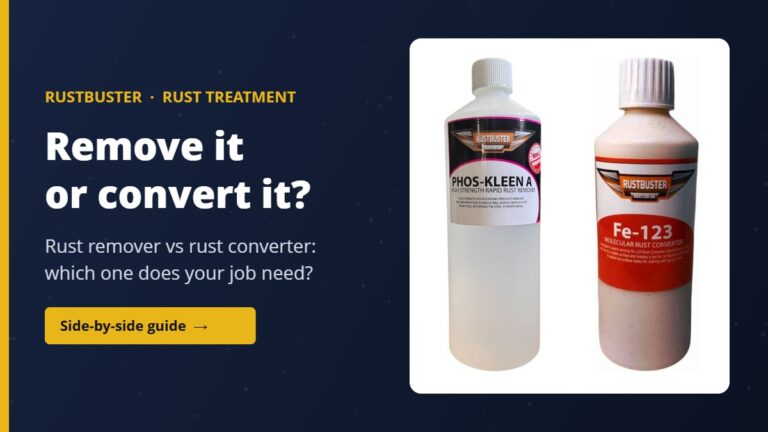
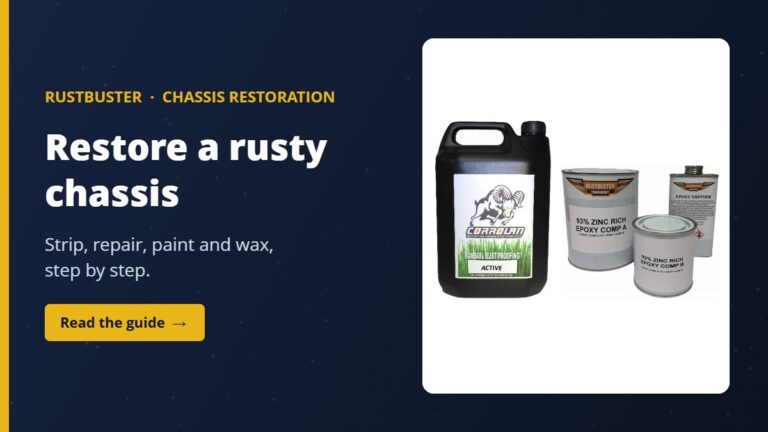
More guides: rust remover vs rust converter, lanolin rustproofing with Corrolan, rustproofing before winter , the Safer range, galvanised gates and railings and chassis restoration.