Engine Oil Grades Explained: 5W-40, ACEA C3, and What the V Means
The short version: an oil label carries three separate pieces of information — how thick it is (5W-40), what standard it meets (ACEA C3, API SP), and which manufacturers have approved it (VW 504 00, MB 229.51). They are not alternatives to each other; you usually need all three to match. Here is what each one means, in plain English.
1. The viscosity: what 5W-40 actually means
This is the bit everyone recognises. It describes how the oil flows, and it is two measurements, not one.
- The first number + W (the 5W) is the cold rating. W stands for Winter, not weight. The lower the number, the better the oil flows when you start the engine from cold.
- The second number (the 40) is how thick the oil is at normal running temperature, around 100°C.
So a 0W-30 and a 10W-30 behave much the same once warm — the difference is that the 0W gets round the engine faster on a cold morning. That matters, because most engine wear happens in the first seconds after start-up.
Fitting a thicker oil than specified does not mean “more protection”. Modern engines have tight tolerances and oil-fed components like variable valve timing that rely on the specified grade to work properly.
Monogrades
Older engines often call for a single number — SAE 30, SAE 40, straight 50. These are monogrades: no cold-flow improvers, one viscosity. They are still the correct choice for many vintage and pre-war engines, which is why the Classic & Vintage range still carries them. Do not “upgrade” a vintage engine to a modern multigrade without checking — sometimes the original spec exists for good reasons, including how the engine handles oil consumption and filtration.
2. ACEA: the European standard (A/B, C and E)
ACEA is the European oil standard, and it is the letter most likely to be in your handbook. There are three families:
- A/B — petrol and diesel cars without a particulate filter. Older spec, higher additive levels. E.g. A3/B4.
- C — “catalyst compatible”. For engines with a DPF or GPF (particulate filter) and modern catalysts. This is where most modern cars sit.
- E — heavy-duty diesel: trucks, plant, agricultural.
What “SAPS” means — and why C exists
SAPS stands for Sulphated Ash, Phosphorus and Sulphur. Those additives are excellent at protecting an engine, but they leave ash behind that clogs a particulate filter and poisons a catalytic converter. So the C grades limit them — “low SAPS” or “mid SAPS”. Put a full-SAPS A3/B4 oil in a car with a DPF and you can block the filter. That is the single most expensive mistake people make with oil.
The C grades at a glance
| Grade | SAPS | Thickness under load (HTHS) | Typically |
|---|---|---|---|
| C1 | Low | Lower | Rare — some Ford |
| C2 | Mid | Lower (fuel economy) | Peugeot, Citroën, Toyota |
| C3 | Mid | Higher (≥3.5, more protection) | The common one — VW, BMW, Mercedes |
| C4 | Low | Higher | Mainly Renault |
| C5 | Mid | Lower (fuel economy) | Newer VAG, Asian |
| C6 | Mid | Lower, plus LSPI protection | Newest engines |
The practical difference between C2/C5 and C3/C4 is HTHS — how thick the oil stays under real load and heat. C3 and C4 hold a thicker film (better protection); C2, C5 and C6 run thinner for fuel economy. That is why you cannot simply swap a C3 for a C5 because the viscosity number matches. See the 5W-30 range — you will find C2, C3 and C5 oils all in the same viscosity.
3. The bit that confuses everyone: what does the V mean?
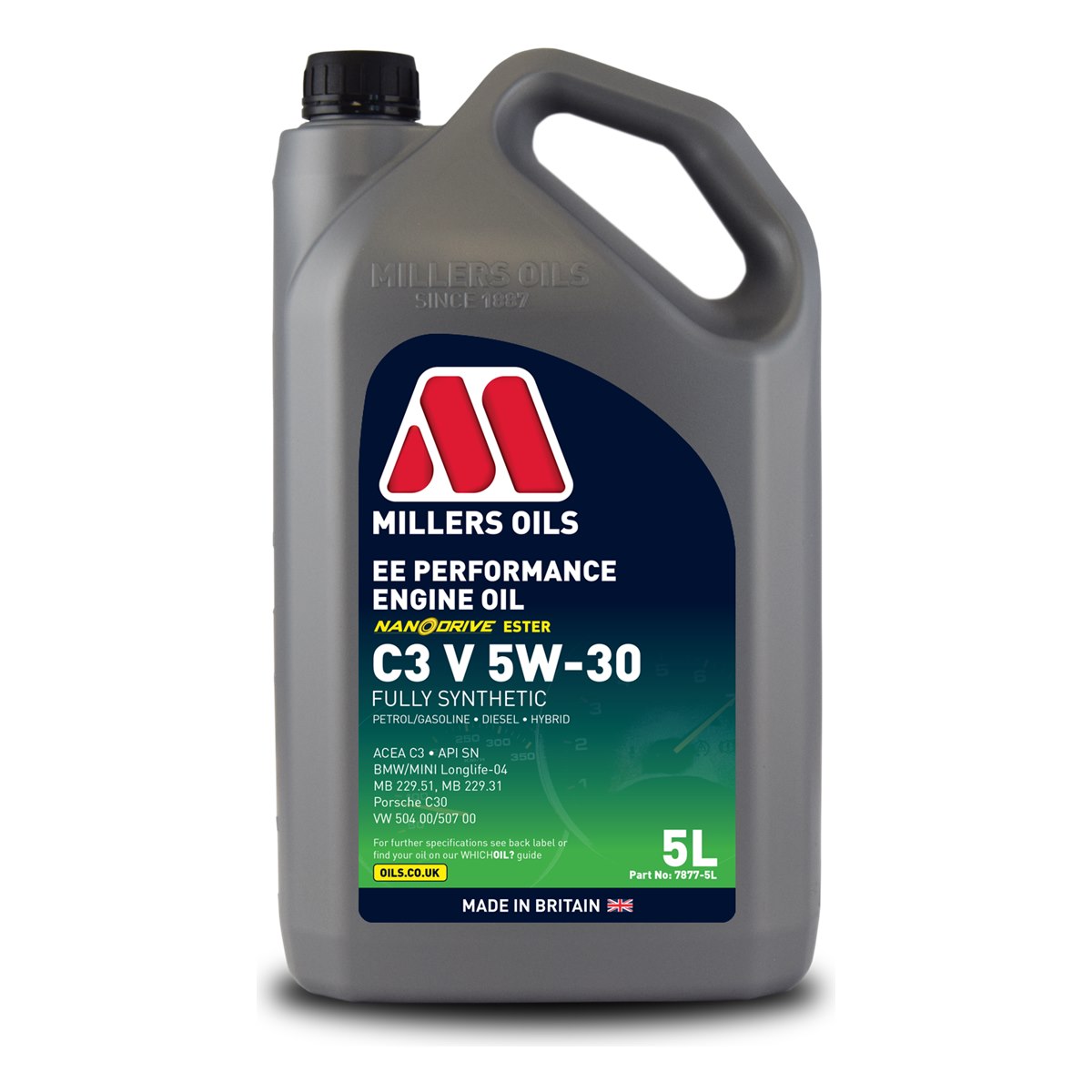
Millers have started adding a letter after the ACEA grade — you will see C3 V, C5 V and C3 RN. This trips people up, so let us be clear:
The V is not a new grade and not a higher grade. It tells you which manufacturer’s approvals that particular C3 (or C5) has been formulated and approved against.
- V = Volkswagen Audi Group. A C3 V carries the VAG approvals — VW 504 00 / 507 00 and the older VW specs, plus Porsche C30, and it also covers Audi, Seat, Skoda, Bentley and Lamborghini. It typically carries BMW Longlife-04 and MB 229.51 too.
- RN = Renault. A C3 RN meets Renault’s RN17 specification (replacing the older RN700/RN710).
- C2 C3 together simply means the oil meets both of those ACEA grades.
So if your handbook asks for a C3 oil and VW 504 00/507 00, the C3 V is the one you want. If it asks for C3 and RN17, you want the C3 RN. If it just says C3, a standard C3 is fine. In short: the ACEA grade tells you the chemistry, the letter tells you whose approval list it is on.
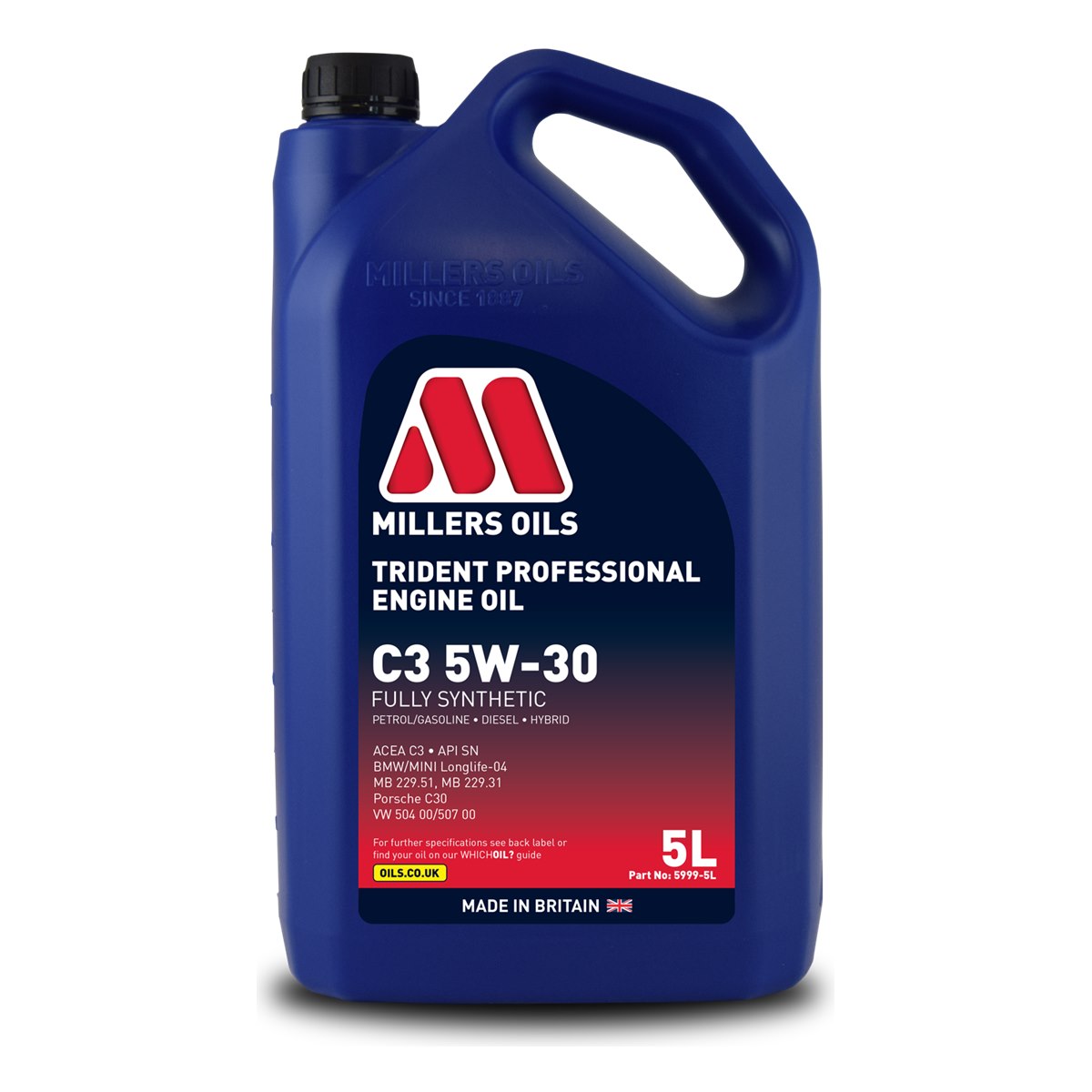
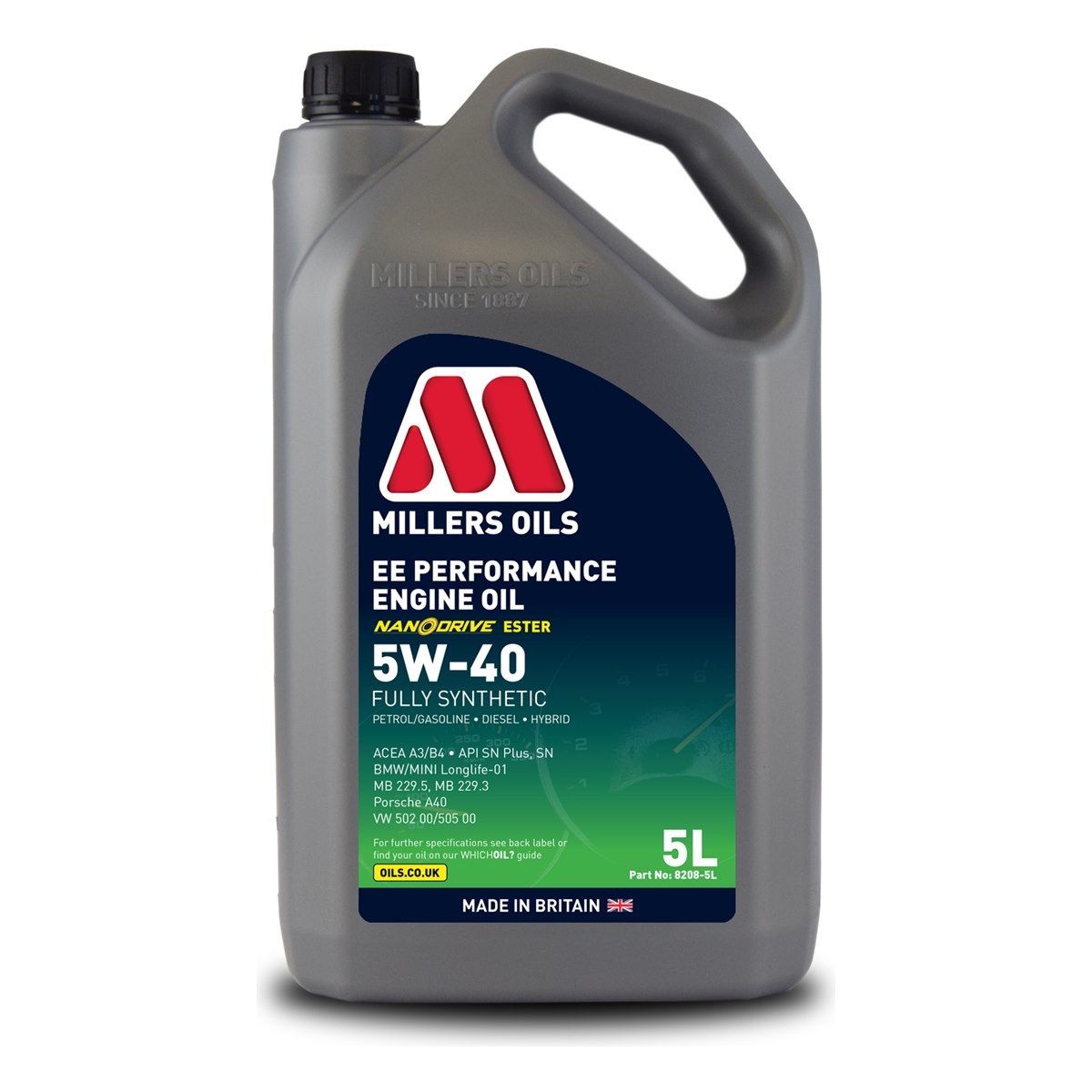
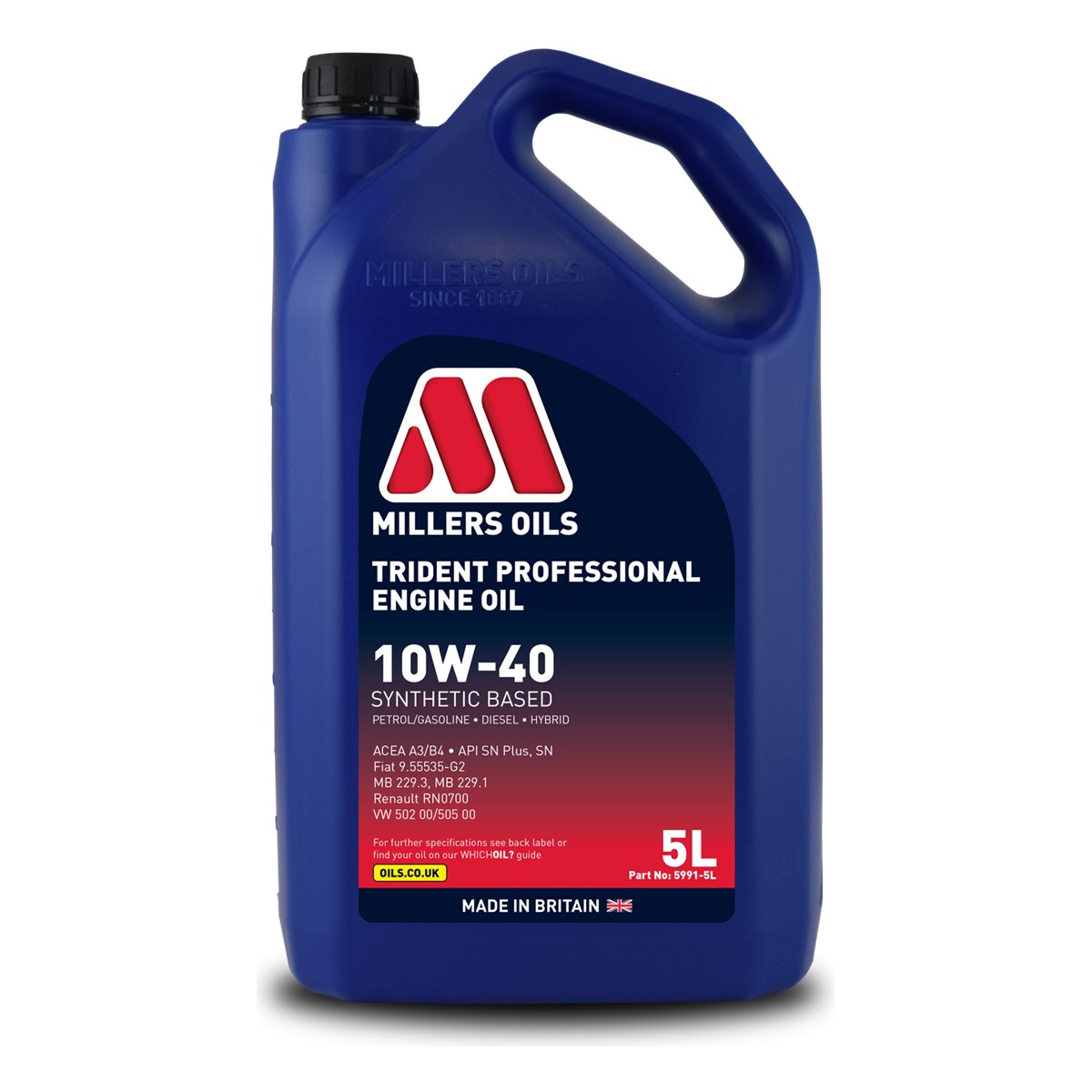
You can see this across the EE Performance and Trident Professional ranges — same viscosity, different approval variants.
4. API: the American standard
You will often see an API rating alongside ACEA. It is simpler:
- S + a letter = petrol (spark). The letter advances over time — SL, SM, SN, and now SP, the current one, which adds protection against LSPI (low-speed pre-ignition) in modern turbo petrol engines.
- C + a letter = diesel (compression). E.g. CK-4.
Later letters are generally backwards compatible, so an API SP oil covers an engine asking for SN — but only if the ACEA grade and any OEM approval also match.
5. OEM approvals — the ones that really matter
If your handbook names a manufacturer spec, that is the one to match — it outranks everything else. Common ones:
- VW 504 00 / 507 00 (long-life petrol/diesel), 502 00 / 505 01
- Mercedes-Benz 229.51, 229.31, 229.5
- BMW Longlife-04 (LL-04), LL-01
- Porsche C30, A40
- Renault RN17
- GM dexos 2
An oil that is “C3” but does not carry your VW approval may still invalidate a warranty claim on a car that specifies VW 504 00. This is exactly why the V variants exist.
How to pick the right oil, in order
- 1. Open the handbook. Note the viscosity (e.g. 5W-30) and any ACEA grade and manufacturer approval.
- 2. Match the approval first if one is named — that is the binding requirement.
- 3. Match the ACEA grade — and never drop from a C3 to a C2/C5 just because the viscosity is the same.
- 4. Then choose your range based on how the car is used.
Which Millers range?
- Trident Professional — everyday servicing for modern cars and vans. Full approvals, sensible money.
- EE Performance — fully synthetic with NANODRIVE low-friction technology. For drivers who want more from a modern engine.
- Classic & Vintage and Pistoneeze — the right chemistry for older engines, including monogrades.
- Motorsport — CFS race oils for competition engines.
- Motorcycle — ZFS 4T and 2T for bikes, where wet clutches need a JASO rating too.
Still not sure?
Use our Oil Finder, compare the ranges on Oil Ranges Explained, or download the full Millers brochures. You can also browse everything by viscosity: 0W-20, 5W-30, 5W-40, 10W-40, 20W-50 and more on the Shop Oil by Grade page.
Or just ring us on 089 448 6626 with your registration and what the handbook says — we do this all day, and it takes two minutes to get it right.
Frequently asked questions
What does 5W-40 mean on engine oil?
The 5W is the cold rating (W stands for Winter): the lower the number, the better the oil flows on a cold start. The 40 is how thick the oil is at normal running temperature, around 100°C.
What does the V mean after C3 on Millers oil?
It is not a higher grade. The V shows the oil carries Volkswagen Group approvals such as VW 504 00 / 507 00. Likewise RN means Renault RN17. The ACEA grade tells you the chemistry; the letter tells you whose approval list it is on.
Can I use a C5 oil instead of C3?
Not just because the viscosity matches. C3 holds a thicker oil film under load (HTHS of 3.5 or more) for protection, while C5 runs thinner for fuel economy. Match the ACEA grade and any manufacturer approval in your handbook.
What is a low SAPS engine oil?
SAPS stands for Sulphated Ash, Phosphorus and Sulphur. These additives protect engines but leave ash that clogs particulate filters and poisons catalysts, so ACEA C-grade oils limit them. Putting a full-SAPS A3/B4 oil in a car with a DPF can block the filter.