Race Engine Oil Explained: Millers CFS vs CFS NT+ (Plus CSS and CB40)
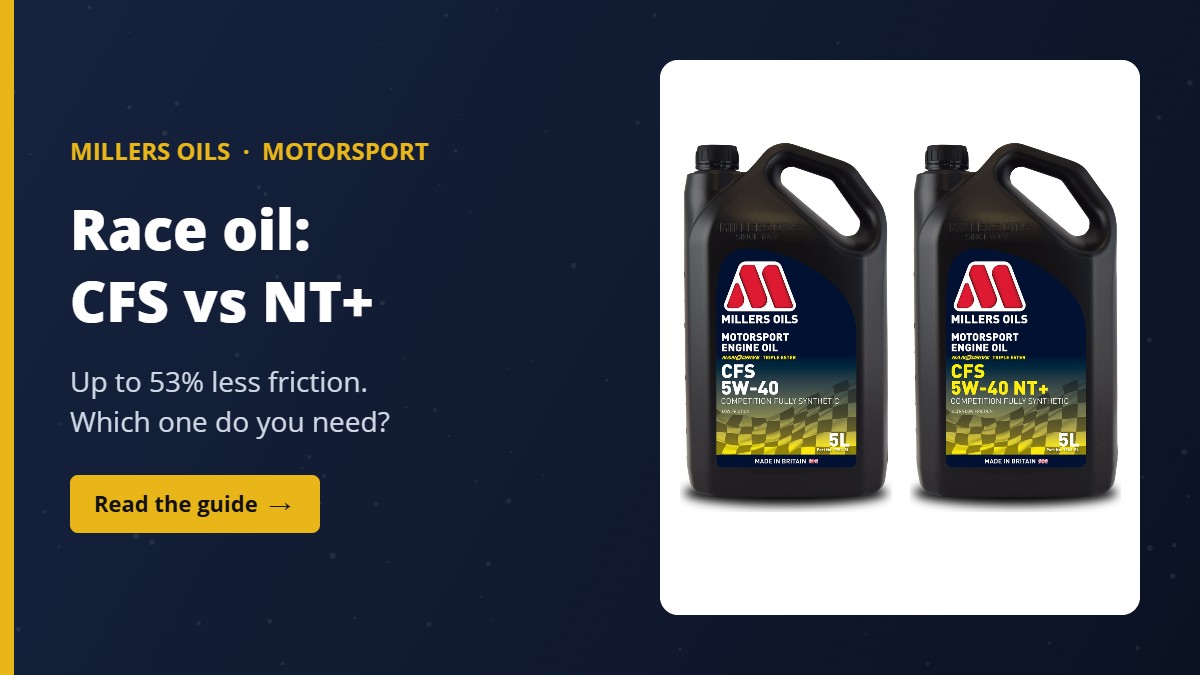
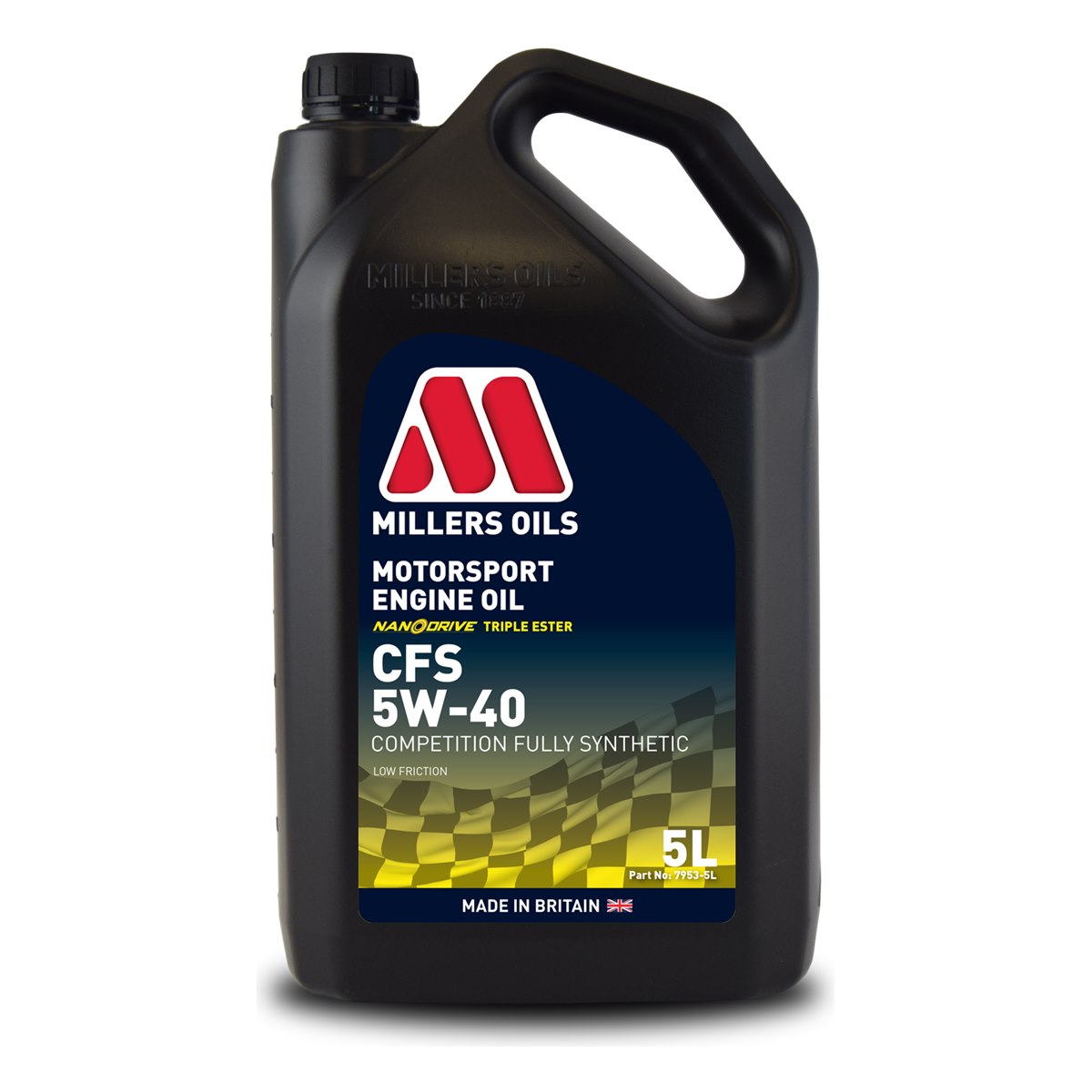
Millers Oils make two families of fully synthetic race engine oil that look almost identical on the shelf: CFS and CFS NT+. Both are triple-ester race oils, both come in similar grades, and both are used everywhere from track days to championship-winning race cars. So what’s the difference, and which one is right for your engine? This guide explains it, along with Millers’ semi-synthetic CSS and the castor-based CB40.
What makes a race oil different?
A road car’s oil is designed for long service intervals, fuel economy and emissions systems. A race engine’s oil has a different job: protecting components at their absolute limits while giving away as little power as possible to friction. Millers’ CFS range is built from 100% synthetic base fluids, polyalphaolefins (PAO) plus a synergistic blend of three esters, chosen to minimise the polymers that can shear down under stress. The result is a strong, shear-resistant oil film, many times the load-carrying capacity of a mineral oil, excellent cold flow at start-up, and thermal stability for operating temperatures of 125°C, with peaks up to 150°C.
CFS vs CFS NT+: the difference
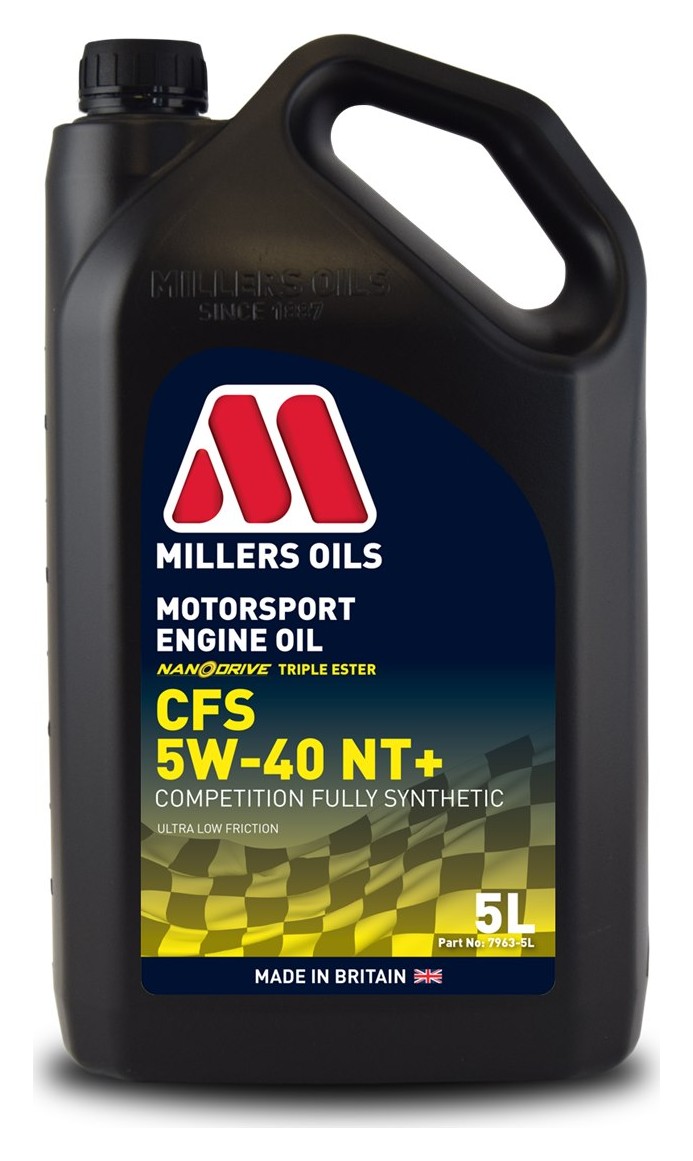
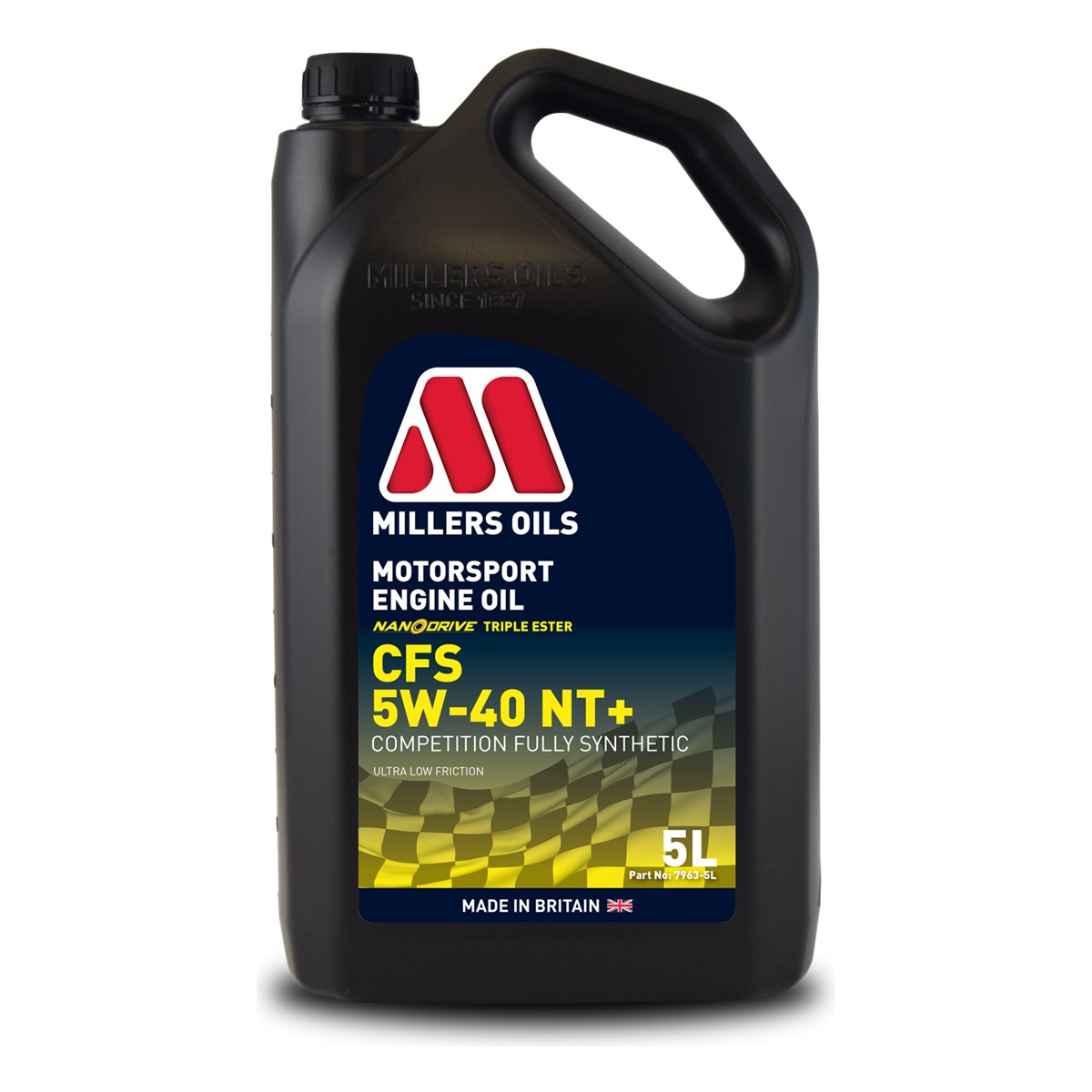
The difference is NANODRIVE, Millers’ award-winning motorsport technology. It combines advanced nanoparticles with triple-ester chemistry to greatly reduce friction, protect against wear and release more power. CFS uses Millers’ ultra-low-friction nano additives; CFS NT+ uses the second generation of NANODRIVE, which takes friction reduction much further.
| CFS | CFS NT+ | |
|---|---|---|
| Base | Fully synthetic PAO + triple ester | Fully synthetic triple ester |
| Low-friction technology | Ultra-low-friction nano additives | Second-generation NANODRIVE |
| Friction reduction* | Up to 26–27% | More than 53% |
| Wear | Reduced wear compared with a standard oil | Up to 48% smaller wear scar |
| Temperatures | 125°C running, 150°C peak | 125°C running, 150°C peak |
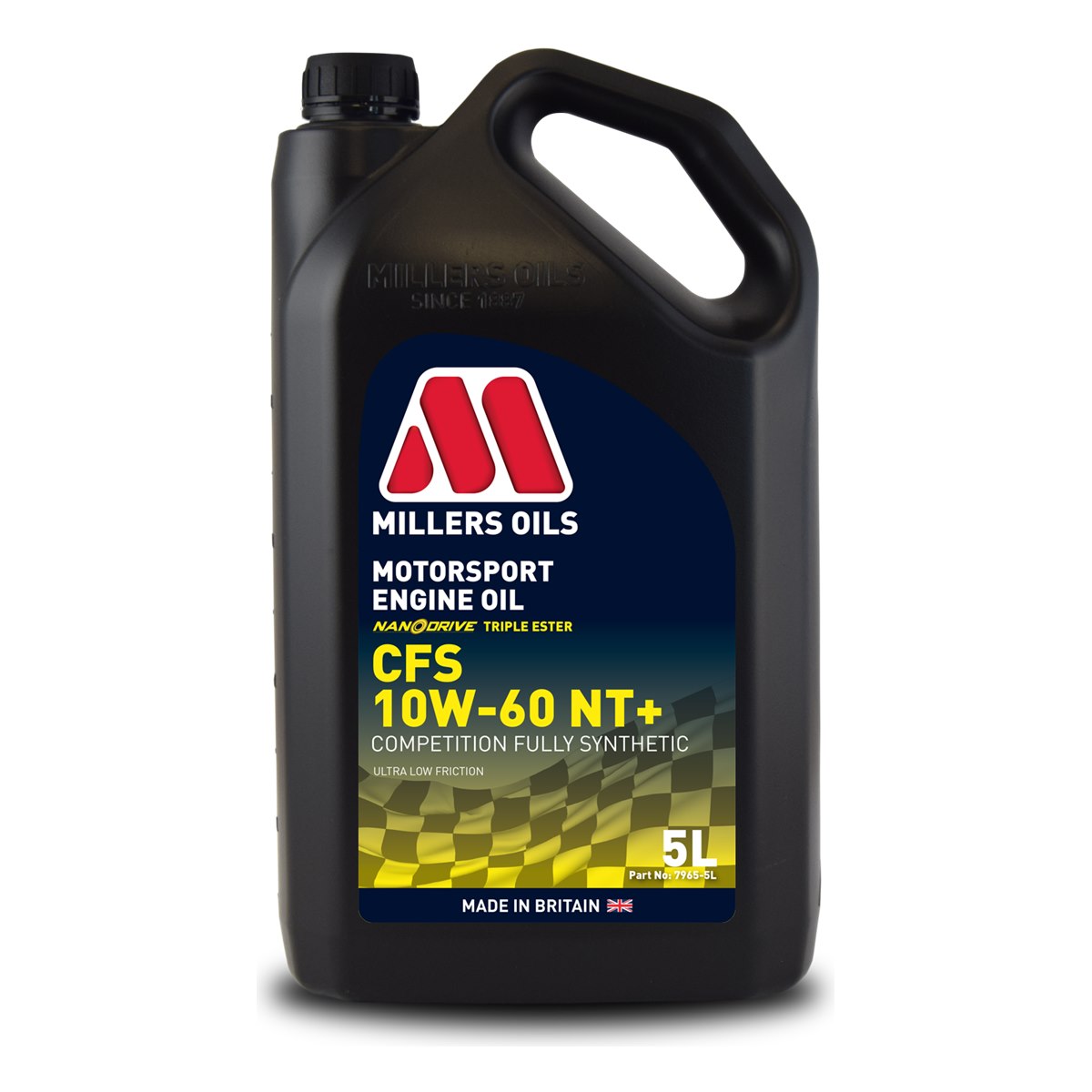
| Grades | 5W-40, 10W-40, 10W-50, 10W-60 | 5W-40, 10W-50, 10W-60 |
| Best for | Fast road, track days, club racing, rally, sprints and hill climbs | Professional teams, qualifying and arduous race events where performance comes without compromise |
*Compared with a typical passenger-car 5W-40 or standard engine oil, in Millers’ tests.
What the tests show
Millers tested CFS 5W-40, CFS 5W-40 NT+ and a typical passenger-car 5W-40 on a high-frequency reciprocating rig (HFRR), measuring friction between two metal surfaces from 40°C to 140°C. At 100°C, a normal engine operating temperature, CFS 5W-40 cut the coefficient of friction by 27%, and CFS 5W-40 NT+ cut it by more than 53%, compared with the typical oil. In a wear test, the scar left by metal-to-metal contact was over 48% smaller with CFS 5W-40 NT+ (28,260µm² against 54,100µm² for the typical oil). Less friction means more of the engine’s power reaches the wheels; less wear means better reliability.
Which one should you choose?
| You are… | Choose |
|---|---|
| Doing track days or fast road driving | CFS 5W-40, ideal where a 5W-30 is normally specified, and for engines with hydraulic tappets such as the Ford Zetec |
| Club racing, rallying, sprints or hill climbs | CFS in the grade your engine needs |
| A professional team, or chasing every last bit of performance | CFS NT+: ideal for qualifying, with the performance to last an arduous race |
| Running a historic or classic competition engine | CSS 20W-60 or Classic Sport (see below) |
| Running methanol or alcohol fuel, or speedway | CB40 castor-based oil |
Choosing the grade
- 5W-40: fast road, race, rally, sprints and hill climbs; engines with hydraulic tappets; engines where a 5W-30 is normally specified
- 10W-40: high-revving engines in circuit racing
- 10W-50: competition and high-performance engines from 2 litres upwards, normally aspirated or turbocharged; in NT+ form, suitable for all race types from endurance to rallying
- 10W-60: larger race and rally engines, with or without turbochargers, under severe, high-stress conditions
Your engine builder’s recommendation always comes first. For more on what the numbers mean, see oil viscosity grades explained.
Historic racing: CSS 20W-60
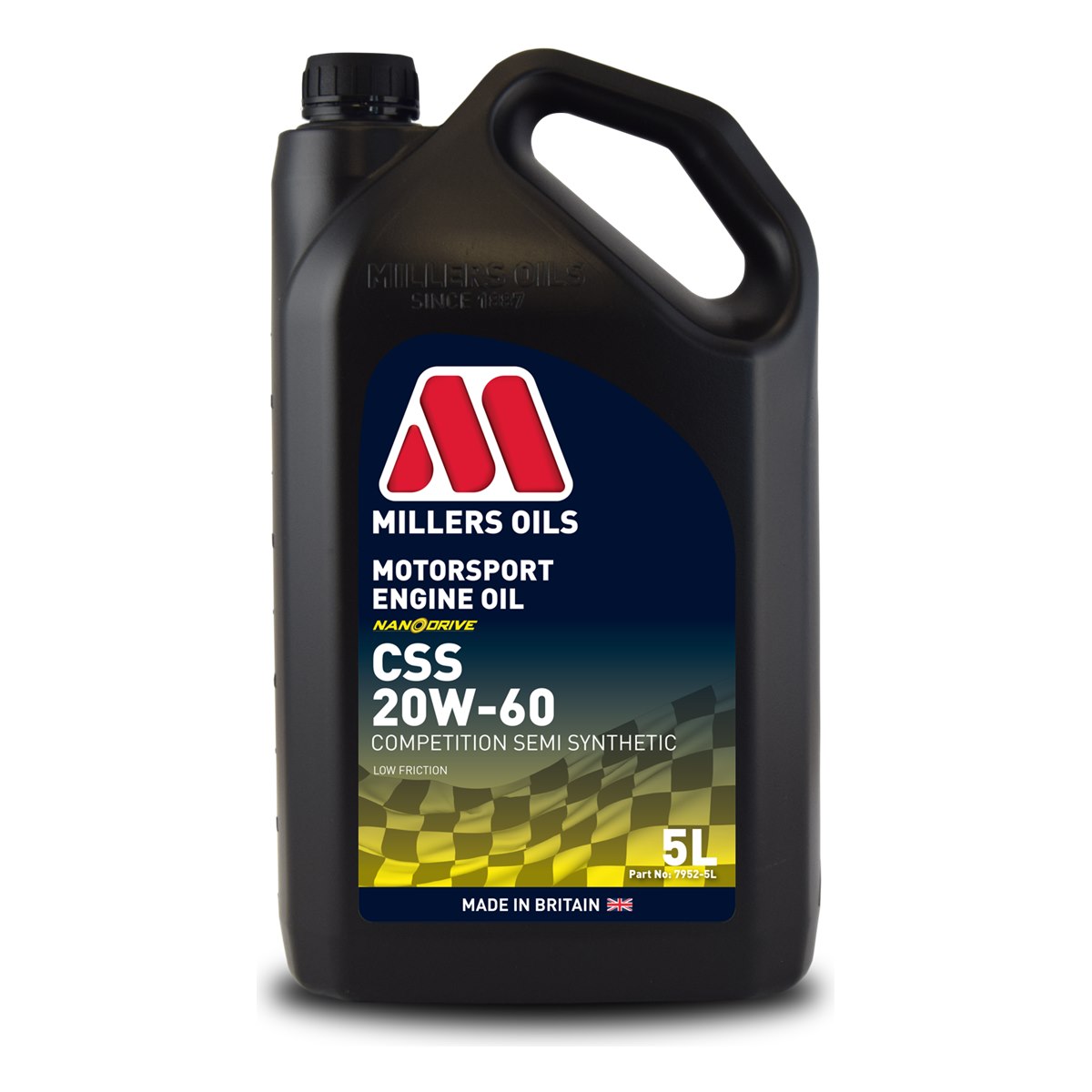
Millers Motorsport CSS 20W-60 is a competition semi-synthetic with the original NANODRIVE low-friction technology, reducing friction by up to 26% compared with a standard oil. Its high viscosity protects engines at very high temperatures and in endurance events. It’s particularly suited to competition engines such as Jaguar, Austin-Healey, MG, TR, Aston Martin, American V8s and modified Ford Kent and Pinto engines, and to competition engines derived from production engines built between the post-war period and the early 1980s. It’s also catalytic-converter compatible, and a strong choice for club and non-professional racing. For road-going classics, see our classic car oil guide.
Methanol and speedway: CB40 castor oil
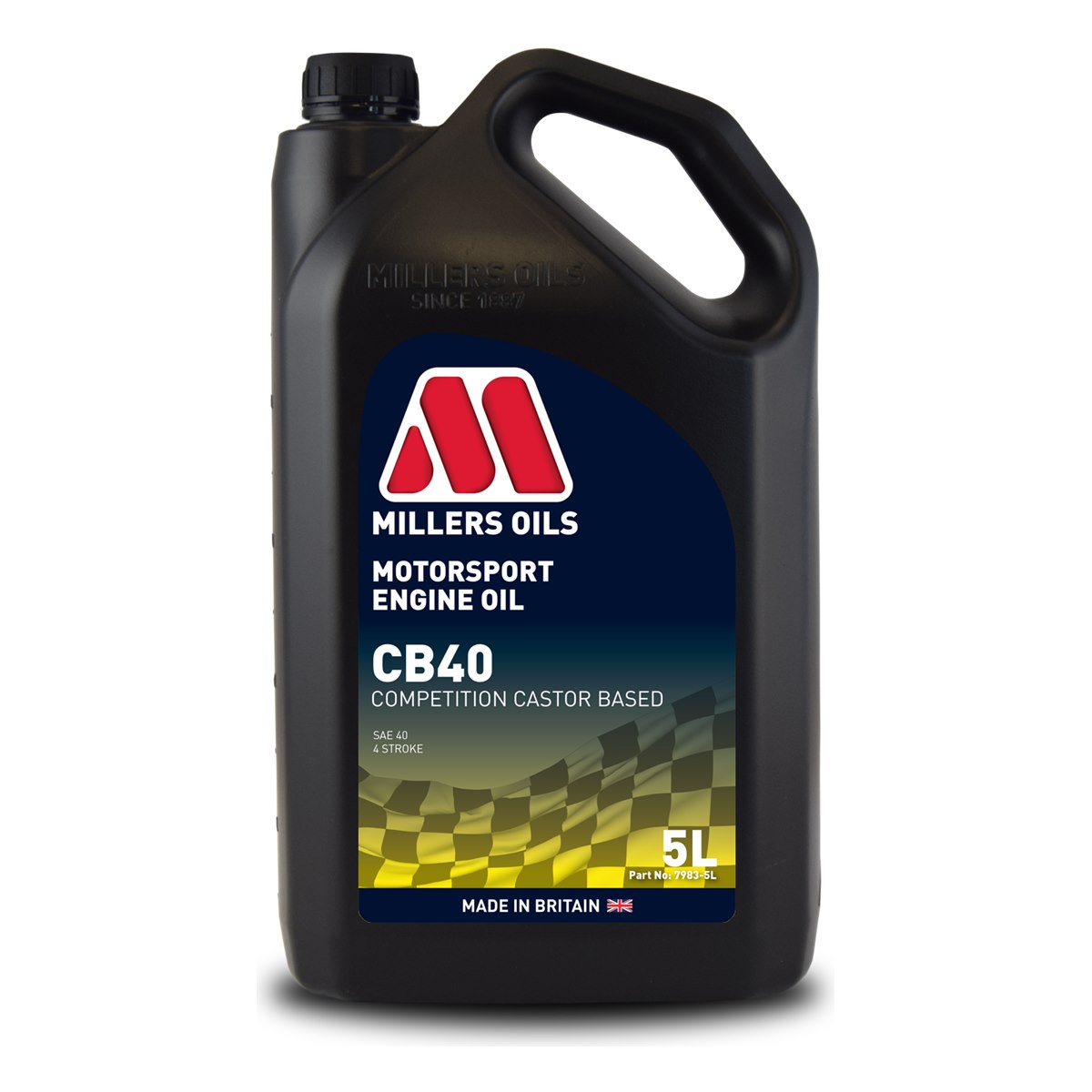
Castor oil has been used in racing engines since the early days of motorsport, and it still has a place today. Millers CB40 is an SAE 40 castor-based competition oil for four-stroke engines, designed for use with methanol or alcohol-based fuels and used extensively in speedway for many years. The natural lubricity of castor, plus extra load-carrying additives, gives outstanding wear protection, with enhanced anti-oxidant performance.
Race oil tips
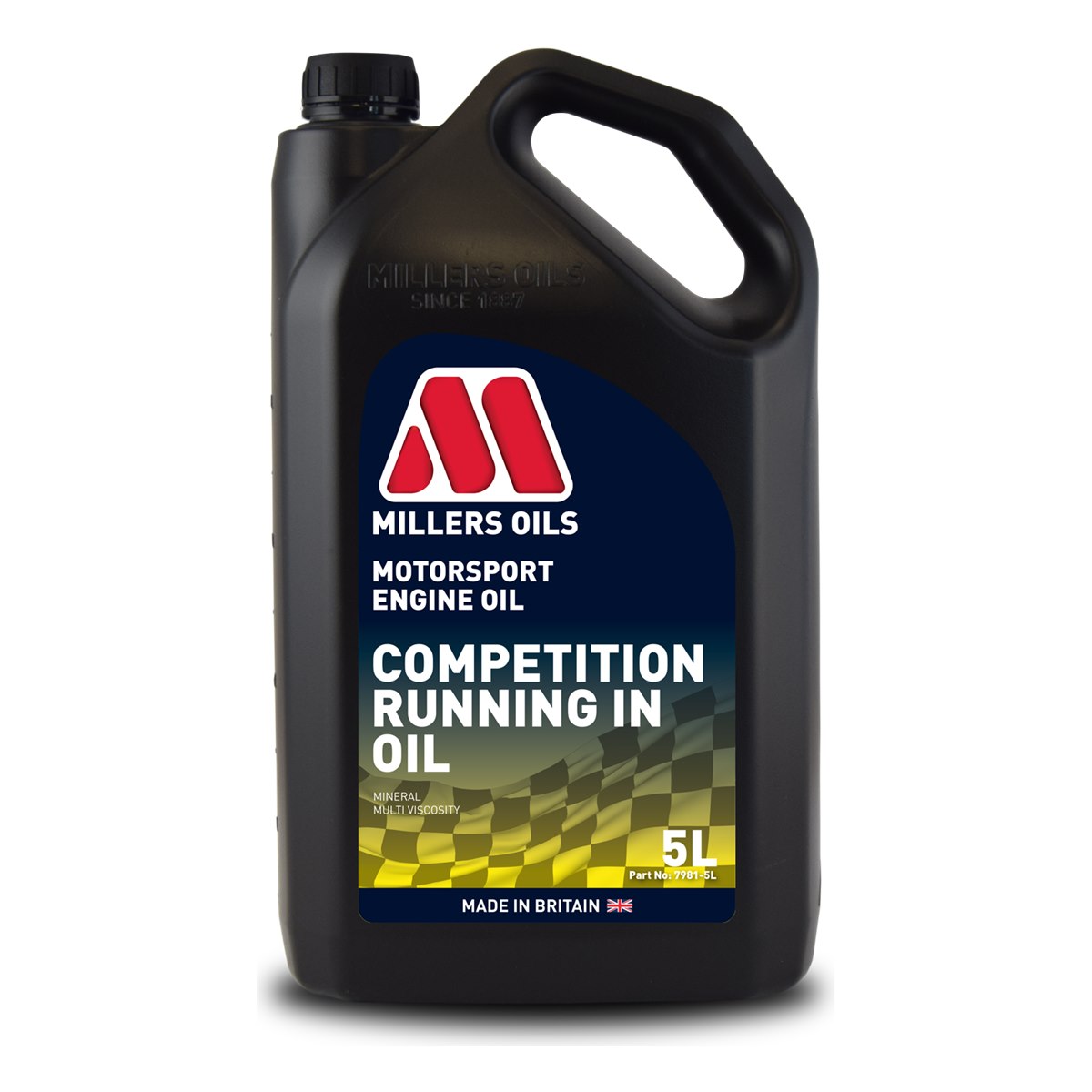
- Don’t run in on race oil. Low-friction synthetics can stop new rings bedding in. Use Competition Running In Oil first; see our race engine running-in guide.
- Change it more often than road oil. Race oil works much harder, so follow your engine builder’s schedule, which is often measured in race hours or events rather than miles.
- Watch oil temperatures. CFS and NT+ are rated for 125°C running with peaks of 150°C; if you’re regularly going higher, look at cooling.
- Don’t mix and match. Stick to one oil and grade so you get the full benefit of its chemistry.
- Use the right grade. Thicker isn’t always better; follow the engine builder’s recommendation.
Racing a MINI? Millers are the Official Lubricants Partner of the MINI CHALLENGE; see our Mini oil guide. Racing a two-stroke kart? See Millers KR2T and our two-stroke oil guide.
Race oil FAQs
What’s the difference between Millers CFS and CFS NT+?
Both are fully synthetic triple-ester race oils rated for 125°C running with peaks of 150°C. CFS NT+ adds second-generation NANODRIVE technology, which cuts friction by more than 53% and wear scar by up to 48% compared with a typical oil, against up to 26–27% friction reduction for CFS. NT+ is aimed at professional teams; CFS suits fast road, track days and club racing.
What is NANODRIVE?
NANODRIVE is Millers Oils’ award-winning motorsport technology. In engine oils, it combines advanced nanoparticles with triple-ester chemistry to greatly reduce friction, protect against wear and maximise power.
Is CFS 5W-40 good for track days?
Yes. Millers recommend CFS 5W-40 as ideal for fast road or track day use, especially in engines where a 5W-30 is normally specified, and it suits engines with hydraulic tappets.
Can I use race oil on the road?
CFS is recommended for fast road as well as racing use. For an everyday road car, a road oil that meets your manufacturer’s approval is usually the better choice, as race oils are designed around performance rather than long service intervals.
What oil should I use in a historic race car?
Millers CSS 20W-60 is designed for competition engines derived from production engines built between the post-war period and the early 1980s, such as Jaguar, Austin-Healey, MG, TR and modified Ford Kent and Pinto engines. Classic Sport 20W-50 and 20W-60 are also popular.
What oil do methanol engines use?
Millers CB40 is an SAE 40 castor-based competition oil designed for four-stroke engines running on methanol or alcohol-based fuels, and it has been used extensively in speedway for many years.
More guides: running in a race engine, octane booster explained, oil viscosity grades explained and motorcycle oil guide.