How to Strip Paint Back to Metal With R10/B1 Paint Stripper (DCM-Free)
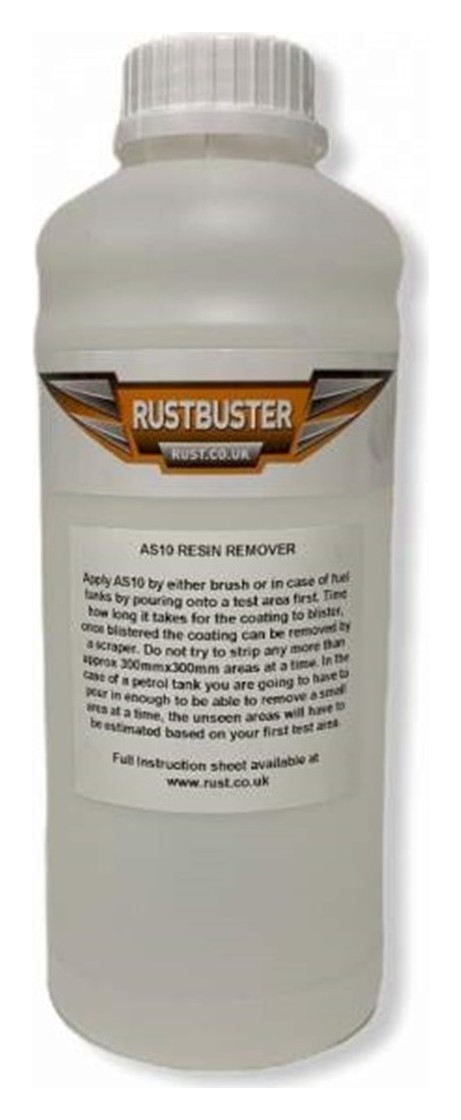
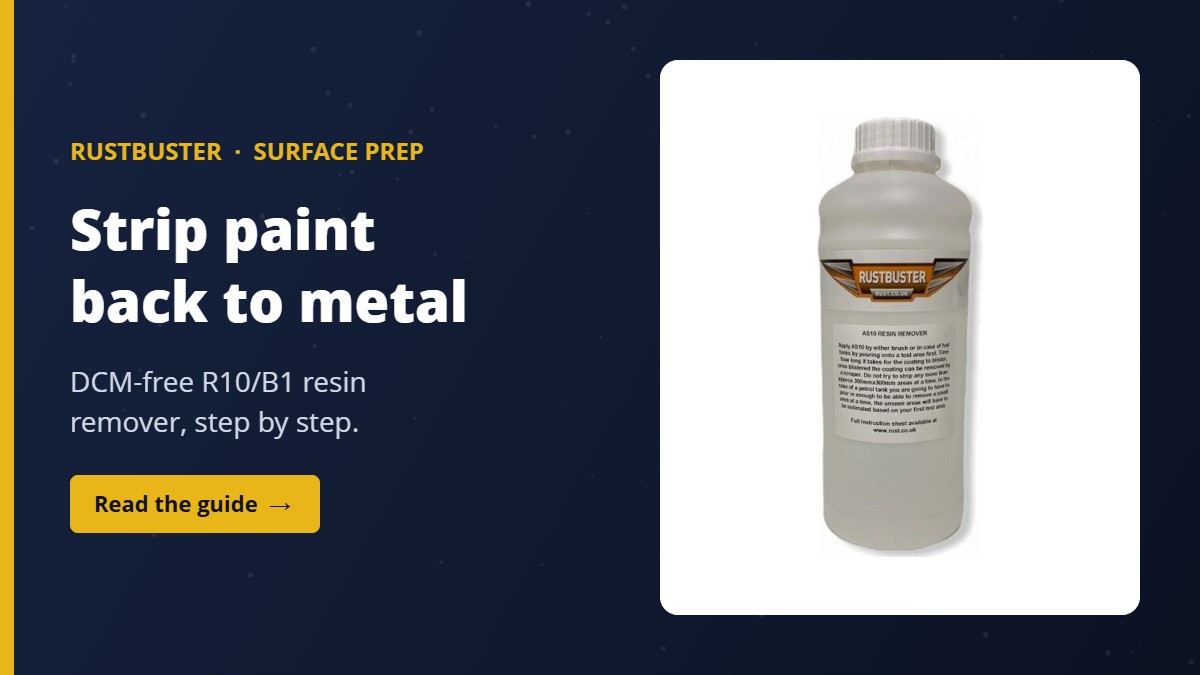
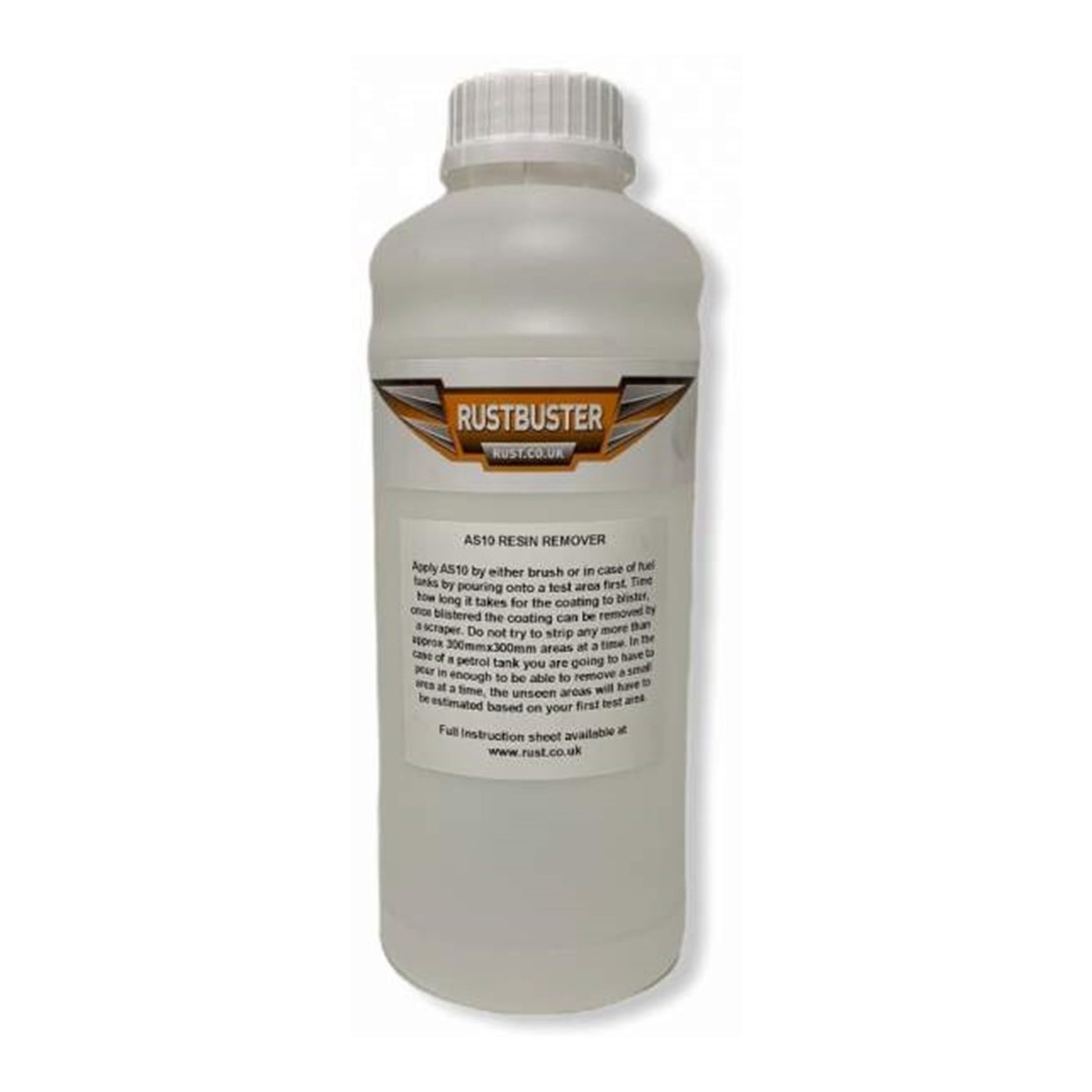
Sometimes the only way to deal with rust properly is to strip the part back to bare metal. That means getting through layers of old paint, tough 2K finishes, epoxy primers or failed tank sealer, and a weak stripper will just leave you scraping for hours. Rustbuster R10/B1 Resin Remover is an industrial-strength paint and resin stripper that handles all of these. This guide shows you how to use it, how long to leave it, and what to do once the metal is bare.
What is R10/B1 Resin Remover?
For years the strongest paint strippers relied on dichloromethane (DCM, also called methylene chloride). DCM is now heavily restricted because of health concerns. In 2022 Rustbuster replaced their old AS10 resin remover with R10/B1, which is based on benzyl alcohol and formic acid and contains no DCM. It’s a thick white liquid that’s water-based, non-flammable, low in VOCs and non-corrosive, and it still has the strength to strip:
- multiple layers of car body paint, including tough 2K coatings
- epoxy coatings such as Epoxy Mastic
- old tank sealer (such as Slosh) from steel or aluminium fuel tanks, ready for resealing
- resins, adhesives, varnish, lacquer and graffiti
How long does it take?
It depends on the coating, how many layers there are and the temperature. These are the guide times from the technical data sheet:
| Coating | Typical stripping time |
|---|---|
| Single-pack paint | 5–30 minutes |
| Varnish | 10–30 minutes |
| Two-pack varnish | 15–90 minutes |
| Two-pack (2K) lacquer | 15 minutes – 12 hours |
| Heavy multi-layered paint | 45 minutes – 12 hours |
| Cured epoxy coating (Rustbuster test) | Softening within 2 hours; fully removed after about 18 hours |
Use it between 5°C and 30°C. As a rough guide, 1 litre strips about 1m², depending on how thick the coating is and how many layers there are.
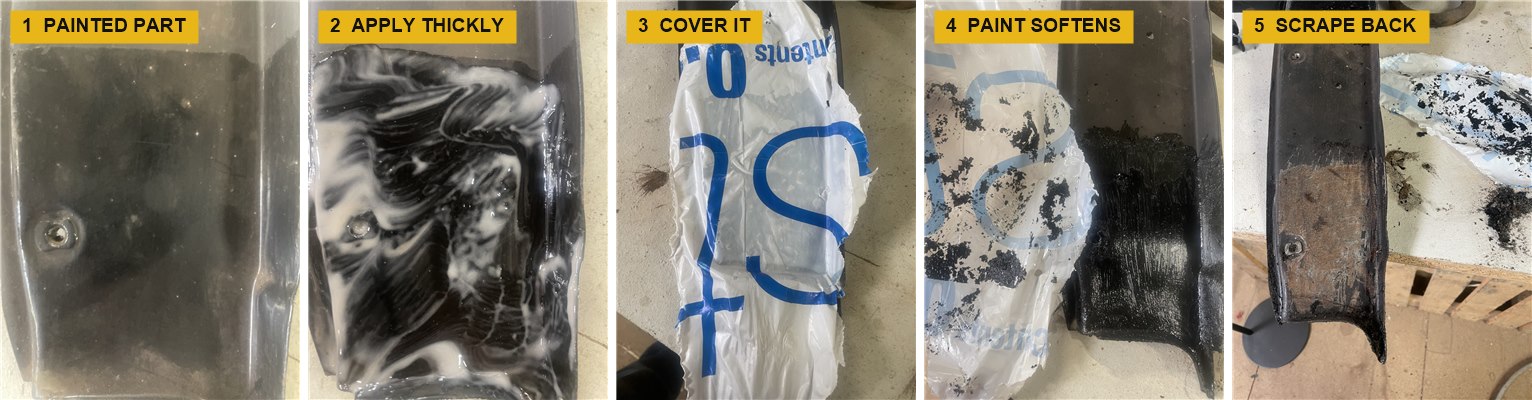
How to strip paint with R10/B1
Test a small area first
Brush a little onto a test patch and time how long the coating takes to blister. That tells you how long to leave it on the rest of the job, and how much you’ll need.
Protect what you want to keep
Mask or remove rubber, plastics, perspex and any painted surfaces you don’t want stripped. The surface you’re stripping must be completely dry.
Lay on a thick coat and don’t brush it out
It’s ready to use; don’t dilute it. Cover the top of the bottle with a cloth when you open it to avoid splashes. Lay a generous, even coat onto the surface with a clean brush, but don’t brush it out thin. Work on an area of about 300mm × 300mm at a time.
Cover it to stop it drying
Cover the coated area with cling film or a plastic sheet so the stripper stays wet and keeps working. In warm weather, work somewhere cool, and lay a damp tea towel over the top if needed.
Wait for it to blister, then add a second coat if needed
Leave it for the time you found in your test. On more than five layers of paint, apply a second generous coat. It can take up to 24 hours to penetrate thick or 2K coatings fully.
Scrape it off
Once the coating has softened and lifted, scrape it away with a suitable scraper, leaving the surface as clean as you can. Let the scrapings dry, then dispose of them as dry waste.
Wash and dry
Rinse the surface with cold water and detergent, using a stainless steel scourer. Never use ordinary steel wool, only stainless. Leave it to dry. Brushes and tools clean up in soapy water.
Removing old sealer from a fuel tank
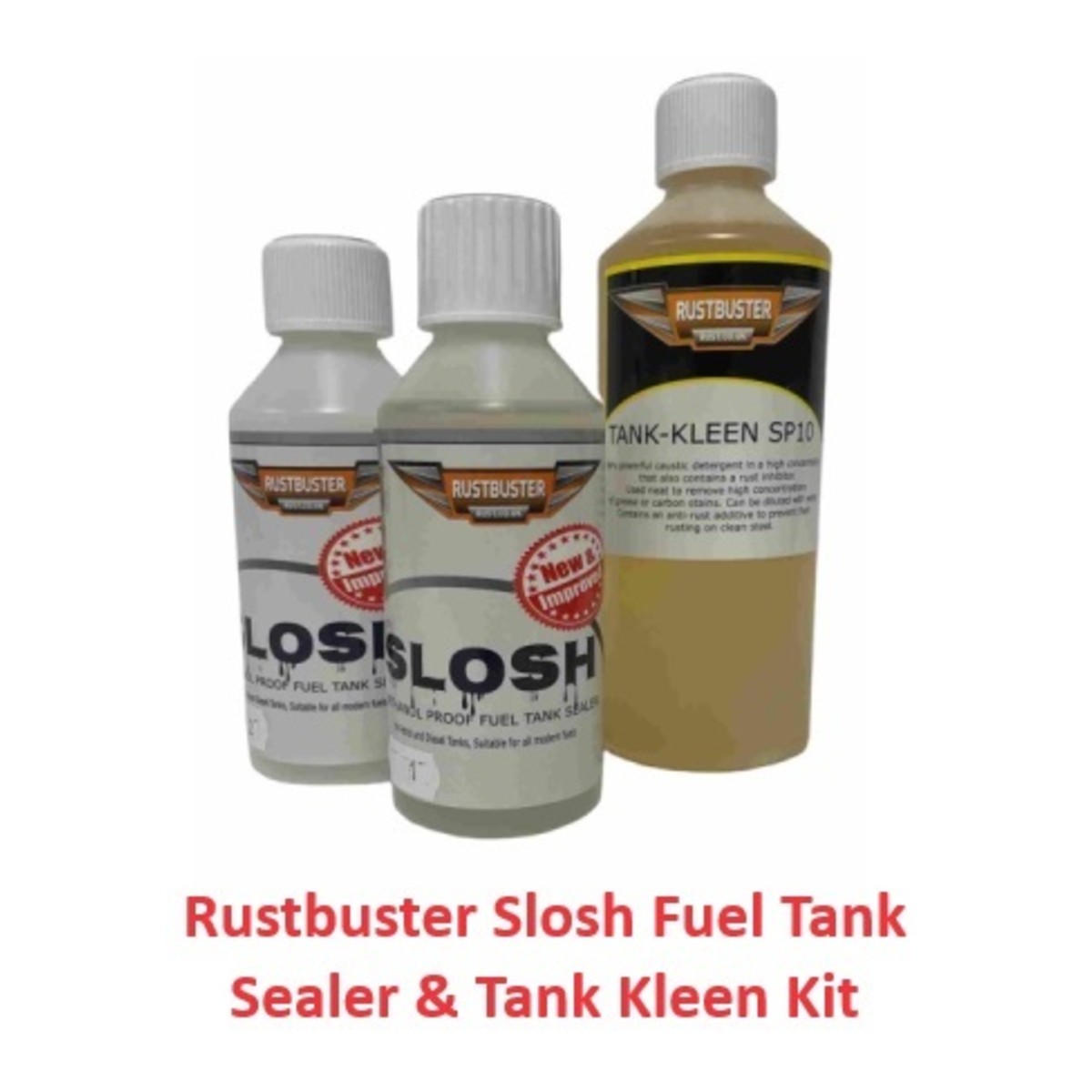
When an old tank sealer starts to peel or blister, it has to come out before the tank can be resealed. R10/B1 is strong enough to remove old sealers from steel and aluminium tanks. Do a test area first to find out how long it takes. Then pour in just enough remover to treat one small area at a time, turning the tank so each section is covered, and use your test to estimate how much you’ll need for the parts you can’t see. Once the old sealer is out, clean and prepare the tank and reseal it with a Slosh fuel tank sealer kit. Our petrol tank sealing guide takes you through it.
After stripping: protect the bare metal
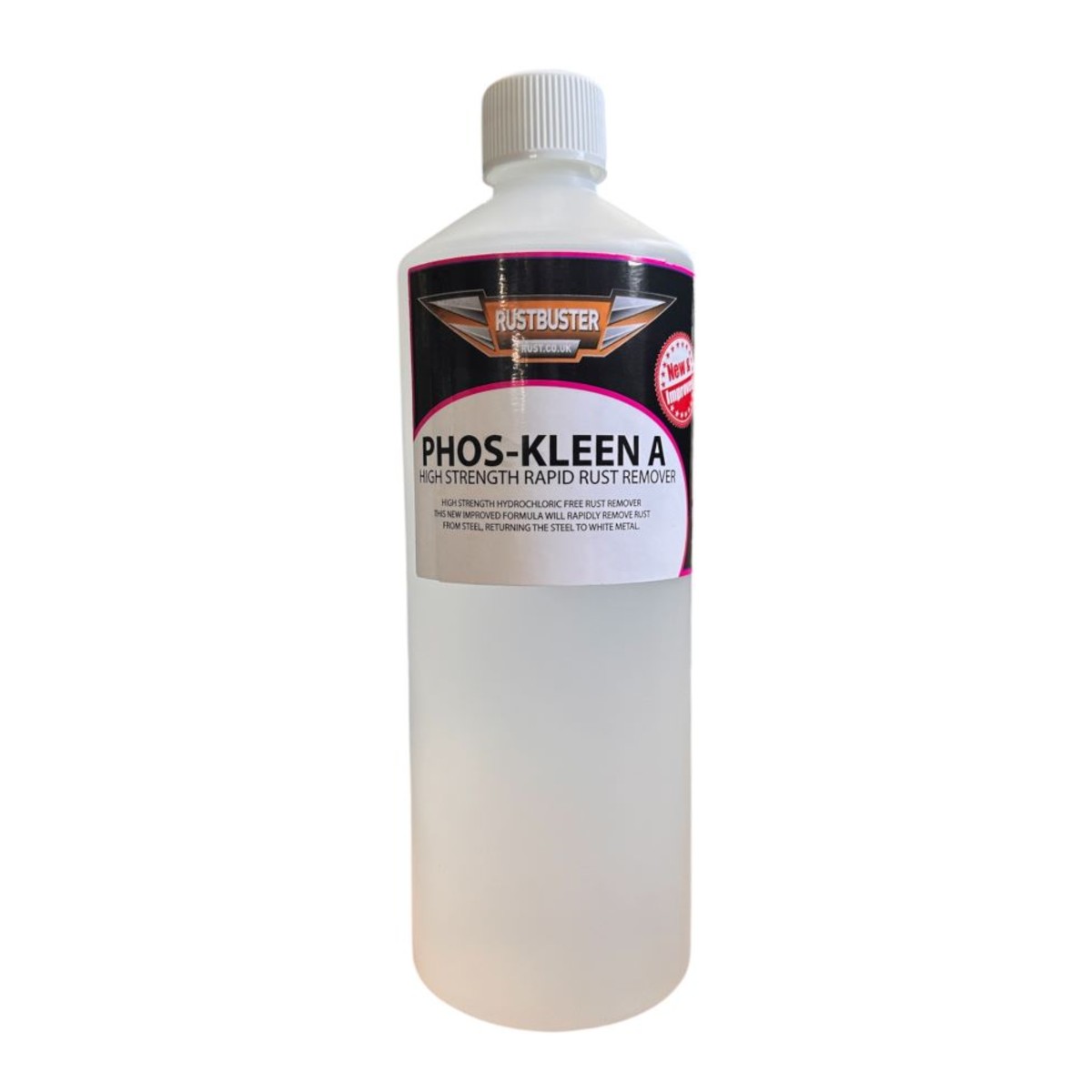
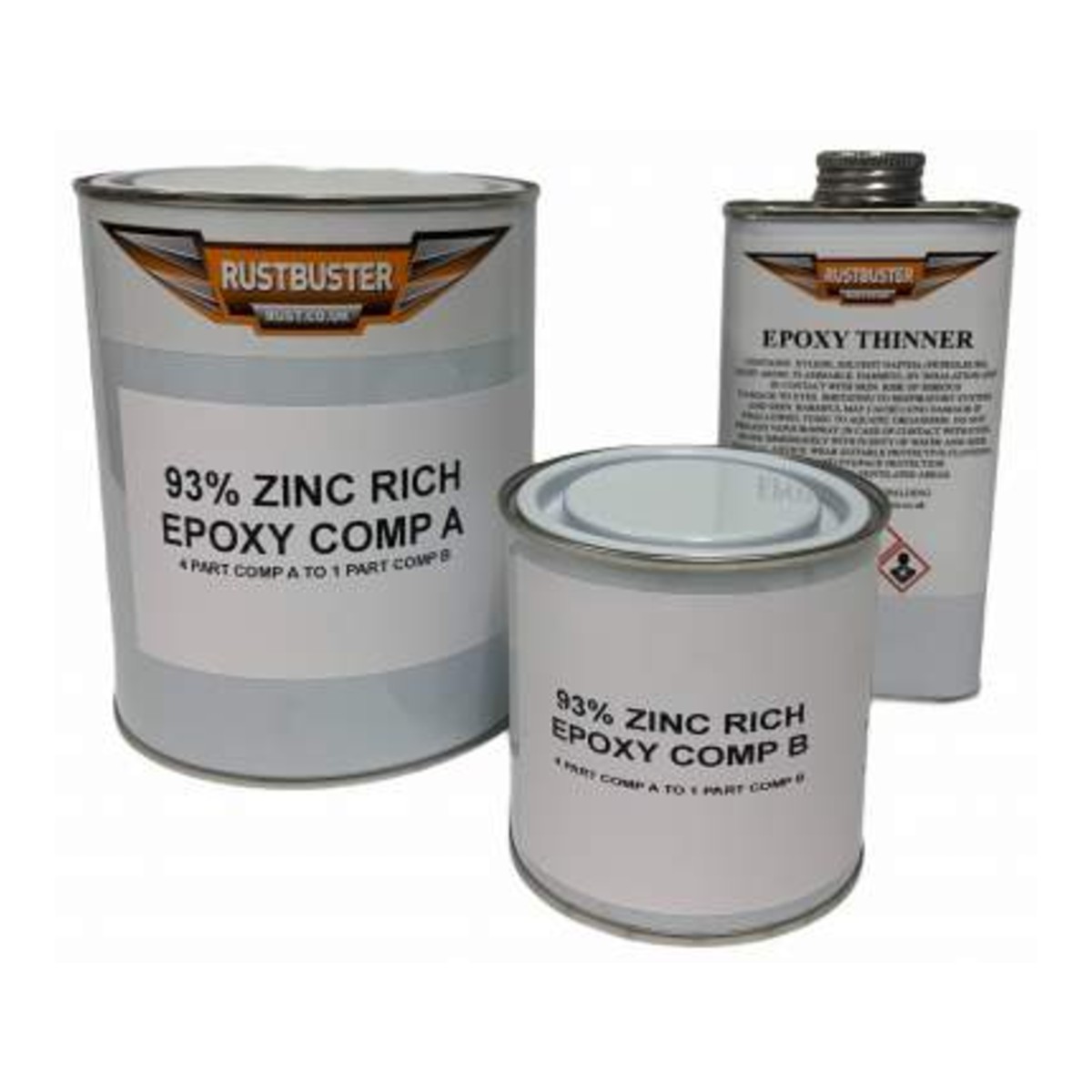
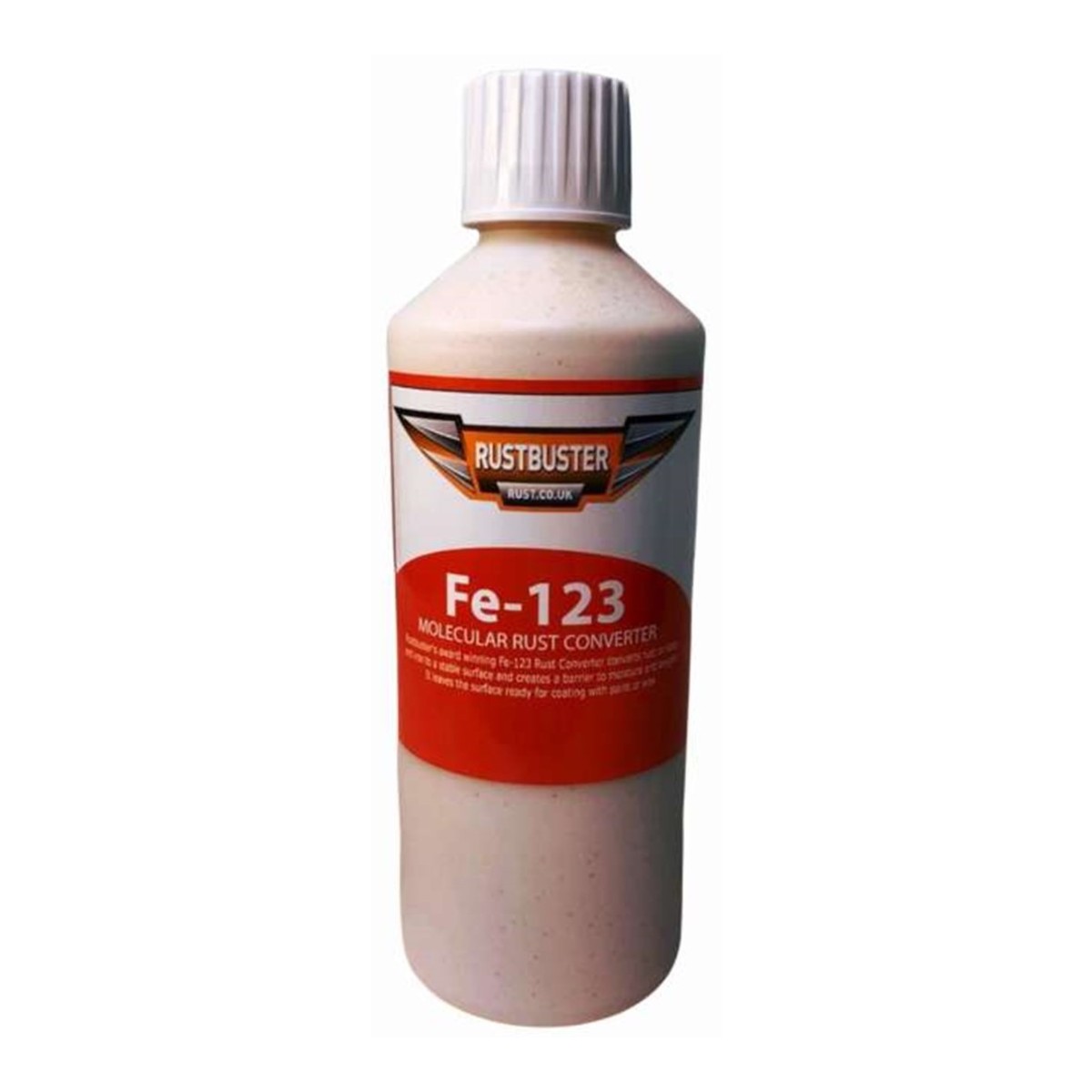
Freshly stripped steel starts to flash rust quickly, especially after washing. Once it’s clean and dry, deal with any rust you’ve uncovered (Phos-Kleen A for heavy rust, FE-123 for rust you can’t remove), then prime as soon as you can. Use Zinc Rich Epoxy-Anode, Epoxy Mastic or Custom 421 Epoxy Primer, or Techshield aerosol primer for smaller parts. If you can’t prime straight away, Bor-X stops flash rust in the meantime.
Mistakes to avoid
- Brushing it out thin. It needs a thick layer to penetrate. Lay it on generously.
- Letting it dry out. Cover it with cling film or plastic, and work somewhere cool.
- Doing too much at once. Work in areas of about 300mm × 300mm so you can scrape each one while it’s soft.
- Using ordinary steel wool. Only use a stainless steel scourer to wash it off.
- Forgetting the plastics. Protect rubber, plastic, perspex and anything painted you want to keep.
- Leaving bare steel unprotected. Prime it as soon as it’s clean and dry, before flash rust starts.
Paint stripper FAQs
Does R10/B1 contain DCM (methylene chloride)?
No. R10/B1 is a DCM-free formula based on benzyl alcohol and formic acid. It replaced Rustbuster’s older AS10 resin remover in 2022, and it’s water-based, non-flammable and low in VOCs.
Will it strip 2K paint?
Yes. R10/B1 strips multiple layers of car body paint, including 2K coatings. Two-pack lacquer can take anywhere from 15 minutes to 12 hours, depending on its thickness and age, so do a test area first and keep the stripper covered so it doesn’t dry out.
How long should I leave paint stripper on?
Single-pack paint usually lifts in 5–30 minutes, while heavy multi-layered paint can take 45 minutes to 12 hours, and thick coatings up to 24 hours. Test a small area and time how long it takes to blister, then use that for the rest of the job.
Can I use R10/B1 to remove old sealer from a petrol tank?
Yes. It’s strong enough to remove old tank sealers from steel and aluminium fuel tanks before resealing. Pour in enough to treat a small area at a time, using a test area to judge the time and quantity, then clean the tank and reseal it with a Slosh kit.
Why shouldn’t I use steel wool to clean off stripper?
The data sheet says to rinse with cold water and detergent using a stainless steel scourer only, never ordinary steel wool. Tiny fragments of ordinary steel wool left on the surface can rust and spoil the finish.
Will it damage plastic or rubber?
It can. Protect perspex, plastics, rubber and any coatings you don’t want removed before you start, and always test an inconspicuous area first.
More rust guides: surface preparation, how to seal a petrol tank, zinc rich epoxy primer and Purple-X rust stain remover.