
Classic Car Oil Guide: Which Oil for Your Classic or Vintage Engine?
A classic or vintage engine wasn’t designed for the oil you’d buy for a modern car. Modern oils are thinner, carry less of the anti-wear additive older engines rely on, and are built for sealed, filtered, catalytic-converter-equipped engines. Put the wrong oil in a 1930s side-valve or a 1960s pushrod engine and you can speed up cam wear, stir up old deposits or end up with oil pouring out of worn seals. This guide explains what makes a classic oil different, and which oil suits your engine’s era.
Why classic engines need a different oil
1. ZDDP: the anti-wear additive older engines depend on
ZDDP (zinc dialkyldithiophosphate, or zinc/phosphorus) forms a protective film on metal surfaces under high pressure. Older engines with flat-tappet camshafts and followers put enormous pressure on a very small contact area, and they rely on ZDDP to stop the cam lobes and tappets wearing away. Modern oils have had their zinc and phosphorus reduced because phosphorus damages catalytic converters. That’s fine for a modern engine, but not for a classic. Millers Pistoneeze, Millerol, Classic Sport and Classic Mini oils are all formulated with ZDDP, and Pistoneeze and Classic Sport are specifically high in it.
2. Detergency: why some old engines need non-detergent oil
Detergent oils hold dirt and combustion by-products in suspension so a full-flow oil filter can catch them. Many vintage engines had only a gauze strainer or a basic bypass filter. They were designed to run on non-detergent oil, which lets deposits settle harmlessly in the sump instead of carrying them round the engine. Putting a high-detergent oil into an engine like this can loosen years of settled sludge and send it into the oilways. That’s why there are three levels of classic oil: non-detergent for vintage engines, low-detergent for the transition years, and moderate-detergent for post-war engines with modern-type filters.
3. Viscosity: thicker, stable oil for looser tolerances
Older engines were built with larger clearances than modern ones, and they were developed on the thicker monograde and multigrade oils of their day. Very thin modern grades such as 0W-20 and 5W-30 aren’t what they were designed for, and in worn engines they can increase oil consumption and leaks. Classic oils use period viscosities with modern, shear-stable additives, so they stay in grade. Read our engine oil grades explained guide for more on what the numbers mean.
Which oil for your classic: by era
| Era / engine type | Oil type | Millers | Penrite |
|---|---|---|---|
| Veteran & Edwardian (1900–1920) | Non-detergent monograde | Millerol 30, 40, 50 | Heritage LTM 30/40, Heritage MTH 40/50 |
| Vintage (1920–1950), strainer or basic filter | Non-detergent or low-detergent | Millerol 30, 40 or 50 | Shelsley Light, Shelsley Medium |
| Post-war classics (1950s–1970s), full-flow filter | Moderate-detergent, high ZDDP | Pistoneeze 20W-50 or 30, 40, 50 monogrades | Classic Light 20W-60, Classic 15W-50 |
| Later classics (1960s–1980s) | Moderate-detergent multigrade with better cold flow | Pistoneeze 10W-30, 10W-40, 15W-40 | Classic 15W-50 |
| Performance classics | Semi-synthetic, full ZDDP | Classic Sport 20W-50, 20W-60 | – |
| Classic Mini (shared engine and gearbox oil) | Engine oil with gear additives | Classic Mini 20W-50, CTV Mini 20W-50 (tuned), High Performance 20W-50 | Classic Mini 20W-50 |
| Freshly rebuilt engines | Running-in oil | Running In Oil 30 | – |
These are guides, not rules: an engine that has been rebuilt with modern seals and a full-flow filter may be better suited to a later oil than its age suggests. Always start from the grade in the handbook.
The Millers classic ranges explained
Vintage Millerol: non-detergent for the earliest engines
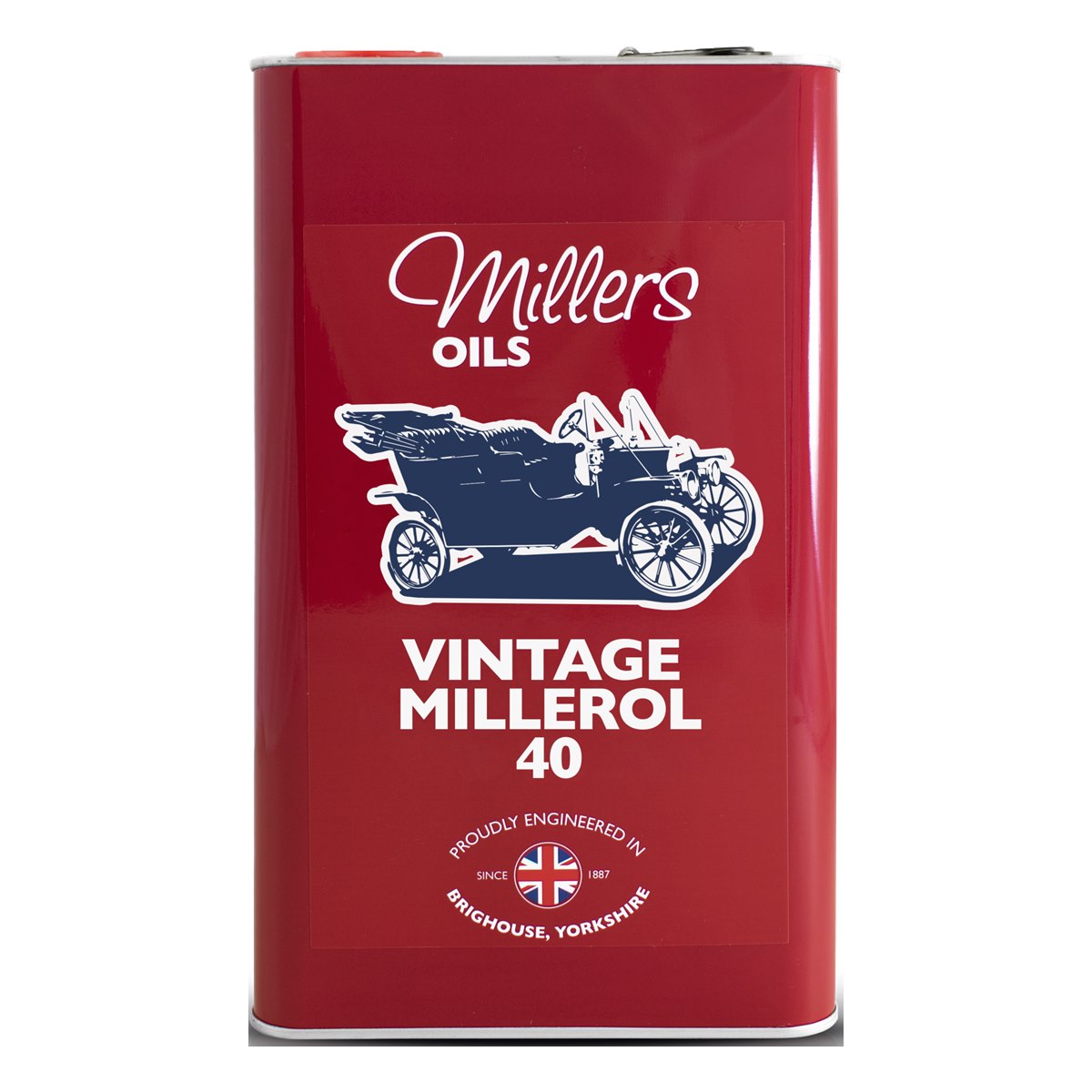
Millerol is a non-detergent, mineral monograde oil in SAE 30, 40 and 50, made for vintage cars with a strainer or basic filtration. Its non-detergent design lets deposits settle rather than holding them in suspension, just as these engines were built for. It’s formulated with ZDDP, resists oxidation and bearing corrosion, and gives protection equivalent to API SB. It can also be used in gearboxes that specify a GL-1 oil.
Classic Pistoneeze: the everyday classic oil
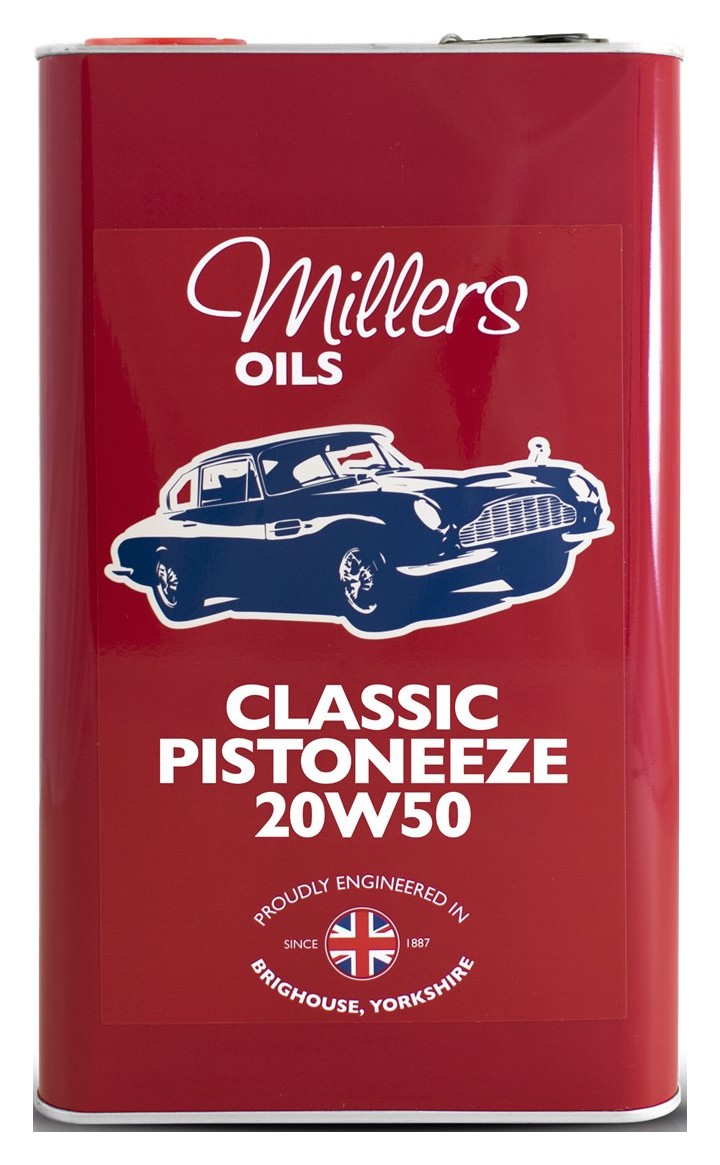
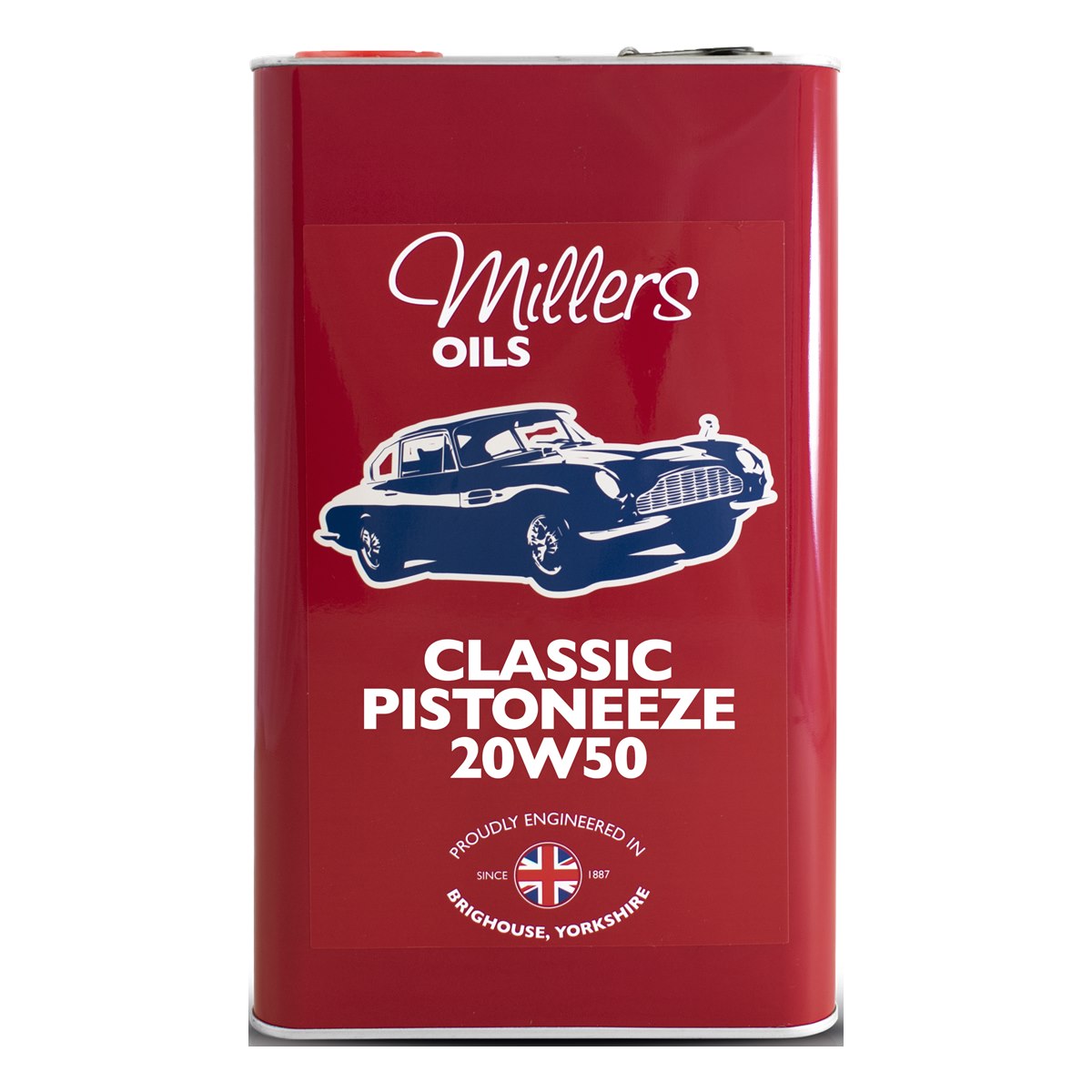
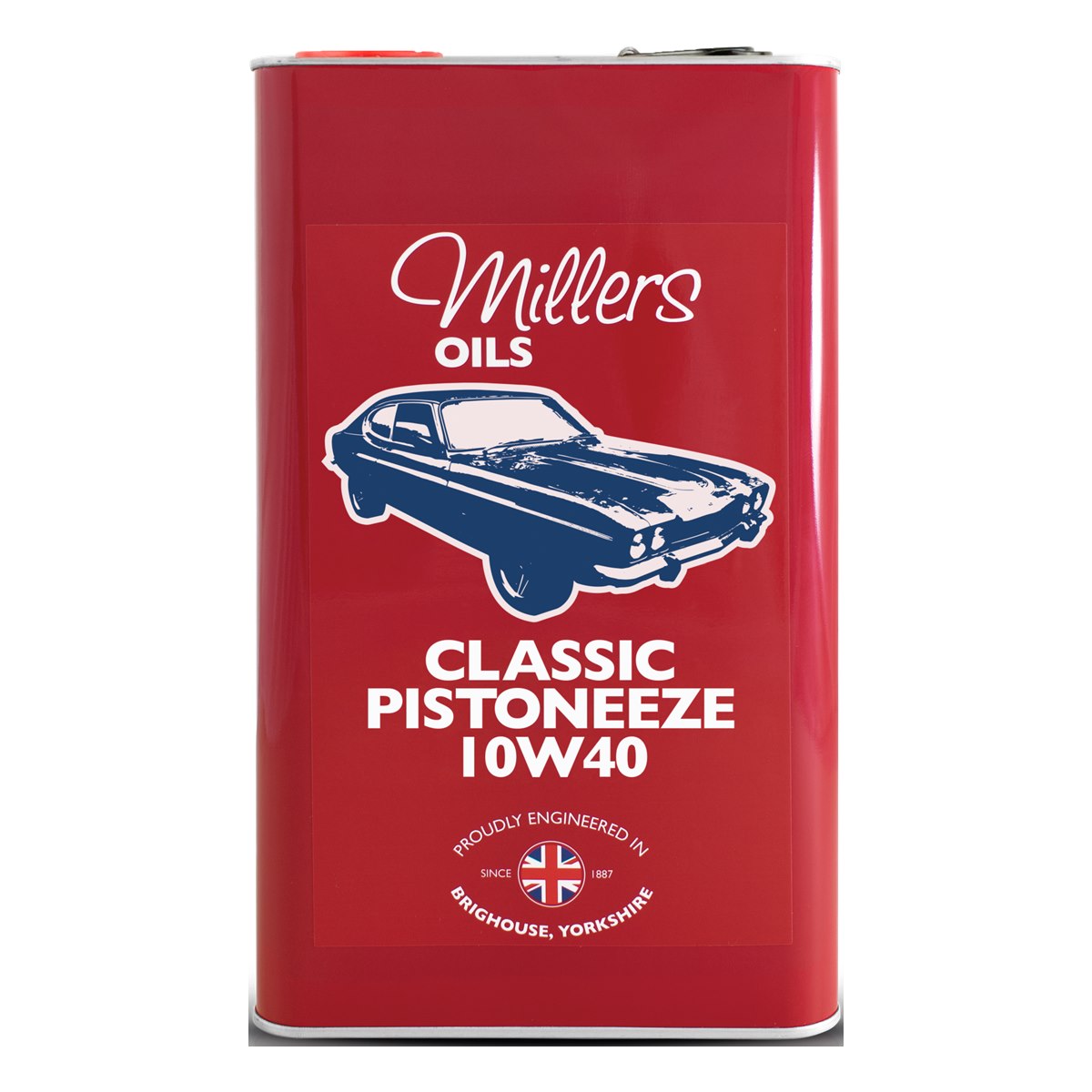
Pistoneeze is a moderate-detergent oil for classics with modern-type filtration, high in ZDDP to protect flat-tappet cams and followers. Pistoneeze 20W-50 is the classic all-rounder: a mineral oil for mainly pre-1980 petrol and diesel vehicles that also helps reduce oil consumption in higher-mileage engines. The SAE 30, 40 and 50 monogrades suit engines specified for a single grade. For later classics that need better cold starting, the 10W-30 and 10W-40 are semi-synthetic, and 15W-40 is mineral.
Classic Sport: for high-performance classics
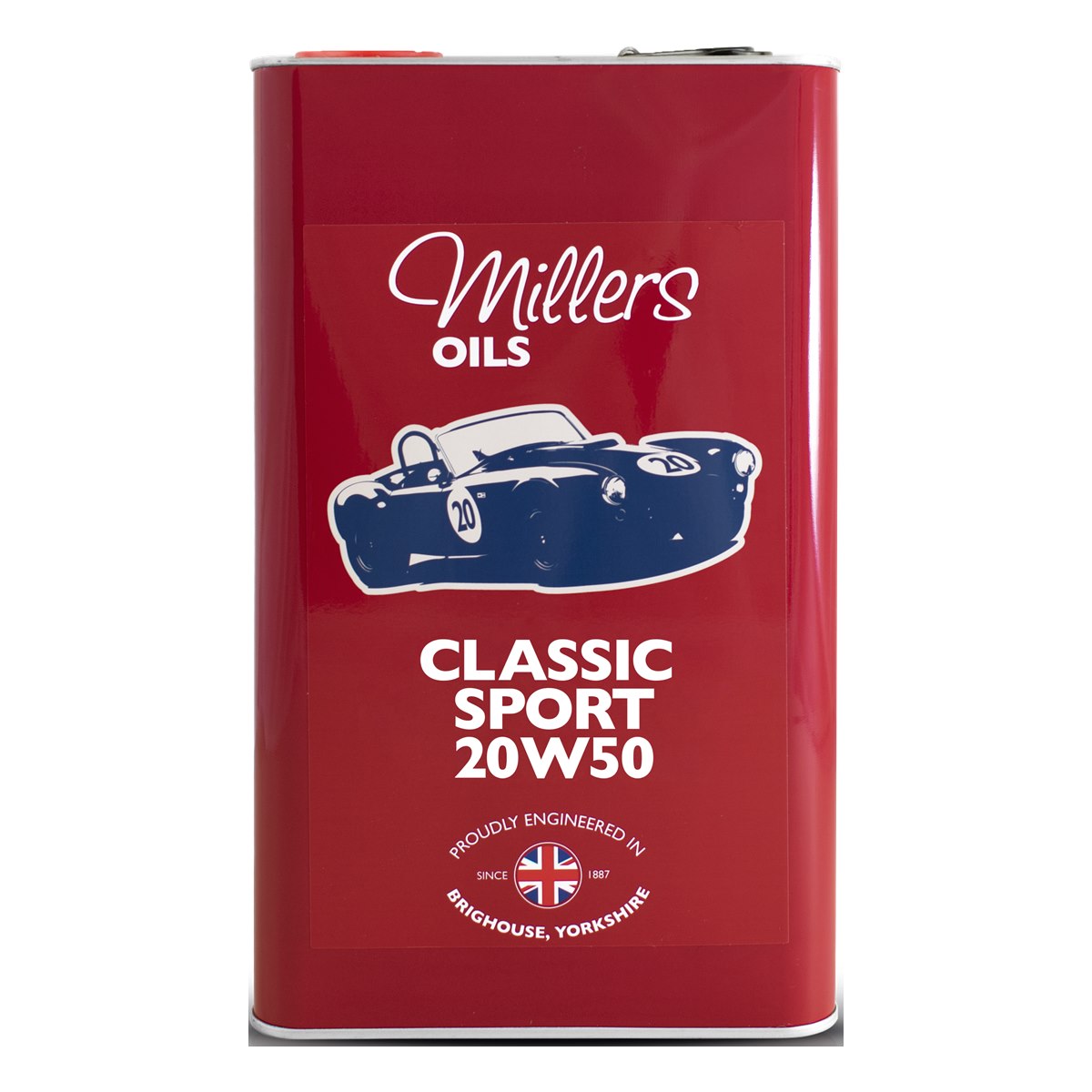
Classic Sport oils are semi-synthetic, with full ZDDP and shear-stable viscosity improvers. Classic Sport 20W-50 is ideal for high-output engines such as Aston Martin, Jaguar, Ferrari and Lotus, and for spirited road driving. Classic Sport 20W-60 gives extra protection at competition temperatures.
Classic Mini oils: one oil for engine and gearbox
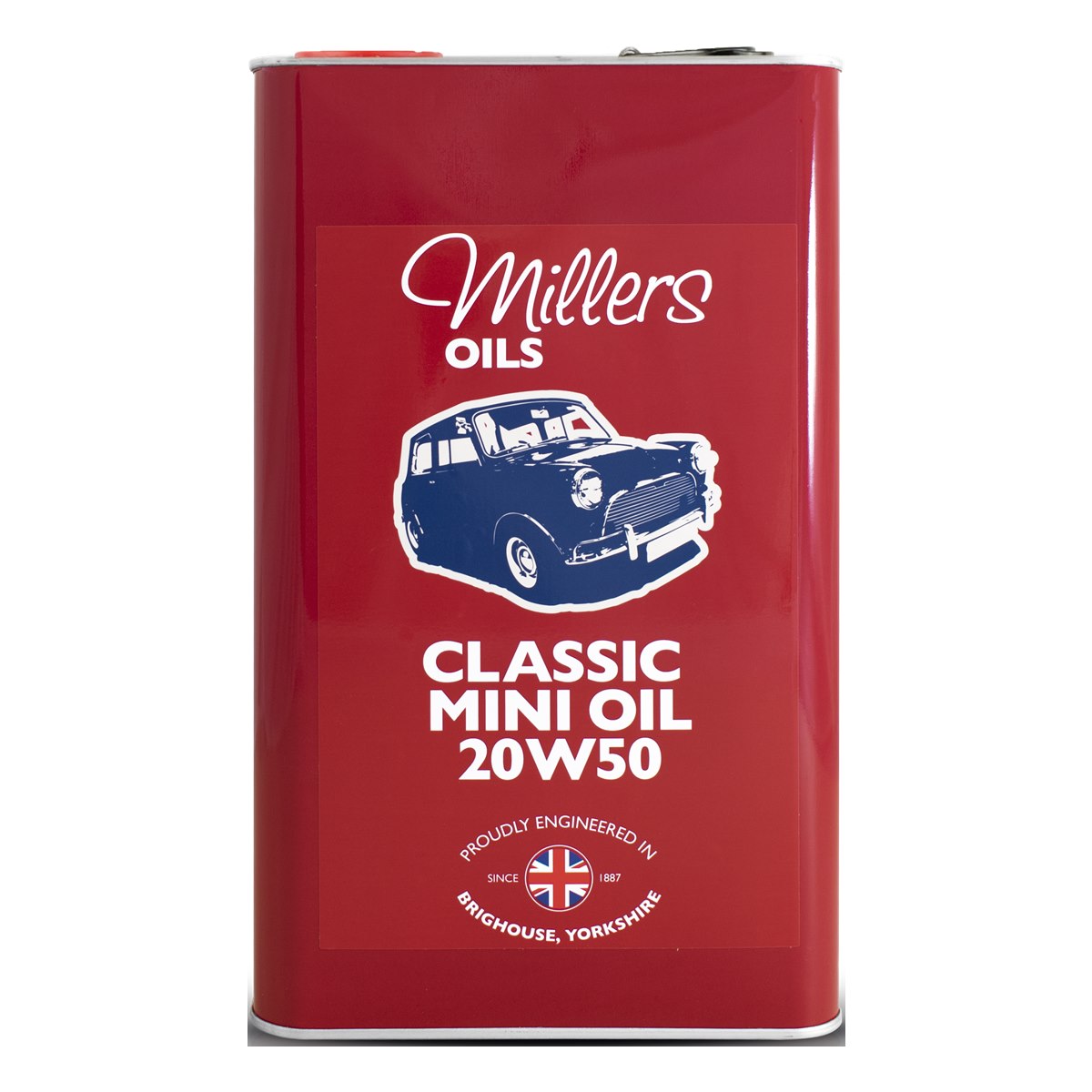
The original Mini’s gearbox sits in the sump and shares the engine oil, so the oil has to protect the gears as well as the engine. Millers Classic Mini 20W-50 is a moderate-detergent mineral oil with full ZDDP and gear-oil additives for a smooth gear change, made for standard Mini, Cooper and Cooper S engines. For tuned engines, choose CTV Mini 20W-50 or the semi-synthetic Classic High Performance 20W-50. Read our full classic Mini oil guide.
Running In Oil: for freshly rebuilt engines
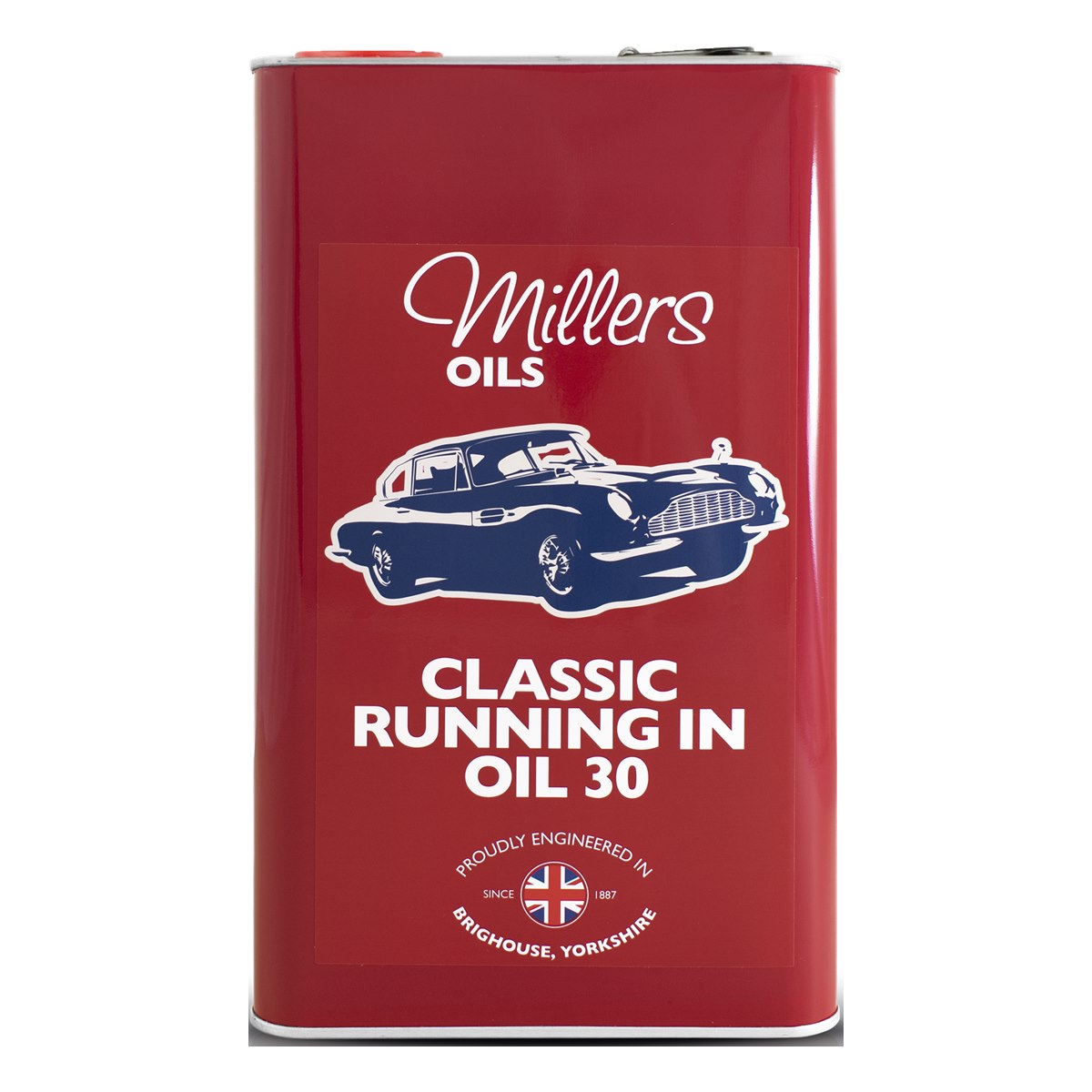
After a rebuild, the rings and bores need to bed in properly. Millers Classic Running In Oil 30 is a mineral SAE 30 oil designed for this first stage. Once the engine is run in, drain it and switch to the correct service oil for your engine. Our running-in guide explains the full procedure.
Penrite: classic oils by date
We also stock Penrite classic and vintage oils, which are labelled by era: Heritage LTM and MTH non-detergent oils for 1900–1920, Shelsley Light and Medium low-detergent multigrades for 1920–1950, and Classic Light 20W-60 and Classic 15W-50 moderate-detergent oils for 1950–1989. They’re a simple way to match an oil to your car’s date.
Changing from one type of oil to another
If your engine has run on non-detergent oil for years and hasn’t been stripped, be careful about switching to a detergent oil. It can loosen settled deposits faster than the filtration can deal with them. On the other hand, a rebuilt engine with a modern full-flow filter will usually benefit from a moderate-detergent oil like Pistoneeze. If you’re unsure what your engine has been running on, or what’s been done to it, ask us before you change.
Looking after a classic engine
- Change the oil regularly, even at low mileage. Oil ages and collects moisture and acids when a car sits. Change it at least once a year, and before you lay the car up for winter.
- Don’t use modern low-ZDDP oil in a flat-tappet engine. Cam and follower wear can be rapid.
- Don’t use high-detergent oil in an unfiltered vintage engine. Use a non-detergent oil such as Millerol.
- Don’t use thin modern grades in a worn engine. They can increase oil burning and leaks.
- Don’t forget the fuel. Many classics also need a lead replacement and protection from E10. See our lead replacement and E10 guide.
Classic car oil FAQs
Can I use modern oil in a classic car?
It isn’t recommended. Modern oils have reduced ZDDP anti-wear additive to protect catalytic converters, they’re often thinner than older engines were designed for, and their detergency may not suit early engines. A classic oil such as Millers Pistoneeze gives period viscosity with high ZDDP and modern additive technology.
What is ZDDP and why does my classic need it?
ZDDP is a zinc and phosphorus anti-wear additive that protects metal under very high pressure. Older engines with flat-tappet camshafts and followers depend on it to prevent cam and tappet wear. Modern oils contain less of it, which is why classic oils like Pistoneeze and Classic Sport are formulated to be high in ZDDP.
When should I use non-detergent oil?
Use a non-detergent oil such as Millers Vintage Millerol in vintage engines with only a strainer or basic filtration, or where the manufacturer specifies non-detergent oil. These engines were designed to let deposits settle in the sump rather than hold them in suspension.
Is 20W-50 the right oil for my classic?
20W-50 suits many post-war classics, particularly pre-1980 engines with modern-type filtration, and Millers Classic Pistoneeze 20W-50 can also be used where SAE 20, 30 or 40 grades are recommended. Always check your handbook first, as some engines were specified for thinner multigrades or a single monograde.
What oil does a Classic Mini need?
The Classic Mini’s gearbox shares its oil with the engine, so it needs an oil with gear additives. Millers Classic Mini 20W-50 is made for standard Mini, Cooper and Cooper S engines, with CTV Mini 20W-50 or Classic High Performance 20W-50 for tuned engines.
How often should I change the oil in a classic car?
Follow the handbook interval for mileage, but change it at least once a year even if the car has done few miles, because oil ages and picks up moisture and acids when a car sits. Changing it before winter lay-up is a good habit.
More classic guides: lead replacement and E10 protection, E10 petrol problems for older engines, laying up a classic for winter and classic gear and differential oil.