Lead Replacement & E10 Protection for Classic Cars: An Irish Owner’s Guide
Two big changes to Irish pump fuel have left classic-car owners asking the same question: is today’s petrol going to damage my engine? First, leaded petrol disappeared decades ago, taking with it the protection older engines were built around. More recently, standard unleaded moved to E10 — petrol with up to 10% ethanol — which brings its own headaches for older fuel systems. This guide explains both problems in plain English, helps you decide whether your car actually needs a lead replacement additive, and shows which Millers treatment is right for your engine.
Why leaded petrol mattered — and what valve seat recession is
For decades, the lead in petrol did more than boost octane — it left a soft, protective coating on the valve seats every time the engine ran. Older engines were designed around that: their valve seats were never hardened, because the fuel did the protecting. Take the lead away, and on a hard-worked or high-revving engine those unhardened seats can slowly wear away — a problem known as valve seat recession, which eventually causes burnt valves and lost compression. A lead replacement additive puts that protection back, laying down a protective coat in place of the lead that’s no longer in the fuel.
The newer problem: E10 petrol and ethanol
Ireland’s standard 95-octane unleaded is now E10 — up to 10% ethanol. That’s fine for modern cars, but it causes real problems for older ones:
- Ethanol is hygroscopic — it draws water out of the air, leading to condensation, corrosion and even fuel/water separation in a tank that sits for a while.
- Ethanol is an aggressive solvent — it attacks the older rubber, plastic, cork and fibreglass used in classic fuel lines, seals, diaphragms and some tanks, and can corrode brass, zinc and certain alloys in carburettors.
For a car that’s driven occasionally and stored between outings — which describes most classics — that mix of moisture and corrosion is the bigger day-to-day worry. We go deeper on this in our guide to E10 petrol problems for older engines.
What a classic fuel treatment does
A proper classic fuel treatment tackles all three modern threats at once:
- Lead replacement / valve-seat protection — cushions unhardened valve seats against recession.
- Ethanol protection — combats the corrosion and moisture problems E5 and E10 cause in older fuel systems.
- Octane boost — nudges octane back up, helping prevent knock, pinking and running-on in engines designed for higher-octane leaded fuel.
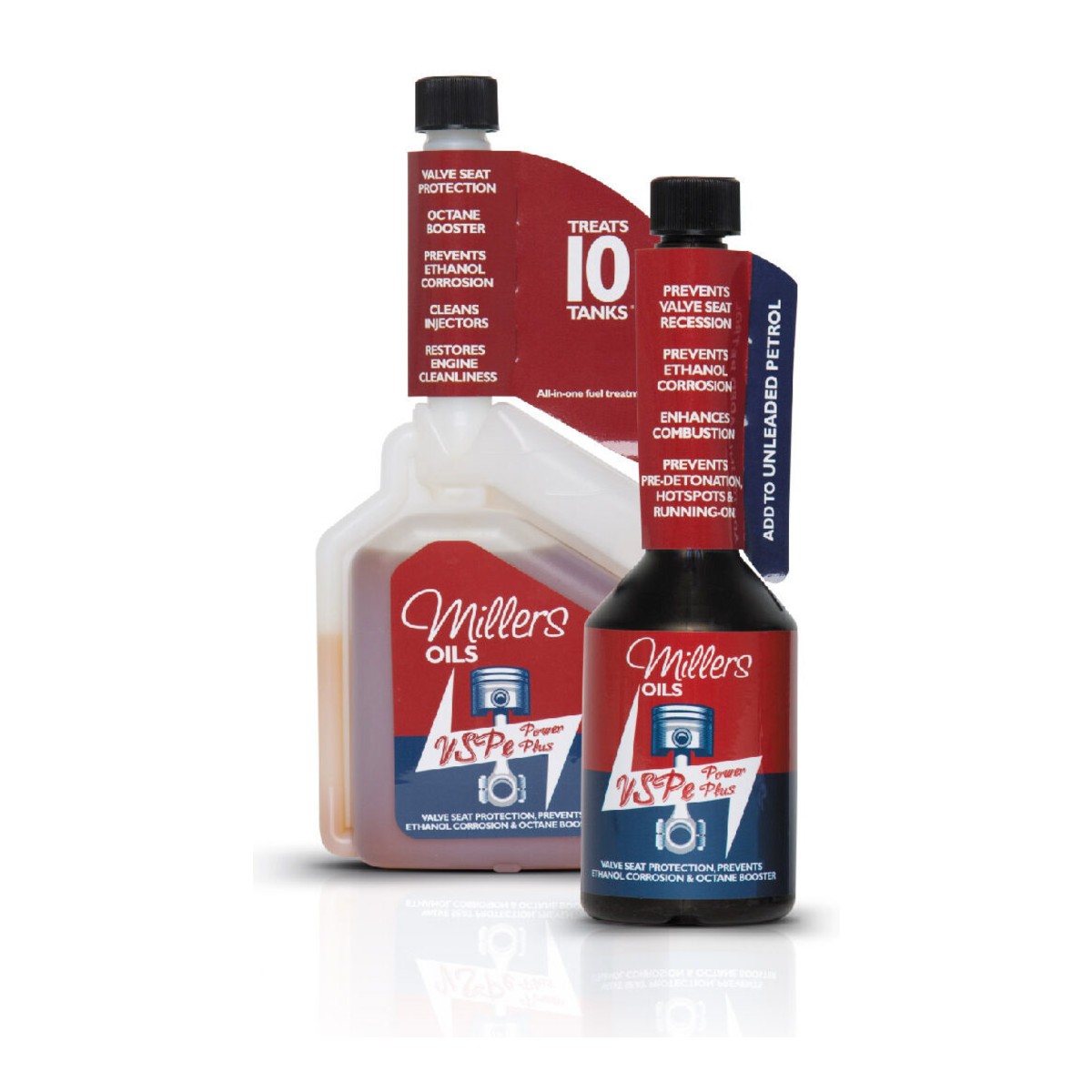
That’s exactly what Millers VSPe Power Plus does — a genuine all-in-one that adds up to two octane numbers (20 points) while protecting valve seats and guarding against ethanol.
Classic or modern? Pick the right Millers treatment
This is where people often buy the wrong thing, so keep it simple:
Classic / older engine that needs lead replacement
Reach for VSPe Power Plus. It does all three jobs at once — valve-seat (lead-replacement) protection, ethanol defence and an octane boost of up to two octane numbers (20 points). One dose every time you fill up.
Modern petrol engine that does NOT need lead replacement
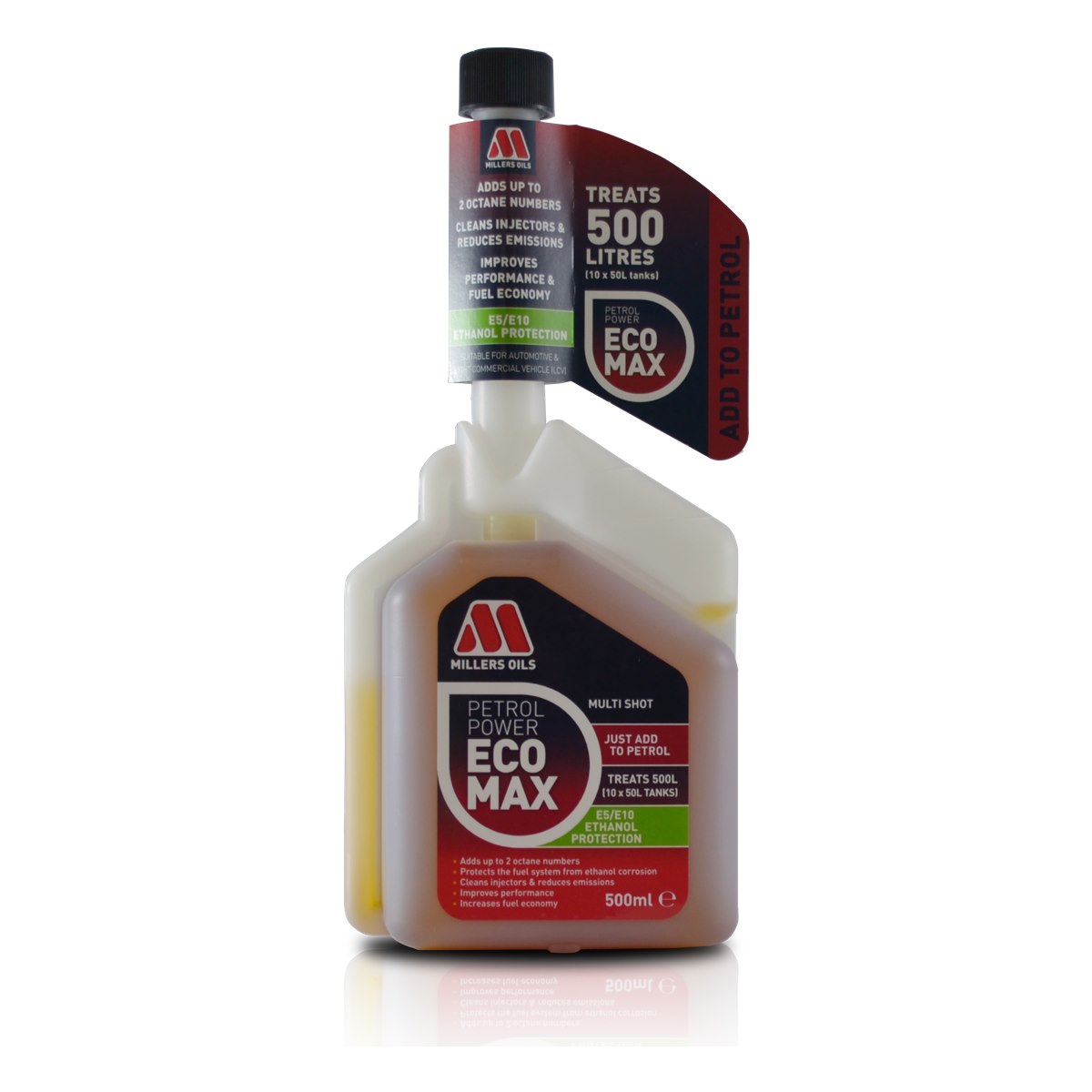
Use Petrol Power EcoMax instead. Modern engines have hardened valve seats, so they don’t need lead replacement — but they still benefit from E10/ethanol protection and a fuel-system clean.
Whichever you use, the routine is the same: add it when you fill up and let it mix — every fill, every time, for continuous protection.
Frequently asked questions
Do I need a lead replacement additive in Ireland now?
If your engine was designed for leaded petrol and still has its original soft valve seats (generally pre-1990s classics), yes. Newer engines with hardened seats do not need it.
Will E10 petrol damage my classic car?
It can, over time — ethanol draws in moisture and attacks older rubber, plastic and some metals. Using E5 where possible, and an additive like VSPe, reduces the risk.
Is E5 or E10 better for a classic?
E5 (super unleaded) is the safer choice as it contains less ethanol, but it still contains some, so protection is still recommended.
Does my modern car need lead replacement?
No — modern engines have hardened valve seats. If you want fuel-system protection and cleaning, use Petrol Power EcoMax instead.
Can I use VSPe in a classic motorbike?
Yes — it suits older petrol motorcycle engines built for leaded fuel too.
The bottom line
Today’s pump fuel wasn’t designed with classics in mind — but a few euro of the right additive at every fill protects an engine worth many thousands. If your car was built to run on leaded petrol, Millers VSPe Power Plus covers lead replacement, ethanol protection and octane in one bottle. If it’s a modern engine, Millers Petrol Power EcoMax is the one you want. As the official Irish Millers Oils distributor, we keep both in stock in Co. Wexford, with fast delivery across Ireland and Northern Ireland.