Rustbuster Safer Range: Acid-Free Rust Removal and Degreasing
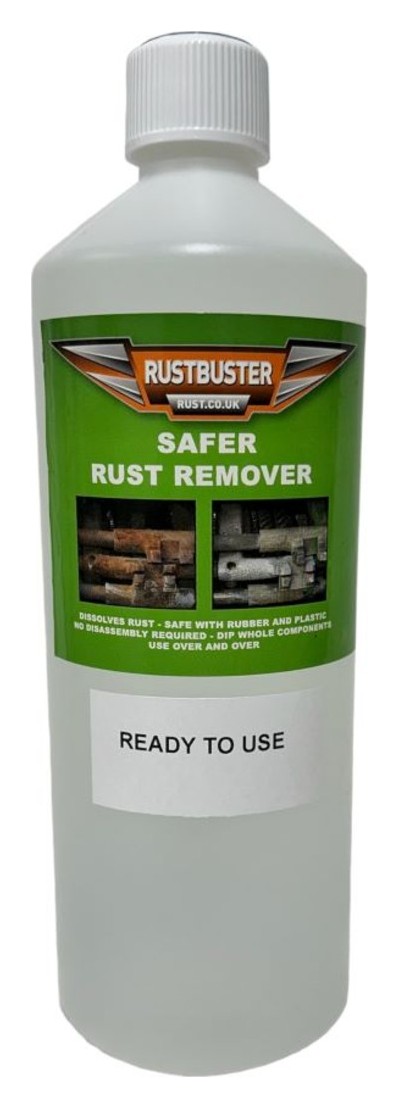
Acid rust removers are fast, but they need gloves, goggles, ventilation and constant supervision, and they’ll eat good metal if you leave them too long. The Rustbuster Safer range takes the opposite approach: Safer Rust Remover and Safer Degreaser are water-based, non-toxic and biodegradable, gentle enough to use indoors, and safe on almost everything except rust and grease. Here’s how they work and when to choose them.
Safer Rust Remover: how it works
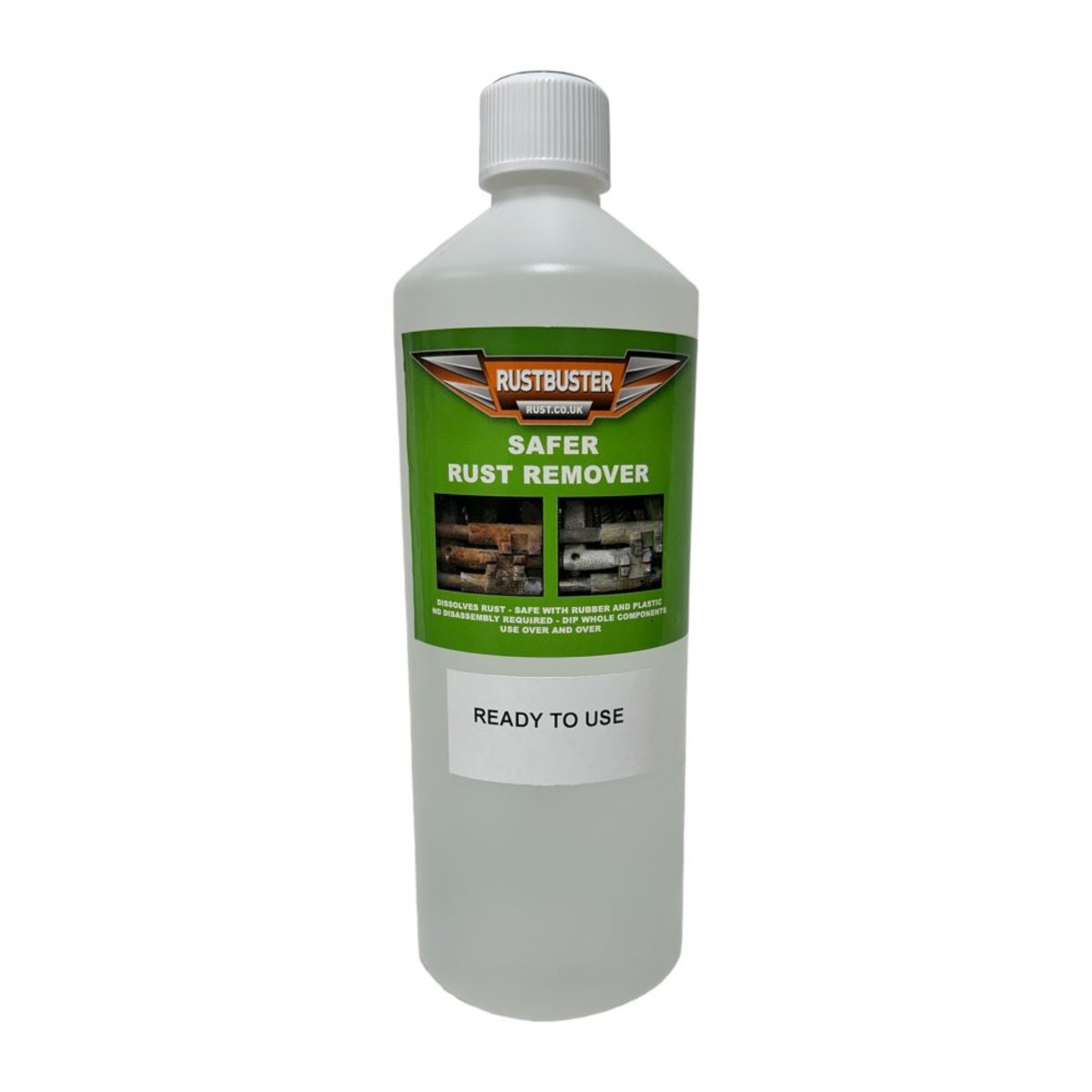
Safer Rust Remover is a chelating rust remover. Instead of dissolving metal with acid, it contains compounds that lock onto the iron in rust and lift it away, leaving it as a brown sludge that washes off with water. Because it targets the rust rather than the steel, it stops working when the rust is gone. There’s no risk of it eating into good metal, and original casting marks and seams come back crisp and clean.
- Acid-free and near pH neutral (pH 8): non-corrosive, non-flammable, non-toxic, water-based and biodegradable.
- Safe on mixed materials: it won’t harm copper, brass, aluminium, plastic, rubber, vinyl or most paints, so you can dip whole assemblies, even with seals and gaskets fitted.
- No hydrogen embrittlement: because it’s acid-free, it won’t weaken high-tensile steel parts such as springs and bolts.
- Removes deep, pitted rust from mild steel, iron and stainless steel.
- Ready to use and reusable: supplied ready to use in 1 and 5 litre bottles, and works over and over until performance drops off.
Safer Rust Remover or an acid remover?
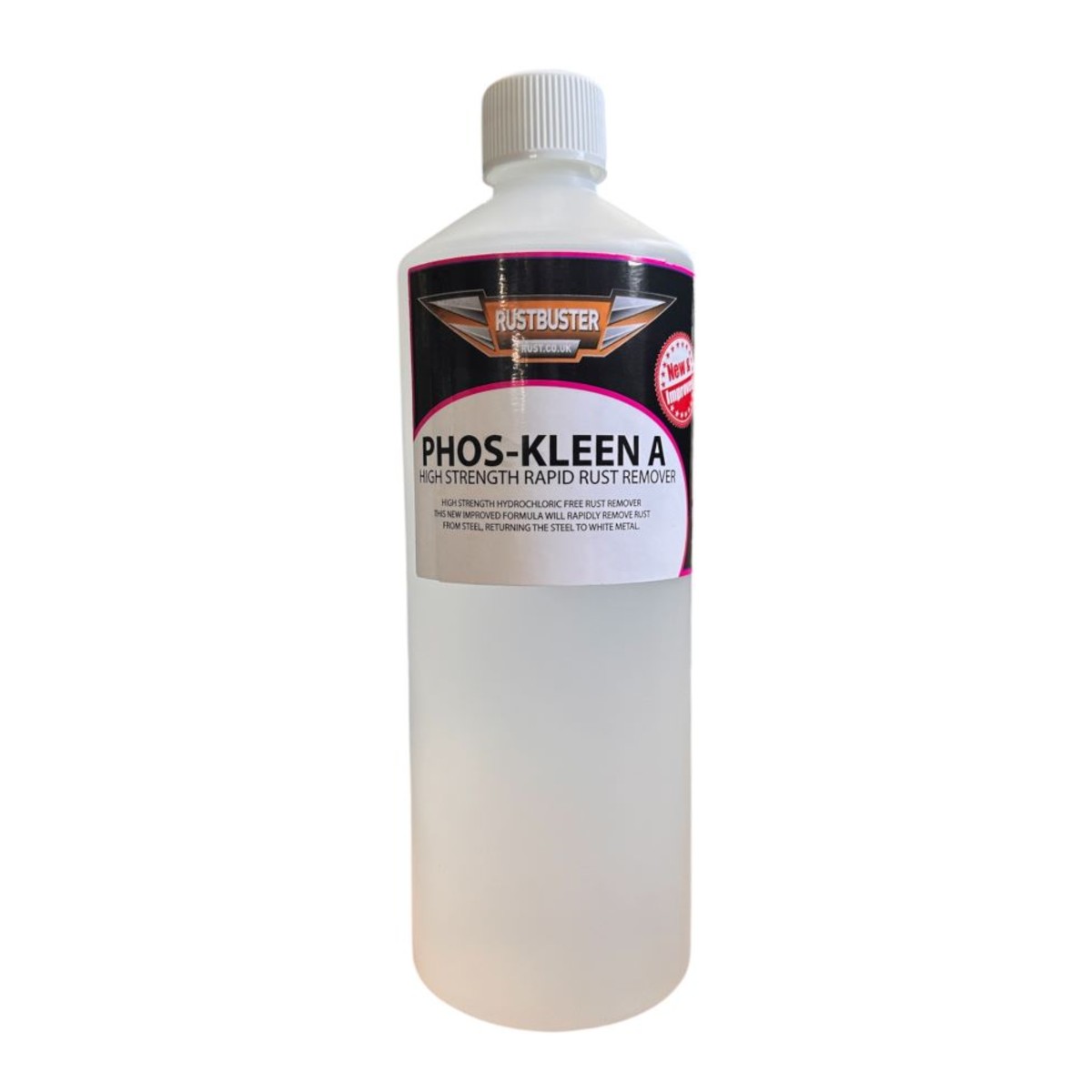
| Safer Rust Remover | Phos-Kleen A (acid) | |
|---|---|---|
| Speed | Slow: hours to days | Fast: often minutes |
| Good metal | Stops when the rust is gone | Keeps going; never leave unattended |
| Other materials | Safe on rubber, plastic, brass, copper, aluminium | Designed for steel |
| Supervision | Leave it soaking and check in | Watch it constantly |
| Handling | Non-toxic, non-flammable, usable indoors | Strong acid: full PPE, ventilation |
| Best for | Parts you can dip, mixed-material assemblies, patient restorations | Fast stripping of heavy rust and mill scale |
Need speed? See our Phos-Kleen A guide. Treating rust on a car body or chassis you can’t dip? A converter like FE-123 is the better tool. For the full picture, read Rust Remover vs Rust Converter.
How to use Safer Rust Remover
Degrease the part
Grease and oil stop the remover reaching the rust. Clean the part with Safer Degreaser (see below) and rinse.
Knock off loose rust and failing paint
Wire-brush away heavy, layered rust and flaking paint. Safer Rust Remover works on rust, not paint, so strip any sound paint first where you want bare metal.
Submerge it and keep it warm
Fully submerge the part in a plastic tub. It works best at 25–30°C: an aquarium heater dropped into the tub does the job. For larger assemblies, use a plastic dustbin with a lid.
Check it and scrub off the sludge
Every day or so, lift the part out and wash off the brown sludge with water and a nylon brush. If there’s rust left, put it back in. Don’t let the sludge get back into the tub, and top up any evaporation with water. Be patient: this isn’t a quick fix, but the results are worth it.
Stop flash rust, then protect
Clean bare steel flash-rusts quickly, so leave finished parts submerged in the solution until you’re ready to paint, oil or wax them. Then rinse, dry and prime straight away.
Reuse the solution
Pour used solution through a strainer to remove the iron sludge, then store it in a sealed container for next time. When it’s finally spent, the iron content decides how it should be disposed of.
Real result: rusty brake calipers
In one of Rustbuster’s own case histories, a pair of badly rusted VW/Audi brake calipers were degreased, wire-brushed and left in Safer Rust Remover for six days, kept at 25–30°C with a small aquarium heater. The remover worked underneath the heavy scale so it lifted off, and cleaned the rust out of every pit in the steel. The calipers came out looking like new.
Safer Degreaser: the first step of every job
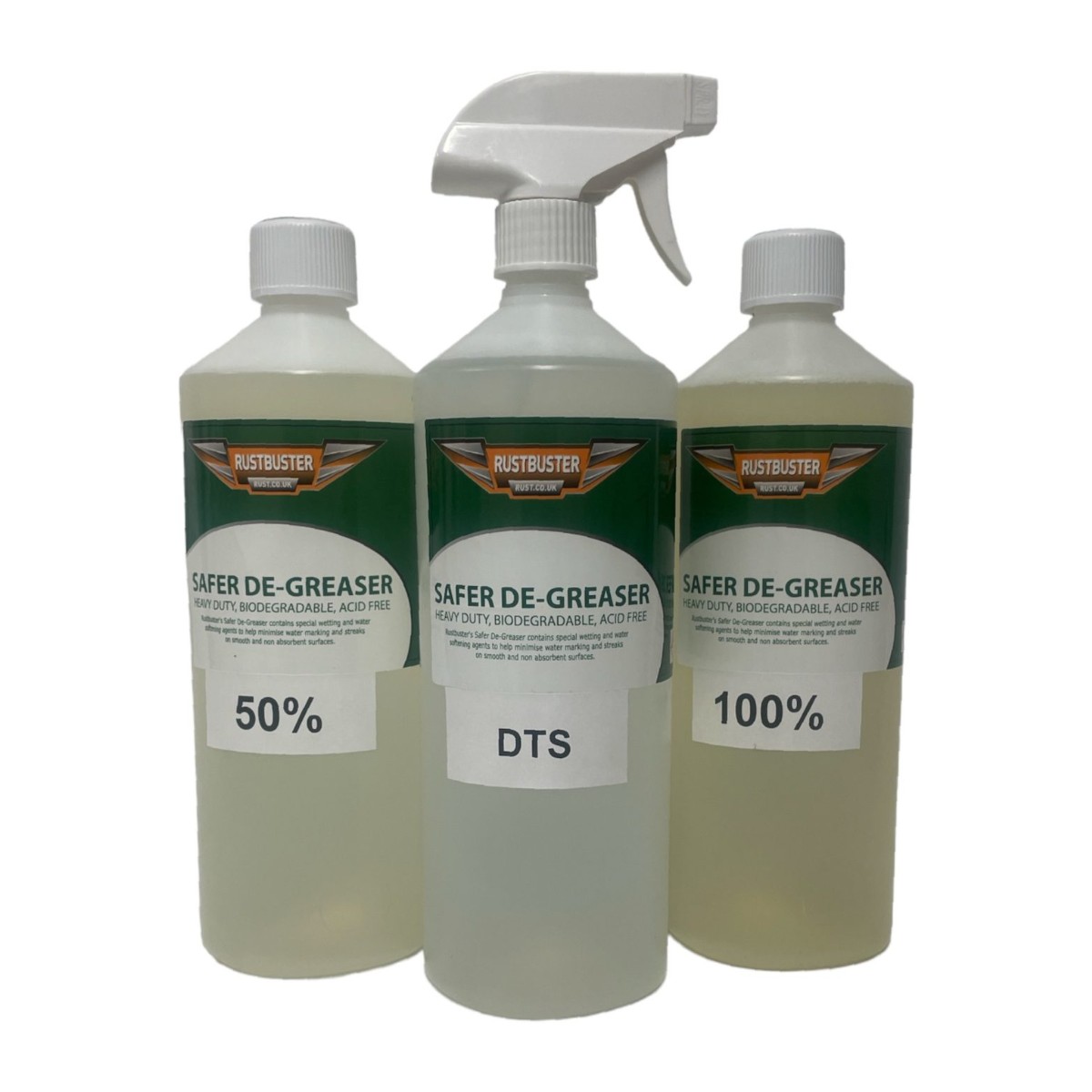
Every rust treatment, primer and paint works better on a clean, grease-free surface, which makes degreasing the most important step you can’t see. Rustbuster Safer Degreaser is a heavy-duty cleaner that contains no VOCs, gives off no vapours, and is colourless, non-toxic, phosphate-free and biodegradable. Spills clean up with plain water.
| Format | How to use it |
|---|---|
| 1L DTS (Direct To Surface) spray | Ready to use. Spray straight on for light and general cleaning. |
| 1L or 5L 100% concentrate | Dilute with water; 1 litre makes up to 25 litres. Light contamination: 100–200ml in 5 litres of water. Heavy contamination: 300–400ml in 5 litres. |
Spray it on, or apply with a brush, mop or sponge, and leave it to work for 5 to 60 minutes depending on how dirty the surface is. Then rinse thoroughly with clean water, using a hose, power washer, sponge or brush. It’s ideal for engines, components and chassis before painting or rust treatment, and just as good on driveways, paving, tiles and workshop floors. It doesn’t harm the skin, but it’s still good practice to wear gloves, eye protection and protective clothing.
Safer range FAQs
Is Safer Rust Remover acid-free?
Yes. It’s an acid-free, near pH-neutral (pH 8) chelating rust remover. It’s non-corrosive, non-flammable, non-toxic, water-based and biodegradable.
How long does Safer Rust Remover take?
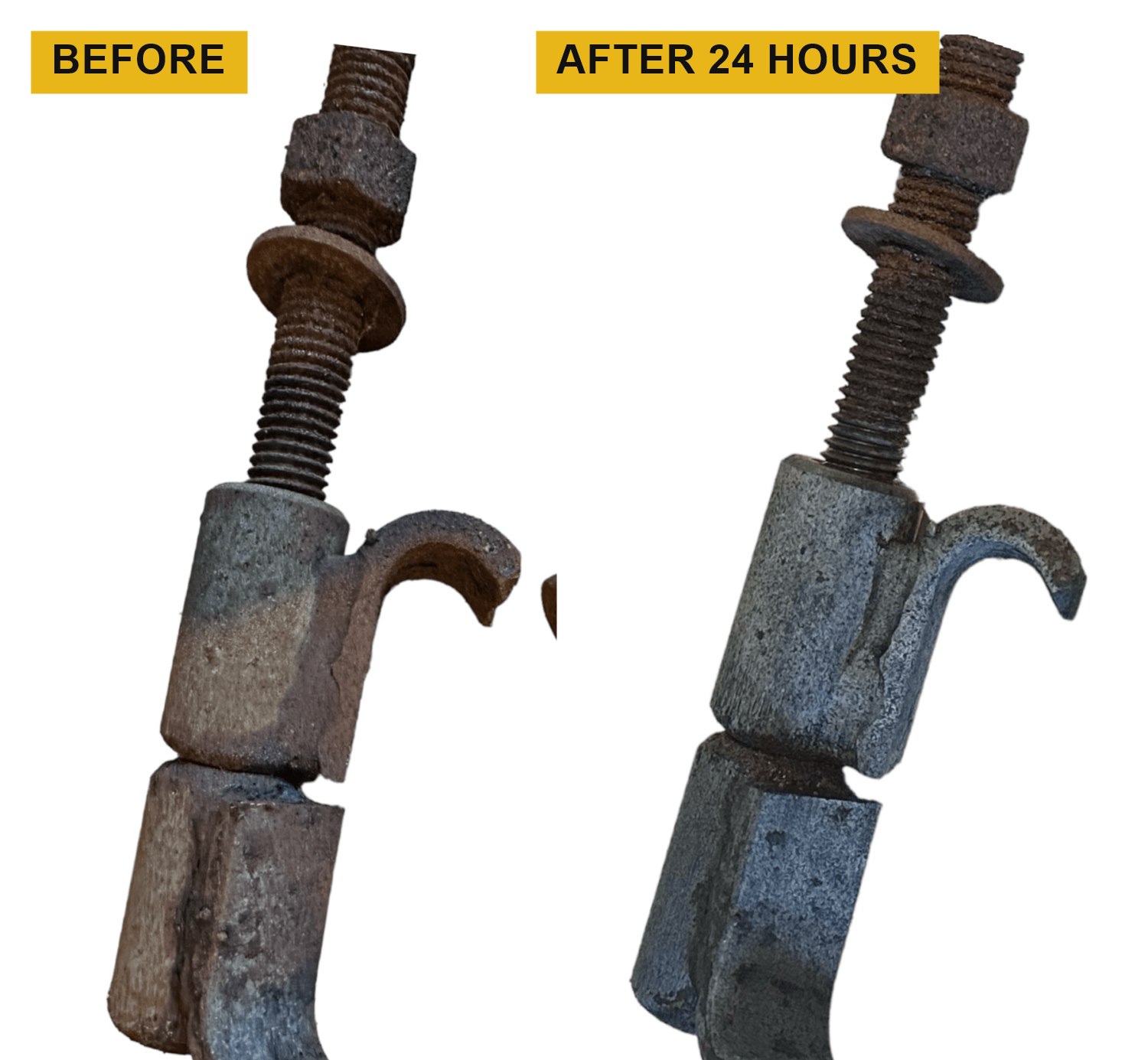
It depends on how heavy the rust is. The part pictured at the top of this page was transformed in 24 hours, while the heavily rusted brake calipers in Rustbuster’s case history took six days. Keeping the solution at 25–30°C helps it work faster.
Will it damage rubber, aluminium or paint?
No. It won’t harm copper, brass, aluminium, plastic, rubber, vinyl or most paints, so you can dip complete assemblies. It also stops working once the rust is gone, so it won’t eat into good steel.
Do I need to dilute Safer Rust Remover?
No. It’s supplied ready to use. Just top it up with water if some evaporates during a long soak.
Can I reuse Safer Rust Remover?
Yes. Strain out the iron sludge after use and store the solution in a sealed container. It keeps working until its performance drops off.
How do I dilute Safer Degreaser concentrate?
For light contamination, mix 100–200ml of concentrate in 5 litres of water; for heavy contamination, 300–400ml in 5 litres. One litre of concentrate makes up to 25 litres. The DTS spray version is ready to use.
More rust guides: surface preparation, Phos-Kleen A, stopping flash rust with Bor-X and rust remover vs rust converter.