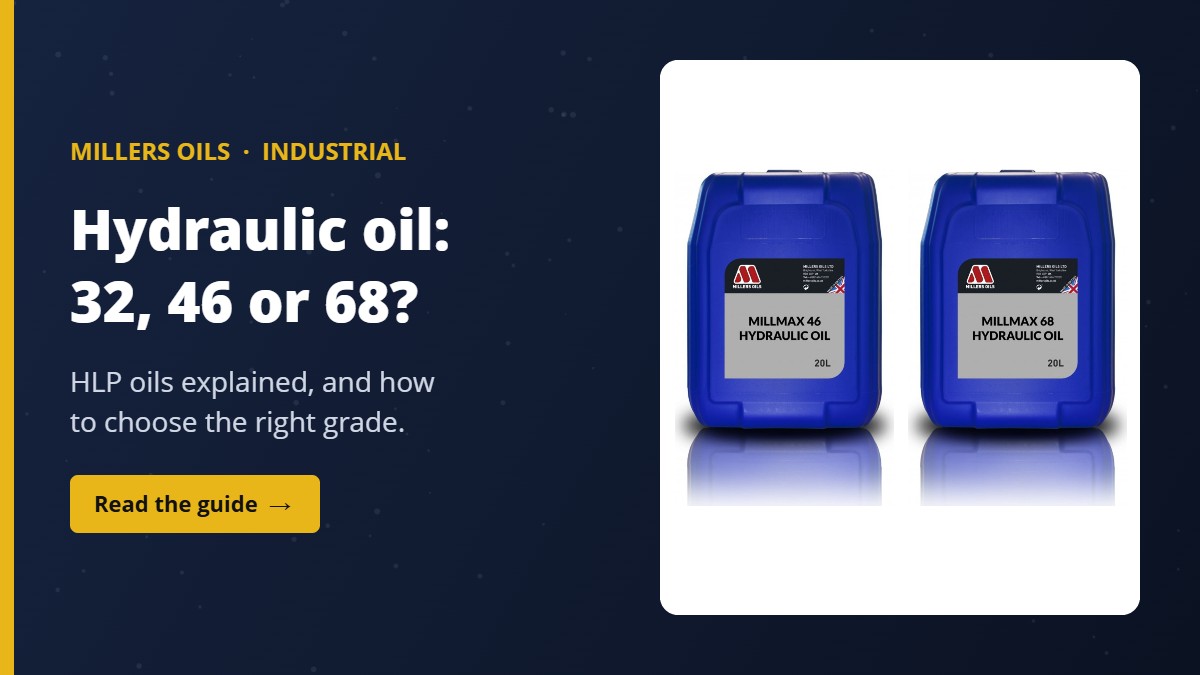
Hydraulic Oil Guide: ISO 32, 46 or 68?
Diggers, loaders, log splitters, presses, lifts, injection moulding machines and farm machinery all depend on hydraulic oil. It’s the fluid that turns a small pump into enormous force, and when it’s the wrong grade, contaminated or worn out, everything slows down, runs hot and wears out faster. This guide explains what hydraulic oil does, what HLP means, and how to choose between ISO 32, 46 and 68.
What hydraulic oil does
Hydraulic oil does several jobs at once. It transmits power: because oil barely compresses, pushing it with a pump moves a cylinder or motor at the other end of the system. It lubricates the pump, valves and seals, often under very high pressure. It also protects metal surfaces from rust and corrosion, carries heat away from the pump and valves, and releases trapped air so the system works smoothly.
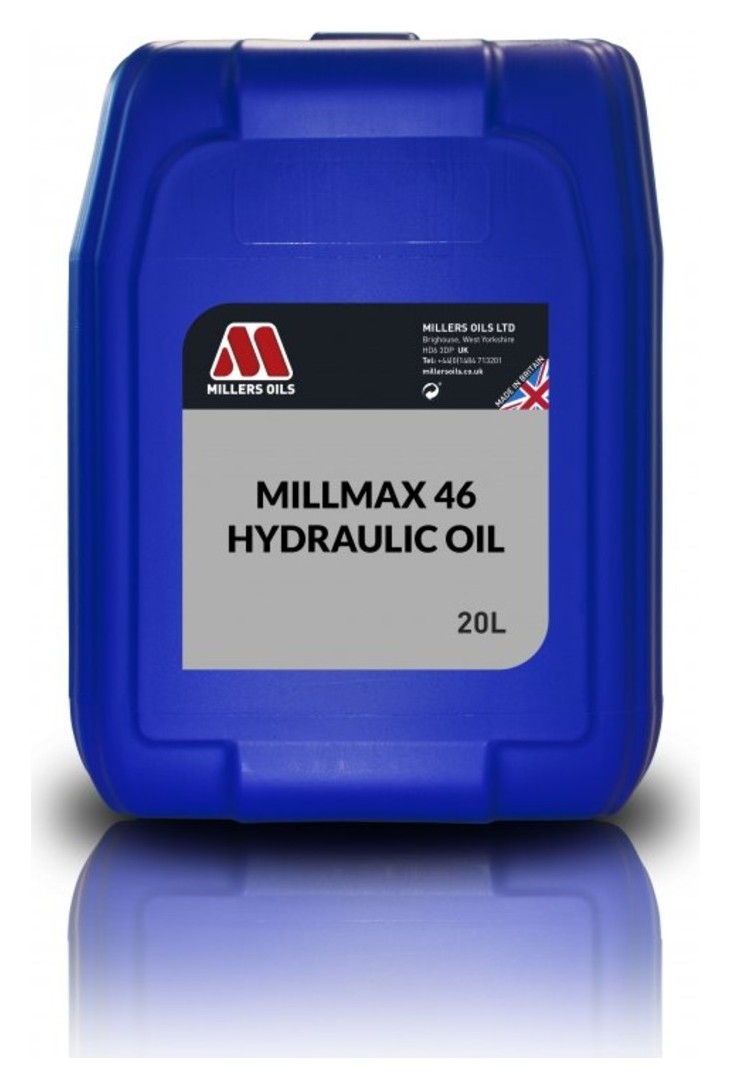
Millers Millmax hydraulic oils are premium zinc anti-wear oils built for this job, with:
- zinc anti-wear protection for pumps, valves and components
- thermal and oxidation stability at high operating temperatures, keeping systems clean and extending oil life
- low foaming, which minimises aeration and cavitation for smooth, consistent power
- corrosion protection for internal metal surfaces
- efficient power transfer under load
What does HLP mean?
Hydraulic oils are commonly classified under the German standard DIN 51524:
| Type | Standard | What it contains |
|---|---|---|
| HL | DIN 51524 Part 1 | Rust and oxidation inhibitors |
| HLP | DIN 51524 Part 2 | HL plus anti-wear additives for high-pressure systems |
| HVLP | DIN 51524 Part 3 | HLP with a high viscosity index, for wide temperature ranges |
All three Millmax grades meet DIN 51524 Part 2 (HLP). They also meet two demanding hydraulic pump makers’ specifications: Bosch Rexroth RDE 90235 and Parker HF-0. That makes them suitable for modern high-pressure industrial and mobile systems.
ISO 32, 46 or 68: which grade?
The number is the oil’s ISO viscosity grade: its thickness in centistokes at 40°C. A higher number means a thicker oil. Thinner oils flow better when cold; thicker oils hold a stronger film when hot and heavily loaded. If you want to understand the numbers properly, read our guide to oil viscosity grades explained.
| Grade | Typical use | Millers oil |
|---|---|---|
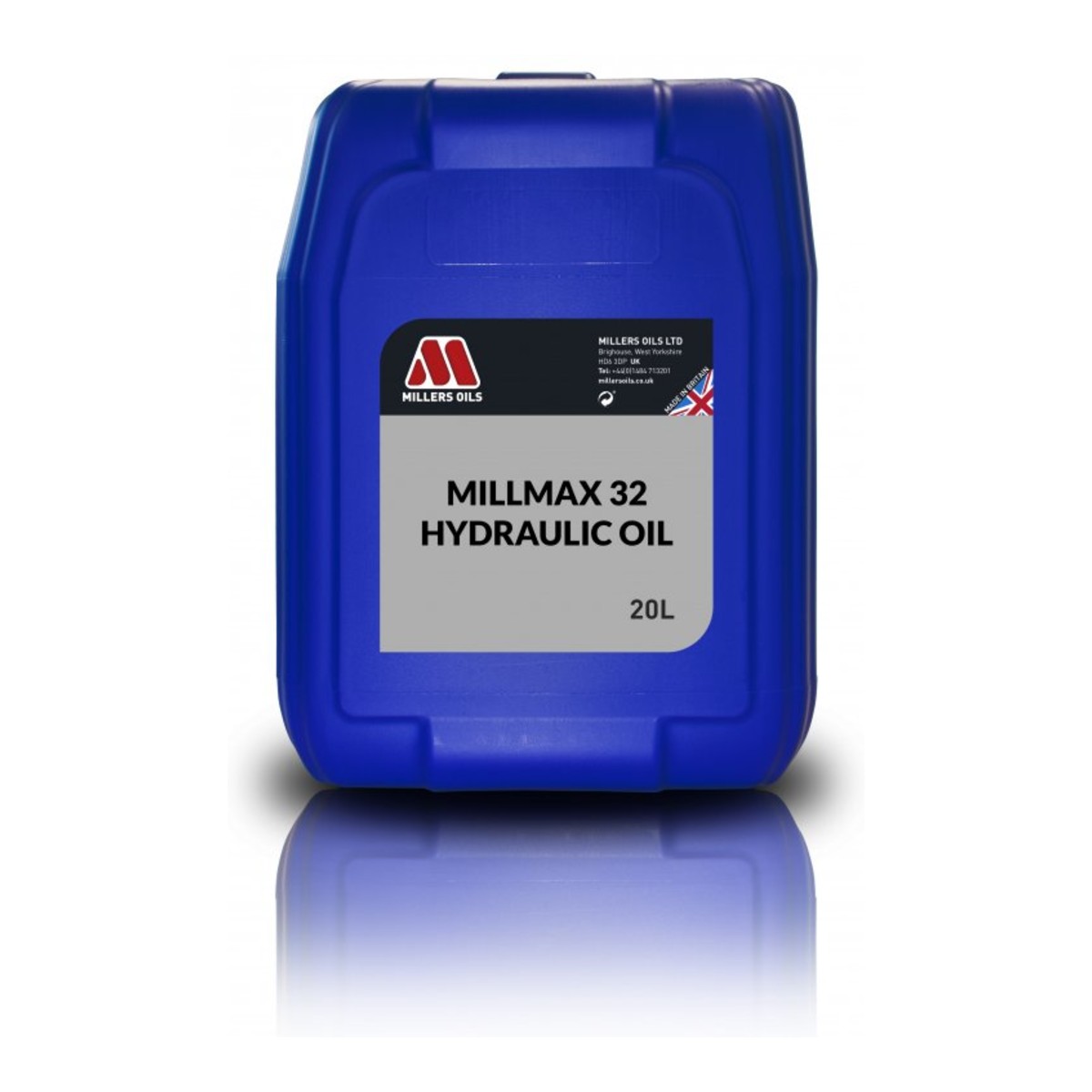
| ISO 32 | Industrial hydraulics, mobile plant, injection moulding and CNC machinery; systems that need a lighter oil, or that start and run cooler | Millmax 32 |
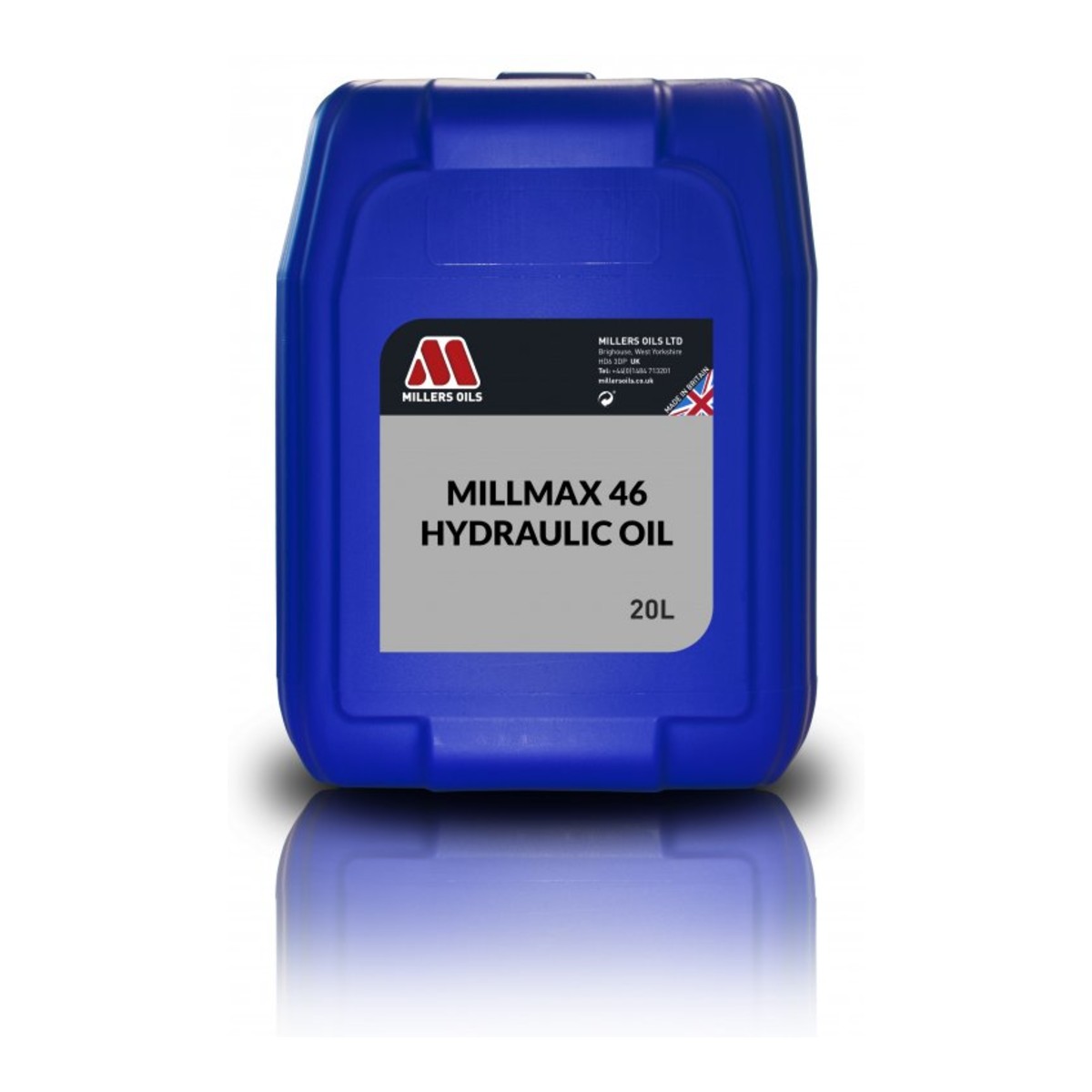
| ISO 46 | The all-rounder: industrial hydraulics, mobile plant, injection moulding, and mining, quarrying, forestry and agricultural machinery | Millmax 46 |
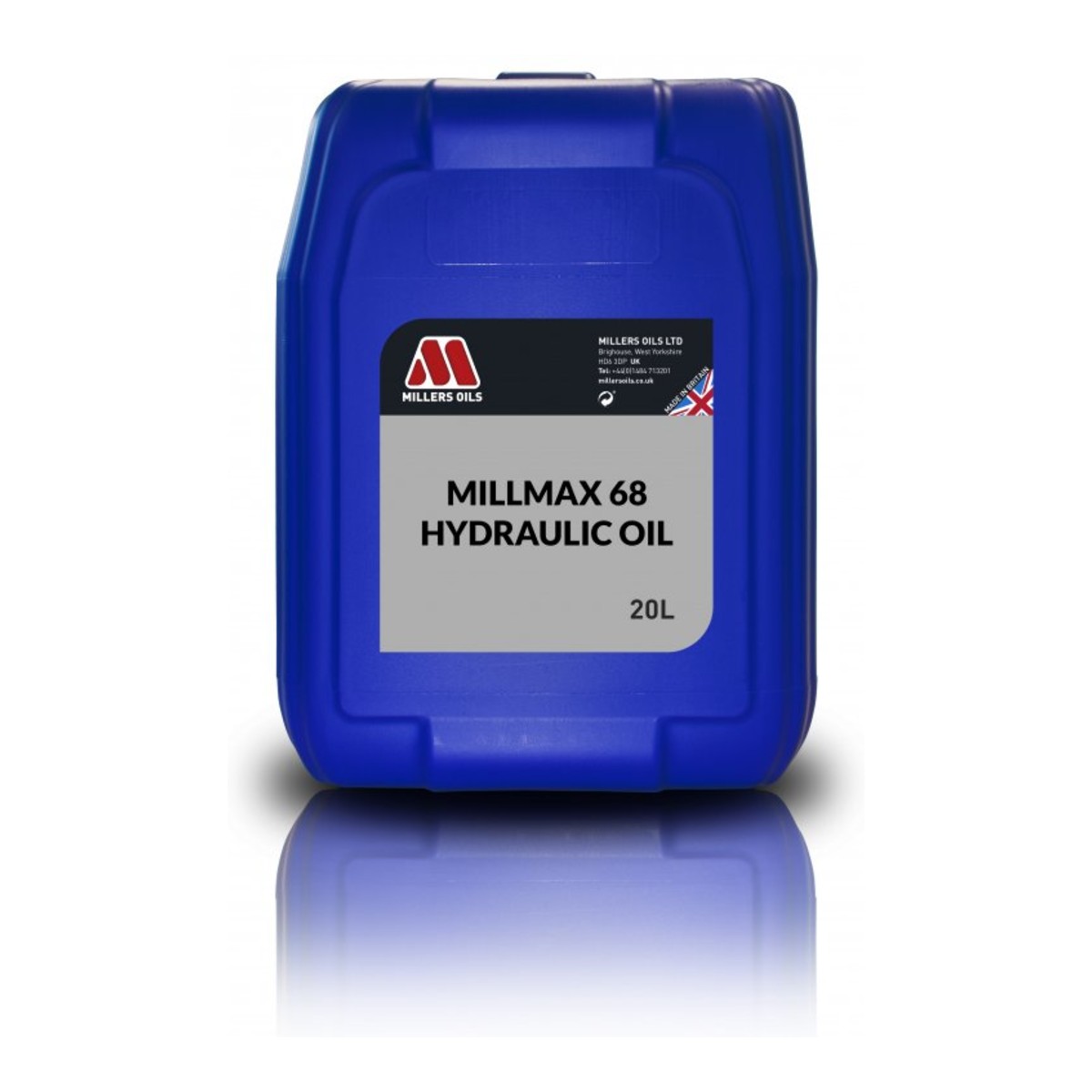
| ISO 68 | Heavily loaded and higher-temperature systems, mobile plant and heavy machinery that need extra load-carrying capability | Millmax 68 |
Always use the grade the manufacturer specifies. Switching to a thicker oil to “quieten” a worn pump can make cold starts sluggish and increase the risk of cavitation, so it’s best to fix the underlying problem.
Keep it clean: the key to hydraulic life
Hydraulic pumps and valves are built to very fine tolerances, and dirt is their biggest enemy. Dust, metal particles and water wear pumps, stick valves and block filters. Treat the oil like the precision product it is:
- Use clean containers and funnels, and keep drums sealed and stored out of the rain
- Clean around the filler cap before you open it
- Change filters at the recommended intervals and keep the reservoir breather clean
- Watch the oil: milky means water, foamy means air getting in (often a suction-side leak or low level), and dark with a burnt smell means it has overheated
How to change hydraulic oil
Warm it, then make it safe
Run the machine briefly so the oil flows and carries contaminants out. Then lower everything, switch off and relieve the pressure as the manual describes.
Drain and inspect
Drain the reservoir and check the old oil for water, sludge or metal particles.
Change the filters and clean the breather
Fit new filters and clean or replace the reservoir breather, so new oil starts clean.
Refill with clean oil
Fill with the correct Millmax grade using clean equipment, to the level shown on the sight glass or dipstick.
Bleed out the air and top up
Start the machine and slowly cycle each cylinder and function through its full travel a few times to purge the air, then recheck the level and top up.
Mistakes to avoid
- Using the wrong grade. Stick to the manufacturer’s ISO grade.
- Using engine oil or gear oil. Only if the manual specifies it. Otherwise use a proper anti-wear hydraulic oil.
- Letting dirt in. Dirty containers and open filler caps do more damage than almost anything else.
- Mixing different oils. If you change brand or type, drain the system fully rather than topping up with something different.
- Running with a low level. It draws in air, causing foaming, noise and cavitation.
- Using a standard HLP oil in a tractor’s shared transmission. Those systems usually need a UTTO.
Hydraulic oil FAQs
What’s the difference between hydraulic oil 32, 46 and 68?
The number is the ISO viscosity grade, the oil’s thickness at 40°C. ISO 32 is the thinnest and flows best when cold, ISO 46 is the most common all-round grade, and ISO 68 is thicker for heavily loaded or hot-running systems. Use the grade in your machine’s manual.
What does HLP mean on hydraulic oil?
HLP is a DIN 51524 Part 2 hydraulic oil: it contains rust and oxidation inhibitors plus anti-wear additives for high-pressure systems. Millers Millmax 32, 46 and 68 meet DIN 51524 Part 2 (HLP), as well as Bosch Rexroth RDE 90235 and Parker HF-0.
Can I mix hydraulic oil grades?
It’s best not to. Mixing grades changes the viscosity, and mixing different types or brands can affect performance. If you need to change grade or brand, drain the system and refill with the new oil.
Can I use hydraulic oil in my tractor?
It depends on the tractor. A separate hydraulic system may use an HLP oil such as Millmax 46, but many tractors share one oil between the transmission, wet brakes and hydraulics and need a tractor transmission-hydraulic oil (UTTO). Check the manual, or ask us.
Why is my hydraulic oil milky or foamy?
Milky oil usually means water contamination, from condensation or a leak. Foamy oil means air is getting in, often from a low oil level or a leak on the suction side of the pump. Find and fix the cause, then change the oil.
Do you sell hydraulic oil in bulk?
Millmax is stocked in 20 litre containers, and 200 litre barrels and 1000 litre IBCs are available on request. Contact us for bulk pricing.
More workshop guides: compressor oil guide, oil viscosity grades explained, which grease do I need? and all industrial and workshop guides.