Cutting, Drilling and Tapping Fluids: Which One Do You Need?
Whether you’re hand-tapping a thread on the bench, drilling stainless on a pillar drill or running a CNC lathe all day, the fluid you use makes a big difference. The right cutting fluid keeps the tool cool, stops it seizing or snapping, gives a cleaner thread and finish, and makes taps and drills last far longer. This guide explains the different types of cutting, drilling and tapping fluid, and which one suits your job.
What cutting fluids do
- Cool: heat softens a cutting edge and ruins it. Carrying heat away keeps tools sharp for longer.
- Lubricate: reducing friction between the tool, chip and workpiece stops chips welding to the cutting edge, which causes torn threads and poor finishes.
- Flush: washing chips away from the cut, especially in deep holes and threads.
- Protect: preventing rust on the workpiece and machine.
Different jobs need a different balance. Slow, heavy work such as tapping needs lots of lubrication and extreme-pressure (EP) additives. Fast machining needs lots of cooling.
The main types of cutting fluid
| Type | What it is | Strengths |
|---|---|---|
| Neat cutting and tapping fluids | Used straight from the container, oil-based with EP additives | Maximum lubrication for tapping, drilling and reaming, especially in tough materials |
| Tapping compounds (pastes) | A thick paste applied by brush or by dipping the tap | Stays where you put it; ideal for hand tapping and difficult threads |
| Soluble oils (milky emulsions) | A concentrate mixed with water; high oil content | Good lubrication and corrosion protection with water’s cooling; general machining |
| Semi-synthetic and synthetic coolants | Lower or no oil content, mixed with water | Excellent cooling for high-speed machining |
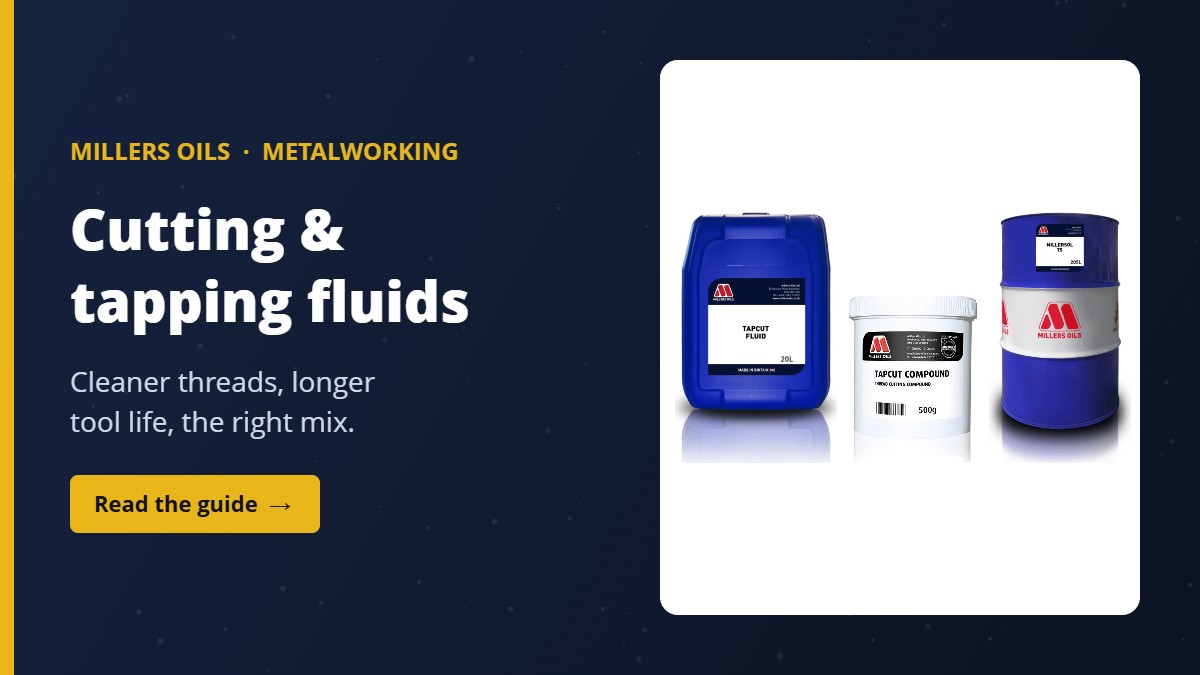
Millers Tapcut Fluid: for drilling, tapping and reaming
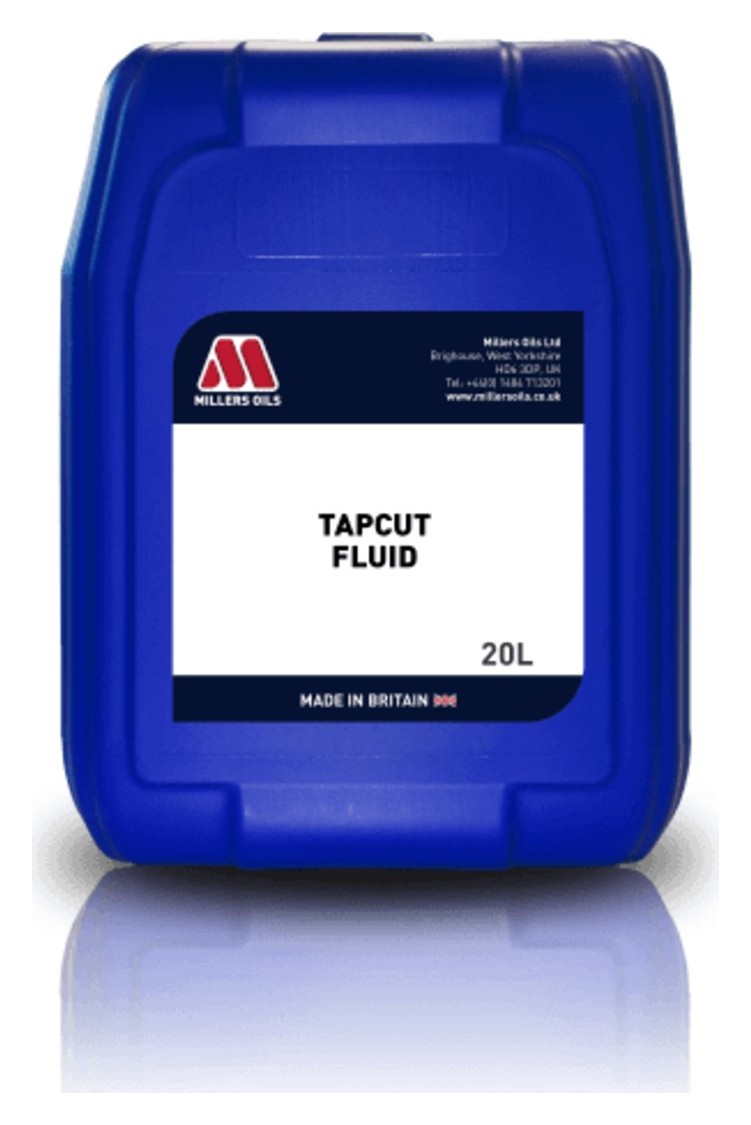
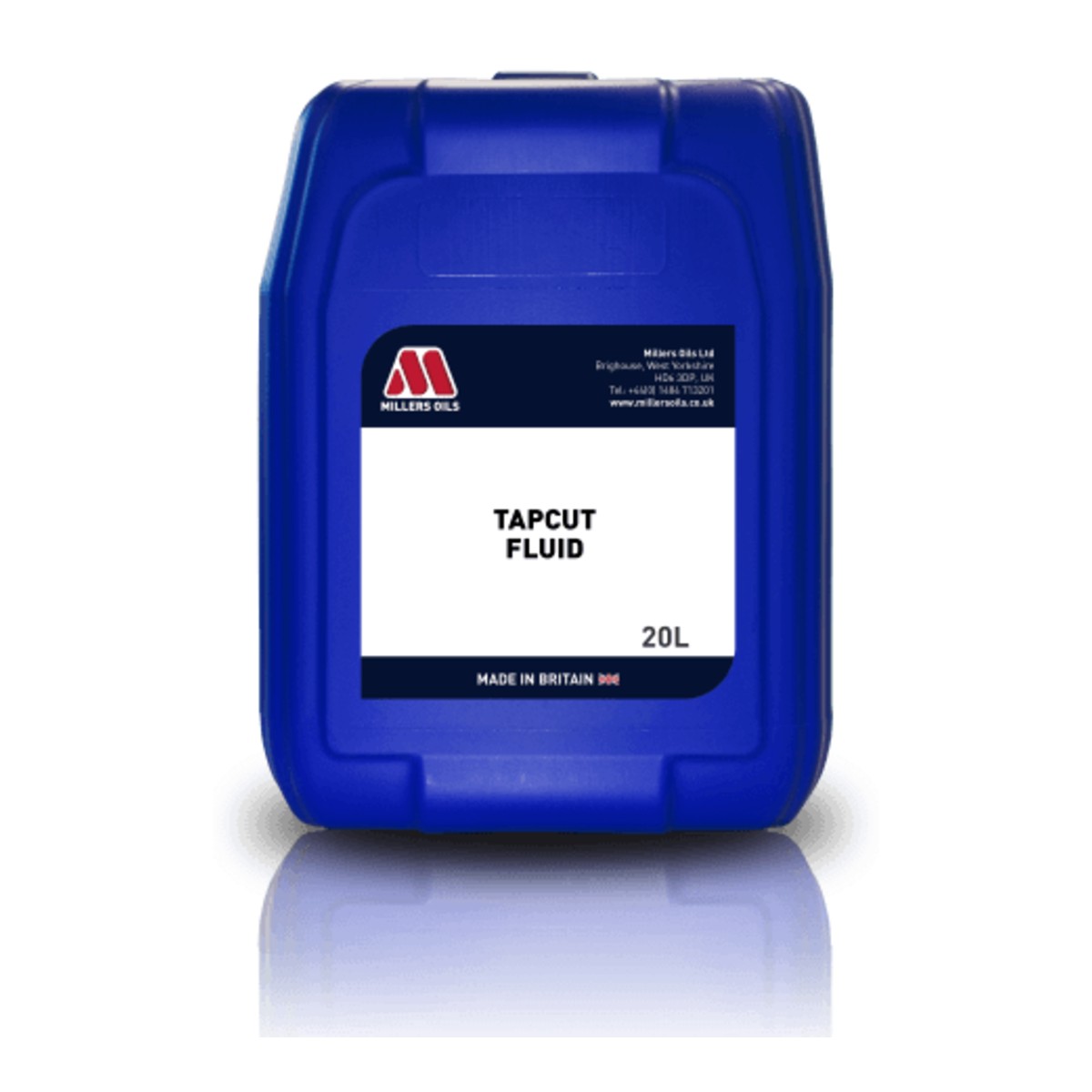
Millers Tapcut Fluid is a neat tapping fluid made from a carefully balanced blend of mineral oils, an extremely active EP agent and lubricity enhancers. It’s used straight from the container, and it’s a brown, fairly viscous fluid (185 cSt at 40°C) that clings to metal surfaces even at high speeds, so it stays in the cut instead of flinging off.
- For drilling, tapping and reaming where a fluid lubricant is needed, and proven in certain horizontal broaching work
- Compatible with high-alloy steels and all non-ferrous metals
- Cleaner threads and cuts, longer tool life and a better surface finish
- Available in 1, 5 and 20 litre sizes
Millers Tapcut Compound: thread-cutting paste
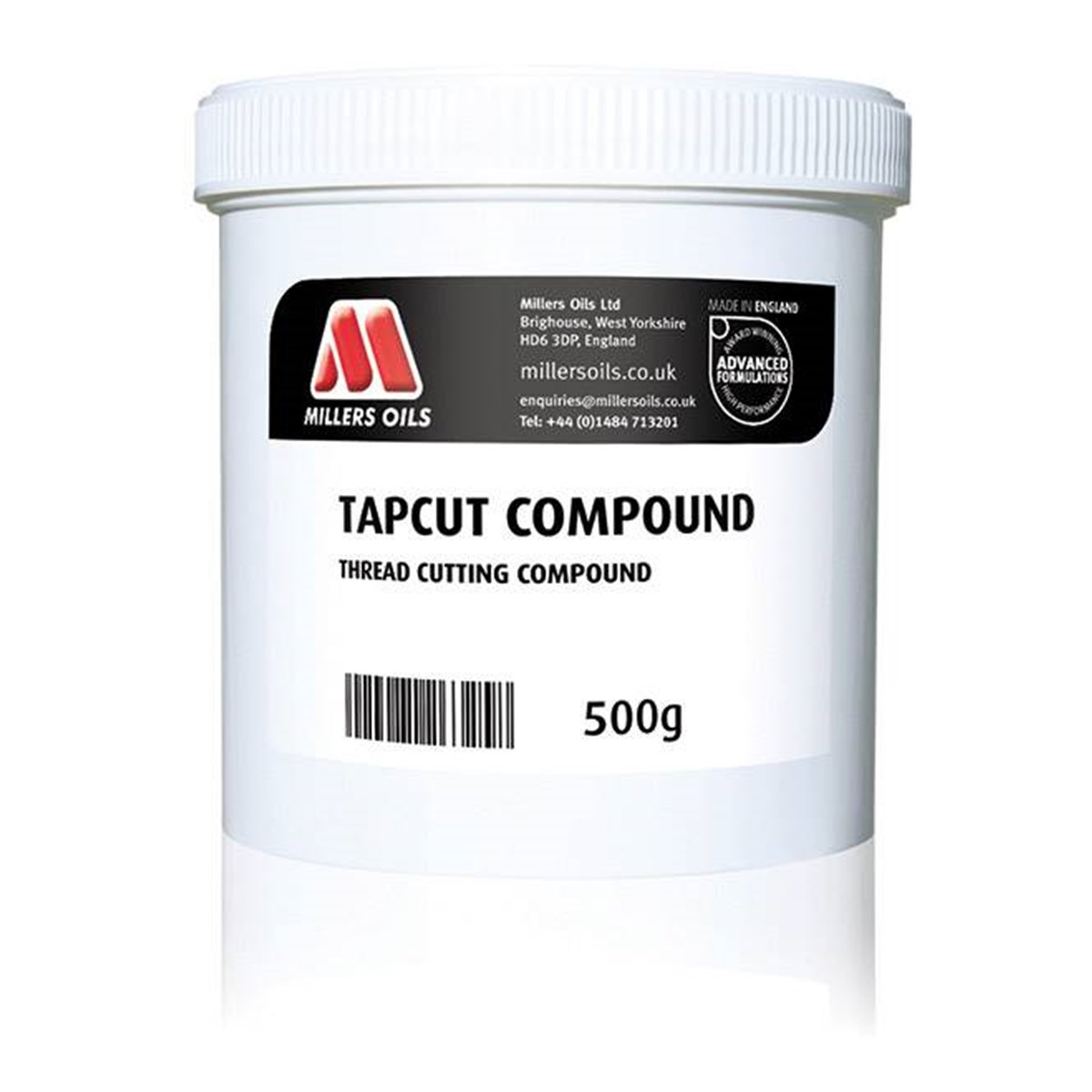
Millers Tapcut Compound is a brown, thixotropic thread-cutting paste with strong EP additives. “Thixotropic” means it stays put as a paste but flows under the pressure of the cut, so it’s ideal for hand tapping, overhead or awkward work, and anywhere a fluid would run off. Apply it with a stiff brush or spatula, or dip the tap or component straight into the tub.
- Cleaner thread cutting with minimal tearing
- Increases the rate of cut
- EP additives for long tool life
- Compatible with high-alloy steels and all non-ferrous metals
- 500g tub
Millersol TS: soluble coolant for machine tools
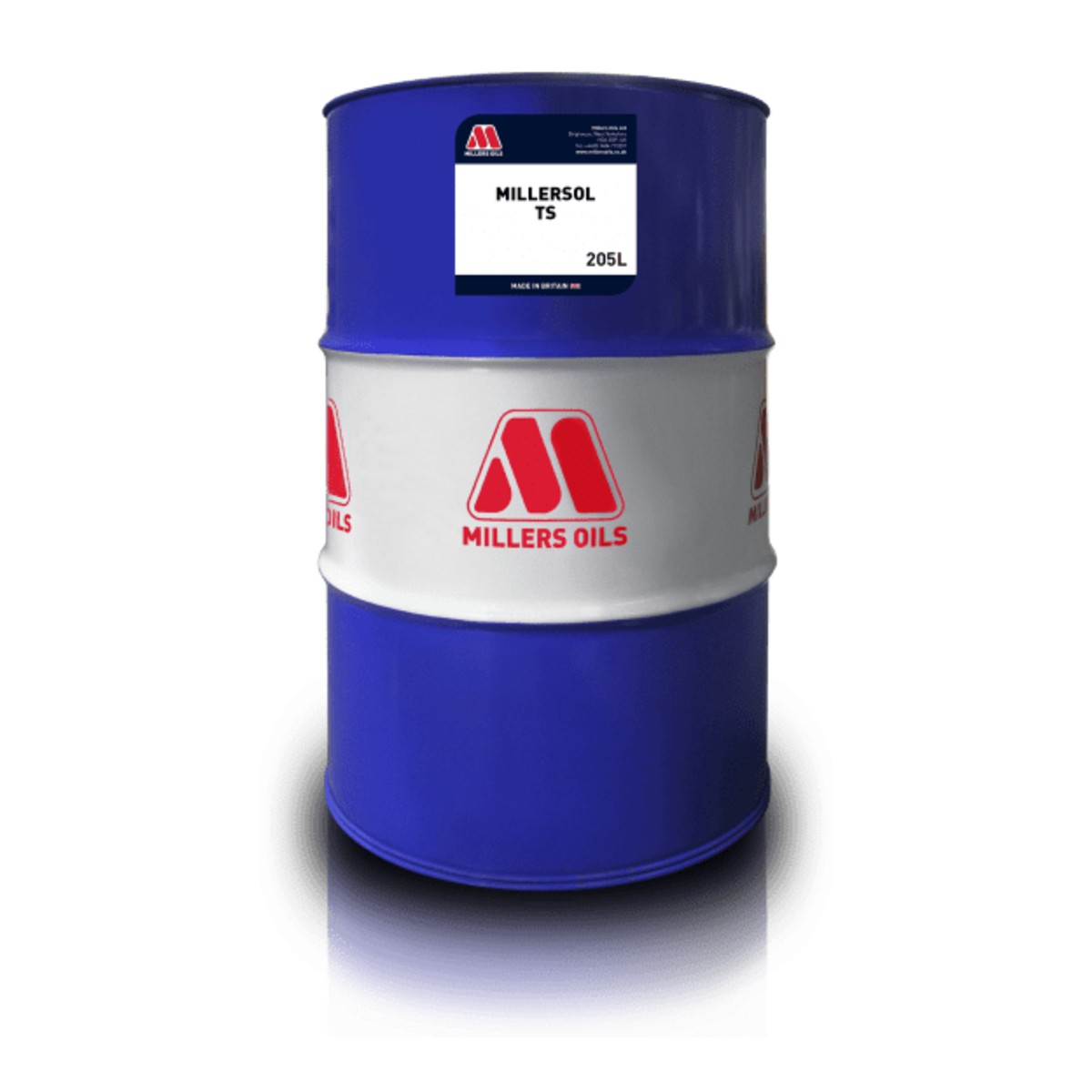
For lathes, mills and machining centres with a coolant pump and sump, you need a water-mixed coolant. Millers Millersol TS (now also sold by Millers as Millcool TS) is a traditional milky soluble oil with a high oil content, giving strong lubrication and corrosion protection on both ferrous and non-ferrous metals.
- For general turning, milling, drilling and tapping on conventional and CNC machine tools, including heavier-duty machining
- Suitable for ferrous alloys, aluminium alloys and yellow metals
- Tight, stable emulsion for long sump life, economical use and less downtime
- Formaldehyde-free, and free from chlorine, zinc and heavy metals, for operator safety and simpler hazard labelling
| Operation | Recommended dilution | Mix for a 100 litre sump |
|---|---|---|
| Turning, milling and drilling | 4–6% | 4–6 litres of concentrate |
| Tapping and threading | 5–8% | 5–8 litres of concentrate |
| Grinding | 3–5% | 3–5 litres of concentrate |
Other figures from the data sheet: pH 9.3 at 5%, a refractometer correction factor of 1.0 (so the refractometer reading is the concentration), and a water hardness range of 100–300ppm.
Which one do you need?
| Job | Best choice |
|---|---|
| Hand tapping and threading on the bench | Tapcut Compound or Tapcut Fluid |
| Drilling and reaming by hand or on a pillar drill | Tapcut Fluid |
| Tough, high-alloy steels and large or difficult taps | Tapcut Compound |
| Machine tools with a coolant sump: turning, milling, drilling, grinding | Millersol TS at the correct dilution |
| Bending tube without the mess | Solform Tube Bending Gel (read the guide) |
We can also supply neat cutting oils, and grinding, honing and forming fluids from the wider Millers range to order. Contact us for anything you don’t see listed.
How to mix and look after soluble coolant
Start with a clean sump
Clean out old coolant, chips and sludge before filling, so the new mix starts clean and lasts longer.
Add the concentrate to the water
Always add the concentrate to the water, not the water to the concentrate, and stir as you go. This gives a stable, even emulsion.
Check the strength with a refractometer
With a correction factor of 1.0, Millersol TS reads directly on a refractometer: a reading of 5 means a 5% mix. Check it regularly, because water evaporates and the mix gets stronger.
Top up with pre-mixed coolant
Top up with a weaker pre-mixed solution rather than neat water or neat concentrate, to keep the strength steady.
Keep it clean
Skim off tramp oil (leaked slideway and hydraulic oil) and remove chips regularly. Tramp oil and debris shorten sump life and can cause smells.
Tips for tapping cleaner threads
- Use the correct tap drill size for the thread
- Apply Tapcut generously to the tap and the hole before you start
- When hand tapping, back the tap off regularly to break the chip, and re-apply fluid or compound
- Clear chips from blind holes before you finish the thread
- Don’t force it: a tap that’s binding needs clearing, not more pressure
Mistakes to avoid
- Cutting dry. Heat and friction ruin tools and threads.
- Using general-purpose oils as tapping fluid. Penetrating sprays and engine oils don’t have the EP additives that tapping needs.
- Getting the coolant strength wrong. Too weak and you get rust and poor tool life; too strong wastes concentrate and can cause residues and foaming. Check it with a refractometer.
- Adding water to concentrate. Always add concentrate to water.
- Ignoring the sump. Tramp oil, chips and bacteria shorten coolant life.
- Skipping skin protection. Wear gloves, avoid prolonged skin contact and read the safety data sheet.
Cutting and tapping fluid FAQs
What is the best tapping fluid?
For most tapping, drilling and reaming, a neat tapping fluid with strong EP additives such as Millers Tapcut Fluid works well; it clings to the tool even at high speed. For hand tapping, awkward positions or difficult threads, a paste such as Tapcut Compound stays where you put it.
What’s the difference between cutting fluid and tapping fluid?
Tapping fluids are usually neat, oil-based products with strong EP additives for the slow, high-pressure action of cutting threads. “Cutting fluid” often means a water-mixed coolant, such as Millersol TS, used in machine tools where cooling matters as much as lubrication.
What ratio do I mix soluble cutting oil at?
For Millersol TS, Millers recommend 4–6% for turning, milling and drilling, 5–8% for tapping and threading, and 3–5% for grinding. For example, a 5% mix is 5 litres of concentrate in 95 litres of water. Always add the concentrate to the water.
How do I check coolant concentration?
Use a refractometer. Millersol TS has a correction factor of 1.0, so the reading equals the percentage concentration. Check it regularly, as evaporation makes the mix stronger over time.
Can I use Tapcut on stainless steel and aluminium?
Tapcut Fluid and Tapcut Compound are compatible with high-alloy steels and all non-ferrous metals. As with any cutting job, use sharp tools and the correct speeds for the material.
Why does my coolant smell?
Bad smells usually come from bacteria growing in a dirty or weak coolant, often helped by tramp oil floating on top. Keep the concentration correct, skim off tramp oil, remove chips, and clean the sump out properly before refilling.
More workshop guides: Solform tube bending gel, compressor oil guide, hydraulic oil guide and oil viscosity grades explained.