
Compressor Oil Guide: Which Oil for Your Air Compressor?
Whether it’s a small piston compressor in a home workshop or a rotary screw compressor running a factory, a compressor lives or dies by its oil. The oil has to cope with heat from compressing air, moisture that condenses inside the machine, and constant churning, all while keeping valves, bearings and rotors clean. This guide explains what makes a proper compressor oil, which grade suits your type of compressor, and how to look after it.
Why compressor oil isn’t engine oil
Compressing air makes it hot, and hot air full of oxygen attacks oil fast. At the same time, the moisture in the air condenses into water inside the compressor. A compressor oil is formulated for exactly these conditions, and it’s very different from engine oil, which is designed for a combustion engine. Millers Millair compressor oils give:
- high oxidation resistance, so the oil doesn’t break down and form deposits in the heat
- low volatility, so less oil is carried away with the air and less topping up is needed
- corrosion protection for ferrous and non-ferrous metals against condensed moisture
- resistance to emulsification and filter blocking, so water separates out instead of turning the oil milky
- good air release and low foaming, so the oil keeps lubricating properly
The mineral Millair oils meet DIN 51506 VD-L, the recognised specification for air compressor oils. Unless your compressor manufacturer specifically calls for engine oil, use a proper compressor oil.
Which grade for your compressor?
Compressor oils are graded by ISO viscosity grade (ISO VG): the number is the oil’s viscosity at 40°C, so a higher number means a thicker oil. The right grade depends mainly on the type of compressor. Millers’ guidance is:
| Compressor type | Typical grade | Millers oil |
|---|---|---|
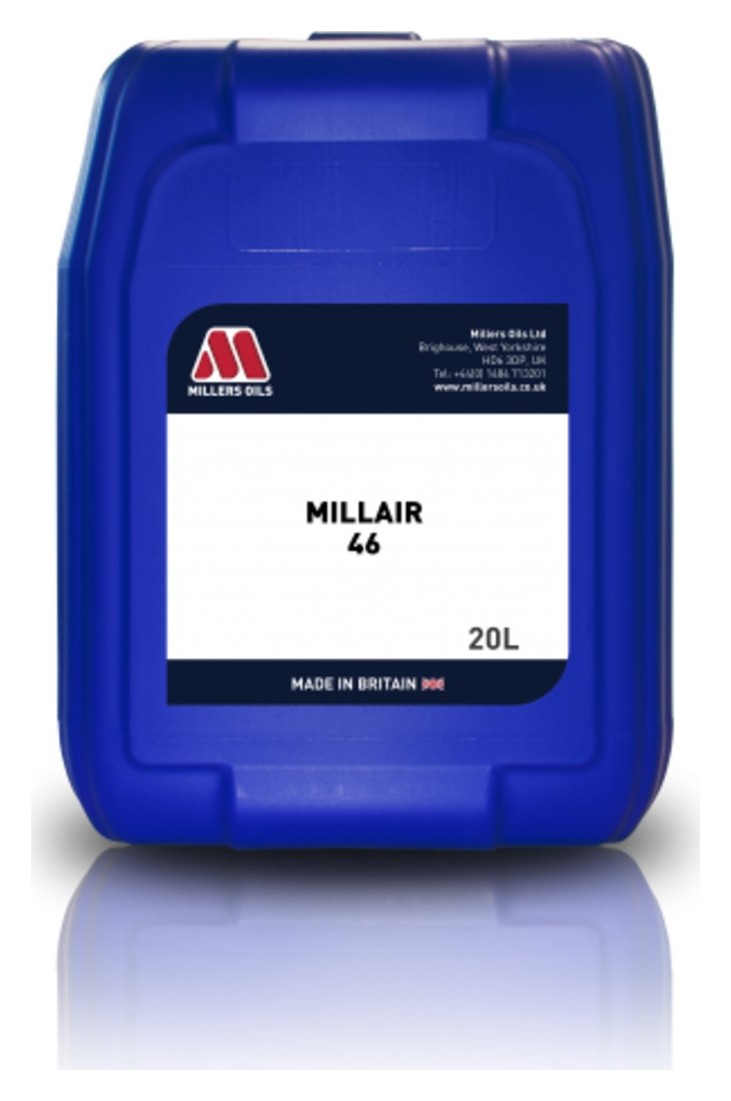
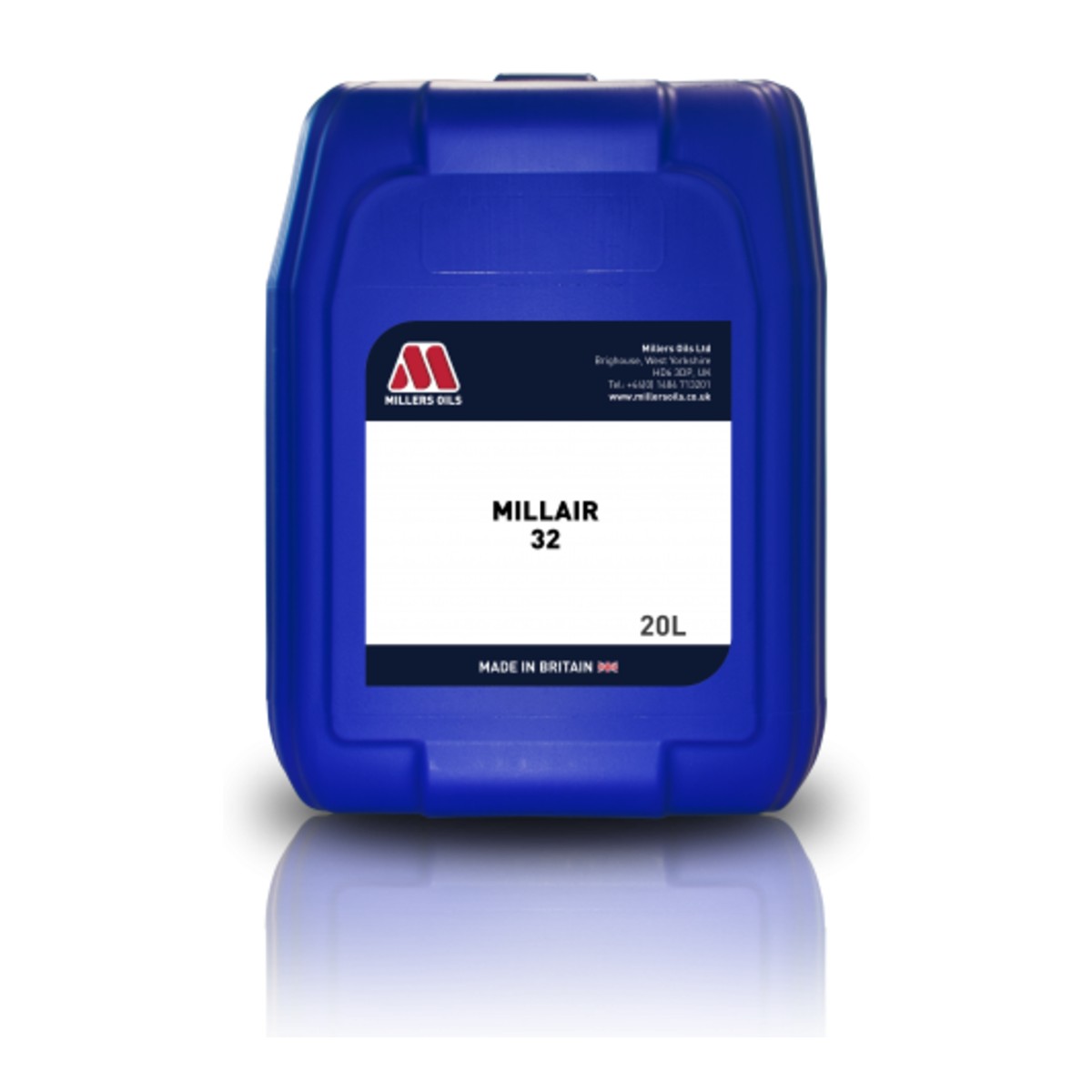
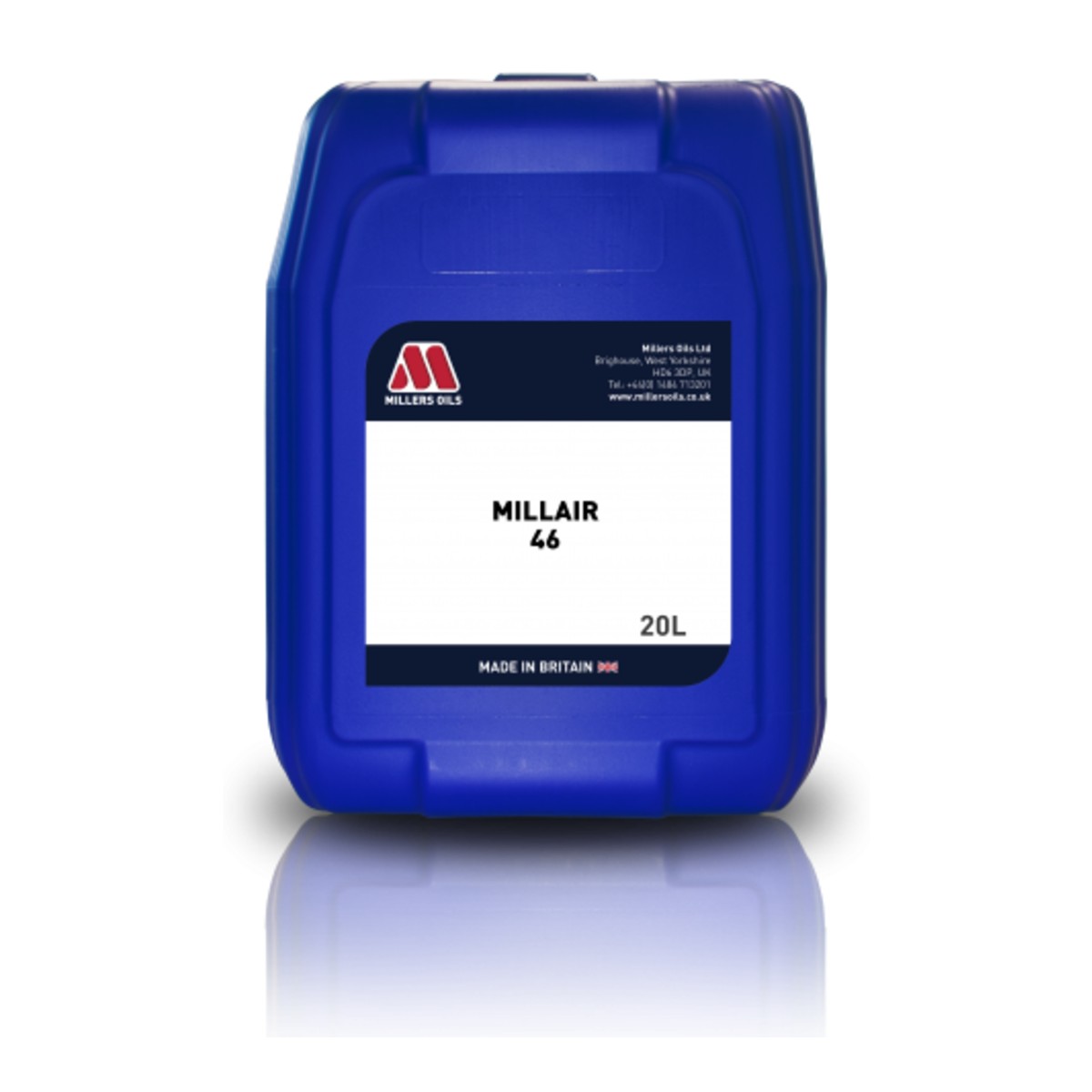
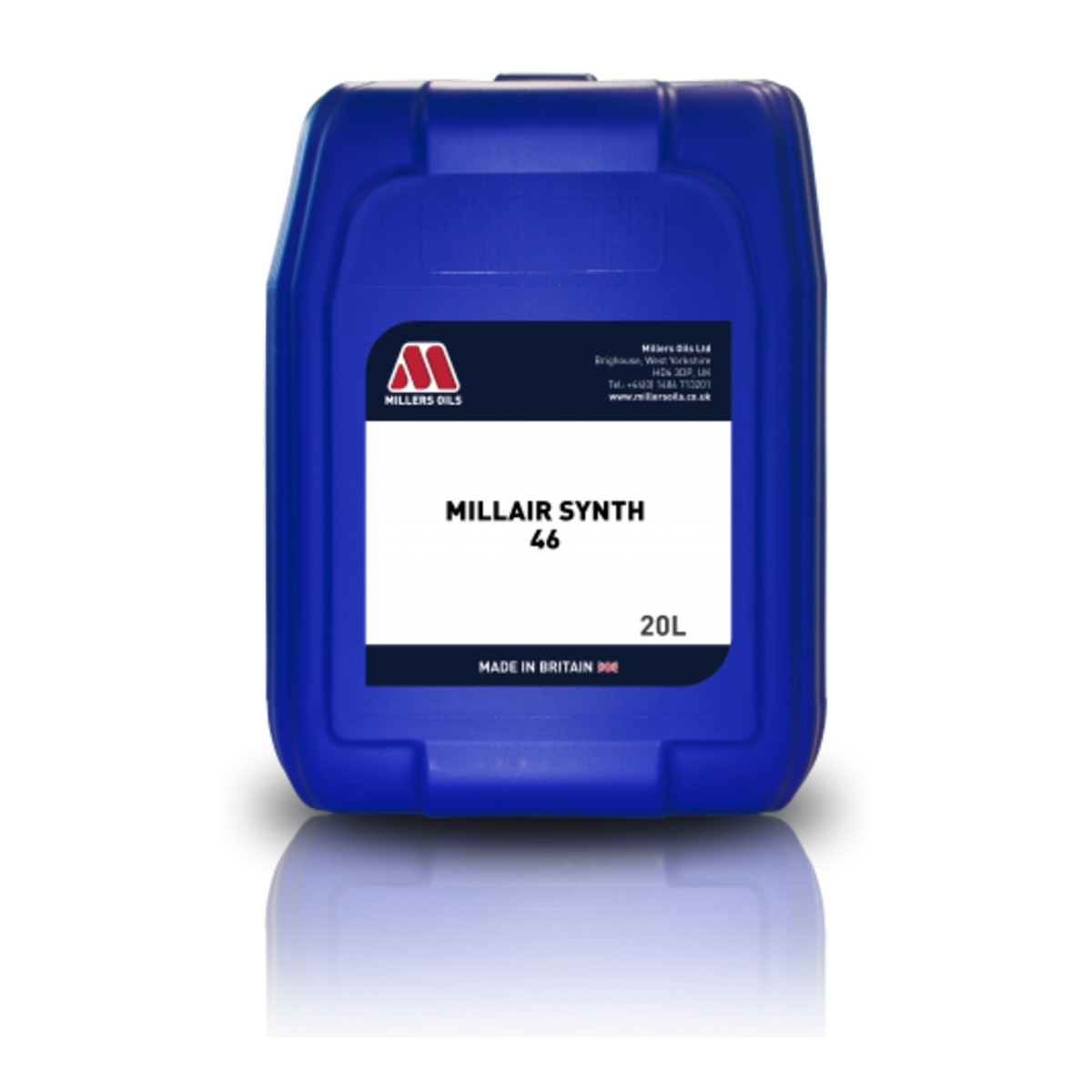
| Rotary screw | ISO 32 or 46 | Millair 32, Millair 46, or Millair Synth 46 for longer intervals |
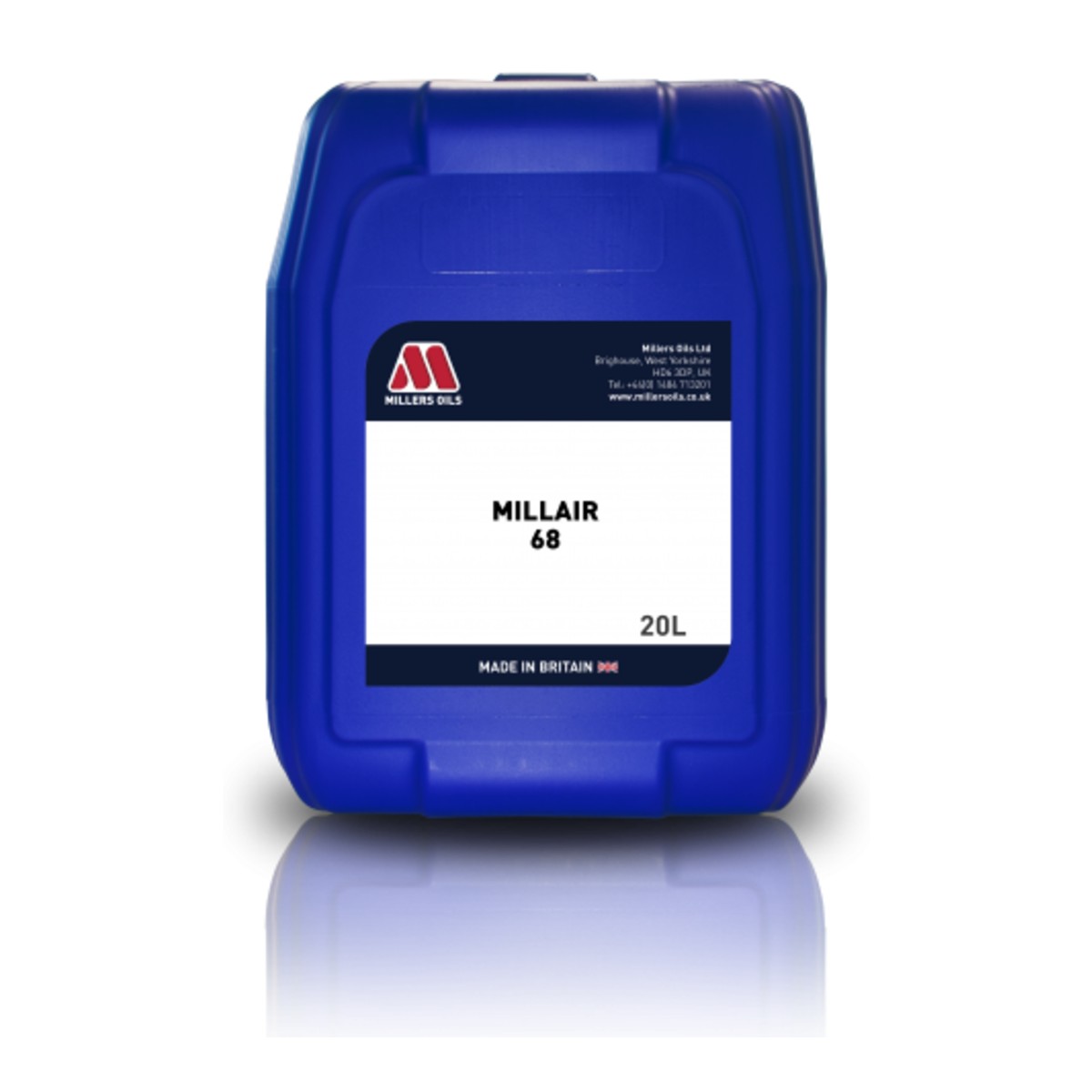
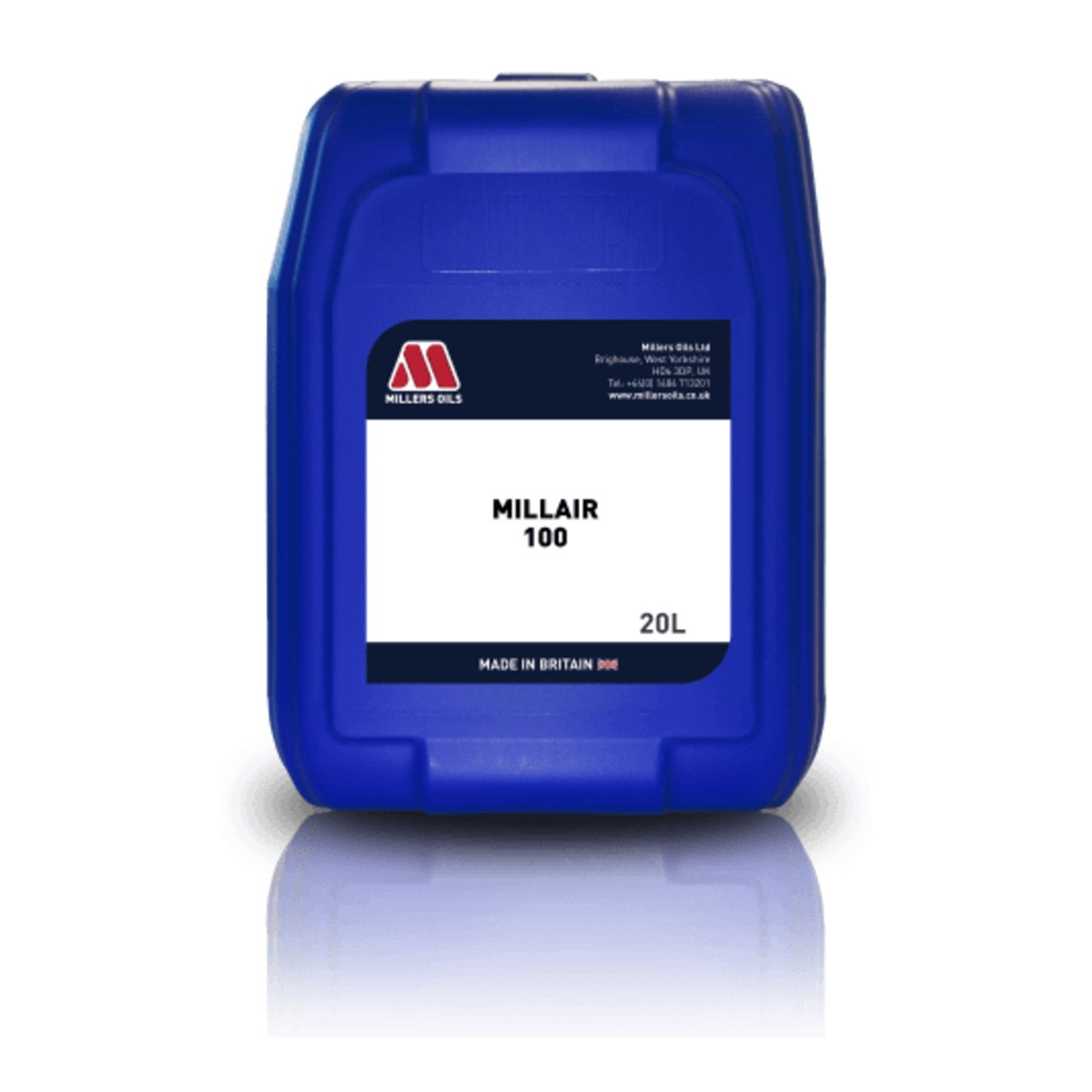
| Reciprocating (piston) | ISO 68 or 100 | Millair 68, Millair 100 |
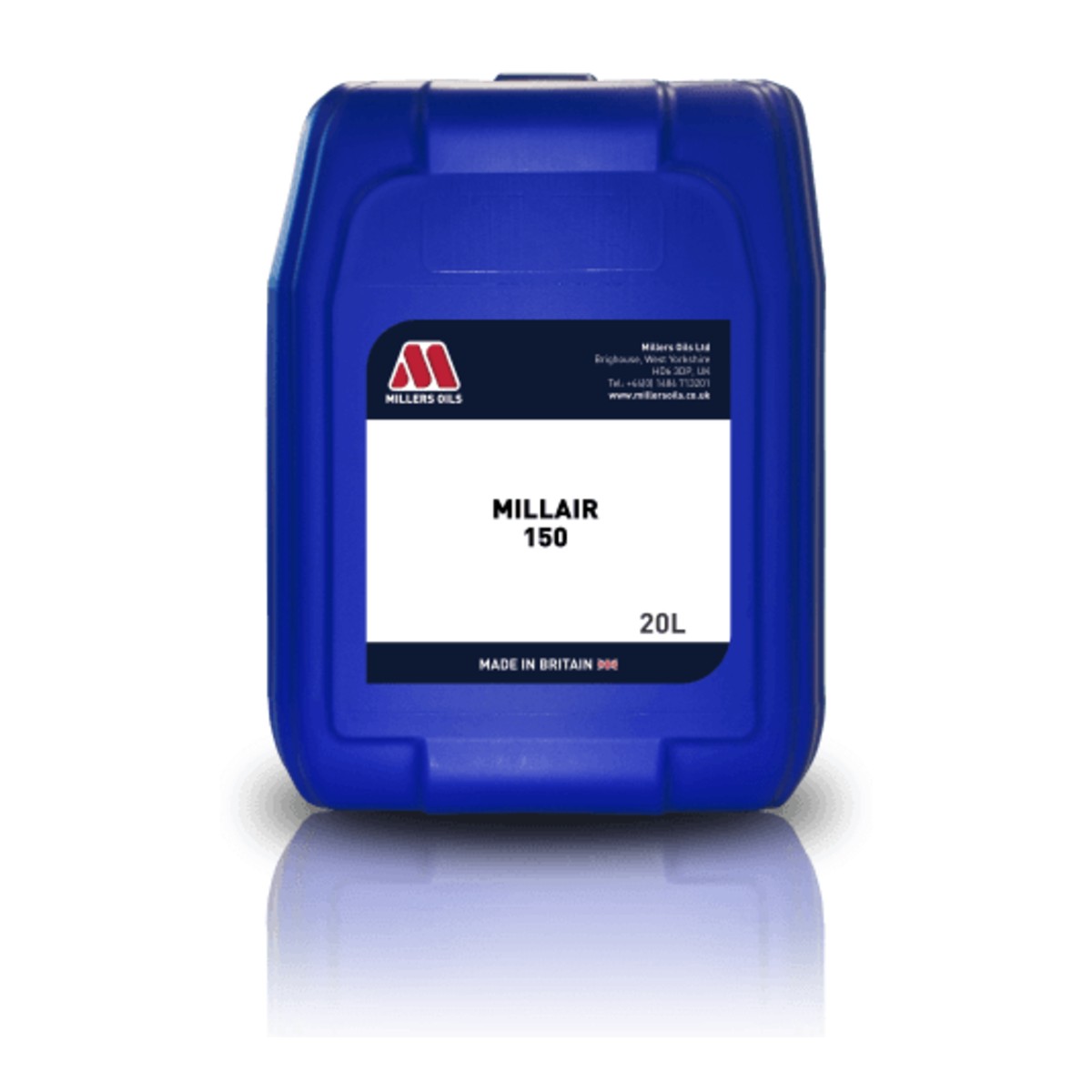
| Vane | ISO 150 (or 46 synthetic where specified) | Millair 150, Millair Synth 46 |
| Vacuum pumps | As specified | The Millair range is also suitable for vacuum pumps in line with the manufacturer’s requirements |
Many small workshop piston compressors ask for an “SAE 30 compressor oil”. SAE 30 roughly corresponds to ISO VG 100, so Millair 100 is the usual equivalent. Check your manual, and ask us if you’re not sure. Curious why? Read oil viscosity grades explained.
Mineral or synthetic compressor oil?
| Millair 32, 46, 68, 100, 150 | Millair Synth 46 | |
|---|---|---|
| Base | Mineral | Synthetic |
| Best for | Piston, rotary screw and vane compressors, and vacuum pumps | Rotary screw and vane compressors, especially those with high discharge temperatures |
| Service interval | Up to 3,000 hours, depending on the manufacturer’s recommendation | Up to 4,000 hours, depending on running conditions |
| Extra benefits | Oxidation and corrosion resistance, low top-up | Controls carbon deposits and sludge, reduces downtime with longer oil changes |
| Specification | DIN 51506 VD-L | DIN 51506 VD-L |
| Sizes | 5L and 20L | 20L |
For a workshop piston compressor, a mineral Millair oil is ideal. For a busy screw compressor that runs hot or for long hours, Millair Synth 46 keeps the machine cleaner and stretches oil changes.
How to change the oil in a piston compressor
Warm it, then isolate it
A short run warms the oil so it drains fully. Then switch off, isolate the power and release all the pressure.
Drain the old oil
Remove the filler cap or breather, then undo the drain plug and let the old oil drain completely. Look at it: milky oil means water is getting in, and dark, sludgy oil means it has overheated or been left too long.
Refill to the correct level
Refit the drain plug and fill with the correct grade to the level shown on the sight glass or dipstick. Don’t overfill: too much oil increases oil carry-over into the air.
Drain the tank condensate
While you’re there, open the drain valve on the air receiver to empty any water, and make this a regular habit.
Rotary screw compressors are usually serviced by running hours, with the oil changed along with the oil filter and air/oil separator element. Follow the manufacturer’s service schedule.
Mistakes to avoid
- Using engine oil. Unless your manufacturer specifies it, use a proper compressor oil made to resist heat, water and foaming.
- Using the wrong grade. Screw, piston and vane compressors need different viscosities. Match the manual.
- Overfilling. It causes oil carry-over into the air lines.
- Mixing different oils. When changing brand or switching between mineral and synthetic, drain the old oil fully and follow the manufacturer’s advice.
- Ignoring the condensate. Water left in the tank and oil causes corrosion and emulsification.
- Stretching oil changes. Old, oxidised oil forms deposits on valves and in the discharge line.
Compressor oil FAQs
What oil do I use in my air compressor?
Use a dedicated compressor oil in the grade your manufacturer specifies. As a guide, rotary screw compressors typically use ISO 32 or 46, reciprocating piston compressors ISO 68 or 100, and vane compressors ISO 150. Millers Millair oils cover all of these grades.
Can I use engine oil in a compressor?
Only if your compressor manufacturer specifies it. Compressor oils are formulated to resist the heat of compression, separate from condensed water, release air and resist foaming. Engine oils are designed for combustion engines and aren’t made for these conditions.
What is the equivalent of SAE 30 compressor oil?
SAE 30 corresponds roughly to ISO VG 100, so Millers Millair 100 is the usual equivalent for small piston compressors that call for an SAE 30 compressor oil. Check your manual to confirm.
How often should compressor oil be changed?
Follow your manufacturer’s schedule. Millers Millair mineral oils allow service intervals of up to 3,000 hours depending on the manufacturer’s recommendation, and Millair Synth 46 up to 4,000 hours depending on running conditions. Change it sooner if the oil turns milky, dark or sludgy.
Is synthetic compressor oil worth it?
For rotary screw and vane compressors that run for long hours or at high discharge temperatures, often yes. Millair Synth 46 controls carbon deposits and sludge and allows oil changes of up to 4,000 hours, reducing downtime. For a small workshop piston compressor, a mineral oil is usually ideal.
Why has my compressor oil gone milky?
Milky oil means water has mixed with it, usually from condensation. Drain the condensate from the tank regularly, make sure the compressor runs long enough to get properly warm, and change the oil. A good compressor oil resists emulsification so water separates out more easily.
More workshop guides: hydraulic oil guide, Solform tube bending gel, which grease do I need? and all industrial and workshop guides.