
Lever-Arm Shock Absorber Oil and SU Dashpot Oil: How to Top Them Up
Two of the smallest jobs on a classic car make some of the biggest differences to how it drives: topping up the lever-arm shock absorbers, and topping up the dampers in SU or Stromberg carburettors. Both rely on a small amount of the right oil. Let them run low, or fill them with the wrong oil, and you get a car that wallows and bounces, or one that stumbles and hesitates when you press the accelerator. This guide explains which oil to use for each, and how to top them up.
Part 1: lever-arm shock absorber oil
Many classic cars, including many MGs, Triumphs, Austin-Healeys and Morris Minors, use lever-arm dampers made by companies such as Armstrong. Instead of a sealed telescopic unit, the damper body is bolted to the chassis, and an arm connected to the suspension moves a piston or vane through oil inside it. Unlike most modern shock absorbers, lever-arm dampers can be topped up. Over time they leak and run low, and when that happens the damping fades away.
Signs your lever-arm dampers need oil
- The car bounces or wallows over bumps and keeps moving after it
- It floats at speed or feels vague in corners
- With the damper disconnected, the arm moves with little or no resistance
- There’s oil weeping from the damper body or around the arm spindle
Which shock absorber oil?
Damper oils come in different viscosities. A thicker oil gives firmer damping, so you can choose between a standard feel and something sportier.
| Oil | Grade | Best for |
|---|---|---|
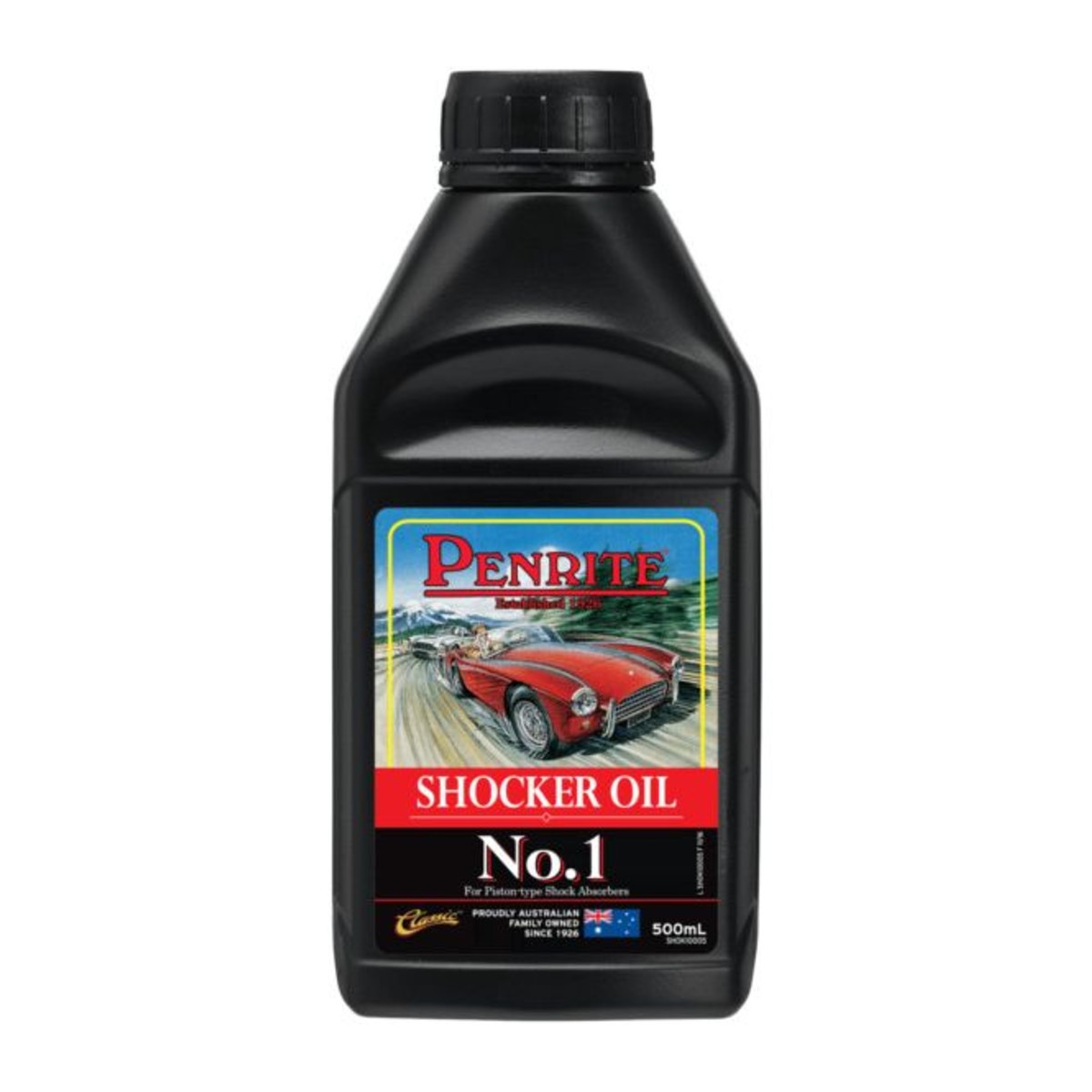
| Penrite Shocker Oil 1 | SAE 15 | Most single- and double-acting dampers, including Armstrong and Gabriel lever-arm and Delco-type units. Also Jackall central jacking systems and forks specifying a 15-weight oil. |
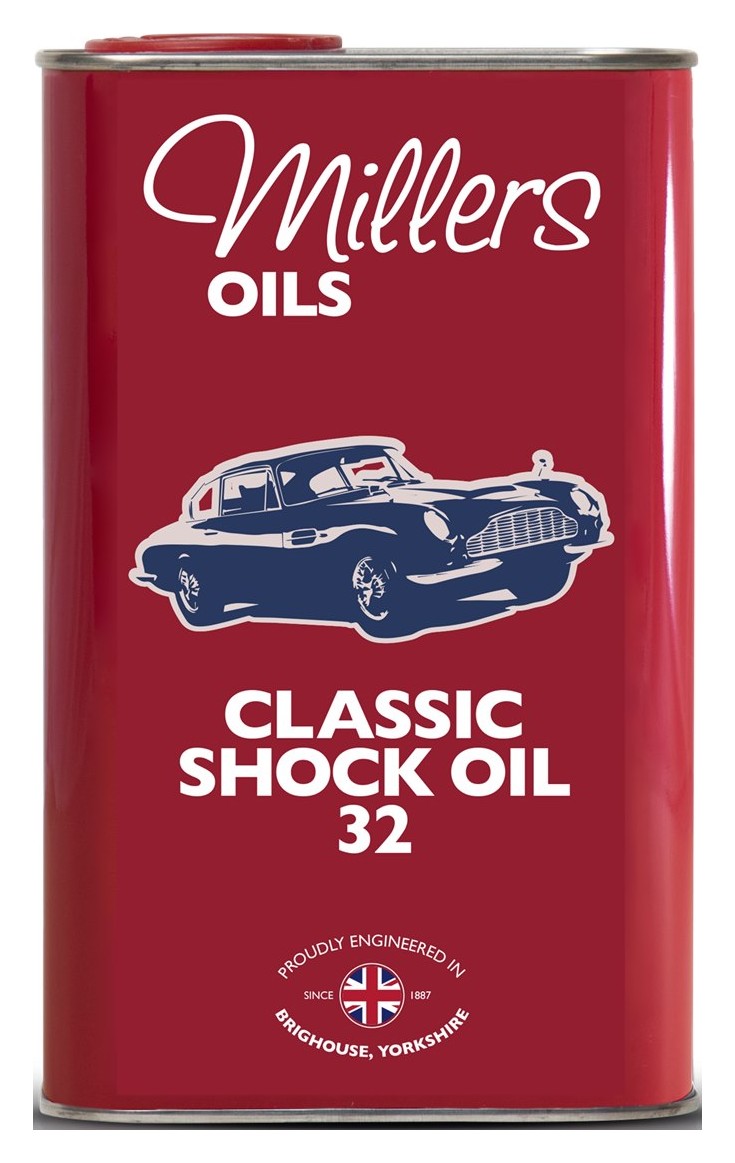
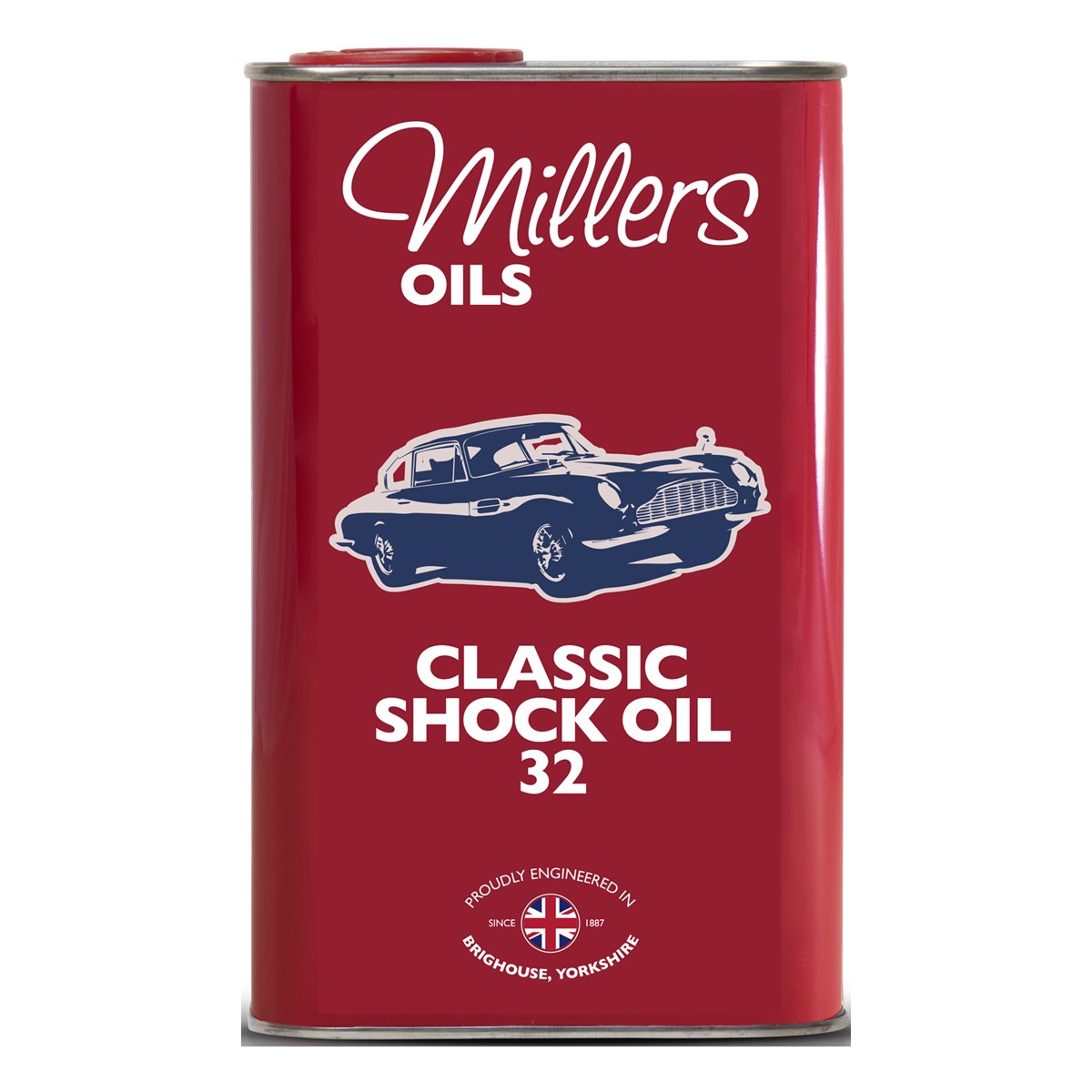
| Millers Classic Medium Shock Oil 32 | ISO 32 / SAE 10 | The “medium” grade for sporty handling, in lever-arm and telescopic dampers and motorcycle forks |
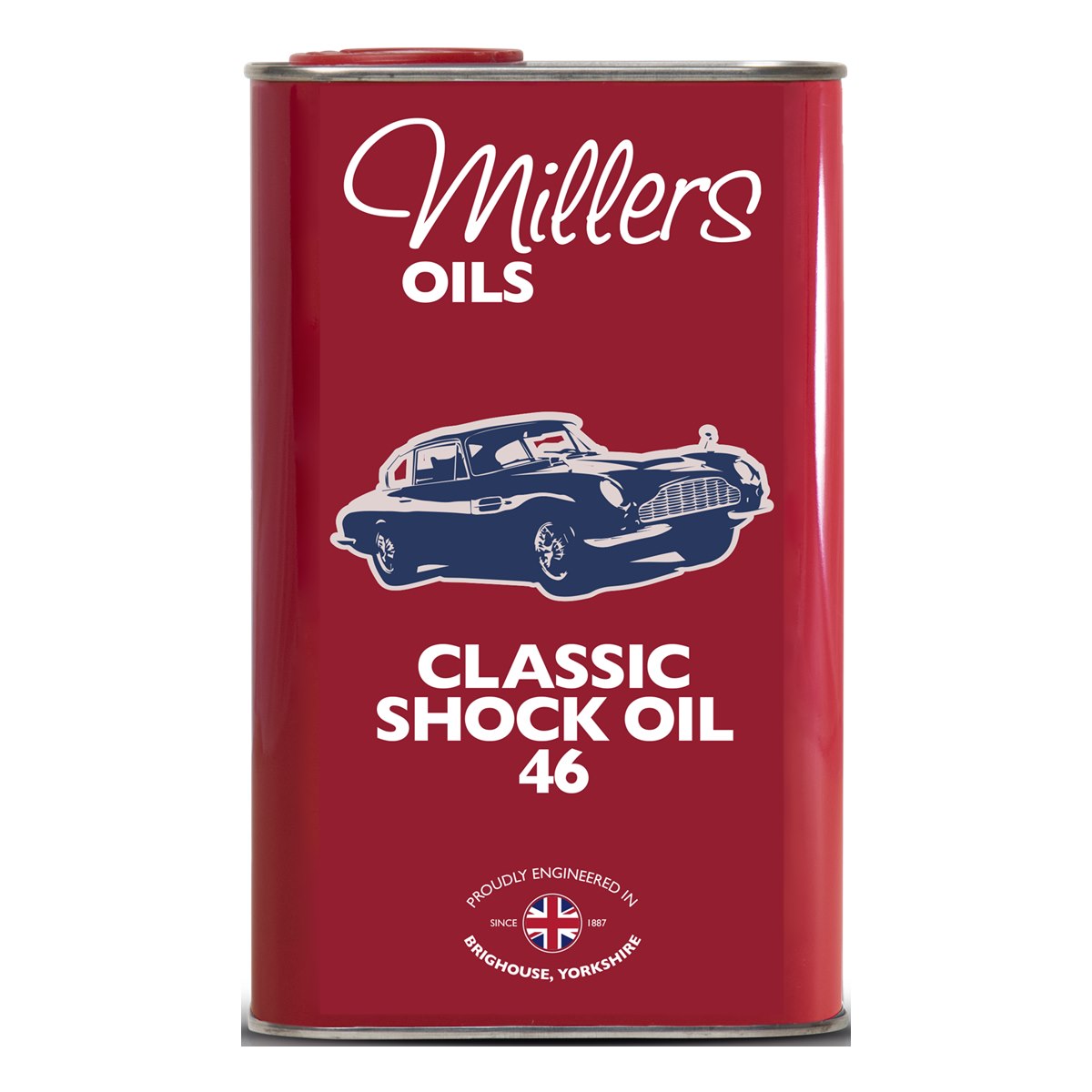
| Millers Classic Heavy Shock Oil 46 | SAE 15 | The heaviest Millers grade, for firmer, competition-style damping |
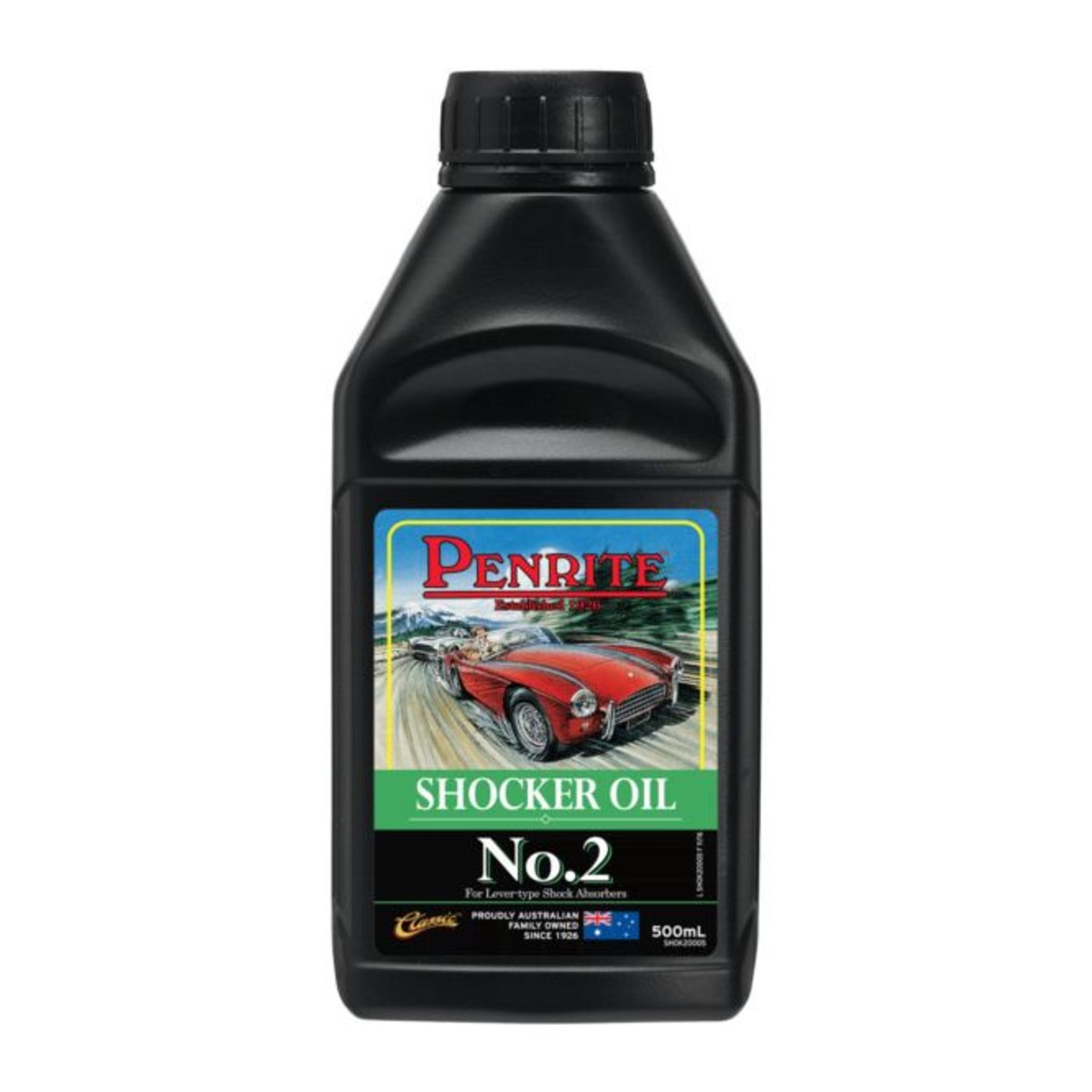
| Penrite Shocker Oil 2 | SAE 20 | Increasing the damping rate of Armstrong lever-arm dampers for fast road or competition use; also non-piston dampers and Berg-type shocks |
These oils are made for dampers. They have anti-wear, anti-oxidation and corrosion protection, and low foaming, which matters because foamy oil doesn’t damp properly. Don’t use engine oil or hydraulic jack oil. If you’re unsure which grade to use, stick to the standard grade for a road car; too heavy an oil can make the ride harsh.
How to top up lever-arm dampers
Clean around the filler plug
Wire-brush and wipe the top of the damper thoroughly. Dirt getting into the damper will wear the valves and piston.
Remove the filler plug
With the car supported securely and the damper level, unscrew the filler plug on top of the body.
Fill slowly
Fill with damper oil up to the bottom of the filler hole, or to the level given in your workshop manual. A small oil can or syringe makes it much easier.
Bleed out the air
If the damper arm can be disconnected, move it slowly up and down through its full travel to work out any trapped air, then top up again. Repeat until the level stays put and the arm has even resistance in both directions.
Refit and check
Refit the plug and any links, and check for leaks after a short drive. A damper that loses oil quickly, or still has no resistance when full, needs rebuilding or replacing.
The same shock oils can be used for top-ups or a full fluid change in serviceable telescopic dampers and motorcycle forks. Always check the grade specified by the manufacturer.
Part 2: SU and Stromberg dashpot oil
SU and Stromberg carburettors are “constant depression” carbs. A piston rises and falls inside a dome-shaped dashpot to control the air and fuel flow. On top of the dashpot is a small hydraulic damper: a plunger that sits in oil inside the hollow piston rod. When you press the accelerator, the damper slows the piston’s rise for a moment, which richens the mixture so the engine picks up cleanly, like the accelerator pump on other carburettors.
If the damper runs dry, the piston shoots up too quickly and the mixture goes weak. You’ll feel a hesitation or flat spot when you press the accelerator. It’s one of the most common and easily fixed carburettor faults on classic cars.
Which dashpot oil?
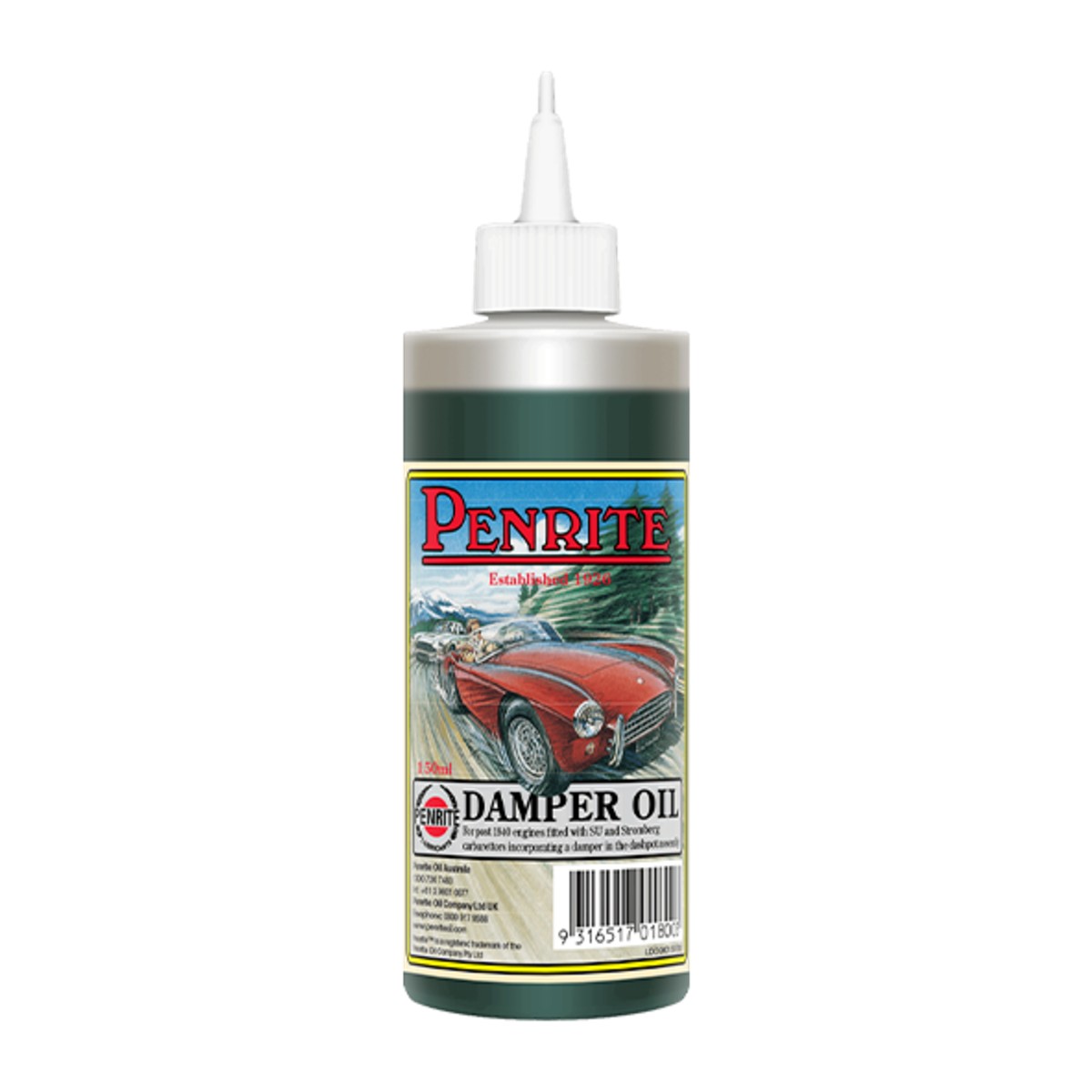
Penrite SU Dashpot Oil is a mineral oil with anti-corrosion and anti-wear additives, made to lubricate the pistons and dampers of post-1940 SU and Stromberg carburettors that have a damper in the dashpot. It comes in a 150ml bottle, which is enough for many top-ups.
How to top up an SU dashpot
Unscrew the damper cap
With the engine off and cool, unscrew the cap on top of the dashpot and lift the damper plunger out carefully.
Check the level
Look down into the hollow piston rod. The correct level is given in your workshop manual. On many SU carburettors it’s about 13mm (½in) above the top of the hollow piston rod; Stromberg carburettors are usually filled to a set distance below the top of the rod.
Top up
Add dashpot oil a little at a time until it reaches the correct level. Don’t overfill: excess oil will just be pushed out.
Refit the damper
Lower the plunger back in gently and screw the cap down. Do the same for every carburettor on the engine, so they all respond evenly.
Running an SU or Stromberg on modern petrol? Ethanol in E10 can attack older fuel system parts. See our guide to E10 problems for older engines and lead replacement and E10 protection.
Mistakes to avoid
- Using engine oil in lever-arm dampers. Use a proper low-foam damper oil for consistent damping.
- Letting dirt into the damper. Clean around the filler plug before you open it.
- Going too heavy on a road car. A competition grade can make the ride harsh.
- Overfilling SU dampers. Fill to the correct level only.
- Oiling the SU piston or dashpot walls. Only the damper needs oil.
- Topping up a damper that’s worn out. If it keeps losing oil or has no resistance, it needs a rebuild.
Shock and dashpot oil FAQs
What oil goes in lever-arm shock absorbers?
A dedicated damper oil. Penrite Shocker Oil 1 (SAE 15) suits most Armstrong, Gabriel and Delco-type dampers, and Millers Classic Medium Shock Oil 32 gives a sporty feel. For firmer damping, use Millers Classic Heavy Shock Oil 46 or Penrite Shocker Oil 2.
Can I use engine oil in my shock absorbers?
It isn’t recommended. Damper oils are made to resist foaming and oxidation and to give consistent damping. Engine oil isn’t designed for this job and can foam, leaving the damper less effective.
How do I make lever-arm dampers firmer?
Use a heavier damper oil. Penrite Shocker Oil 2 (SAE 20) is designed to increase the damping rate of Armstrong lever-arm dampers for fast road or competition use, and Millers Classic Heavy Shock Oil 46 is the heavy grade for competition handling. Don’t go too heavy on a road car, or the ride can become harsh.
What does the oil in an SU carburettor damper do?
It slows the rise of the carburettor piston when you open the throttle, briefly richening the mixture so the engine accelerates cleanly. If the damper runs low, you’ll get a hesitation or flat spot when you press the accelerator.
How much oil goes in an SU dashpot?
Only enough to reach the correct level in the hollow piston rod. On many SU carburettors that’s about 13mm (½in) above the top of the rod, but check your workshop manual, as it varies between models and Stromberg carburettors differ. Don’t overfill.
Can I use SU dashpot oil in a Stromberg carburettor?
Yes. Penrite SU Dashpot Oil is made for the pistons and dampers of post-1940 SU and Stromberg carburettors that have a damper in the dashpot.
More classic guides: classic car oil guide, classic gear and differential oil, classic Mini oil and laying up a classic for winter.