DPF Cleaner: How to Clean a Blocked Diesel Particulate Filter
A blocked DPF (diesel particulate filter) is one of the most common — and most expensive — problems on a modern diesel. A garage clean or replacement can run into hundreds of euro. The good news: caught early, a DPF cleaner additive poured into the fuel tank can clean and regenerate the filter as you drive, and save you the bill. Here’s what a DPF is, why it blocks, the warning signs to watch for, and how a DPF cleaner puts it right.
What is a DPF, and why does it block?
The diesel particulate filter sits in your exhaust and traps the soot a diesel engine produces. It’s designed to clean itself through regeneration — periodically getting hot enough to burn that trapped soot away to harmless ash. The problem is that regeneration needs a good, hot run to happen. On a car doing lots of short, low-speed, stop-start journeys — the classic town diesel — the exhaust rarely gets hot enough for long enough, so the soot just keeps building up until the filter clogs.
Signs of a blocked DPF
Don’t ignore the early warnings — the sooner you treat it, the more likely an additive alone will fix it:
- DPF warning light on the dash
- Limp mode / sudden loss of power
- More frequent regenerations
- Poor fuel economy
- A smell of burning or excess smoke
- Rough running / higher emissions or NCT fail
How a DPF cleaner works
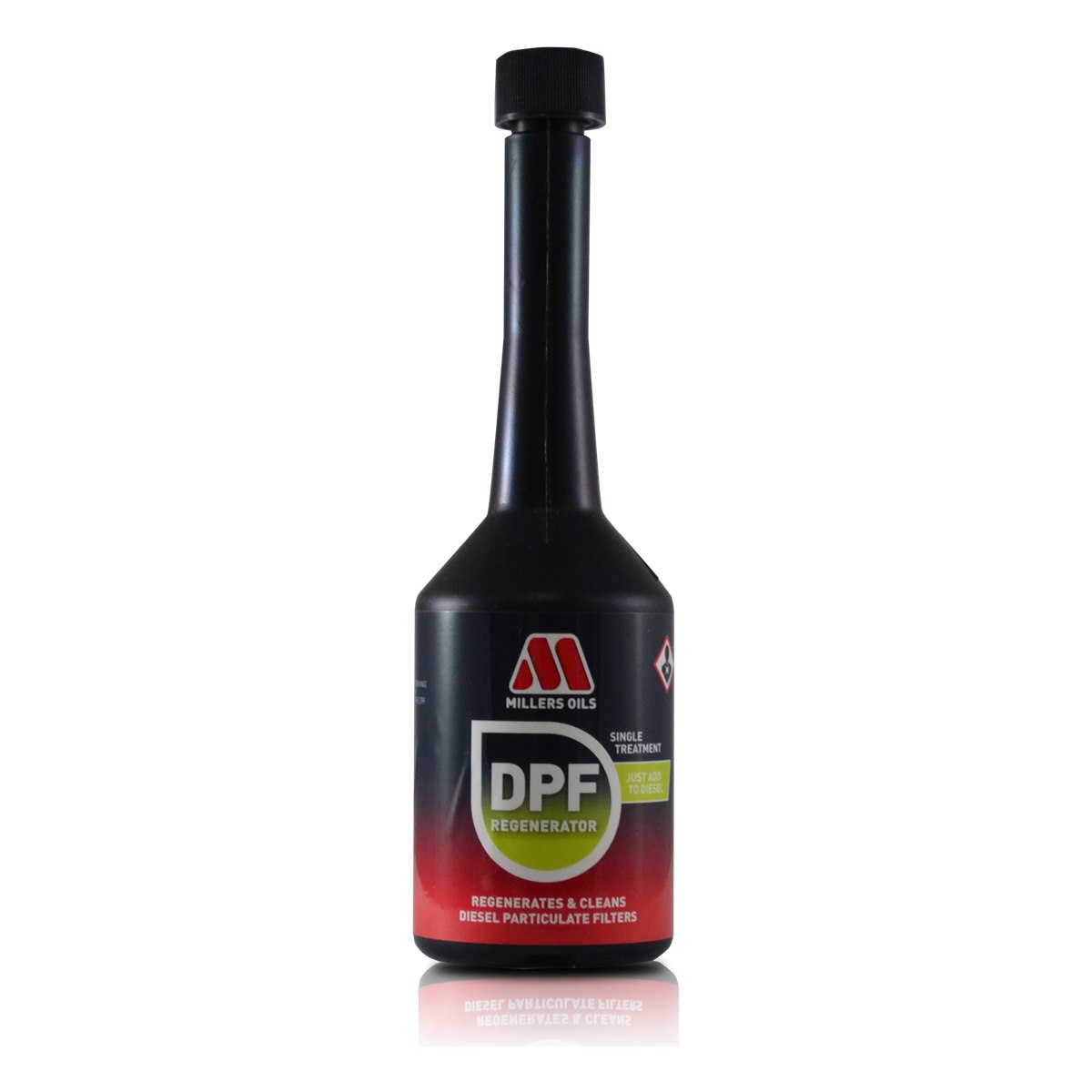
A DPF cleaner is a one-shot fuel additive you pour into the tank. It works by lowering the temperature at which the trapped soot burns off, so the filter can regenerate during normal driving instead of needing a forced, dealer-level regeneration. That makes it ideal for exactly the short-trip, stop-start driving where regeneration usually struggles. Millers Diesel Particulate Cleaner & Regenerator does this in one dose, and it’s suitable for vehicles fitted with AdBlue aftertreatment systems.
How to use a DPF cleaner
Add it to the tank
Pour the correct dose into the tank before you refuel so it mixes right through the diesel. One 250ml bottle of Diesel Particulate Cleaner & Regenerator treats 60 litres of fuel.
Take it for a good run
Drive at higher, steady revs where it’s safe to — a motorway or open-road trip — so the exhaust and filter get properly hot. This is where the regeneration happens.
Let it regenerate
The additive lowers the temperature at which trapped soot burns off, so the filter can clean and regenerate itself as you drive, instead of needing a forced regen at the garage.
Keep it from coming back
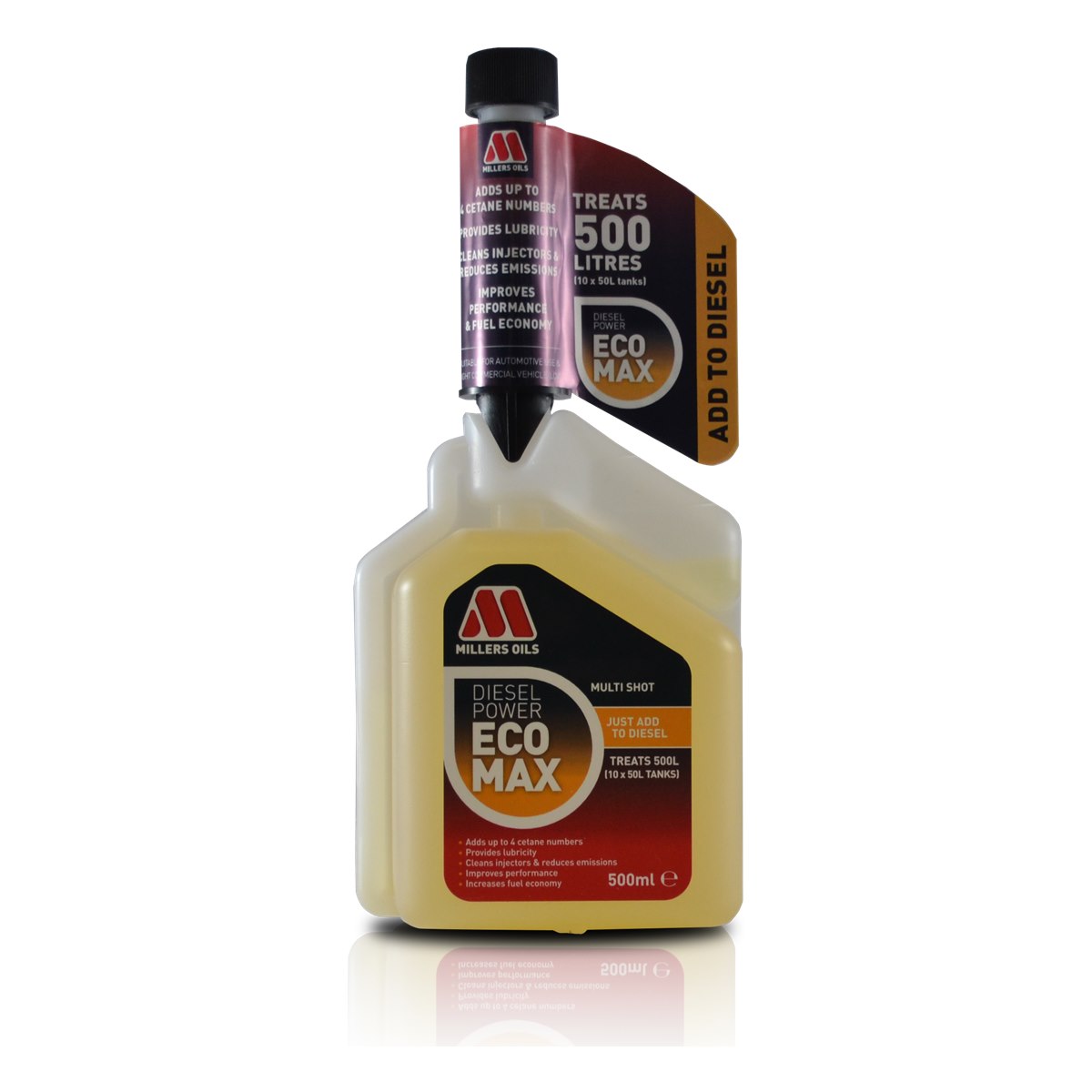
Use it as a regular preventative — roughly every 2,000 miles (3,000 km), or more often if blocking is a recurring problem — or switch to Diesel Power EcoMax for everyday DPF and injector protection at every fill.
Stop it blocking in the first place
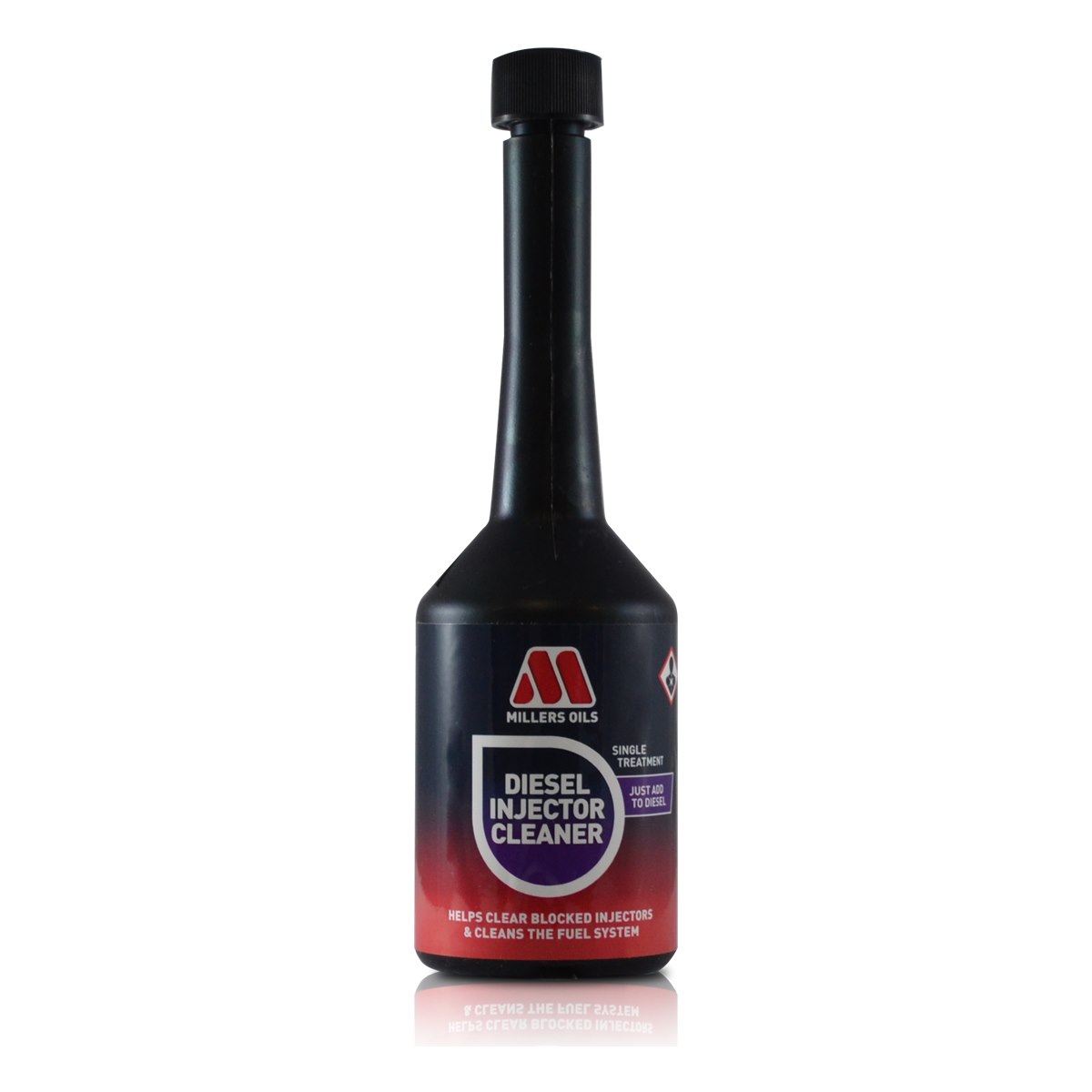
Prevention is cheaper than a cure. Give the car a good longer run at speed regularly so it can regenerate naturally; use Diesel Power EcoMax as an everyday DPF and injector cleaner that also boosts cetane by up to four numbers for cleaner combustion; keep your Diesel Injector Cleaner clean so the engine burns efficiently; and never ignore the DPF warning light.
DPF cleaner FAQs
Does a DPF cleaner actually work?
Yes — caught early, it works well. A DPF cleaner additive lowers the temperature at which trapped soot burns off, so a partly-blocked diesel particulate filter can clean and regenerate itself as you drive. Used at the first warning signs, it can clear the filter and save an expensive garage clean or a new DPF.
Why does my DPF keep blocking?
Almost always short, low-speed journeys. The filter only cleans itself (regenerates) when the exhaust gets hot enough for long enough, which rarely happens in stop-start town driving. Regular longer, faster runs plus a DPF cleaner additive help it regenerate.
Can a DPF cleaner unblock a fully blocked filter?
If it’s only partially blocked, an additive plus a good run will often clear it. A completely blocked filter that has put the car into limp mode may need a forced regeneration or professional clean — which is exactly why it’s best to treat a DPF at the first signs, not the last.
Is a DPF cleaner safe for my car and AdBlue system?
Yes — it’s a fuel additive that’s burned with the diesel, and Millers Diesel Particulate Cleaner and Regenerator is suitable for vehicles with AdBlue aftertreatment systems. Just use the correct dose.
DPF cleaner or injector cleaner — what’s the difference?
They do different jobs. An injector cleaner cleans the fuel injectors; a DPF cleaner cleans and regenerates the diesel particulate filter in the exhaust. A blocked DPF needs the DPF product — see our fuel injector cleaner guide if injectors are your issue.
Looking after the whole fuel system pays off. See our guide to fuel injector cleaner for the injector side of the job.