Brake Fluid Explained: DOT 3 vs DOT 4 vs DOT 5 vs DOT 5.1
Brake fluid is the one fluid in your car where getting it wrong can be genuinely dangerous. It’s also one of the most confusing: DOT 3, DOT 4, DOT 5 and DOT 5.1 sound like steps on the same ladder, but they’re not. One of them is a completely different fluid that must never be mixed with the others. This guide compares all four, explains what the numbers mean, and helps you pick the right fluid for your car.
How brake fluid works, and why it wears out
When you press the pedal, brake fluid carries that force through the pipes to the calipers and wheel cylinders. It works because liquid can’t be compressed. The danger comes from heat: hard braking heats the fluid, and if it boils, it forms vapour bubbles, which can be compressed. The pedal suddenly goes soft or to the floor. That’s called vapour lock.
That’s why brake fluids are rated by boiling point, and why there are two figures:
- Dry boiling point: the boiling point of fresh fluid straight from a sealed bottle.
- Wet boiling point: the boiling point after the fluid has absorbed about 3.7% water, roughly what it picks up over a couple of years in a car. This is the more realistic figure for a car on the road.
Most brake fluids (DOT 3, 4 and 5.1) are glycol-based and hygroscopic: they absorb moisture from the air through seals and hoses. As the water content rises, the boiling point falls. Water also corrodes calipers, cylinders and pipes from the inside. That’s why glycol brake fluid needs changing regularly, typically every two years (check your handbook).
DOT 3 vs DOT 4 vs DOT 5 vs DOT 5.1 compared
The boiling points below are the minimums required by the US FMVSS 116 standard that the DOT ratings come from. Individual fluids can exceed them, and many good ones do.
| DOT 3 | DOT 4 | DOT 5.1 | DOT 5 | |
|---|---|---|---|---|
| Base | Glycol | Glycol (with borate esters) | Glycol (with borate esters) | Silicone |
| Min. dry boiling point | 205°C | 230°C | 260°C | 260°C |
| Min. wet boiling point | 140°C | 155°C | 180°C | 180°C |
| Absorbs water? | Yes | Yes | Yes | No |
| Mixes with | DOT 4, DOT 5.1 | DOT 3, DOT 5.1 | DOT 3, DOT 4 | Nothing else |
| Damages paint? | Yes | Yes | Yes | No |
| Typically used in | Older and basic cars | Most modern cars and vans | Performance cars and systems that specify it | Classics and cars that stand for long periods |
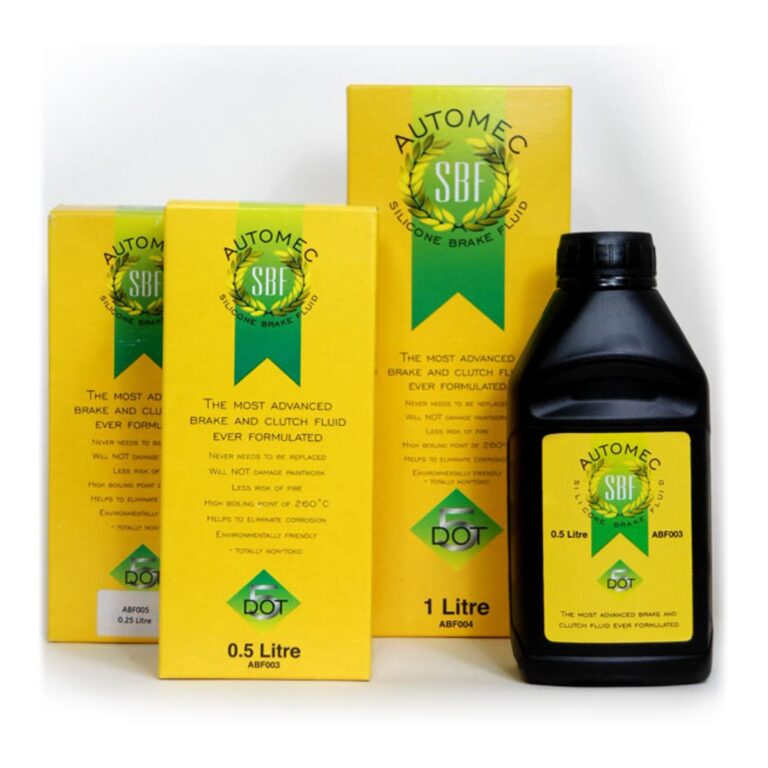
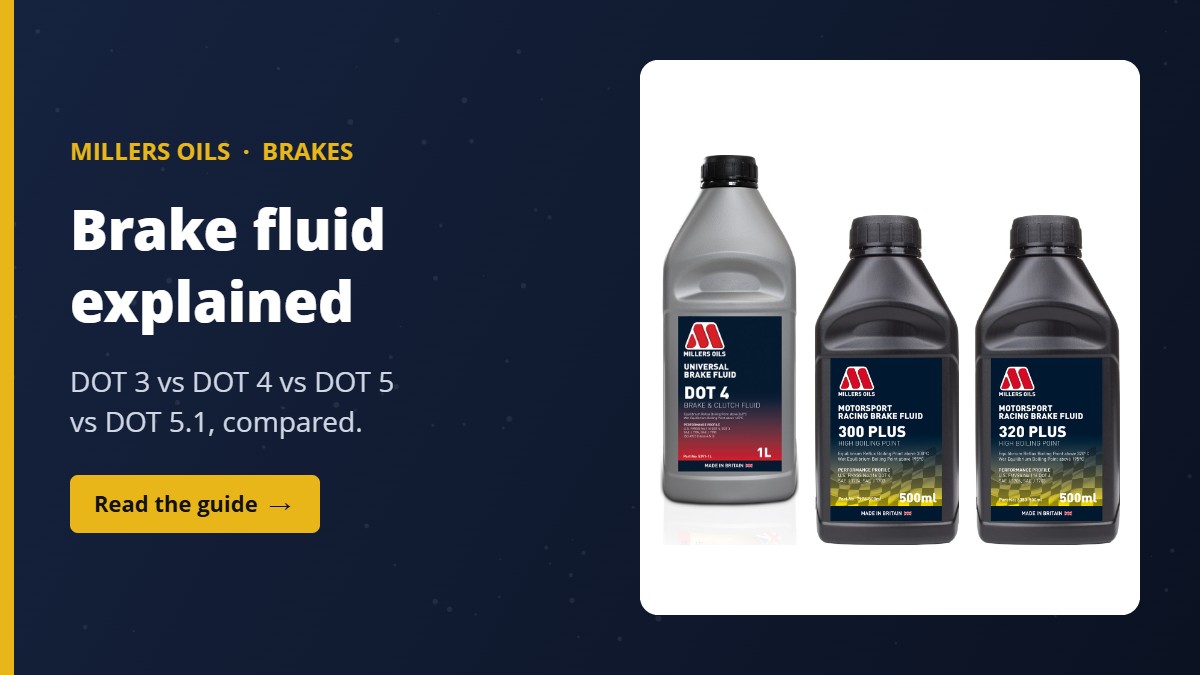
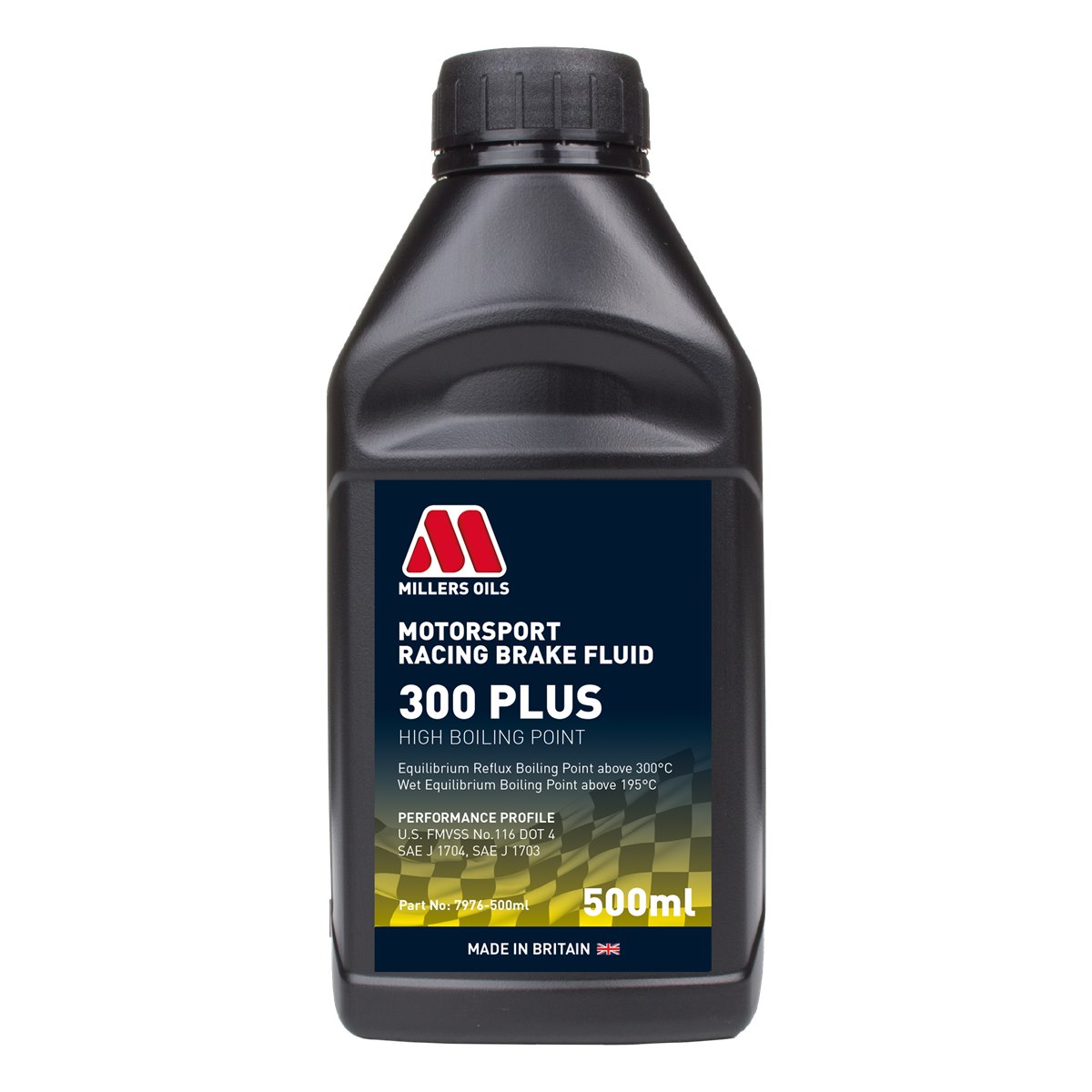
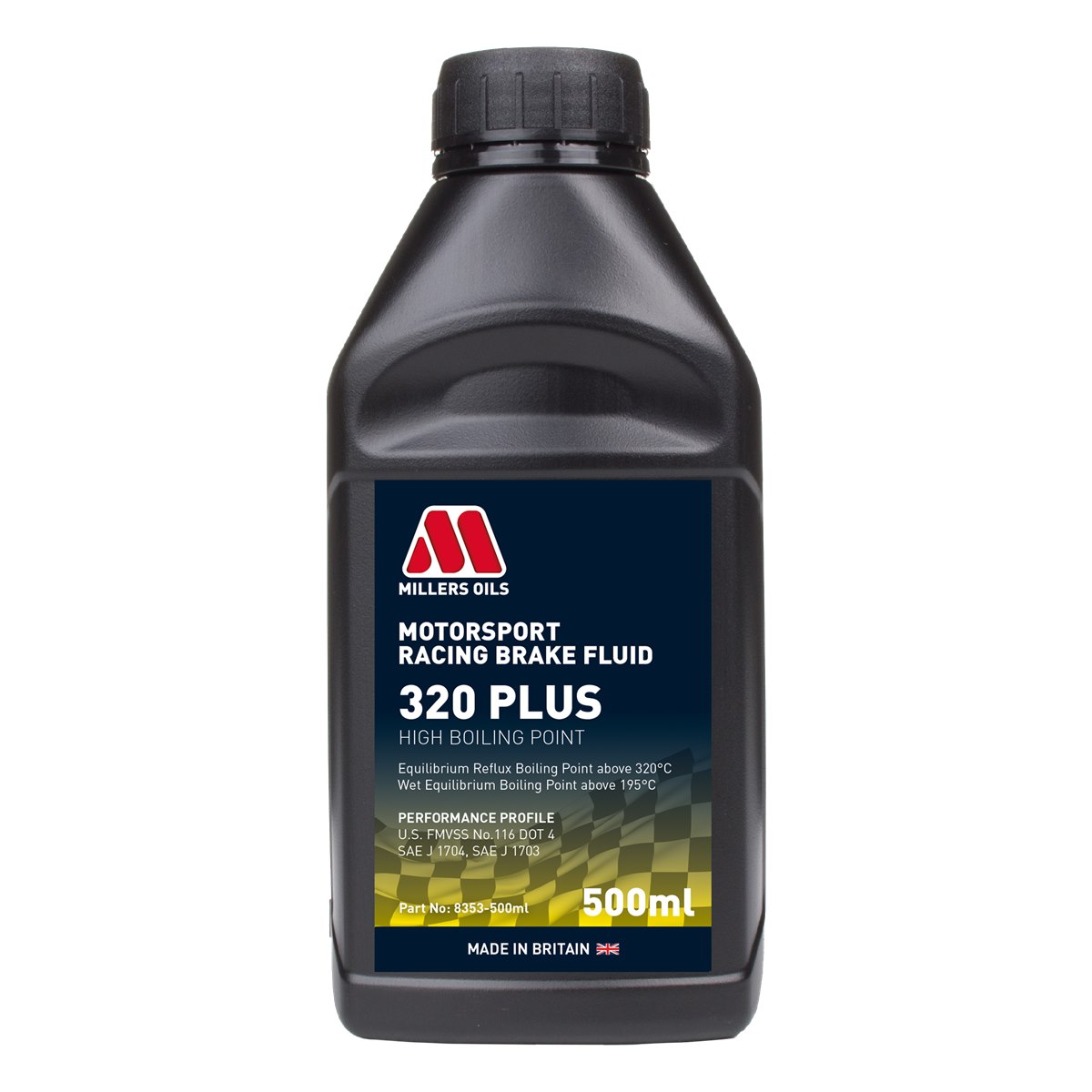
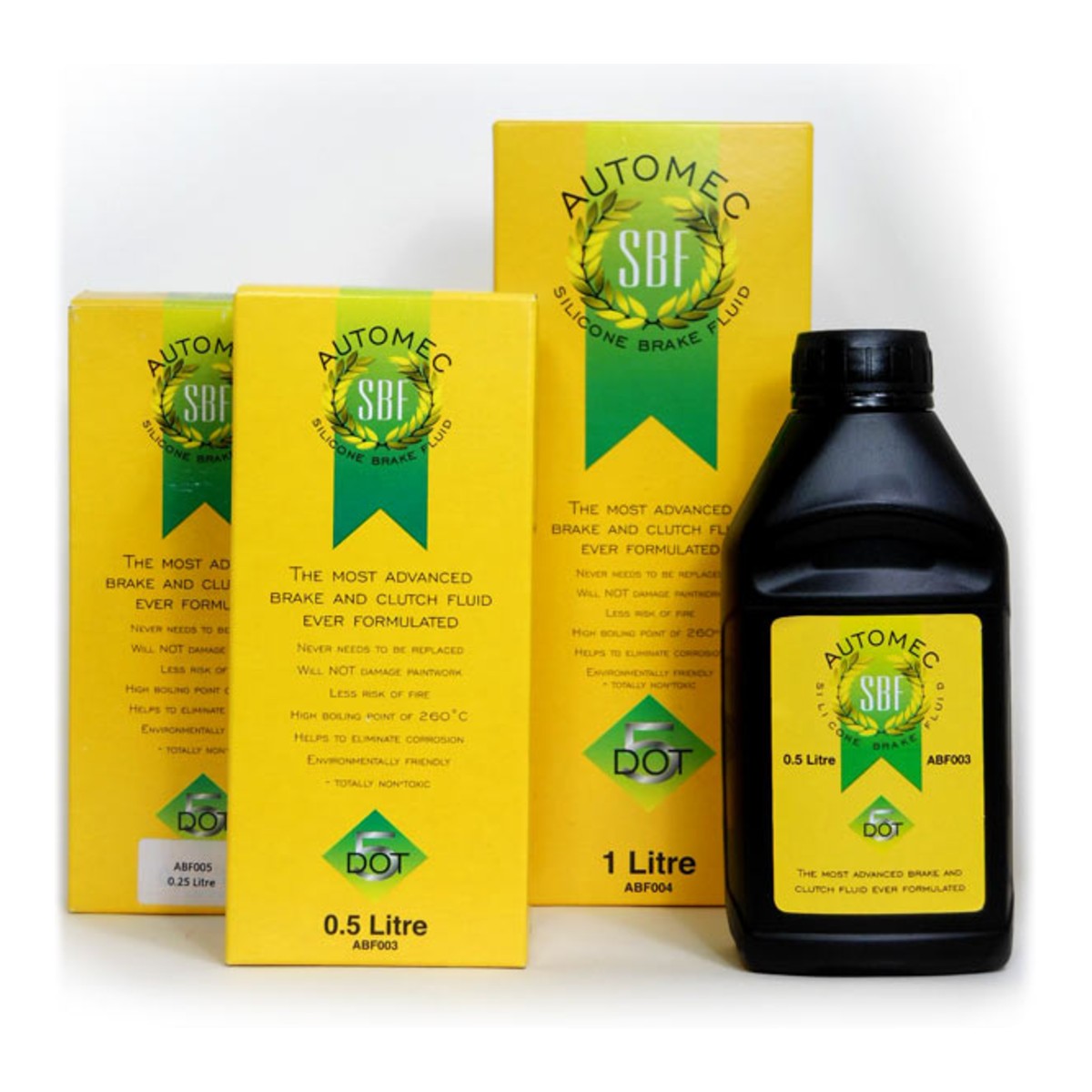
| We stock | Not stocked | Millers Universal DOT 4, Racing 300+, Racing 320+ ESP DOT 4 LV coming soon | Not stocked | Automec DOT 5 Silicone |
DOT 3
The original glycol brake fluid, with the lowest boiling points of the four. You’ll find it specified on older and more basic cars. We don’t stock DOT 3, because DOT 4 meets and exceeds its boiling-point requirements and is compatible with it, so it’s the usual replacement where a car calls for DOT 3. As always, check your handbook, and if in doubt, ask us.
DOT 4: the modern standard
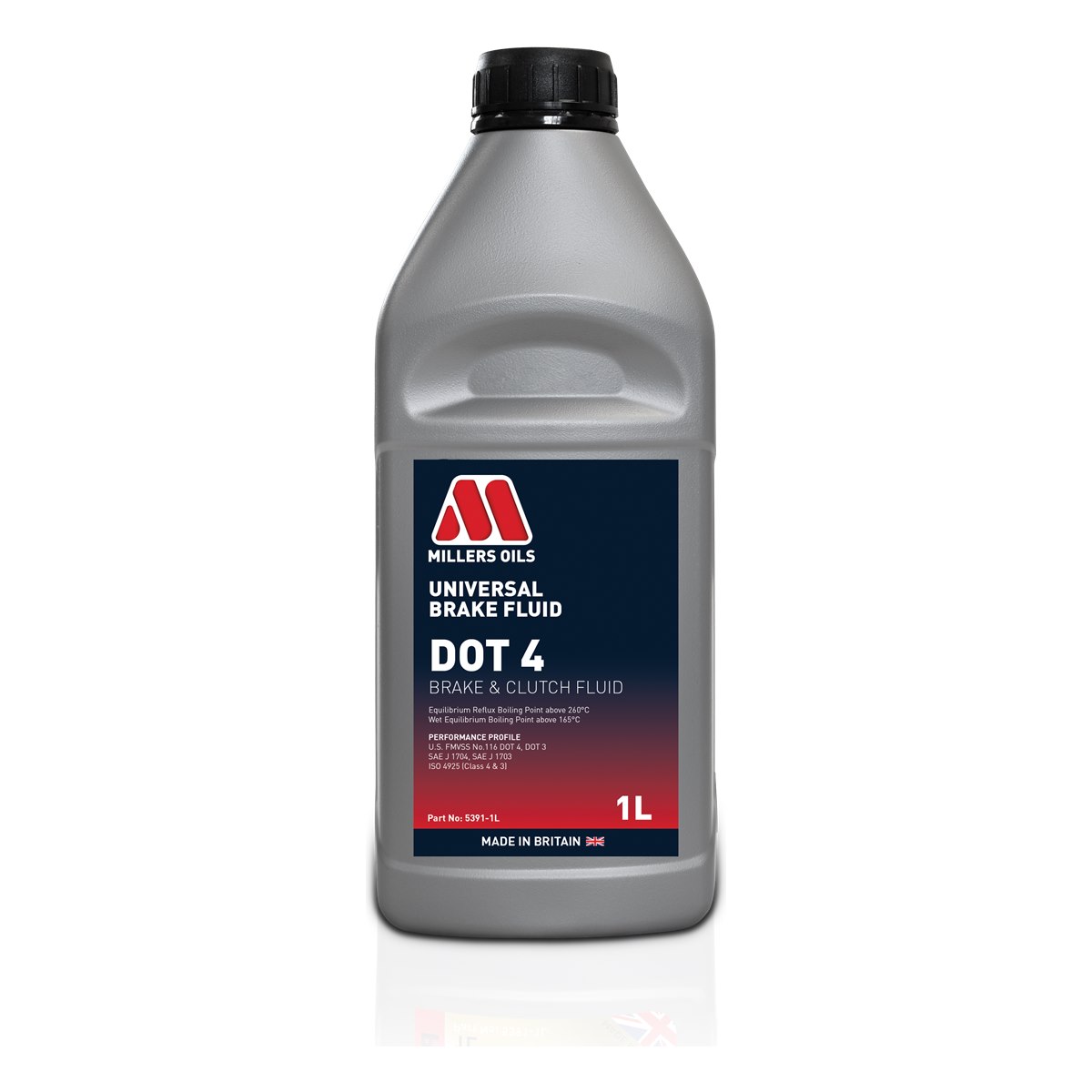
DOT 4 is what most modern cars, vans and motorcycles use. Borate esters give it higher boiling points than DOT 3 and help it cope better with absorbed moisture. Millers Universal Brake Fluid DOT 4 comfortably beats the DOT 4 minimums, with a 260°C dry and 165°C wet boiling point, meets SAE J1703 and FMVSS 116, resists water absorption well, and is compatible with other fluids of the same specification. It suits cars, vans and motorcycles.
DOT 4 LV: low viscosity for ABS and ESP
Many newer cars specify DOT 4 LV (low viscosity). It meets the DOT 4 boiling-point requirements but is much thinner, especially when cold, so it flows quickly through the small valves and pumps of ABS and electronic stability control (ESP) systems for a rapid response. If your cap or handbook says DOT 4 LV, that’s what to use.
Racing DOT 4: for track days and competition
Hard track driving can push brake temperatures far beyond anything on the road. The Millers Motorsport racing fluids are extended-performance DOT 4 formulations with much higher boiling points for a firm, consistent pedal lap after lap:
- Racing Brake Fluid 300+: dry boiling point above 300°C, wet above 195°C. Ideal for track days and competition.
- Racing Brake Fluid 320+: dry boiling point above 320°C, for the most extreme racing temperatures.
Both are compatible with DOT 3 and DOT 5.1 fluids. On a track car, change racing fluid more often than a road car’s, as it’s working much harder.
DOT 5.1
DOT 5.1 is a high-performance glycol fluid with the same minimum boiling points as DOT 5 (260°C dry, 180°C wet) but, unlike DOT 5, it’s glycol-based, absorbs water and mixes with DOT 3 and DOT 4. It’s also a thin, free-flowing fluid, which some ABS and stability-control systems are designed around. We don’t currently stock DOT 5.1. If your car specifies DOT 5.1, use DOT 5.1; don’t substitute a lower-rated fluid. Get in touch if you need it.
DOT 5 silicone: the odd one out
DOT 5 is silicone-based. It doesn’t absorb water, so its boiling point stays up for the life of the fluid and it doesn’t need changing on a schedule. It won’t damage paintwork and it protects cars that stand for long periods, which makes Automec DOT 5 Silicone Brake Fluid a favourite for restored classics. But it isn’t generally recommended for ABS systems or competition, and it can’t be mixed with glycol fluid: converting a car means a completely clean system, ideally during a brake rebuild. Read the full pros and cons in our DOT 5 silicone brake fluid guide.
Which brake fluid does my car need?
Check the reservoir cap and handbook
The DOT rating is usually printed on the cap of the brake fluid reservoir, and it’s always in the handbook. Match it, including any “LV” (low viscosity) marking.
You can usually go up, never across to DOT 5
A higher-rated glycol fluid can generally replace a lower one (DOT 4 for DOT 3, for example), but never swap between glycol and silicone DOT 5 without a full system conversion.
Match it to how you drive
Everyday road car: Millers Universal DOT 4. Track days or competition: Racing 300+ or 320+. Stored or occasional-use classic: consider DOT 5 silicone at the next brake rebuild.
Remember the clutch
Many hydraulic clutches use brake fluid, often from the same reservoir. Use the same fluid for both.
Signs your brake fluid needs changing
- It’s more than two years old (or past your manufacturer’s interval), even if the brakes feel fine.
- A soft or spongy pedal, or one that sinks further than it used to.
- Brake fade after repeated hard stops, such as coming down a long hill.
- Dark fluid. Fresh glycol fluid is clear to amber; dark brown fluid is old and contaminated.
- A falling level. The level drops slowly as pads wear, but a sudden drop means a leak. Get it checked straight away.
Tips for changing brake fluid
- Use a fresh, sealed bottle. Glycol fluid starts absorbing moisture as soon as it’s opened, so don’t use a half-empty bottle that’s been in the garage for years.
- Protect the paint. Glycol fluid strips paint. Cover the wings and wash any spill off immediately with plenty of water.
- Bleed properly. Work through each wheel until clean fluid runs through with no air bubbles. Many cars with ABS or electronic stability control have a specific bleeding procedure, so check the workshop manual.
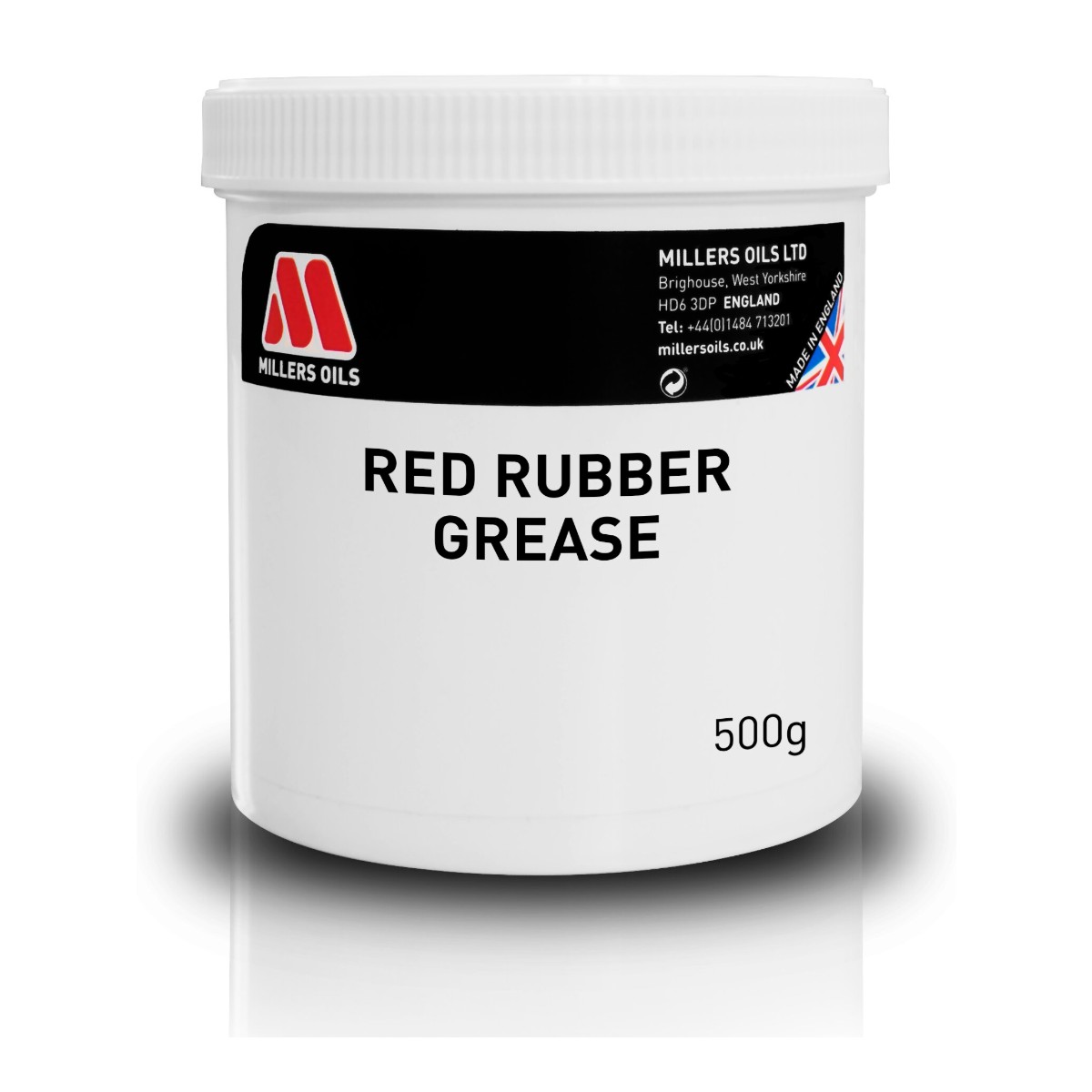
- Rebuilding cylinders or calipers? Assemble rubber seals with red rubber grease or clean brake fluid, never mineral grease. See our grease guide.
- Never reuse old fluid, and dispose of it responsibly.
Brake fluid FAQs
What is the difference between DOT 3 and DOT 4 brake fluid?
Both are glycol-based, but DOT 4 has higher minimum boiling points: 230°C dry and 155°C wet, against 205°C and 140°C for DOT 3. They’re compatible, and DOT 4 is commonly used where a car calls for DOT 3.
Can I mix DOT 4 and DOT 5.1?
Yes. DOT 3, DOT 4 and DOT 5.1 are all glycol-based and can be mixed, although the mixture will only perform to the lower-rated fluid. What you must never do is mix any of them with silicone DOT 5.
Is DOT 5 better than DOT 5.1?
Not better, just different. DOT 5 is silicone and DOT 5.1 is glycol; they share the same minimum boiling points. DOT 5 doesn’t absorb water and won’t harm paint, which suits stored classics, but it isn’t generally recommended for ABS or competition and must never be mixed with glycol fluids.
What is DOT 4 LV brake fluid?
DOT 4 LV is a low-viscosity DOT 4 brake fluid. It meets DOT 4 boiling points but flows much more easily, especially in the cold, which suits the ABS and electronic stability control (ESP) systems on many newer cars. Use it where your handbook specifies DOT 4 LV. Millers ESP Brake Fluid DOT 4 LV is coming soon.
How often should brake fluid be changed?
Most manufacturers recommend changing glycol brake fluid (DOT 3, 4 and 5.1) every two years, because it absorbs moisture that lowers its boiling point and corrodes the system. Track cars need it more often. Silicone DOT 5 doesn’t absorb water and doesn’t need changing on a schedule.
What is the wet boiling point of brake fluid?
It’s the boiling point after the fluid has absorbed about 3.7% water, roughly what it takes on in normal use over a couple of years. It’s a more realistic guide than the dry figure. Millers Universal DOT 4, for example, has a 165°C wet boiling point.
Does brake fluid damage paint?
Glycol brake fluids (DOT 3, 4 and 5.1) do: they can strip paint quickly, so cover the bodywork and wash any spill off with plenty of water. Silicone DOT 5 won’t damage paint.
Brakes are not the place to guess. If you’re not sure which fluid your car takes, send us the registration or the make, model and year, or call 089 448 6626. More guides: DOT 5 silicone brake fluid, gearbox oil explained and power steering fluid.