Power Steering Fluid Explained: PSF vs CHF (Which Does Your Car Need?)
“What power steering fluid does my car take?” is one of the questions we’re asked most. The answer matters: power steering systems are built around one of two quite different fluid types, and using the wrong one can damage seals and wreck an expensive pump. The good news is it only takes a minute to work out which you need.
First: does your car use power steering fluid at all?
Only cars with hydraulic power steering use fluid. A pump driven by the engine pressurises the fluid, which helps you turn the wheel. You’ll find a small reservoir under the bonnet, usually with a steering-wheel symbol on the cap.
Many newer cars use electric power steering (EPS) instead, where an electric motor does the work and there’s no fluid at all. If you can’t find a power steering reservoir, check your handbook: your car may simply not have one.
The two types: PSF and CHF
PSF: red, ATF-type power steering fluid
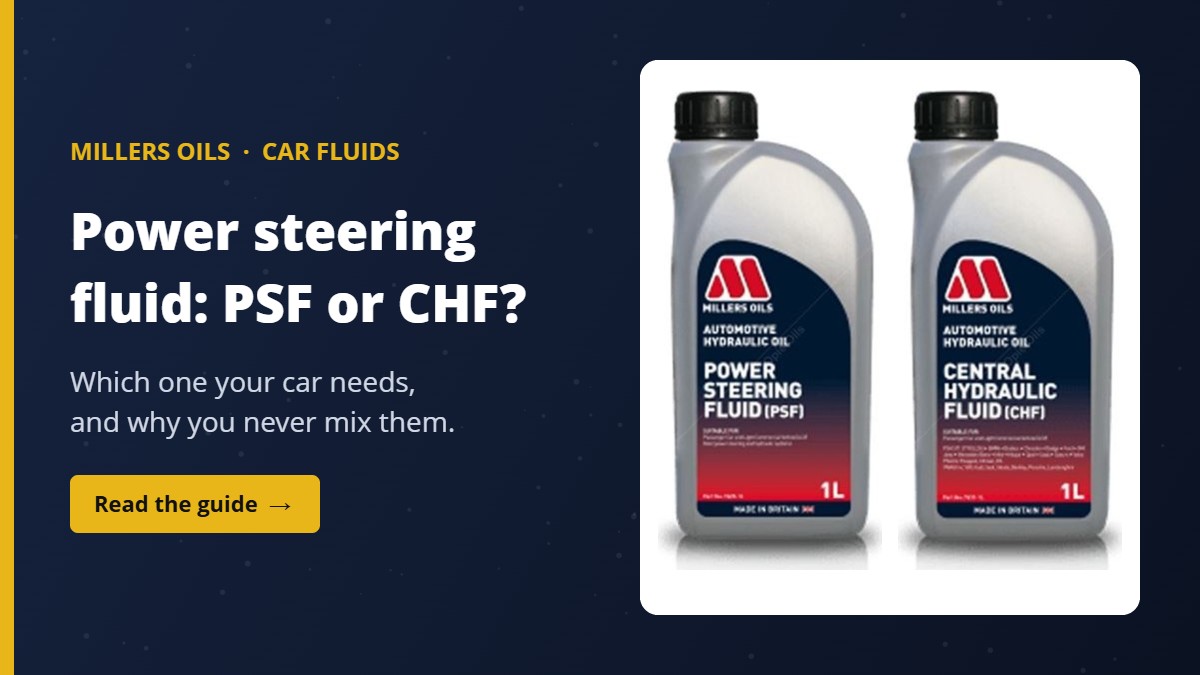
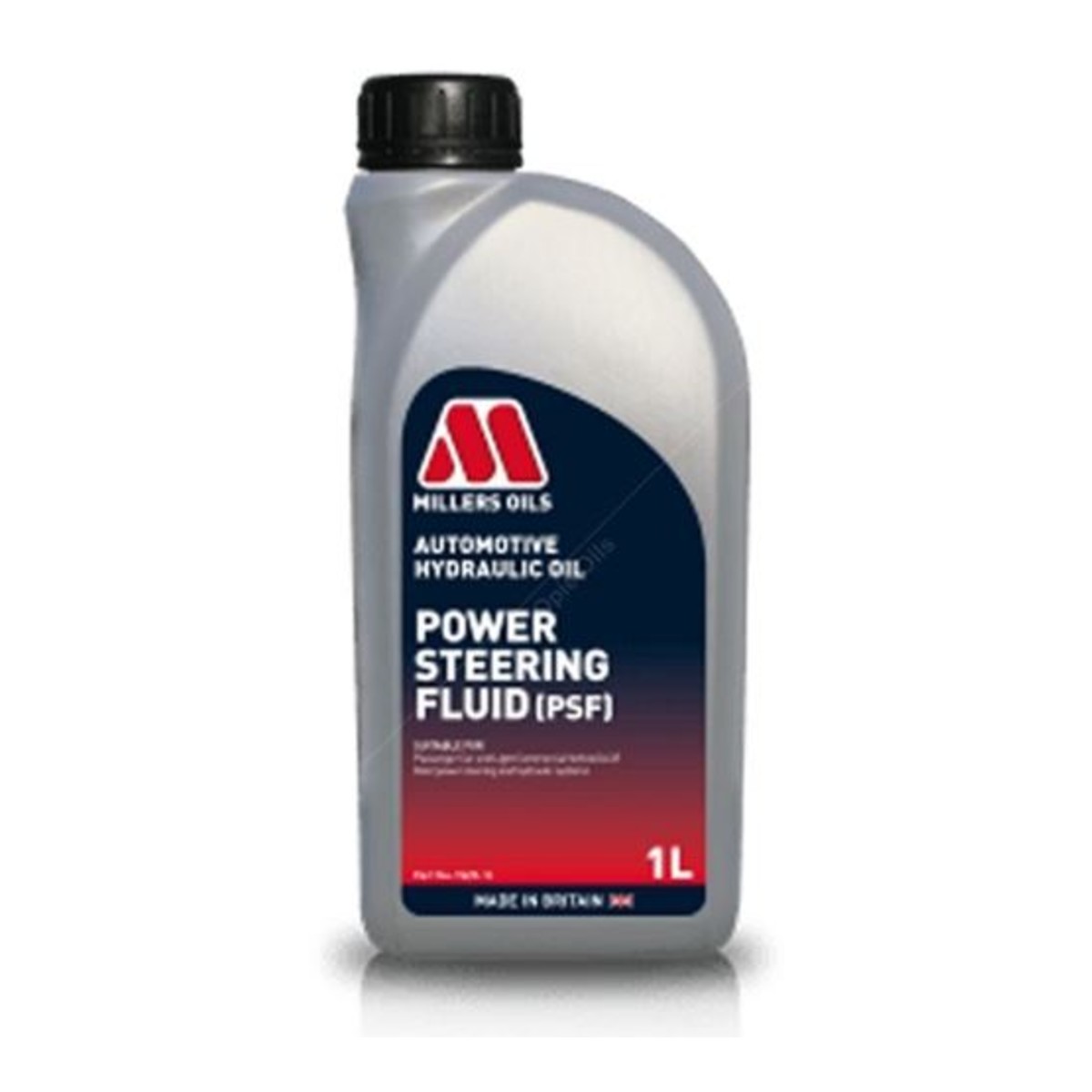
Many power steering systems are designed for a red, ATF-type fluid (automatic transmission fluid chemistry). Millers Power Steering Fluid (PSF) is made for these systems in cars and light commercials. It’s compatible with ATF, recommended wherever a red ATF-type power steering fluid is specified, and helps preserve seals, stop leaks and reduce wear on the pump.
CHF: central hydraulic fluid
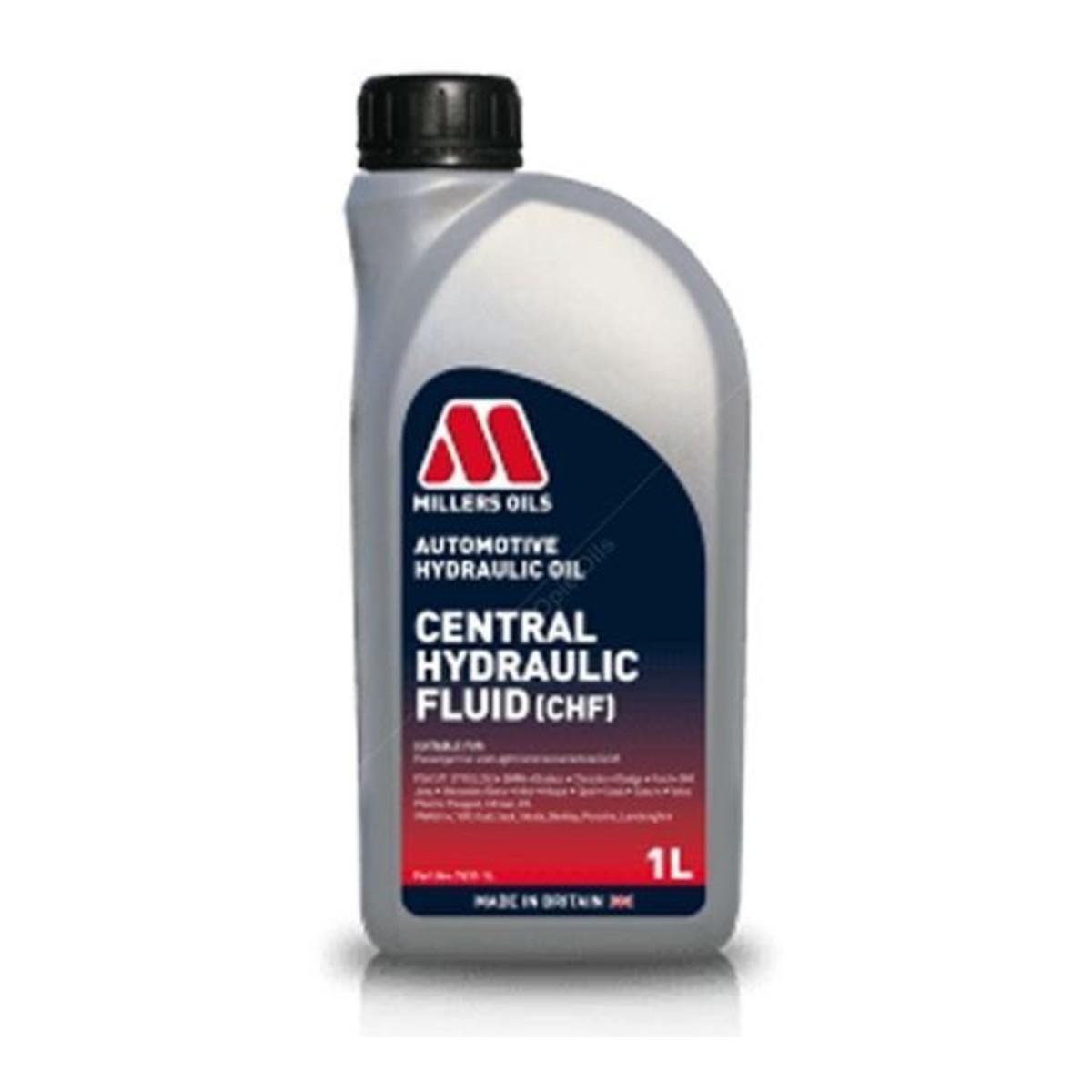
Many European cars, particularly German models, use a dedicated central hydraulic fluid instead, often recognisable as a green fluid. These systems are not designed for ATF. Millers Central Hydraulic Fluid (CHF) is a synthetic, long-life fluid meeting PSA S71 2710, recommended for makes including BMW, Mercedes-Benz, Mini, VW, Audi, Seat, Skoda, Porsche, Ford, GM, Volvo, Peugeot and Citroën. As well as power steering, CHF is used in hydro-pneumatic and self-levelling suspension, stability control and even convertible roof mechanisms.
| PSF (Millers Power Steering Fluid) | CHF (Millers Central Hydraulic Fluid) | |
|---|---|---|
| Type | ATF-type fluid | Synthetic central hydraulic fluid |
| Typical colour | Red | Often green (check your spec) |
| Used where | Systems that specify a red ATF-type power steering fluid | Systems that specify CHF, e.g. PSA S71 2710; many German and European cars |
| Also used for | Most power steering and hydraulic systems in cars and vans that call for it | Hydro-pneumatic suspension, level and stability control, convertible roofs |
| Don’t use in | Systems that require CHF | Systems designed for ATF-type fluid |
How to tell which fluid your car needs
Check the reservoir cap
Many caps are marked with the fluid type, such as “ATF”, “CHF” or a specification number. That’s your quickest answer.
Look in the handbook
The fluids section lists the power steering fluid specification. Match it exactly.
Look at the fluid (as a guide only)
Red usually means an ATF-type fluid; green often means CHF. Colour alone isn’t proof, and old fluid of either type darkens to brown, so always confirm with the cap or handbook.
Still not sure? Ask us
Send us your registration, or the make, model and year, and we’ll tell you which fluid it takes. Call 089 448 6626.
Signs your power steering fluid needs attention
- Whining or groaning when you turn the wheel, often worst at full lock. Low fluid is a common cause.
- Heavy or notchy steering, especially when parking.
- Foamy or bubbly fluid in the reservoir, a sign of air in the system or the wrong fluid.
- Dark brown or burnt-smelling fluid, meaning it’s old and has lost its protection.
- Drips or damp patches around the pump, hoses or steering rack.
How to check and top up power steering fluid
Find the reservoir and clean the cap
Wipe around the cap before opening so no dirt falls in.
Read the level
Use the MIN/MAX marks on the reservoir or dipstick. Some have separate hot and cold marks, and some manufacturers ask for the engine to be running, so follow your handbook.
Top up slowly with the correct fluid
Add a little at a time and recheck. Don’t overfill: the fluid expands as it warms up.
Find out why it was low
A power steering system is sealed, so a low level means a leak somewhere. Check the hoses, pump and rack, and get any leak fixed before it damages the pump.
Changing old fluid: flush it first
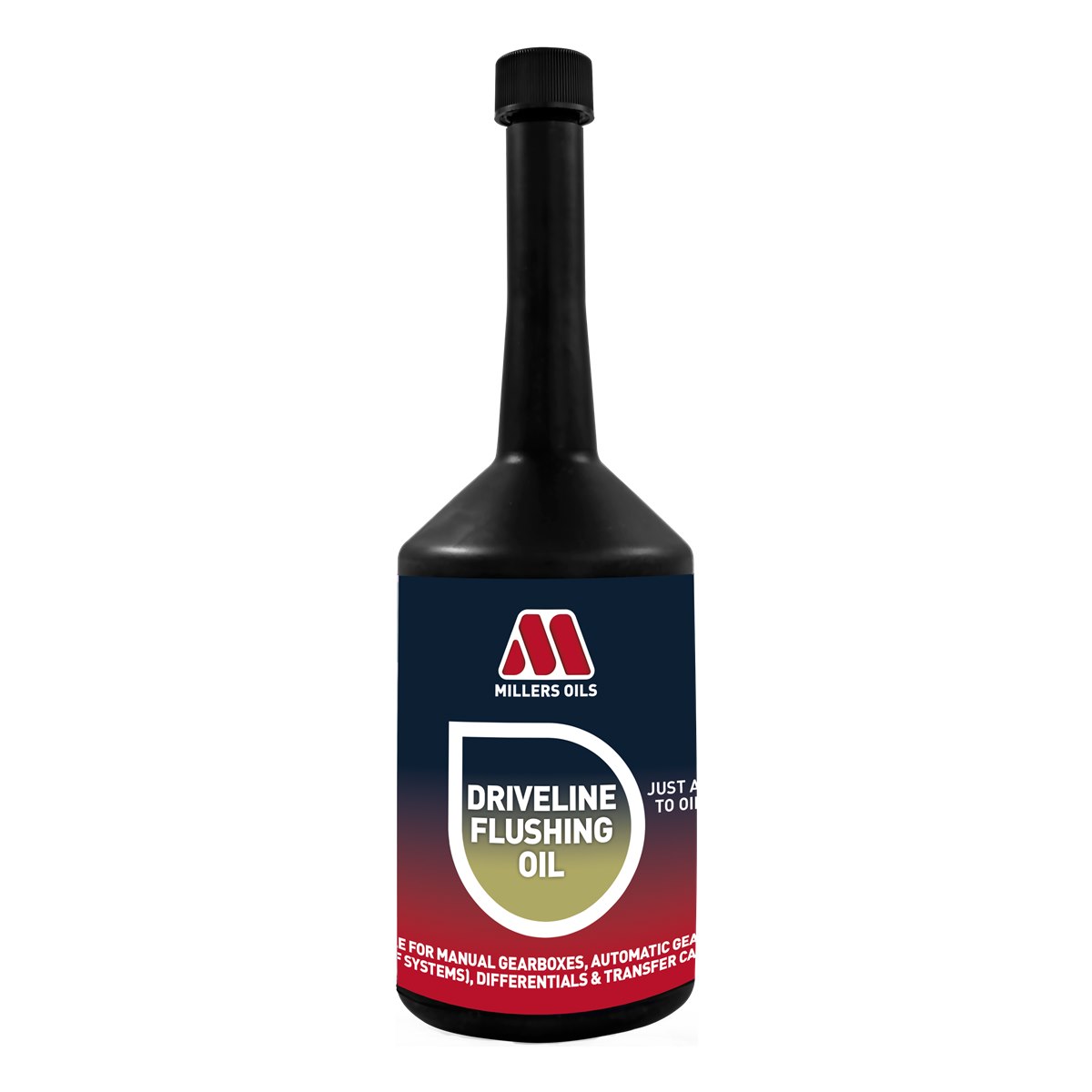
Power steering fluid ages like any other oil, picking up wear particles and losing its protection. When it’s dark and tired, a drain and refill makes a real difference, and a flush beforehand gets more of the old contamination out. Millers Driveline Flushing Oil is suitable for power steering systems: add it to the old fluid before the drain and refill, and it lifts sludge and debris so the fresh fluid starts clean. It’s oil-based, so it’s gentle on seals, unlike solvent flushes.
Power steering fluid FAQs
Is power steering fluid the same as ATF?
Many power steering systems use an ATF-type fluid, and Millers PSF is compatible with ATF. But not all systems do: cars that specify CHF (central hydraulic fluid) must not use ATF. Check your cap or handbook.
Can I mix PSF and CHF?
No. They’re different fluid types, and mixing them can damage seals, cause foaming and harm the pump. Use only the type your car specifies.
What colour is power steering fluid?
ATF-type power steering fluid is usually red. CHF is often green. Old fluid of either type turns dark brown. Colour is a guide only, so always confirm the specification on the cap or in the handbook.
Does every car need power steering fluid?
No. Only cars with hydraulic power steering use it. Many newer cars have electric power steering with no fluid reservoir at all.
Why is my power steering whining?
The most common cause is a low fluid level, often from a leak. Air in the system, old fluid or a worn pump can also cause it. Check the level first, top up with the correct fluid and look for leaks.
More car fluid guides: engine oil grades explained, gearbox oil explained, DOT 5 silicone brake fluid and which grease do I need?