
How to Run In a Race Engine: Test Bed, Rolling Road or Road
A freshly built race engine is a big investment: tight tolerances, high compression and components that will be pushed to their limits. How it’s run in decides whether the rings seal properly and the engine makes its full power, or whether it arrives at the first race with blow-by, glazed bores and rising oil consumption. This guide explains how to run in a competition engine on the test bed, rolling road or road, based on Millers Oils’ motorsport running-in procedure.
Why a race engine needs a running-in oil
Race oils are designed to cut friction. Millers’ CFS and NT+ race oils are fully synthetic, with triple-ester chemistry and, in the NT+ range, NANODRIVE low-friction technology. That’s exactly what you want on the grid, and exactly what you don’t want in a brand-new engine. As Millers put it, it is very difficult to get new piston rings and bores to run in on a fully or semi-synthetic oil. If the rings can’t wear in against the bores, the bores can glaze over and the rings may never seal.
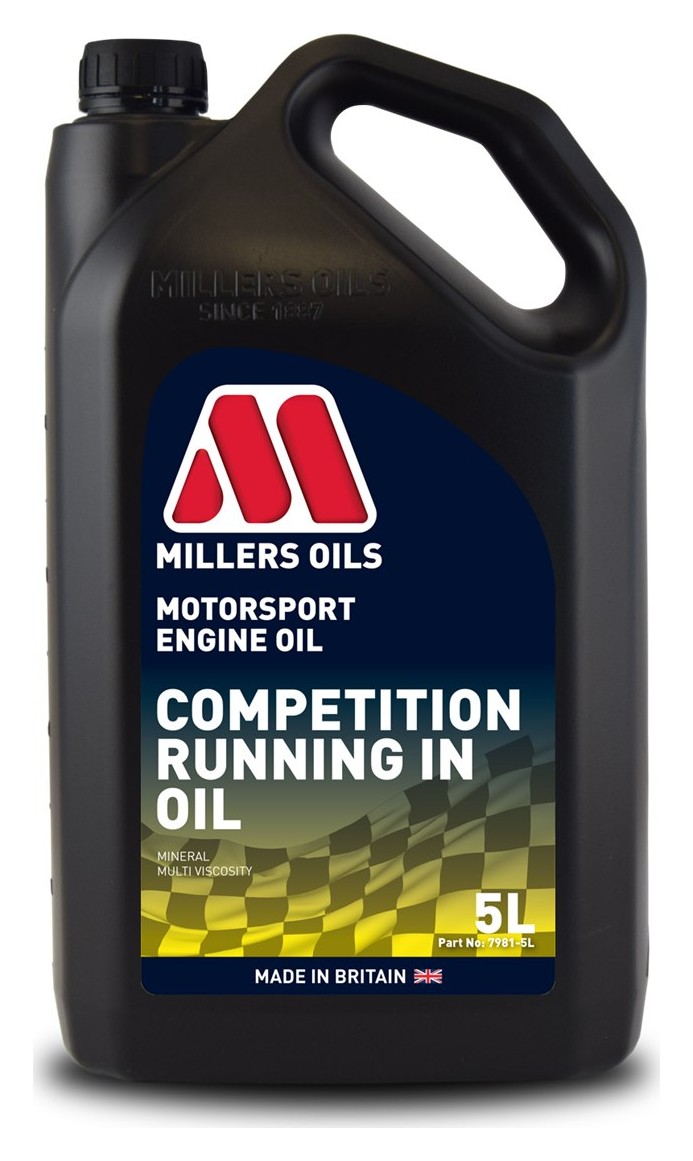
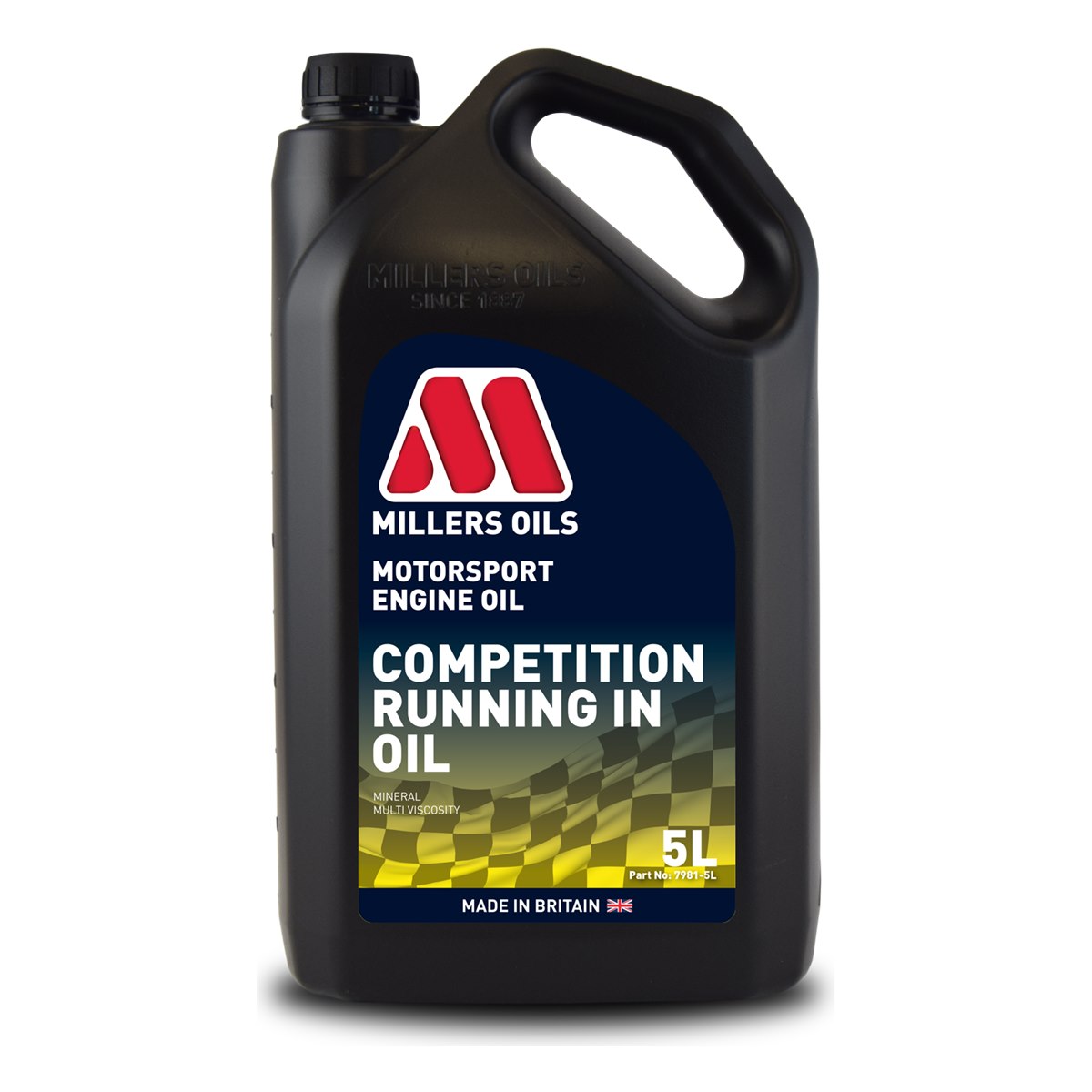
Millers Competition Running In Oil (CRO 10W-40) is a high-quality mineral multigrade built for this job. It’s made from solvent-refined mineral oils with special low-volatility components and running-in additives. According to Millers:
- it gives full protection to highly stressed components such as the crankshaft and valve train, while letting the rings and bores bed in
- its viscosity is chosen so the pistons still reach the boundary lubrication needed for bedding in
- its additive technology allows short bursts at full load
- it helps the engine make peak power and torque, reduces wear and oil consumption, maintains oil pressure, and avoids bore glazing and high blow-by
- it gives very low leak-down (around 4%) after controlled test-bed running
| Classic Running In Oil 30 | Competition Running In Oil (CRO 10W-40) | |
|---|---|---|
| Type | Mineral monograde, SAE 30 | Mineral multigrade, 10W-40 |
| Made for | Rebuilt vintage and classic road engines | Competition and modified petrol and diesel engines |
| Running in | About 500 miles on the road, or test bed or rolling road | Test bed for up to around 4 hours, or light road duties up to 500 miles (800km) |
| Oil temperature | – | Optimum 85–115°C |
| Guide | Classic running-in guide | This guide |
During the build: assembly lube
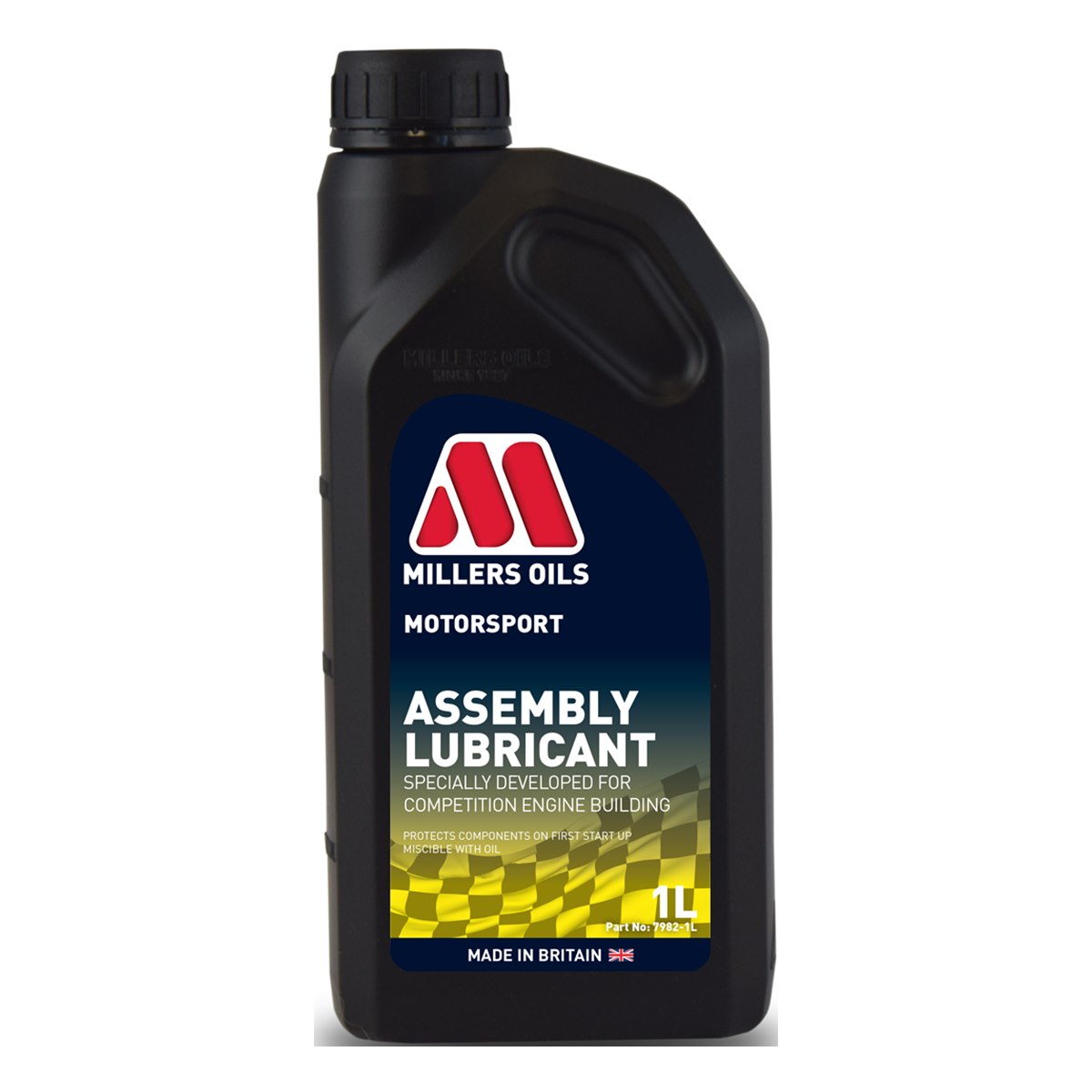
The first start is the most dangerous moment in an engine’s life, because there’s no oil pressure yet. Millers recommend using Millers Assembly Lube alongside their running-in oils. It’s formulated for competition engine and transmission builders, with a high concentration of anti-wear additives that stay on highly stressed parts such as camshafts and followers, and crankshaft bearings until oil pressure takes over.
How to run in a race engine
Fill with Competition Running In Oil
With the engine built to a high standard and assembled with assembly lube, fill with CRO 10W-40 to the maximum mark on the dipstick (or the correct level for a dry-sump system).
First start
Watch for oil pressure straight away, and follow your engine builder’s or cam supplier’s procedure for bedding in the camshaft. Check for oil, water and fuel leaks.
Bring it up to temperature
Millers give an optimum oil temperature of 85–115°C for CRO 10W-40. Get the oil and water fully up to temperature before you start loading the engine.
Load it at peak torque
Millers’ procedure is to run the engine at peak torque, ideally on a test bed or rolling road where load and temperatures can be controlled, for up to around 4 hours. Build the load progressively, and vary it rather than holding one speed. The oil’s additives allow short bursts at full load, but avoid long periods at maximum revs and long spells of idling.
Check the results
Look for the signs of a good run-in: compression to specification, strong power and response, and low oil consumption. A leak-down test is the best proof that the rings have sealed.
Drain, change the filter and switch to race oil
Drain the running-in oil and inspect it and the filter for debris. Fit a new filter and refill with the correct race oil for the engine.
Which race oil after running in?
Once the rings have sealed, switch to a competition oil in the grade your engine builder specifies.
| Engine | Millers race oil |
|---|---|
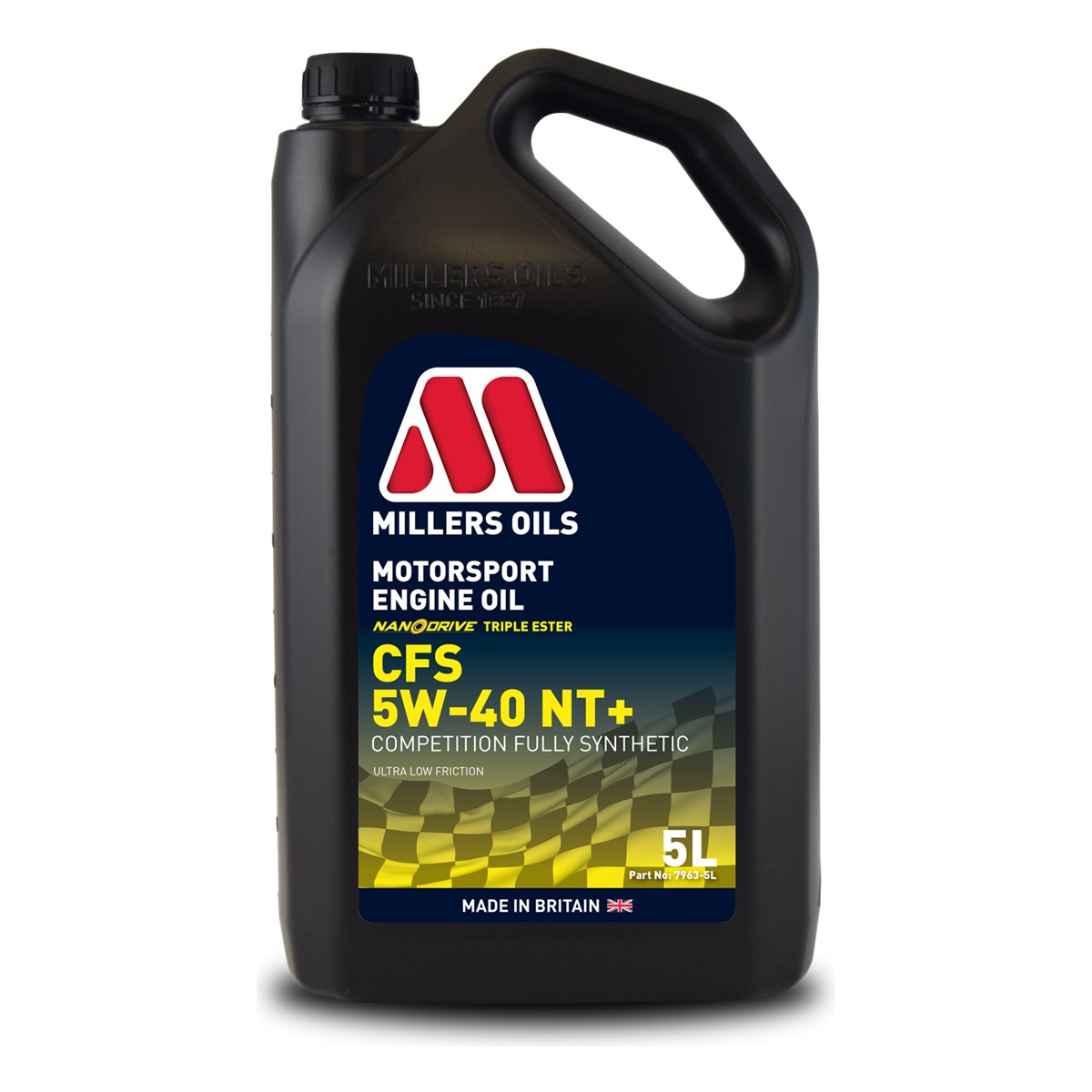
| Fast road and modified engines, race, rally, sprints and hill climbs, including hydraulic tappets | CFS 5W-40 NT+ (fully synthetic triple-ester NANODRIVE) |
| All race types, from endurance and circuit racing to sprints, hill climbs and rallying, turbo or non-turbo | CFS 10W-50 NT+ |
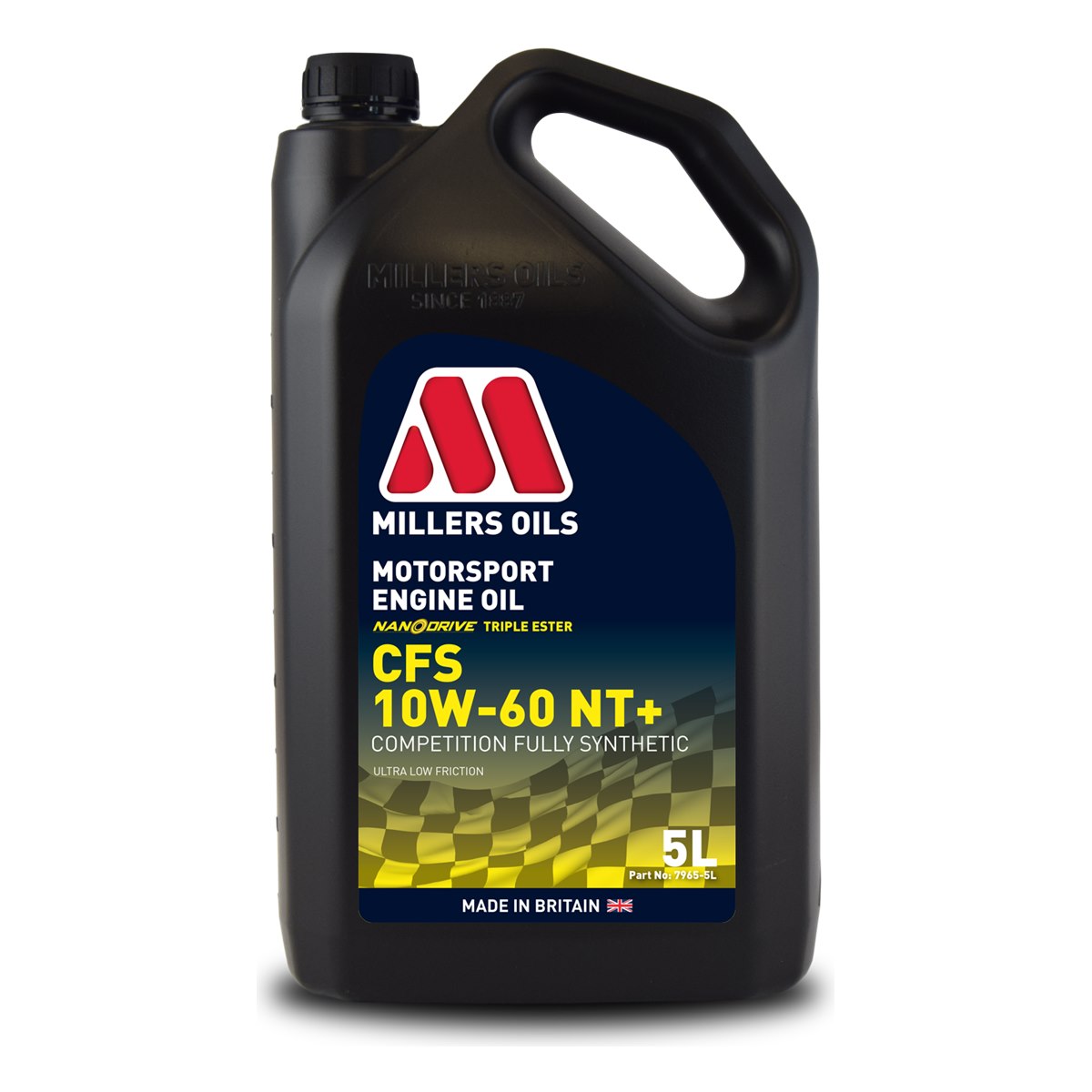
| Larger race and rally engines, turbo or non-turbo, under severe stress | CFS 10W-60 NT+ |
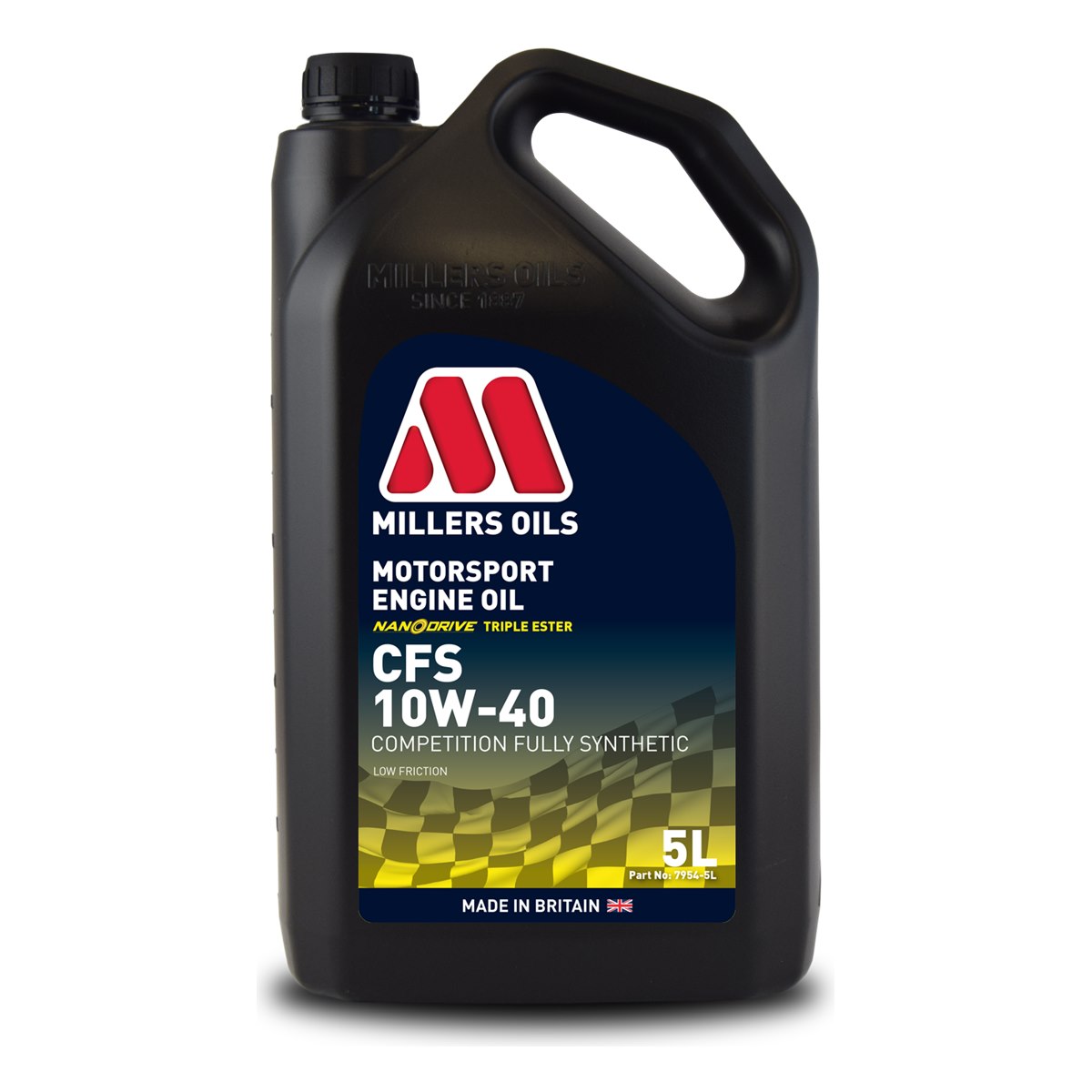
| High-revving circuit and competition engines | CFS 10W-40 or CFS 5W-40 (fully synthetic triple ester) |
| Competition engines of 2 litres and above | CFS 10W-50 or CFS 10W-60 |
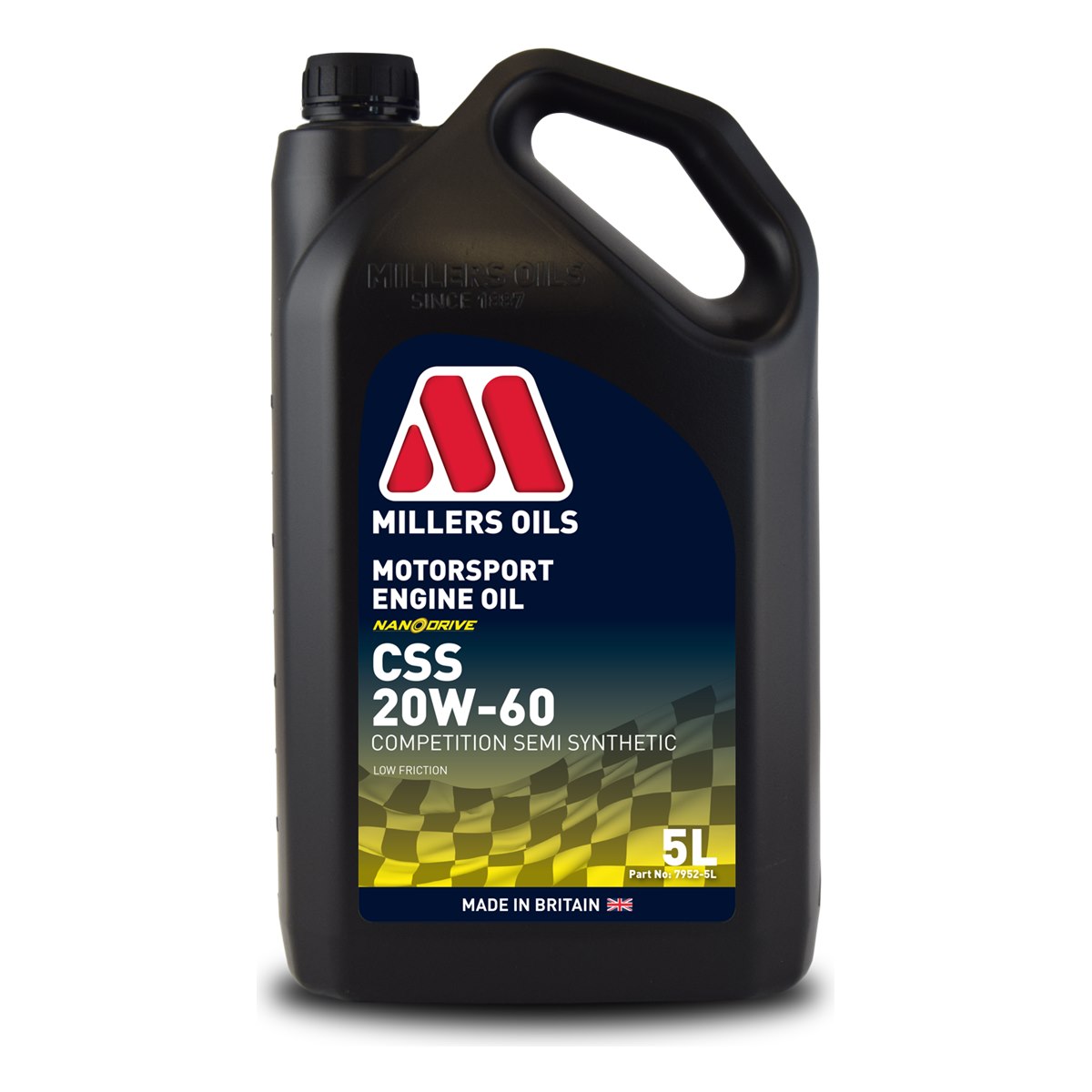
| High-performance competition engines needing a heavier grade | CSS 20W-60 (semi-synthetic NANODRIVE) |
| Historic and classic race engines | Classic Sport 20W-50 or 20W-60 (full ZDDP). See our classic car oil guide. |
Mistakes to avoid
- Running in on race oil. Fully synthetic, low-friction oils can stop the rings bedding in and glaze the bores.
- Loading the engine cold. Bring the oil up to 85–115°C first.
- Not loading it enough. Long idling and light running don’t push the rings against the bores. Run at peak torque.
- Sustained maximum revs. Short full-load bursts are fine; long periods at the limiter are not.
- Skipping assembly lube. The first start is when cams and bearings are most at risk.
- Not checking the oil and filter. Debris in the drained oil is your early warning of a problem.
Race engine running-in FAQs
Can I run in a race engine on synthetic oil?
Millers don’t recommend it. It is very difficult to get new piston rings and bores to bed in on a fully or semi-synthetic oil, and it can lead to bore glazing. Use a mineral running-in oil such as Millers Competition Running In Oil, then switch to race oil.
How long should I run in a race engine on the dyno?
Millers Competition Running In Oil is designed for test-bed running of up to around 4 hours, at peak torque with the oil at 85–115°C. Your engine builder will set the exact procedure for each engine.
Can I run in a race engine on the road?
Yes. Millers Competition Running In Oil can be used for light road duties for up to 500 miles (800km). A test bed or rolling road gives more control over load and temperature, but road running works if it’s done carefully. Don’t run in at full pace on track.
What oil temperature should I run in at?
Millers give an optimum oil temperature of 85–115°C for their Competition Running In Oil. Bring the engine fully up to temperature before loading it.
Which oil should I use after running in?
A competition oil in the grade your engine builder specifies. Millers’ CFS range and NANODRIVE NT+ range are fully synthetic triple-ester race oils, such as CFS 5W-40 NT+ for modified, race and rally engines, or CFS 10W-60 NT+ for larger engines under severe stress. Historic race engines usually suit Classic Sport 20W-50 or 20W-60.
Is it different from running in a classic road engine?
The principle is the same (mineral oil, load at peak torque, then change the oil and filter), but the oil differs. Race engines use the 10W-40 Competition Running In Oil, mainly on a test bed, while classic road engines use Millers Classic Running In Oil 30 over about 500 road miles. See our classic running-in guide.
More guides: running in a rebuilt classic engine, engine oil grades explained, classic car oil guide and oil ranges explained.